See How HighRadius Increases Consolidation Efficiency By 60%
Download Feature Guide- This guide evaluates the top 10 financial consolidation tools in 2026 based on agents that manage intercompany elimination accuracy, multi-currency handling, ERP integration and scalability.
- HighRadius Agentic AI consolidation Software provides small Mid-market teams 95% faster data aggregation and 99% IC elimination accuracy. For complex multi-ERP enterprises, it automates FX and intercompany eliminations, ensuring compliance, audit readiness and accelerating multi-currency consolidation.
- Financial consolidation has evolved from spreadsheet-heavy, error-prone cycles to autonomous, AI-driven processes. Manual GL extraction, COA mapping, and reconciliation across siloed ERPs are now streamlined, replacing tedious period-end accounting tasks with efficient automation.
Everyone talks about FX Conversion when they talk about Financial Consolidation. What nobody talks about is Accounting policy translation for multiple subsidiaries. One subsidiary runs on IFRS 16 while another operates on local GAAP and a third has a custom Depreciation method that made sense at the time. The moment you try to consolidate across these entities, you are no longer solving a formula problem. You are solving a consistency and judgment problem which is difficult to scale. Without the right infrastructure, restatements happen and audit findings trace back not to bad numbers but to undocumented policy decisions nobody remembers making.
This is the gap that defines modern financial consolidation software, and what separates the best financial consolidation software from traditional consolidation solutions. The best platforms in 2026 go beyond currency conversion and data aggregation. They bring structure to the parts of consolidation that have always lived in institutional memory, policy mappings, intercompany elimination rules, chart of accounts hierarchies, top-side adjustment logic; and make them auditable, repeatable, and enforceable across every entity in every jurisdiction.
This guide evaluates the top 10 financial consolidation tools of 2026 focusing on key metrics such as automation depth, elimination accuracy, multi-currency handling, ERP integration, and scalability.
Table of Contents
- Best Financial Consolidation Tools at Glance
- What is financial statement consolidation tool?
- How We Evaluated the Top 10 Financial Consolidation Accounting Tools
- 10 Best Financial Consolidation Accounting Tools
- Benefits of Financial Consolidation Tools
- How To Choose The Right Financial Consolidation Tools For Your Business
- What to Look for in Financial Consolidation and Reporting Platform in 2026
- FAQs
Best Financial Consolidation Tools at Glance
| Platform | Best For |
| HighRadius | Agentic AI Consolidation with 99% IC Accuracy and 95% faster Data Aggregation. Recognised as a Challenger in the 2026 Gartner® Magic Quadrant™ for Consolidation, HighRadius helps Enterprise & Mid-markets Organisation automate multi-entity, multi-ERP and multi-currency Consolidation while maintaining Audit Readiness. |
| Vena | Excel-like Consolidation with easy team Adoption and minimal learning curve firms. |
| LucaNet | FinGAAP and IFRS-focused Consolidation for organisations with strong regulatory compliance needs. |
| OneStream | Compliance-driven financial reporting and disclosure management for audit-heavy organisations requiring strong controls. |
| Workiva | Mid to large Enterprises seeking streamlined FP&A, automated close, rolling forecasts, and scenario analysis. |
| Prophix | Flexible, fast-to-deploy consolidation and planning solution well suited for Organisations. |
| Planful | Real-time scalable cloud consolidation supporting growing businesses with multi-entity reporting needs. |
| BlackLine | Controls Consolidation with Robust Intercompany reconciliation and audit support for compliance-focused organisations. |
| Anaplan | Connected Financial Planning and Consolidation Platform built for Organisations needing Unified modeling Capabilities. |
| Centage | Simple, Intuitive Consolidation and Budgeting Platform Designed specifically for Small Business needs. |
What is financial statement consolidation tool?
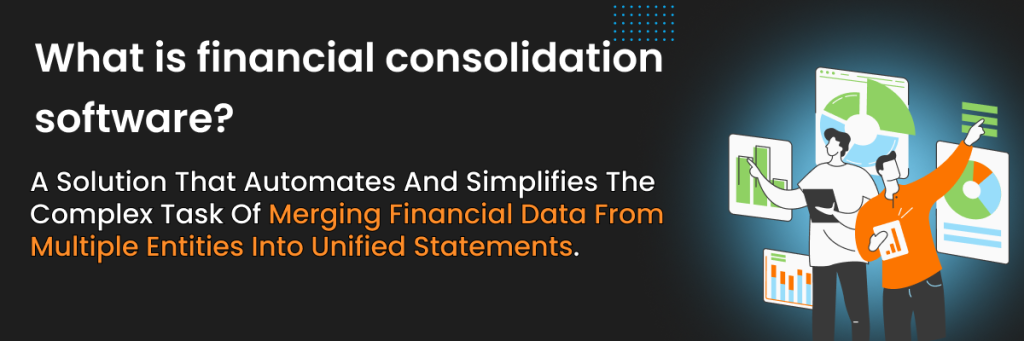
Financial statement consolidation tool is a specialised tech solution that automates and simplifies the complex task of merging financial data from multiple entities into unified statements. This powerful tool works on top of the ERP layer and creates a central platform that revolutionises how organisations handle their financial consolidation across entities, currencies, and reporting structures.
The tool removes manual data compilation by automatically collecting data from various sources in an organisation, whatever their location or currency. It gives users a single, unified view of finances throughout the enterprise and presents the organisation as one economic entity.
Key Functionality and Features of Financial Consolidation Software
Financial statement consolidation tools automate several key steps in the consolidation process:
- Data Integration and Mapping: The software collects financial information from various sources such as ERP systems, spreadsheets, and databases, then maps different charts of accounts into a unified structure.
- Multi-Currency Handling: Organisations that operate globally can automatically handle currency conversions based on current exchange rates, which eliminates manual translation errors.
- Intercompany Accounting Eliminations: The platform spots and eliminates inter company accounts transactions to prevent double-counting and create accurate consolidated statements.
- Adjustments Processing: These tools apply needed adjustments like minority interest calculations and statutory-to-GAAP conversions.
- Financial Reporting: They produce consolidated financial statements that comply with relevant accounting standards.
How We Evaluated the Top 10 Financial Consolidation Accounting Tools
To cut through the marketing noise, we filtered dozens of financial consolidation software platforms through four rigorous, enterprise-focused lenses. Here is a breakdown of the criteria used to rank this year’s top performers:
- Scalability: In 2026, scalability isn't just about adding new subsidiaries. We evaluated how these tools handle increasing financial consolidation complexity, such as tracking performance across hundreds of cost centers, product lines, and geographical jurisdictions simultaneously. The best tools maintain sub-second reporting speeds even as transaction volumes spike, ensuring that a mid-market firm growing into a global enterprise won't outgrow its consolidation infrastructure in two years.
- ERP Integration: A consolidation tool is only as good as the data it pulls. We prioritised platforms that offer native, bi-directional API connectors for major ERPs like SAP S/4HANA, Oracle Fusion, Microsoft Dynamics 365, and NetSuite. Our focus was on "low-code" integration, solutions that allow finance teams to map new data fields or adjust COA (Chart of Accounts) structures without waiting for a month-long IT project or support.
- Automation Depth: We looked for a transition from "basic automation" (like simple intercompany eliminations) to Autonomous Finance. They now utilise predictive anomaly detection to catch inconsistent entries before they hit the ledger, while automated multi-framework translation instantly converts local books into IFRS or US GAAP. To streamline reporting, AI-powered narratives automatically generate the first drafts of management commentary, allowing finance teams to shift their focus from manual data entry to strategic analysis.
- Enterprise Readiness: We focused on "Big Four" audit-ready platforms featuring SOC 2 Type II compliance and immutable audit trails. Our selection prioritised tools with role-based access control (RBAC) and multi-factor authentication, ensuring data integrity and security across global teams during high-stakes year-end closing cycles.
10 Best Financial Consolidation Accounting Tools
1. HighRadius
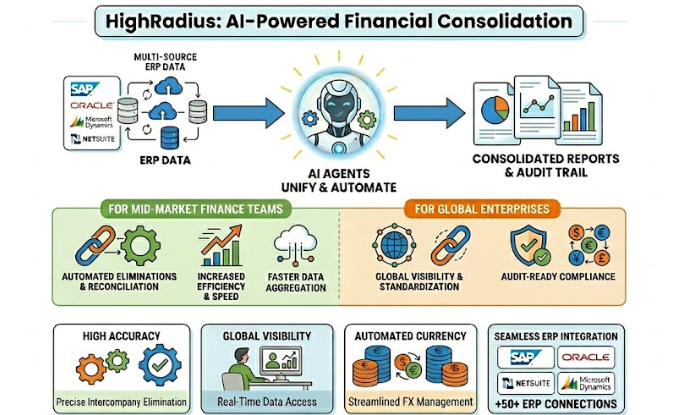
HighRadius provides an AI-powered financial consolidation software solution that transforms consolidation from a spreadsheet-driven, error-prone process into an autonomous, end-to-end workflow for both fast-growing mid-market companies and global enterprises. Recognised as a Challenger in the 2026 Gartner Magic Quadrant for Financial Close and Consolidation Solutions, HighRadius unifies consolidation, intercompany matching and ERP-to-report data synchronisation with major ERP environments including SAP, Oracle NetSuite, and Microsoft Dynamics 365.
For fast-growing mid-market finance teams, HighRadius eliminates the manual burden of financial consolidation work, including intercompany elimination, top-side adjustments, and reconciliation workflows. By automating consolidation processes across entities, the platform enables accounting teams to improve 95% faster data aggregation, and scale operations without increasing finance team size.
For global enterprises managing multiple subsidiaries across multiple ERPs and currencies, HighRadius delivers a unified autonomous consolidation layer built for large-scale financial governance. The platform standardises multi-entity consolidation with automated intercompany accounting eliminations, 97% Currency Conversion Automation and 100% audit trail, enabling finance organisations to maintain audit readiness, improve reporting consistency and accelerate global consolidation processes across complex enterprise environments.
Key Capabilities
- Automates intercompany elimination across entities with 99% accuracy, removing reconciliation effort for lean mid-market accounting teams
- Applies real-time FX conversions across multiple currencies with 97% automation, ensuring consistency across every global subsidiary
- Integrates ERP-agnostically with SAP, Oracle, Microsoft Dynamics 365, NetSuite, and other major systems with no rework as entity count grows
- Provides 100% real-time visibility into consolidated financials, audit trails, and compliance status across every filing jurisdiction
HighRadius' clients claimed to have achieved the following value from the software
Carestream Health: Achieved 98% faster consolidation using HighRadius Agentic AI-powered Financial Consolidation, eliminating the time spent on Consolidation Runtime and enabling the finance team to consolidate financial data across entities with significantly greater speed and accuracy.
- 98% Faster Report Consolidation: Dramatically reduced the time spent on manual report generation and cross-entity data compilation.
- 100% GAAP Compliance Achieved: Intelligent onboarding and configuration agent enforces standardised accounting policies from day one, eliminating compliance gaps across all entities.
- 98% Reduction In Consolidation Runtime: AI data ingestion agent automates aggregation at scale, compressing end-to-end consolidation from 2.5 hours to under 2 minutes.
- 50% Faster Consolidation & Month-End Close: Accelerated the close cycle, enabling the finance team to prioritise strategic analysis over manual consolidation.
HighRadius Named a Challenger In 2026 Gartner® Magic Quadrant™ for Financial Close and Consolidation Solutions
A 3X Leader in Gartner® Magic QuadrantTM Invoice-To-Cash Expands into FCCS
Get The Report2. Vena
Vena Solutions is a cloud-based financial consolidation and planning platform that combines the familiarity of Excel with the power of a centralised database. It is preferred by organisations that require enhanced data integration and advanced consolidation rules to support complex legal entity structures.
Key Features:
- Excel-based interface for consolidation and planning
- Integration with major ERP systems such as SAP, NetSuite, and Dynamics
- Embedded reporting through Power BI and PowerPoint generation
3. LucaNet
LucaNet is a purpose-built financial statement consolidation tool and reporting solution providing out-of-the-box support for IFRS, US GAAP, and local GAAP standards, enabling audit-proof consolidated financial statements. LucaNet offers an intuitive interface for finance users serving companies with $50M–$500M revenue.
Key Features:
- Support for IFRS, US GAAP, and local GAAP reporting
- Financial statement consolidation and reporting capabilities
- Audit-ready financial reporting workflows
4. OneStream
OneStream is an enterprise-grade corporate performance management (CPM) platform built for financial consolidation, reporting, and planning at scale. It replaces legacy tools like Hyperion with a unified, cloud-based solution capable of handling thousands of entities, currencies, and ownership structures within a single application.
Key Features:
- Financial consolidation, reporting, and planning in one platform
- Support for multi-entity and multi-currency environments
- Pre-built integrations with major ERP systems
5. Workiva
Workiva is a leading cloud platform for connected reporting and compliance. It’s not a consolidation engine, but rather a solution to aggregate data, collaborate on reports, and ensure control and traceability in the reporting process. Its Wdata feature allows for seamless data integration from multiple sources, ensuring consistency and accuracy.
Key Features:
- Connected reporting across finance and compliance teams
- Data integration from multiple source systems through data.
- Audit trail and regulatory filing capabilities
6. Prophix
Prophix is an FP&A platform provider that also offers financial consolidation capabilities, geared mainly towards mid-market companies. Prophix provides a corporate performance management solution that automates budgeting, forecasting, and financial consolidation. Its AI-powered Virtual Financial Analyst offers insights and anomaly detection, enhancing decision-making.
Key Features:
- Budgeting, forecasting, and consolidation functionality
- Cloud and on-premise deployment options
- Excel integration with configurable reporting and reconciliation support
7. Planful
Planful (formerly Host Analytics) is a cloud-based FP&A and consolidation platform targeted at mid-market and upper-mid-market companies with complex reporting needs, such as conversion between IFRS and local GAAP. Its Continuous Planning approach allows organisations to adapt quickly to changes, with dynamic planning models that update in real-time.
Key Features:
- Financial planning and consolidation capabilities
- Collaborative planning across business teams
- Integration through pre-built connectors and APIs
8. BlackLine
BlackLine specialises in automating financial close and consolidation processes, offering a unified cloud platform that enhances accuracy and compliance. Its task management feature ensures that all close activities are tracked and completed on time, reducing the risk of errors and omissions.
Key Features:
- Financial close and consolidation automation
- Data validation and reconciliation workflows
- Audit trail for compliance and reporting
9. Anaplan
Anaplan acquired Fluence Technologies in 2024, which added financial close and consolidation capabilities to their platform. Prior to this acquisition, Anaplan primarily focused on business planning and financial forecasting. Anaplan is a cloud-based platform that facilitates connected planning across various business functions.
Key Features:
- Connected planning across business functions
- Financial consolidation capabilities through Fluence
- Low-code modeling environment
10. Centage
Centage's Planning Maestro is a cloud-based FP&A platform built for small and medium-sised businesses. The platform offers collaborative budgeting for efficient planning, flexible forecasting for strategic decisions, and predefined reporting templates that follow GAAP/IFRS standards.
Key Features:
- Budgeting and forecasting tools for finance teams
- Pre-built financial reporting templates
- Integration with QuickBooks Online
Benefits of Financial Consolidation Tools
Modern financial consolidation tools give organisations clear advantages beyond simple reporting functions. Companies need these solutions more as they become complex. Finance departments can work faster and more accurately with these tools.
1. Improved Accuracy and Time Efficiency
Financial consolidation software helps organisations reduce the time needed to close books. Companies reduce their close cycles by 50-70% when they use dedicated tools. Top companies complete their consolidated financial statements in 4 days, while others take 6-10 days.
These tools remove manual errors that often happen with spreadsheets. They automatically handle data collection, currency translations, and intercompany eliminations. This automation reduces mistakes that come from manual work. Teams that use mature AI systems close their books 41% faster, moving from 6.4 days to about 3.8 days.
Finance departments save money too. The Hackett Group's research shows automation tools reduce labor and outsourcing costs by 20%-35%. Small and medium businesses can expect to recover their investment in 12 months. They see yearly returns of 50-150% in the first three years after setup.
2. Enhanced Compliance and Auditability
Financial consolidation tools make it easier to follow complex accounting standards by:
- Applying GAAP/IFRS rules and guidelines automatically
- Offering built-in templates that speed up regulatory reporting
- Keeping detailed audit trails for every transaction and adjustment
- Making sure accounting policies stay consistent across entities
This detailed record-keeping reduces audit prep time and compliance risks. Auditors trust consolidations done with these tools more and see them as a mark of quality.
3. Real-Time Visibility and Strategic Insights
These tools show performance across all entities as it happens. Leaders can make decisions using current data instead of waiting weeks for consolidated results.
Custom dashboards give quick visual summaries of consolidated performance and key financial metrics. Users can explore high-level figures down to the details. This helps them understand why things happen and how well the business performs.
4. Scalability and Future-Proofing
Reliable financial consolidation software grows with your organisation. The platform handles more currencies, accounting policies, and reporting needs as businesses expand worldwide.
Companies going through mergers and acquisitions find it easier to add new entities to their financial consolidation and reporting processes. The consolidation process stays quick and accurate as the business grows.
Many organisations now use their consolidation systems for Enterprise Performance Management. Financial data helps with budgeting, planning, and forecasting to improve business processes.
5. Cultural and Operational Impact
Automation frees finance teams from data entry tasks. They can focus on analysis and strategic support. Finance teams become proactive strategic partners instead of just handling reports.
Teams feel less stressed and more confident. They close books faster with fewer mistakes during reporting periods. The quality of financial outputs improves too.
Teams work better together because they use one dataset instead of different files and formats. This setup enables up-to-the-minute financial consolidation.
How To Choose The Right Financial Consolidation Tools For Your Business
When evaluating financial consolidation software, focus on the capabilities that affect accuracy, speed, and control. The right solution should offer strong business consolidation examples including its functionality, ERP integration, intercompany elimination, currency translation, audit trails, automation, and scalability as your business grows.
Your shortlisted options should excel in these vital capabilities:
- Core consolidation functionality - This is the foundation. The tool should support the full business consolidation workflow, including entity roll-up, eliminations, adjustments, and consolidated reporting.
- ERP integration - This is one of the most important decision factors. Finance teams want a tool that connects cleanly with SAP, Oracle, NetSuite, Microsoft Dynamics, and other source systems without heavy rework.
- Intercompany elimination - If the software cannot handle intercompany eliminations well, consolidation effort stays manual and error-prone. This is a core feature, not a nice-to-have.
- Currency translation - This matters especially for global organisations. The software should handle multi-currency consolidation accurately and consistently across entities and reporting periods.
- Audit trails and controls - This is critical for finance leadership and external audit readiness. A good tool should show who changed what, when, and why, with traceable approvals and supporting documentation.
- Scalability - The software should grow with the business as entity count, transaction volume, and reporting complexity increase.
What to Look for in Financial Consolidation and Reporting Platform in 2026
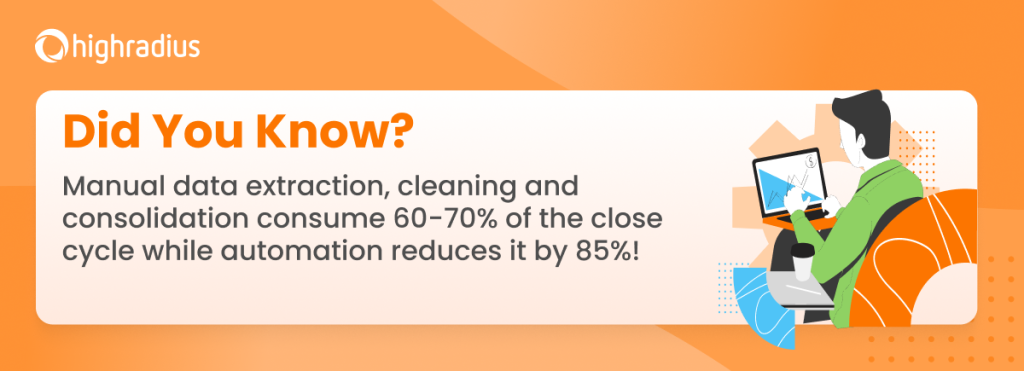
In 2026, controllers require more than just data aggregation; they need a financial consolidation tool that guarantees data integrity across every global entity, currency, and reporting structure. As regulatory scrutiny tightens and close timelines shrink, your team shouldn’t be tethered to manual workbooks.
- Autonomous Intercompany Eliminations & advanced global intercompany system
The best financial consolidation tools move beyond simple automation. Look for a system that proactively identifies and washes intercompany transactions in real-time. This eliminates the month end matching nightmare and ensures that your financial statement consolidation options are always audit-ready. - A Unified Source of Truth
A modern financial consolidation platform should bridge the gap between disparate ERPs. It must provide:
Unified Data Governance: Consistent accounting logic across all subsidiaries.
Real-Time Reporting: Dynamic dashboards that offer a glass pipeline into your consolidated financial health at any point in the month, not just on day ten.
- Scalability and Global Compliance
Whether it’s US GAAP, IFRS, or local statutory requirements, your financial consolidation solutions must adapt automatically. In 2026, scalability means the platform can handle complex multi currency translations and evolving entity structures without requiring a total system overhaul. - Audit-Ready Transparency
In an era of high transparency, black box calculations are a liability. Every adjustment, from currency translation to minority interest, must be traceable. Look for platforms that offer a clear audit trail, turning what used to be a weeks long manual verification into a click through process.
FAQs
1. What are the key benefits of using financial statement consolidation tools?
Financial consolidation tools can reduce close cycles by 50-70%, cut labor costs by 20-35%, eliminate manual errors through automation, enhance compliance, and provide real-time visibility into financial performance across multiple entities.
2. How do financial consolidation and financial close processes differ?
Financial consolidation focuses on combining data from multiple entities, while financial close encompasses all procedures for finalising accounting records in a given period. Consolidation is typically one of the last steps in the broader financial close process.
3. What should organisations consider when choosing a financial statement consolidation platform?
Key considerations include comprehensive consolidation functionality, integration capabilities with existing systems, automation features, user-friendliness, scalability, and whether a cloud-based or on-premise solution is more suitable for the organisation's needs.
4. How can financial statement consolidation tool transform the role of finance teams?
By automating tedious tasks, these tools free finance teams from manual data manipulation, allowing them to focus on analysis and strategic support. This shift transforms finance from a reactive reporting function into a proactive strategic partner for the organisation.
5. What ROI can companies expect from implementing financial statement consolidation tool?
Small and medium businesses can expect a payback period of about 12 months and an average annual ROI of 50-150% within the first three years of deployment. Additionally, organisations typically experience a 50-70% reduction in close cycle times.
6. How does financial reporting and consolidation platform help improve data accuracy across entities?
When different business units work with their own charts of accounts, formats, and data standards, errors creep in fast. Financial reporting and consolidation platform standardises inputs, maps accounts automatically, and validates numbers before they roll up. This gives finance teams a single version of truth they can trust for audits, dashboards, and enterprise-wide reporting.
7. Can growing businesses scale easily with modern consolidation platforms?
Scaling becomes much easier when your consolidation engine isn’t limited by spreadsheets or manual workflows. With financial reporting and consolidation platform, organisations can add new entities, adjust ownership structures, and handle currency conversions without slowing down the close. It keeps the process stable even as the business expands or acquires new companies.
8. How does automation in consolidation of financial information tools support stronger internal controls?
Strong controls rely on consistency, audit trails, and reduced manual intervention. Financial reporting and consolidation tool brings all three together: automated workflows, embedded rules, maker-checker approvals, and complete system logs. It helps companies meet compliance expectations without forcing teams to chase down emails or reconcile conflicting versions of the same report.
9. What is Consolidation of Financial information and reporting tool?
Financial consolidation and reporting tool automates data collection from multiple entities, performs advanced global intercompany system with accounting eliminations, standardises financial statements, and generates real-time reports so finance teams can close faster with greater accuracy. Tools like HighRadius bring automation, audit control, and centralised visibility into a single platform.
10. How does financial consolidation and reporting platform help CFOs and controllers?
It accelerates the close process, reduces manual errors, strengthens compliance, and provides a unified view of financial performance across subsidiaries, regions, and business units. With real-time reporting and workflow automation, CFOs gain faster insights for decision-making and governance.


