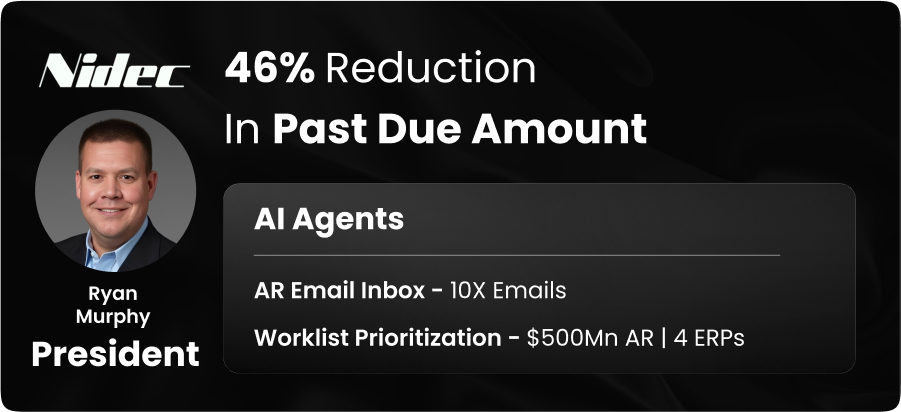
Integrated receivables solution simplifies your accounts receivable process. It automates invoicing, collections, and provides real-time insights using AI and smart workflows. Here’s how the key components work together to streamline and optimise your receivables.
Improved Risk Management
With features like automatic credit checks and AI-based predictions, you can spot potential issues early and adjust credit terms to avoid defaults. By adjusting credit terms early, you minimise bad debt, stabilise cash flow, and maintain full control over your financial health.
Faster Collections
Not all customers are the same, and your collection strategies should reflect that. With the right integrated receivables solution, you can tailor your approach to different customer segments. From polite reminders to more urgent follow-ups, personalised communication ensures timely payments and helps minimise customer churn.
Enhanced Reporting and Insights
An integrated receivables platform brings all your receivables data together on a single platform, offering a holistic view of your financials. It delivers invaluable insights through detailed reports and an integrated receivables dashboard that reveals payment trends, customer behavior, and aging accounts, helping you make informed, data-driven decisions.
Seamless Integrations
Say goodbye to data silos. By integrating your receivables platform with ERP and CRM systems, you gain a unified view of customer interactions and financials. This eliminates manual data entry and errors, enabling seamless collaboration across departments for faster decisions and improved collections efficiency.
HighRadius builds solid partnerships and offers robust integration capabilities by integrating with 110+ banks, 40 credit agencies, 50+ ERPs, and 15+ billing systems globally.

Ready to Connect HighRadius with Your ERP?
Download ERP factsheet
This isn’t theory—it’s real-world case studies from companies using AI to cut costs, reduce manual work, and boost cash flow in record time.
Download Ebook
That’s why GPOs at Keurig Dr Pepper and Air Products used this powerful 10-question evaluation framework to get it right—and now it’s yours.
Download Template
Build a strong business case with ROI models, benchmarks, and real-world wins from customers success stories.
Download WhitepaperIntegrated receivables automation streamlines the entire accounts receivable process by consolidating invoicing, payment processing, and cash application on one platform. This approach automates manual tasks, offers real-time insights, and helps reduce operational costs.
Think of it as an automated system that connects all receivables processes, ensuring everything runs smoothly without manual intervention. This allows businesses to operate efficiently and focus on strategic priorities. Additionally, AI-powered tools predict customer payment trends, prioritise overdue accounts, and optimise collection strategies. This automation not only speeds up receivables management but also helps businesses improve decision-making through actionable insights into payment behaviors and financial health.
With integrated receivables management, companies can lower Days Sales Outstanding (DSO), improve cash flow predictability, and foster stronger customer relationships—all while cutting operational costs and reducing reliance on manual processes.

Integrated receivables streamline and automate the complete AR process, enabling real-time insights and faster cash flow. Unlike traditional methods, they reduce manual errors and connect every step for seamless, efficient financial management.
| Feature | Traditional AR Management | Integrated Receivables Management |
|---|---|---|
| Customer Onboarding | Relies on manual data collection, slow credit checks, and lacks personalisation. | Streamlines data entry, and instantly analyses creditworthiness for faster, error-free processing. |
| Credit Risk Management | Credit reviews are periodic, manual, and based on outdated data, leading to potential risks. | Continuously monitors customer credit risk using AI, providing real-time insights. |
| Invoicing | Invoices are manually created and sent via email or paper, often resulting in delays and errors. | Automated, customised invoicing directly from the system, reducing errors and speeding up the billing process. |
| Collections | Collection efforts are often reactive, relying on outdated data and manual follow-ups. | Prioritises collections using AI-driven insights, automating reminders and follow-ups for faster recovery. |
| Cash Application | Manual and tedious process with higher chances of errors and inefficiencies. | Accurate and faster remittance matching with AI-based capabilities. |
| Deduction Management | Slower identification and resolution of issues due to lack of aggregated information. | Automated dispute detection and prioritisation, accelerating the resolution process. |
| Visibility & Reporting | Siloed systems with limited, delayed reporting make it hard to get a clear financial view. | Real-time, data-driven insights with customisable dashboards and reports that provide a comprehensive financial overview. |
| Operational Costs | High due to manual interventions and inefficiencies. | Reduced significantly through automation, reducing the need for additional resources. |
Our AI-driven integrated receivables platform transforms the way businesses track and manage payments by predicting payment patterns and automating tasks. This leads to quicker collections, reduced aging accounts, and improved working capital management.
AI predicts delinquency and prioritises collections by analysing 100+ impact variables. It optimises collector efficiency by allocating workloads based on daily capacity for faster recovery.
AI automates remittance capture from emails and checks, ensuring precise payment matching with multi-OCR and GPT-powered parsing.

AI predicts deduction validity with 95% accuracy, prioritising claims and cutting task time by 50%, improving recovery rates.

Agentic AI enables autonomous workflows across credit, invoicing, cash application, collections, and deductions. Unlike traditional systems that rely on human input to trigger next steps, agentic systems can independently initiate tasks, like flagging a short pay or launching backup document retrieval, ensuring continuous operations without delays.

Rather than just following static rules, Agentic AI evaluates real-time transaction data, customer behavior, and historical payment trends to make decisions. This results in more accurate credit scoring, smarter invoice prioritisation, and automated dispute routing—boosting overall receivables efficiency and risk management.

In an integrated receivables environment, Agentic AI ensures that each module—from collections to deductions—shares context. For instance, if a deduction is logged, collections are instantly notified to pause dunning. This coordination reduces errors, improves customer experience, and speeds up resolution cycles.

As your receivables volume grows, agentic systems scale effortlessly. They auto-prioritise high-risk accounts, reassign tasks based on collector bandwidth, and continuously learn from outcomes to improve efficiency—without the need to proportionally scale your team.
With the right integrated receivables solution, you can streamline your entire receivables process, reduce manual efforts, and enhance cash flow management. However, with numerous options available, finding the software that aligns with your specific business needs and goals is crucial.
The integrated receivables platform should effortlessly integrate with your existing ERP, CRM, and banking systems. A seamless connection minimises manual effort, ensuring that your financial data flows smoothly while eliminating the risk of costly errors and delays.
Look for a solution that goes beyond basic automation. Advanced AI and machine learning should handle invoicing, cash application, collections, and credit risk management, accelerating operations and improving accuracy with minimal manual oversight.
Data protection is paramount. Choose an integrated management software with top-tier encryption and a strong compliance framework that ensures your financial data is secure and adheres to industry regulations. Safeguard your business and your clients’ sensitive information while minimising the risk of costly breaches.
Your business is one-of-a-kind, and your integrated receivables solution should reflect that. Look for a receivables platform that offers flexible configurations and customisable workflows, allowing you to align the system with your specific operational needs and scale as your business grows.
Choose a comprehensive receivables solution with robust customer support and continuous training. A dedicated team to assist with troubleshooting and system optimisations ensures your integrated receivables solution performs at its best, maximising its value and helping you adapt to evolving needs.

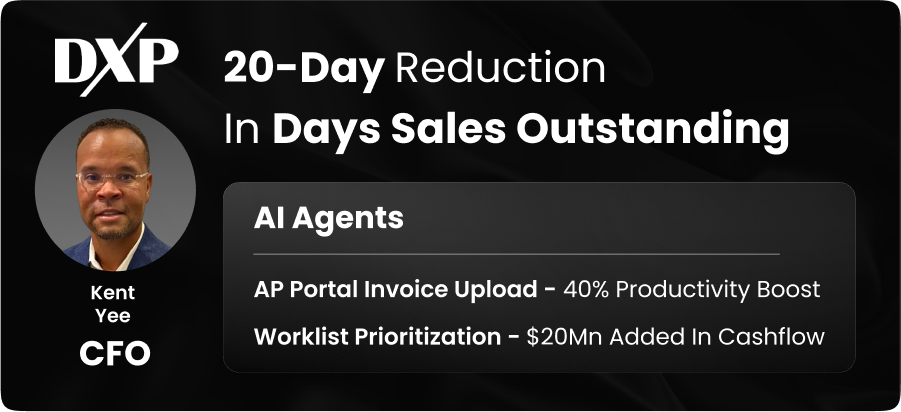
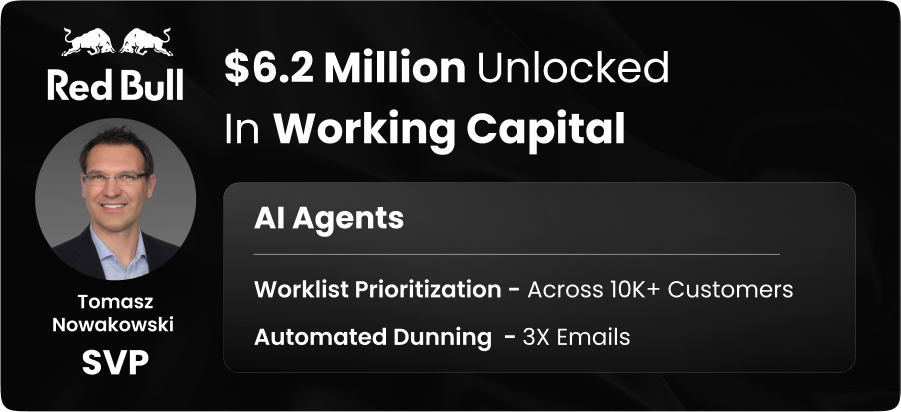
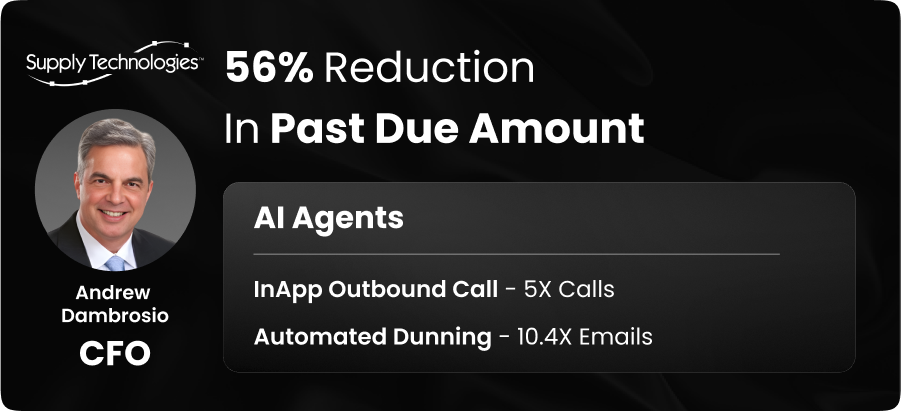
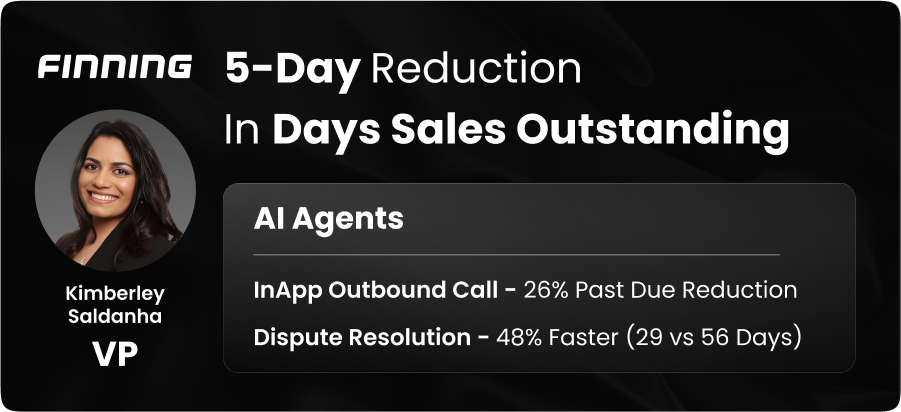
Manual handoffs. Siloed data. Slow collections. Finance teams broke the cycle with Integrated Receivables powered by agentic AI—linking credit, invoicing, collections, and cash app into one intelligent system. The result? Lower DSO, faster decisions, and millions unlocked in under 6 months.
Book a Discovery Call

An Integrated Receivables Solution connects credit, invoicing, payments, cash application, and analytics into one unified workflow. By removing disconnected tools, it helps finance teams automate manual steps, improve visibility across receivables, and manage the full invoice-to-cash lifecycle more efficiently.
An Integrated Receivables Solution uses predictive insights and automation to identify high-risk accounts earlier and prioritise actions that drive faster payments. Centralised data allows AR teams to respond proactively, reduce delays, and improve overall receivables performance without increasing manual workload.
Companies handling large invoice volumes or complex payment workflows benefit most from an Integrated Receivables Solution. CFOs, Controllers, and AR leaders use it to unify operations, improve cash visibility, and reduce inefficiencies created by multiple disconnected receivables tools or manual processes.
With AI-driven matching and automated remittance capture, an Integrated Receivables Solution helps reduce manual reconciliation errors. Payments are matched faster, exceptions are minimised, and finance teams gain clearer insights into incoming cash, improving both operational efficiency and financial reporting accuracy.
A modern Integrated Receivables Solution integrates with major ERP systems to ensure consistent financial data and smoother workflows. This eliminates duplicate data entry, improves reporting accuracy, and allows organisations to automate receivables processes without disrupting their existing financial infrastructure.
Organisations adopting an Integrated Receivables Solution often see faster invoicing cycles, improved recovery rates, and stronger cash flow visibility. Automation reduces manual effort while analytics provide insights that help teams optimise performance and make more informed financial decisions over time.
An Integrated Receivables Solution provides centralised dashboards and real-time analytics across credit, billing, payments, and collections. Finance leaders can track KPIs, identify risks early, and align receivables strategies with broader business objectives, enabling more confident and data-driven planning.
Unlike standalone applications, integrated receivables solutions combine multiple receivables functions into a single platform. This reduces data silos, improves collaboration across finance teams, and creates a consistent process flow that helps organisations manage cash flow more efficiently.
An integrated receivables platform centralises data from invoicing, payments, cash application, and analytics into unified dashboards. This real-time visibility helps teams monitor performance, identify bottlenecks faster, and make proactive adjustments that strengthen the overall invoice-to-cash process.
Modern integrated receivables software helps organisations replace manual workflows with automation and AI-driven insights. As payment channels and customer expectations evolve, businesses adopt these platforms to scale efficiently, improve accuracy, and maintain stronger control over receivables operations.