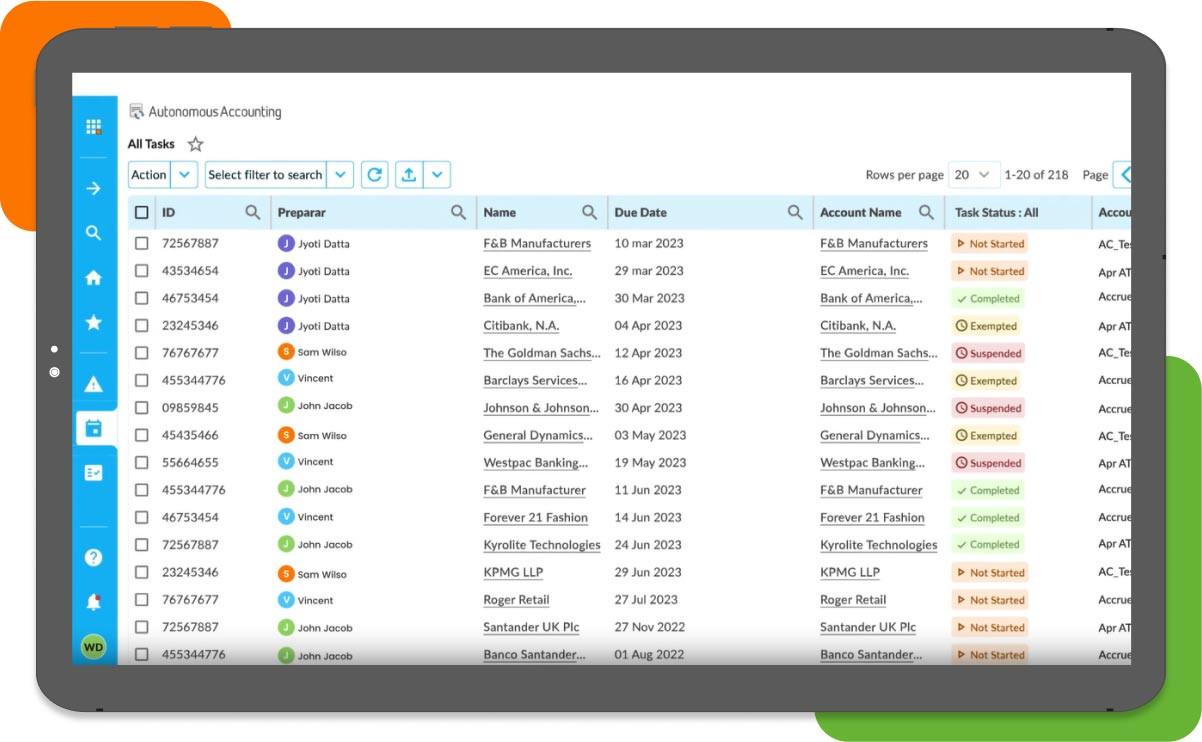
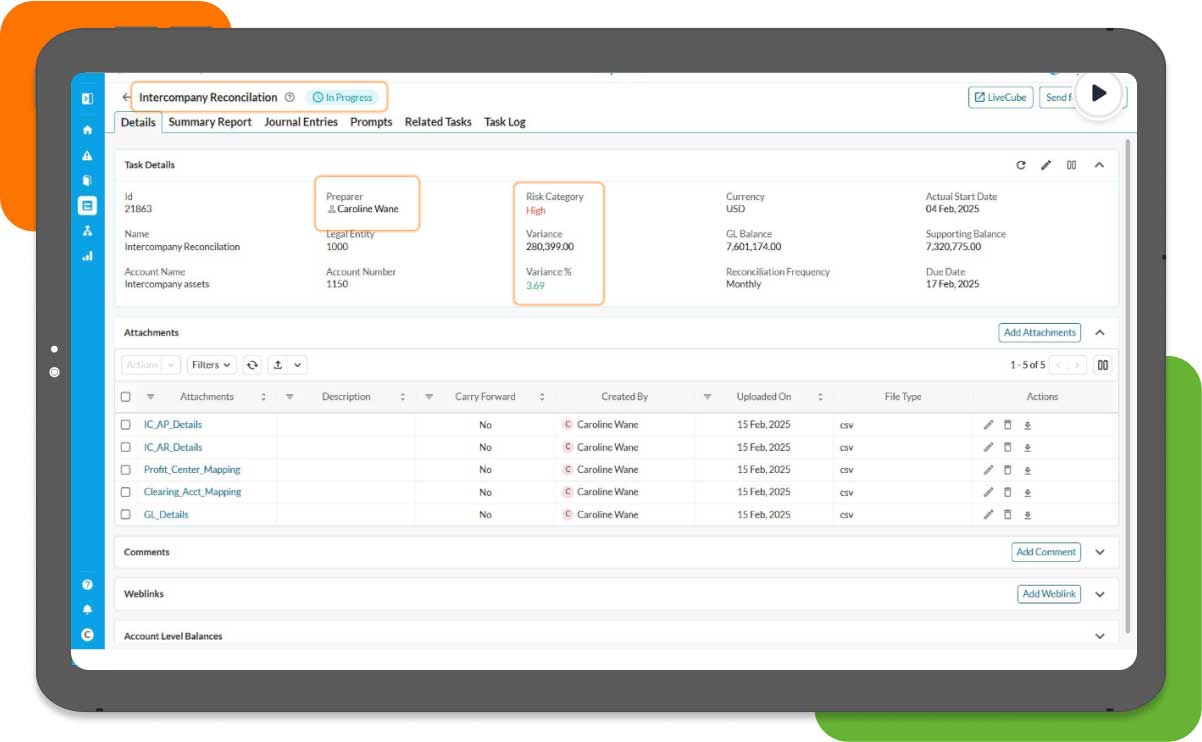
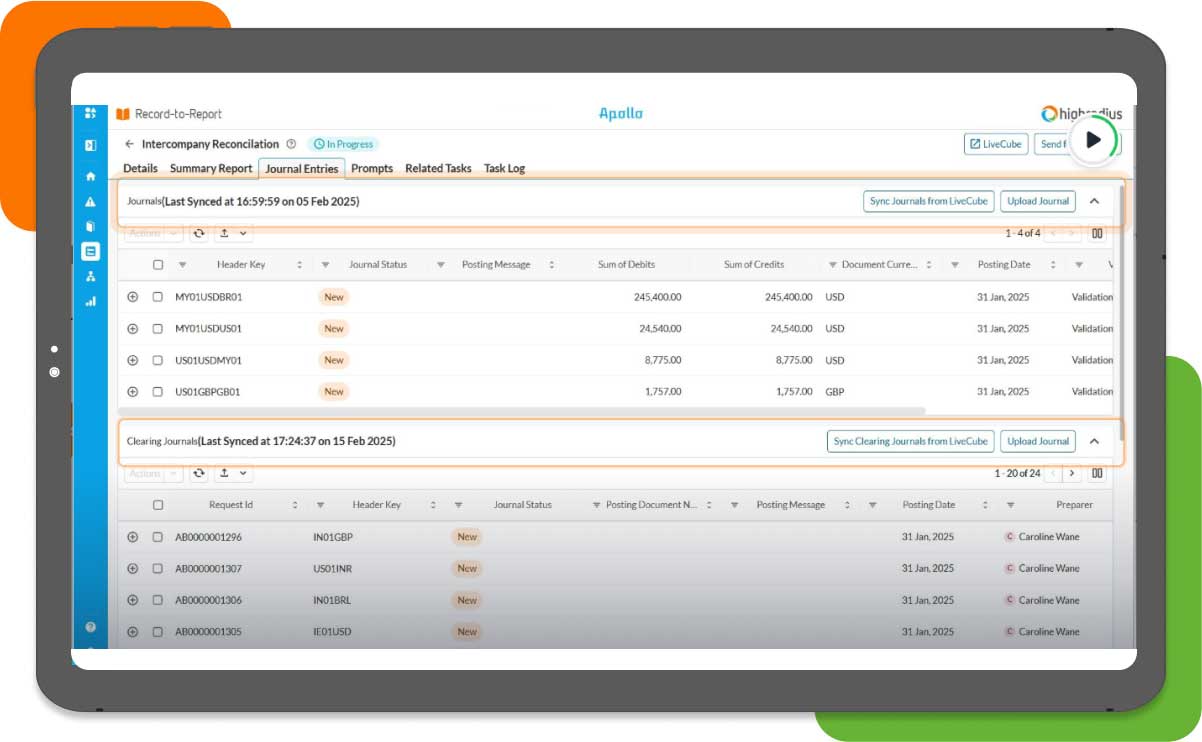
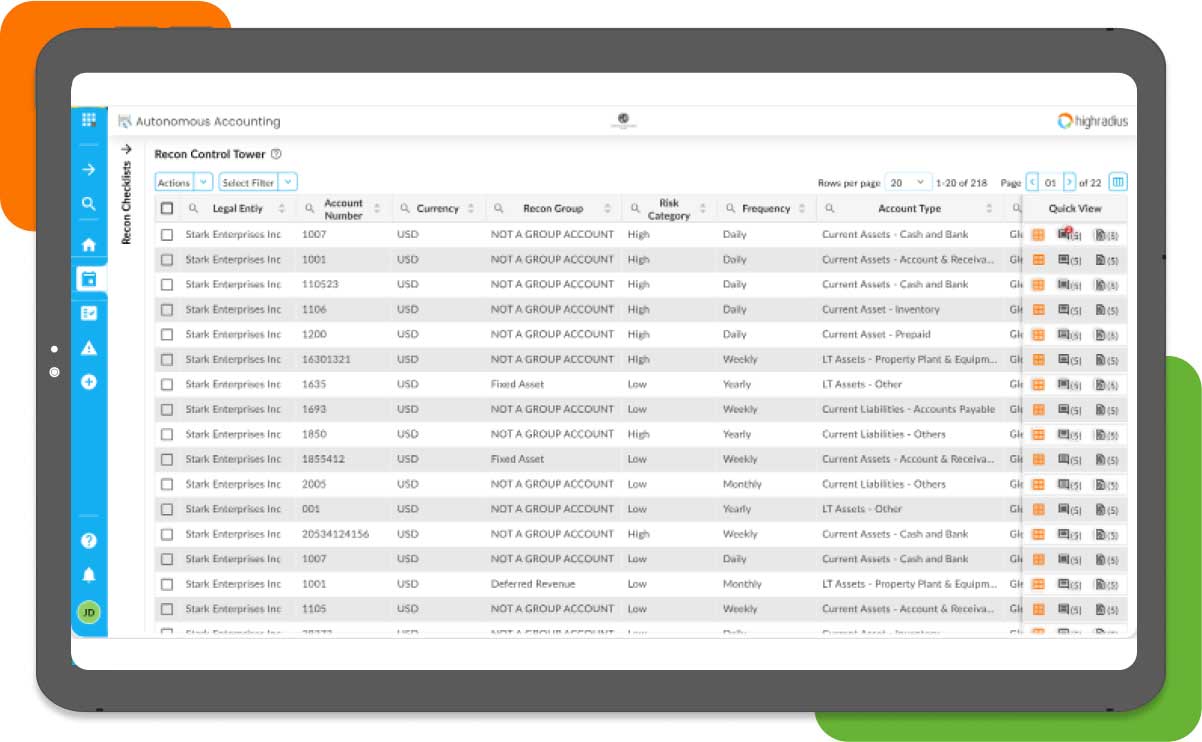
Account Reconciliation Software for a Faster Close and Improved Audit Readiness

Achieve 90% Reconciliation Automation & Reduce Month-End Workload with AI Agents

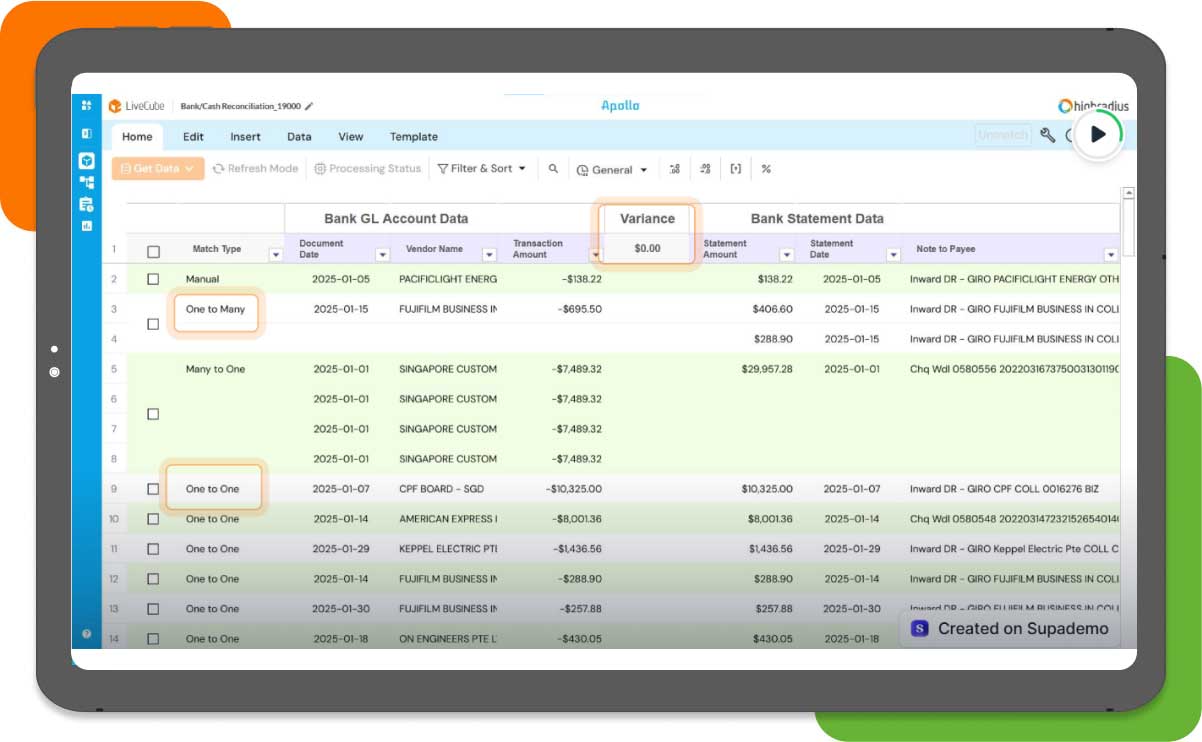
  • 95% Transaction Auto-Match with AI-driven Exception Handling
  • Eliminate Manual Entry with 95% Automated Journal Posting
  • 30% Reduction in Days to Close for a Continuous Accounting Cycle
  • Ensure 99% Reconciliation Accuracy with Standardized Audit-Ready Controls
Konica-logo

CUSTOMER SUCCESS STORY

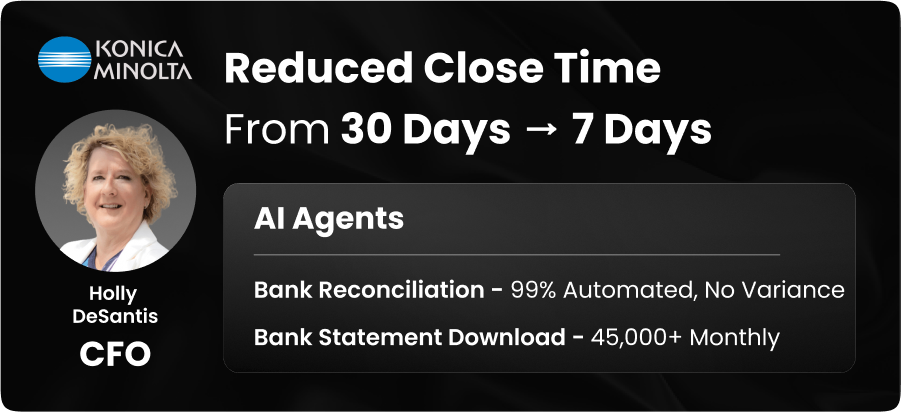
75% Faster Bank Reconciliation with AI/ML-Powered Transaction Matching

Know How
caliber-logo

CUSTOMER SUCCESS STORY

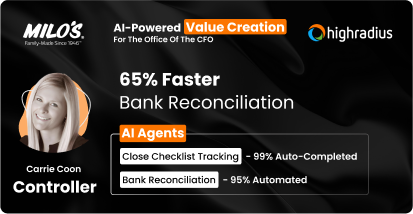
65% Faster Bank Reconciliation with Intelligent Data Extraction

Know How

Key AI Agents for Account Reconciliation Software

AI-Powered Value Creation at 1300+ Enterprises

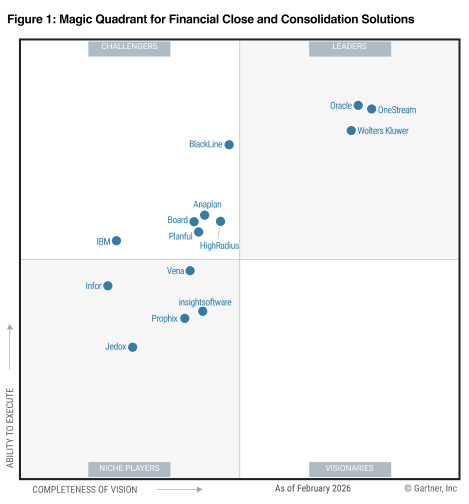
HighRadius recognized as a Challenger in the 2025 Gartner Magic Quadrant for Financial Close and Consolidation Solutions

HighRadius Named a Challenger In 2025 Gartner® Magic Quadrant™ for Financial Close and Consolidation Solutions

HighRadius stands out as a challenger by delivering practical, results-driven AI for Record-to-Report (R2R) processes. With over 200 LiveCube agents automating 60 %+ of close tasks and real-time anomaly detection powered by 15+ machine learning models, the platform drives continuous close with guaranteed business outcomes—moving beyond AI hype. HighRadius aims to achieve 90% automation by 2027 as it evolves toward full autonomy.

A Challenger in the Magic Quadrant. A Leader in Finance Innovation.

Learn how HighRadius is helping global enterprises automate, accelerate, and lead the future of the financial close.

Download the Report

How Does Automated Account Reconciliation Software Work?

  • Centralized Financial Data: Aggregate transactions from banks, ERPs, payment platforms, and subledgers into one reconciliation engine.
  • Real-Time Sync via APIs: Pull bank statements and Cash GL balances automatically through pre-built API and SFTP connectors.
  • Eliminate Manual Entry: Remove spreadsheet uploads and reduce input errors with automated ingestion pipelines.
  • Ensure Consistency: Standardize formats across multiple data sources for cleaner downstream matching.
  • Enable Scalability: Support high-volume transaction environments without increasing analyst workload.
  • Auto-Match with Rules: Apply configurable logic (amount, date, reference IDs) to reconcile transactions across ledgers.
  • Discover Matching Rules with AI: Use machine learning to identify patterns and generate matching rules based on historical reconciliation behavior.
  • Create Matching Clusters: Group related transactions across datasets for high-speed, high-accuracy reconciliation.
  • Accelerate Close: Reduce daily and month-end reconciliation cycles with intelligent automation.
  • Improve Accuracy: Deliver precise matching even in complex, multi-entity environments.
  • Flag Discrepancies Automatically: Detect missing entries, duplicates, timing gaps, or unmatched transactions instantly.
  • Review Exceptions with Context: Route exceptions for analyst validation with supporting documentation and transaction-level drilldowns.
  • Resolve at Scale: Auto-clear recurring reconciling items through rule-based logic.
  • Escalate Complex Cases: Maintain human oversight for high-risk or non-standard exceptions.
  • Reduce Risk Early: Identify anomalies such as unauthorized or fraudulent transactions before close.
  • Learn from History: Continuously retrain models based on prior matches, exceptions, and reviewer actions.
  • Refine Matching Logic Over Time: Improve auto-match rates as transaction behavior evolves.
  • Predict Risks: Surface potential cash leakage, process breaks, or system errors proactively.
  • Support Smart Decision-Making: Provide AI-driven recommendations for faster exception resolution.
  • Prepare Adjusting Journals Automatically: Generate journal entries for missed Cash GL postings or reconciliation variances.
  • Approve & Post Back to ERP: Push approved adjustments directly into systems of record through secure API integration.
  • Reduce Manual Bottlenecks: Eliminate delays caused by offline journal workflows and re-entry.
  • Ensure Audit-Ready Controls: Maintain traceability from exception → resolution → journal posting.
  • Track Progress Live: Monitor reconciliation status across accounts, entities, and teams in real time.
  • Gain Insights Fast: Use dashboards to analyze match rates, exception volumes, and trends.
  • Drive Accountability: Share reconciliation KPIs across finance leadership and controllers.
  • Enable Continuous Improvement: Use reconciliation data to optimize close performance cycle over cycle.
  • Ensure Regulatory Alignment: Automate adherence to financial compliance standards.
  • Maintain Full Audit Trails: Capture every match, exception, approval, and adjustment with timestamps.
  • Simplify Audit Prep: Generate supporting documentation instantly for internal and external audits.
  • Build Trust: Promote transparency and reliability in financial reporting.
Rising logo

HighRadius ‘Rising Star’ in ISG Provider Lens™ 2024 for Record To Report (R2R)

IDC frame

AI Driven Innovations | Comprehensive R2R Suite

Get The Report
IDC frame

Benefits of AI Agent–Led Account Reconciliation Software

With HighRadius AI agents managing reconciliations, finance teams eliminate manual errors and delays. The result: faster closes, cleaner books, and improved audit readiness.

1

Increased efficiency

HighRadius automates up to 80% of reconciliation work, helping accounting teams eliminate manual matching and repetitive close tasks. This frees up analysts and managers to focus on high-value review, controls, and business-critical reporting instead of spreadsheet-driven reconciliations.

2

Reduced errors and improved accuracy

With AI-driven matching and built-in audit controls, HighRadius delivers 99% reconciliation accuracy, minimizing manual errors that lead to rework, misstatements, and audit findings. This improves confidence in financial reporting and supports better decision-making for CFOs and controllers.

3

Scalability

As transaction volumes grow, our automated reconciliation software scales seamlessly across entities and account types, ensuring 100% GL account coverage without adding headcount. Finance teams can standardize reconciliation processes and avoid bottlenecks caused by SME dependency.

4

Real-time insights

Our automated account reconciliation software provides real-time dashboards, alerts, and reconciliation summaries to improve visibility across close activities. Teams can instantly identify unreconciled items, prioritize corrective actions, and reduce close timelines by 30%.

5

Cost savings

By achieving a 90% auto-match rate, HighRadius significantly reduces manual intervention and review effort. Accounting teams can close faster without long month-end hours, improving efficiency while lowering operational costs over time.

6

Enhanced Fraud Detection

Sophisticated AI/ML models continuously flag anomalies, missing entries, and unusual transactions early in the close cycle. This strengthens compliance, supports audit readiness, and helps prevent fraud or financial leakage before it impacts reporting.

Must-Have Resources For Account Reconciliation Success

11 Global Payment Formats

Top 10 AI Use Cases for
Account Reconciliation

Discover how AI is transforming account reconciliation with real-time insights and automated workflows.

Download Ebook
Maximize Revenue: Step-By-Step Guide to Implementing an Automated Billing System

Accounting Software
Vendor Guide

Find the right accounting software for your business with this comprehensive vendor comparison guide.

Download Buyer Guide
The Ultimate Guide to Adopting B2B Payment Processing Solutions in 2024

Impact of AI in Finance
and Accounting

Discover how AI is transforming finance team, from faster close to autonomous reconciliation and forecasting.

Download Ebook

Reconcile any Type of Financial Data with Account Reconciliation Software

Experience 30% Faster Reconciliation

Streamline your bank reconciliation process with intelligent automation that ensures real-time transaction matching and risk management. Our AI-driven solution automates data imports, synchronizes bank statements with cash G/L, and resolves discrepancies across multiple financial systems.

  • Bank statements vs. cash G/L sync
  • AI-driven rule discovery and automated matching
  • Unified exception handling and journal posting
Learn More

Boost Reconciliation Accuracy by 99%

Achieve real-time precision with intelligent automation designed to simplify even the most complex balance sheet reconciliations. Our AI-powered solution effortlessly handles high transaction volumes across multiple accounts, data sources, and entities, eliminating manual work while ensuring accuracy and compliance.

  • Cash accounts vs. bank statements
  • Prepaid expenses vs. general ledger
  • Fixed assets vs. depreciation schedules
Learn More

Achieve 100% GL account coverage with AI

Eliminate manual bottlenecks and accelerate financial close with an intelligent GL reconciliation solution. Our AI-driven software automates high-volume transaction matching, streamlines intercompany postings, and ensures compliance with built-in policy controls.

  • Bank accounts vs. general ledger
  • Intercompany transactions vs. general ledger
  • Revenue and expense accounts vs. general ledger
Learn More

Automate 80% of Reconciliation Tasks

Simplify and accelerate payment reconciliation with intelligent automation that matches transactions in real time, eliminates discrepancies, and ensures financial accuracy. Our solution seamlessly integrates with multiple payment channels, ERPs, and bank statements, reducing manual effort and minimizing errors.

  • Multi-channel payment matching and validation
  • Auto-identification of unapplied and misapplied payments
  • Seamless exception handling and adjustment workflows
Learn More

ERP Integration for Automated Reconciliation

HighRadius’s automated account reconciliation software is ERP-agnostic and integrates seamlessly with leading systems such as SAP S/4HANA, Oracle Fusion, Microsoft Dynamics 365, and NetSuite. It automates bi-directional data flow across ERPs and global bank portals to eliminate manual reconciliation gaps. For organizations using NetSuite, HighRadius further streamlines NetSuite account reconciliation with real-time transaction syncing via API integrations with 10,000+ financial institutions, keeping your finance environment audit-ready.

50+ ERPs

Diagram showing seamless integrations between reconciliation software, major ERP systems, payment processors, and global banks

10+ Payment Processors

Diagram showing seamless integrations between reconciliation software, major ERP systems, payment processors, and global banks

100+ Banks

Diagram showing seamless integrations between reconciliation software, major ERP systems, payment processors, and global banks

Within 6 Months, Our Account Reconciliation Software Delivers

90% Reconciliation Automation
30% Faster Reconciliation
50% Improved Productivity

From Automated to Autonomous: Why Agentic AI in Account Reconciliation is the Future

Traditional reconciliation tools stop at rules-based automation.HighRadius goes further with specialized AI reconciliation agents that automate high-volume processes like bank, intercompany, POS, and cash accounting reconciliations, reducing manual effort across every close cycle.

icons

Bank Reconciliation Agent

Automates matching between Cash GL and bank statement transactions, identifies reconciling items, and prepares journals for missed entries through API-based bank connectivity.

icons

Intercompany Reconciliation Agent

Eliminates manual AR/AP matching across entities by discovering trading relationships, applying intelligent matching logic, and automatically generating intercompany journals.

icons

POS Reconciliation Agent

Reconciles daily POS revenue against ERP and bank deposits, groups transactions into match clusters, and creates cash adjustments for discrepancies — with human review only for true exceptions.

icons

Cash Accounting Agent

Detects non-AR cash movements directly from bank data, enriches transactions with AI, and automates journal creation and posting back into the ERP with approval workflows.

What is Account Reconciliation?

Automated account reconciliation uses advanced technology to automatically compare and match financial records across systems, like bank statements, ledgers, and internal records. Unlike manual methods, it streamlines the reconciliation process, making it faster, more accurate, and less resource-intensive.

See How It Works
Abstract vector graphic illustrating a streamlined account reconciliation workflow

Manual vs. Automated Account Reconciliation

For decades, spreadsheets have been the cornerstone of finance and accounting operations. Despite advancements in technology, many finance teams still depend on these outdated tools to handle the complex reconciliation processes needed in today’s fast-paced organizations. Let’s explore the key differences between manual and automated account reconciliation:

Aspect Manual Account Reconciliation Automated Account Reconciliation
Efficiency Time-consuming, especially for businesses with high transaction volumes. Further reconciliation is often delayed until the month-end close. Streamlined, continuous processes that increase speed and accuracy, allowing for faster reconciliations and better workflow management.
Accuracy Prone to human errors due to manual intervention, especially during the month-end close. Reduces human errors by automating transaction matching and data aggregation, ensuring accurate and consistent results.
Standardization Lack of uniformity across departments or subsidiaries leads to inconsistencies and errors. Standardized workflows across all users and departments, ensuring consistency and reducing errors.
Risk & Compliance Increased risk due to missed fraud detection and lack of pattern analysis. Non-compliance issues may arise from inconsistent practices. Enhances compliance by enforcing defined rules and using AI to detect anomalies and potential fraud patterns, reducing organizational risk.
Visibility & Tracking Difficult to track changes with disconnected spreadsheets and asynchronous communication, leading to bottlenecks. The centralized platform provides real-time visibility into the reconciliation process, improving accountability and reducing bottlenecks.
Data Management Relies on manual entry and multiple spreadsheets, increasing the chance of discrepancies and errors. Automatically integrates and standardizes data from multiple sources, ensuring accuracy and real-time access to the latest information.
Technology Integration Limited use of technology, often relying on basic spreadsheets and manual comparison. Leverages AI, ML, and RPA for intelligent transaction matching, exception handling, and pattern analysis.
Exception Handling Exception handling is manual, prone to delays, and often overlooked. Automated anomaly detection and exception handling ensure timely resolution of discrepancies, improving cash flow management.
Reporting & Analytics Limited or delayed reporting due to manual processes. Lack of insights into transaction trends and potential issues. Real-time reporting and advanced analytics provide insights into transaction patterns, helping to identify and resolve issues promptly.
Compliance & Audibility Inconsistent record-keeping and difficulty in compliance during audits.showcasing  Enforced audit trails and automatic compliance checks ensure that organizations meet regulatory standards with minimal manual effort.
Finance team working together to streamline account reconciliation

Take Your Financial Close Process to the Next Level with Reconciliation Automation!

Manual Templates are a good starting point for organizing data, but they still require significant manual effort for matching transactions and identifying discrepancies. which can be time-consuming and prone to human error.

Automation elevates reconciliation by integrating AI to handle the heavy lifting. AI-powered reconciliation software automatically matches transactions, flags discrepancies, and provides real-time insights, enabling a more efficient and accurate workflow. This level of automation not only reduces the time spent on month-end close but also boosts confidence in financial reporting.

By upgrading to an automated reconciliation solution, you shift from a reactive approach to a proactive one, empowering your team to focus on more strategic tasks rather than mundane, repetitive work. With HighRadius Automated account Reconciliation Software, you can experience the full benefits of automation: seamless integration, unparalleled speed, and zero manual errors.

Download Solution Brief

How To Choose The Right Provider for Automating Account Reconciliation

Selecting the best automated account reconciliation software can be complex. To help guide you through the process, here’s a four-step approach to choosing a solution that maximizes ROI, boosts efficiency, and drives savings.

A guide on choosing the best automated account reconciliation software for financial close and audit readiness

1. Identify Current Challenges and Inefficiencies

Consult with accountants, accounting managers, and controllers to understand their main challenges when closing the books. Identify common errors and omissions that occur during reconciliation. Review audit reports from previous years to highlight recurring issues and recommended actions. Examine industry best practices for insights, and consider partnering with finance consultants to identify gaps and develop a comprehensive plan for process transformation.

2. Assess Organizational Readiness

A significant number of companies are preparing to digitally transform their finance functions with technologies like cloud computing, AI, analytics, and RPA. However, successful digitization of account reconciliation and financial close requires strong data management infrastructure and policies. Use these questions to evaluate your organization's readiness:

  • Are all invoices in digital or electronic format?
  • Do you have a central repository that consolidates finance and accounting data from multiple sources?
  • Are paper-based systems completely avoided by your teams?
  • Is your accounting system hosted in the cloud?

If you answered "yes" to these, your organization is likely ready to implement AI-driven account reconciliation solutions.

3. Set Goals and Expectations

Automating your reconciliation process doesn’t mean immediate, radical changes or the elimination of your accounting team. It’s important to set realistic goals for AI implementation to accurately measure ROI. With HighRadius’ AI-powered account reconciliation solutions, you can aim for:

  • A 30% reduction in month-end close time
  • 100% general ledger account coverage Automation of 50% of close tasks
  • A 90% auto-matching rate for transactions
  • 95% automation in journal entry posting

Setting clear, achievable goals will help align expectations and optimize the effectiveness of your automation investment.

4. Identify the Right Solution/Vendor

AI investments are major decisions that can’t be easily reversed, so thorough vetting of potential vendors is essential. Consider the following when choosing a provider:

  • Features and capabilities of the solution
  • Cost-effectiveness and pricing structure
  • Quality of the training data used for the AI algorithm
  • Vendor support, including update frequency, security features, system uptime, and dispute resolution response time

Taking the time to evaluate these factors will ensure you choose a vendor that fits your specific needs and provides long-term value.

Value Creation

From Strategy to Millions—Real Bottom-Line Value Created in 6 Months

Automate reconciliations, eliminate exceptions faster, and deliver audit-ready financials with Agentic AI for accounting.

Book a Discovery Call

FAQS: Automated Account Reconciliation Software

What is automated reconciliation software?

Automated reconciliation software simplifies the task of comparing and verifying financial records against external statements, like bank statements, to ensure their accuracy. It helps uncover discrepancies between internal records and external documents, enhancing reconciliation process efficiency and minimizing manual errors.

This automated account reconciliation solution integrates with accounting systems to automatically match transactions from different sources, including bank statements and ledgers. It highlights discrepancies for further examination, provides resolution tools, and generates comprehensive audit-ready reports, ultimately saving time and enhancing compliance with financial regulations.

Why should businesses automate account reconciliation?

An account reconciliation tool works by aggregating data from ERPs, bank portals, and payment gateways through API or SFTP connections. It then uses an automated transaction-matching engine to compare records by amount, date, and reference IDs. Any discrepancies or anomalies are flagged in real time and routed to a centralized dashboard for review, helping finance teams resolve issues faster, reduce manual checks, and improve reconciliation accuracy.

How does an account reconciliation tool work?

Automatic reconciliation software automatically matches transactions from multiple sources, such as bank statements, ledgers, and invoices. It uses advanced algorithms to identify any discrepancies, enabling finance teams to quickly address issues, reducing manual checks, and improving accuracy.

The automated reconciliation system continuously monitors transactions and provides real-time alerts for any mismatches. By centralizing financial data and automating comparisons, businesses can enhance the efficiency and accuracy of their reconciliation efforts.

What are the benefits of automated account reconciliation software?

Automated reconciliation software simplifies the reconciliation process by leveraging AI. With high auto-match rates and up to 95% journal-posting automation, it significantly reduces time spent on manual tasks. This enables finance teams to focus more on strategic activities.

Additionally, reconciliation automation tools boost productivity, speed up financial close cycles, and improve financial reporting accuracy by minimizing the risk of errors. This results in better compliance with regulatory requirements, ensuring businesses maintain accurate and transparent financial records.

How to choose the best software for automated account reconciliation?

When performing an account reconciliation software comparison, enterprise buyers should prioritize these three criteria:

ERP Connectivity: Does it provide deep integration with systems like SAP, Oracle, and NetSuite?
Matching Sophistication: Can the AI handle one-to-many or many-to-many matches without manual rules?
Journal Automation: Does the tool automatically post adjusting entries back to your General Ledger?

Does HighRadius integrate with NetSuite for account reconciliation?

Yes. HighRadius provides a certified connector for NetSuite account reconciliation. Our software pulls real-time trial balance and transaction data directly from NetSuite, automates the matching process against external bank feeds, and posts journal entries back to the NetSuite GL to ensure a continuous, audit-ready close.

Why use third-party account reconciliation software instead of native ERP tools?

While most ERPs have basic matching features, they are often limited to simple one-to-one rules. HighRadius provides a more robust account reconciliation system that uses AI to handle messy data, automates intercompany eliminations, and provides a unified dashboard for teams working across multiple ERP instances.

How does the best account reconciliation software support audit-readiness and compliance?

By automating the matching of entries, flagging exceptions, and maintaining a complete audit trail, account reconciliation software helps ensure your financial records are accurate, traceable, and compliant. When every transaction is captured, reconciled, and logged with supporting documentation, you reduce the risk of misstatement, accelerate the close cycle, and build stronger financial control.

Can account reconciliation software handle high-volume, multi-source data?

Yes. Modern transaction reconciliation software can ingest data from banks, ERPs, payment platforms, and other financial systems, then automatically match and reconcile thousands (or even millions) of transactions every cycle. That means finance teams are freed from manual spreadsheets and instead get scalable, accurate workflows capable of supporting growth and complexity.

Accounts Receivable Solutions

Accounts Receivable Software | Collection Software | Cash Application Automation | Credit Risk Management | Credit Management | Credit & Collection | EIPP | Electronic Invoicing | Invoice to Cash | Invoice Collection | B2B Payments | Order to Cash | O2C Analytics | Integrated Receivable | Deduction Management | Credit Application | Credit Scoring | Exception Management | Dispute Management | Trade Promotion | Dunning Management | Financial Data Aggregation | Remittance Processing | Collaborative Accounts Receivable | Remote Deposit Capture | Credit Risk Monitoring | Credit Decisions Engine

Accounts Payable Solutions

AP Automation | Invoice Processing | Invoice Scanning & Capture | Invoice Coding | Invoice Approval | Invoice Matching | Invoice Management | Supplier Management | Supplier Onboarding | Dynamic Discounting

Financial Reconciliation & Close Solutions

Account Reconciliation | Financial Close | Bank Reconciliation | Balance Sheet Reconciliation | Payment Reconciliation | Transaction Matching | SOX Software | General Ledger Reconciliation | Journal Entry | Variance Analysis| Financial Consolidation | Financial Reporting

Treasury & Cash Management Solutions

Treasury Management | Cash Flow Forecasting | Cash Management | Cash Flow Management | Revenue Recognition | Liquidity Management

Resources:

Month End Close Process | SOX Controls | Transactional Reconciliation | Automated Reconciliation | Intercompany Accounting | Intercompany Transactions | Matching Principle In Accounting | Working Capital Management | Payment Reconciliation | ERP vs Accounting Software | Cost Allocation | Intercompany Reconciliation | Payroll Reconciliation | Automated Accounting | Credit Card Reconciliation | Financial Close Management | Financial consolidation tools | What is Account Reconciliation | What is General Ledger Reconciliation | Bank Reconciliation

Ebooks, Templates, Whitepapers & Case Studies:

Financial Close Buyers Guide | ROI of Automated Accounting | Automated Financial Close Use Cases | AI In Account Reconciliation | Impact Of Implementing AI In R2R Processes | Month End Close Accuracy | Bank Reconciliation Template | Month End Close Checklist | Anomaly Management Dashboard | Financial Close Vendor Evaluation Scorecard | Variance Analysis