10+ AI Agents manage supplier onboarding, PO tracking, payment status with enterprise-level Supplier Management Software
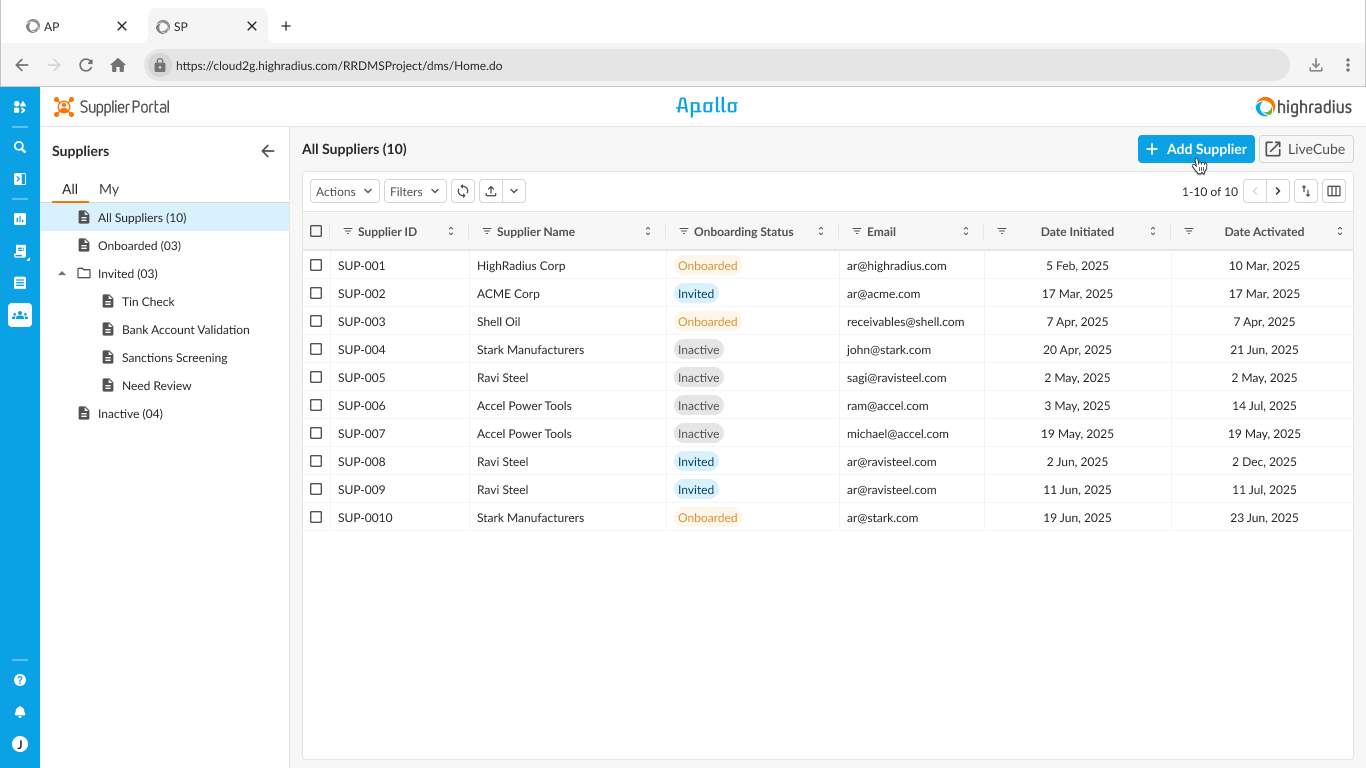
Automate the vetting and integration of new vendors through a structured workflow for profile creation, document collection, and internal approvals.

Review new supplier requests and update existing financial data, ensuring all changes are integrated into the master data or ERP system.
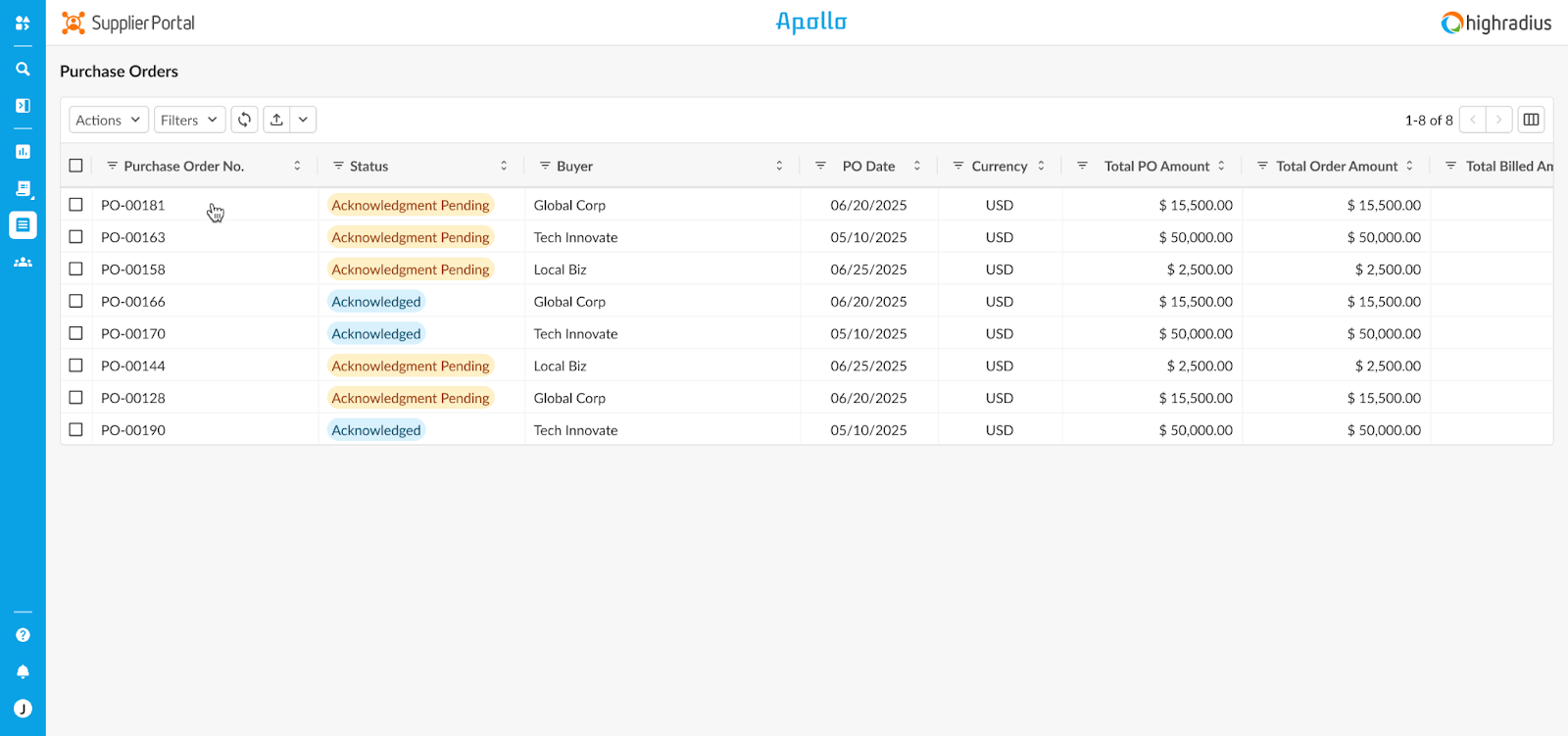
Provide suppliers with a real-time view of all orders pulled from the ERP, ensuring visibility into any amendments and the current status.

Enables your suppliers to confirm, reject, or partially accept purchase orders while centralizing fulfillment documents for verified proof of shipment.
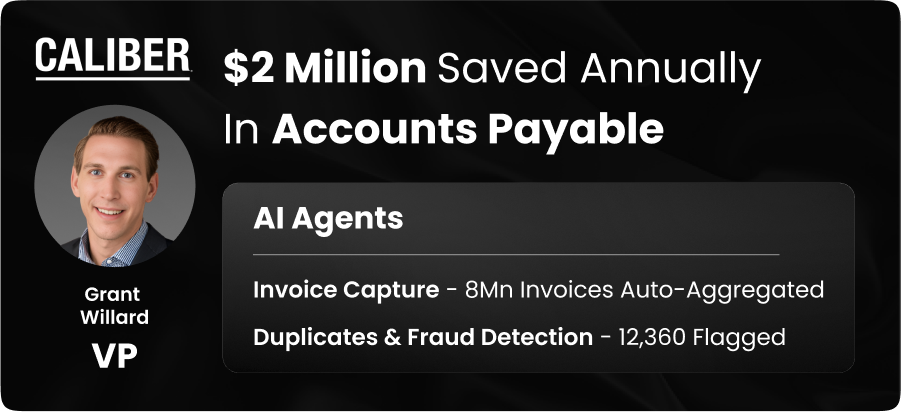
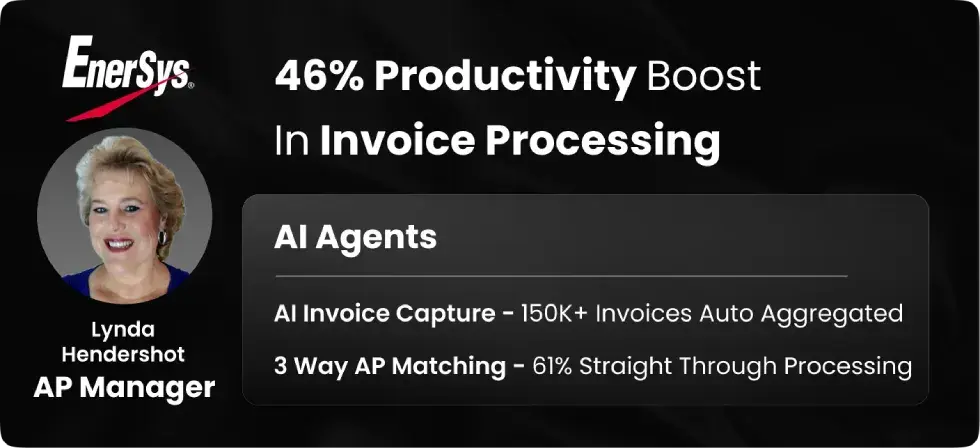
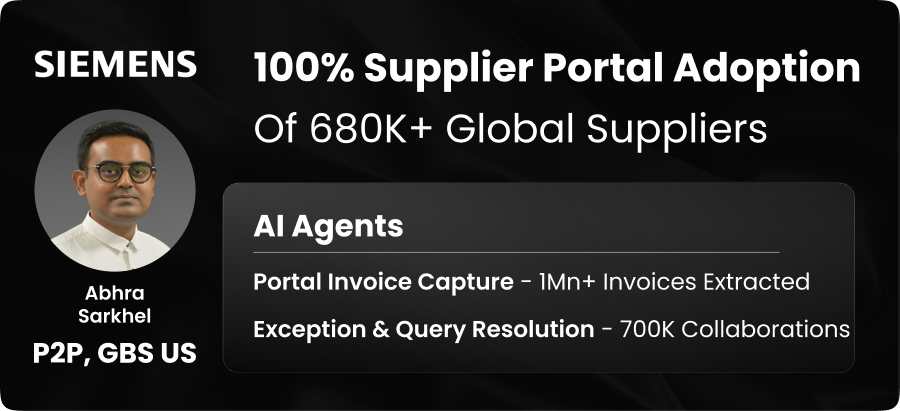
Extracts invoice data from various technical formats, ensuring all billing information is synchronized with your portal.

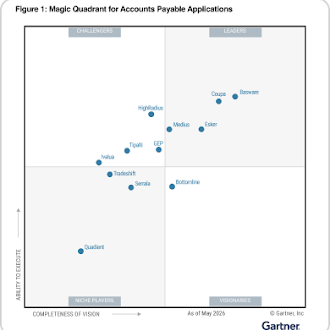

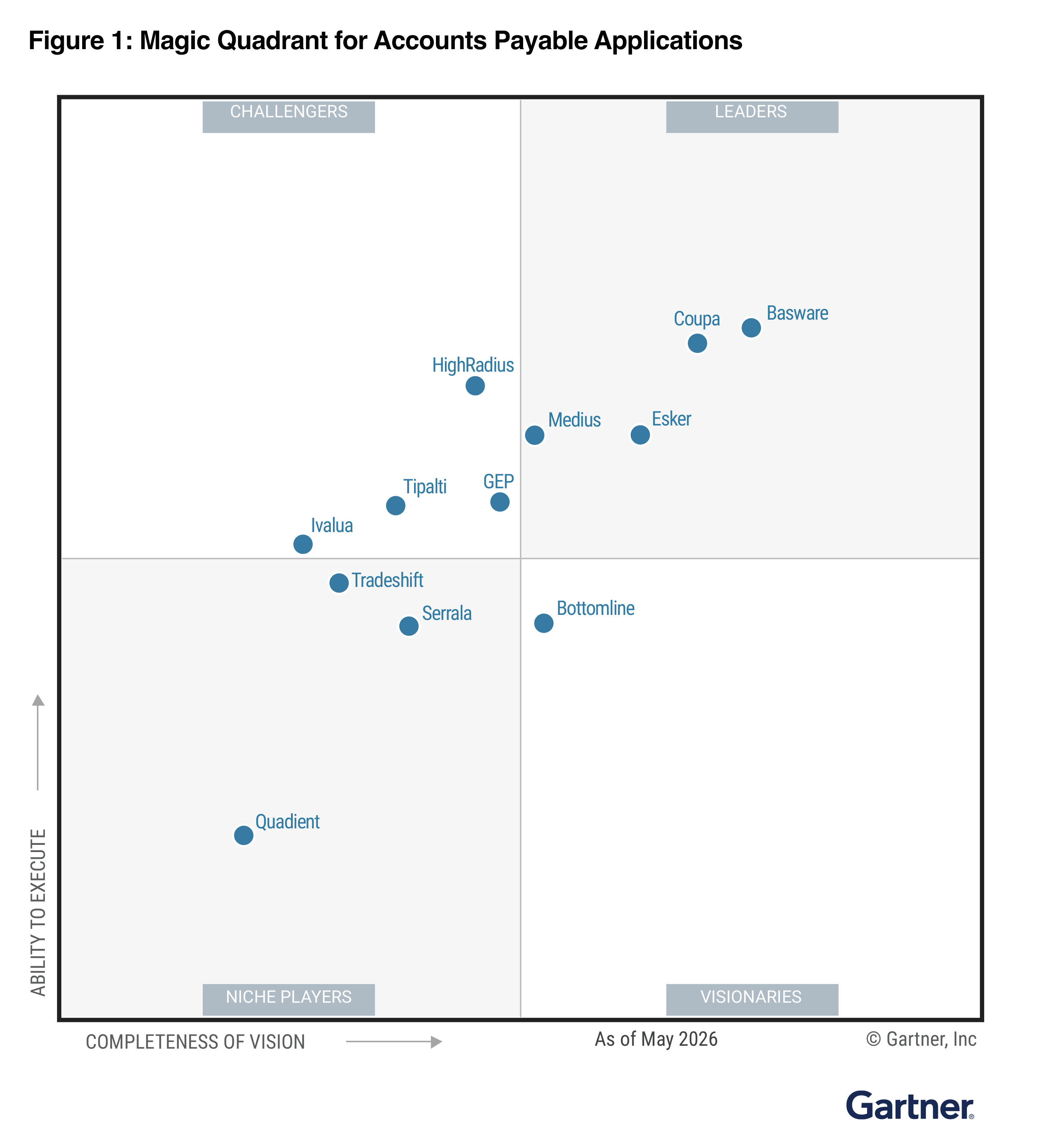
HighRadius recognized By The Hackett Group® as an Advanced Vendor for Accounts Payable Software
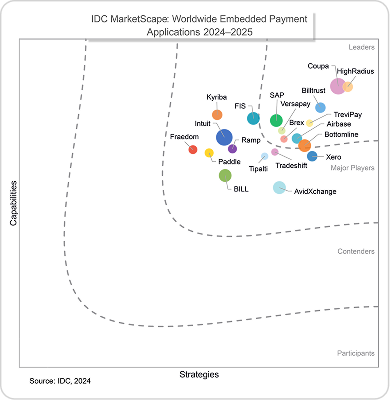

HighRadius Named As A Leader For Worldwide Embedded Payment Applications 2024–2025.
AI-powered supplier management software streamlines the supplier lifecycle by automating onboarding, collaboration, compliance, and risk management. By centralizing supplier data, teams gain better visibility into supplier performance, identify supplier risk earlier, and make informed decisions faster.

Automated supplier management software eliminates manual interventions, streamlining the supplier onboarding process. With self-service registration and AI-driven data validation, businesses can onboard vendors faster, reducing delays and administrative workload while ensuring compliance.
A centralized supplier portal software improves communication by providing suppliers with real-time access to invoice statuses, payment tracking, and document submissions. Automated notifications and workflow tracking enhances transparency and reduces back-and-forth communication improving supplier relationships.
By digitizing supplier interactions and automating invoice submission and approval, supplier management solutions significantly reduce manual errors. Businesses can ensure data accuracy, streamline workflows, and avoid inefficiencies caused by human intervention.
Supplier management software enhances financial efficiency by enabling automated dynamic discounting. Suppliers can offer early payment discounts, while businesses benefit from improved liquidity management. AI-powered reconciliation ensures timely and accurate payments, strengthening supplier trust.
A well-integrated supplier management system syncs with ERP platforms, ensuring real-time data flow between procurement, finance, and accounts payable teams. This eliminates data silos, improves financial accuracy, and enhances decision-making by providing a comprehensive view of supplier transactions.
Supplier management software streamlines the entire supplier lifecycle through a connected, automated workflow. It simplifies supplier onboarding and compliance checks, improves visibility into orders and invoices, and supports analytics and dispute resolution—helping AP teams reduce manual work, strengthen supplier relationships, and maintain greater control over supplier operations. .

AI in supplier management automates the lifecycle of vendor data, from initial screening to final payment. It utilizes machine learning to validate banking details and tax compliance in real-time while proactively identifying risks and anomalies across your entire supply chain. By digitizing onboarding, offboarding and master data updates, the system ensures your vendor records remain synchronized and audit-ready without manual intervention.
AI Agents streamlines the procurement cycle by automatically pulling Purchase Orders from your ERP and process eInvoices in formats like EDI, XML, or PEPPOL. Integrated analytics transform all of this raw data into actionable insights on spends, invoice and payment status trends. Automated status tracking also simplifies relationship management by providing suppliers with full transparency into their fulfillment and payment workflows.

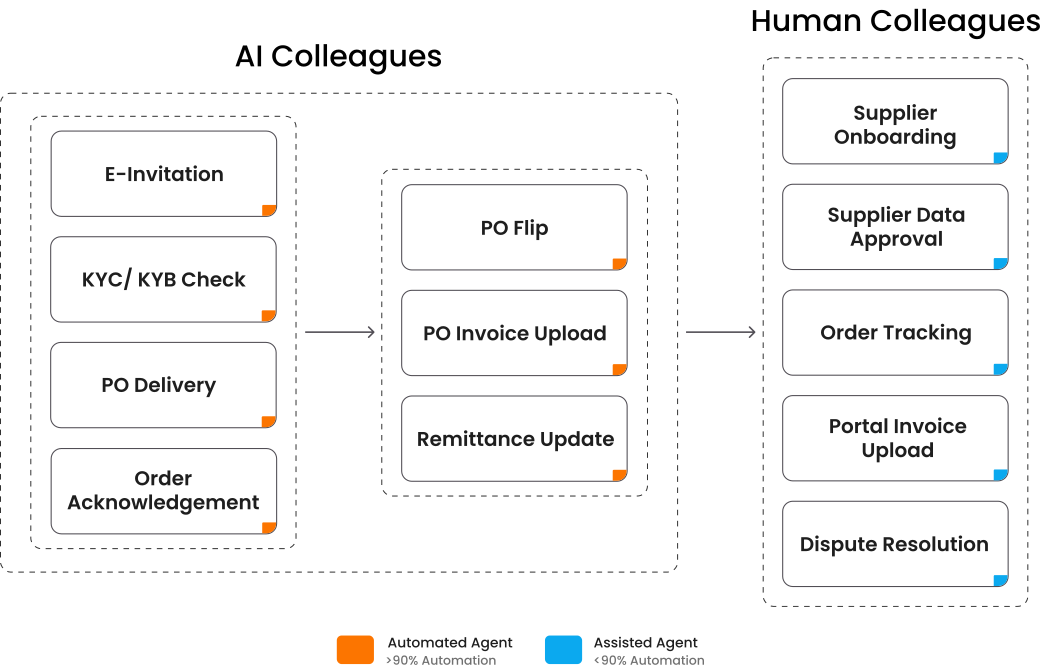
Agentic AI orchestration enables supplier management software to coordinate AI agents and human teams across the supplier lifecycle. It intelligently assigns tasks, routes exceptions, and connects workflows, ensuring the right actions are completed at the right time with minimal manual intervention .

Autonomous onboarding moves beyond simple digital forms to self - identity verification. The system independently executes global sanctions screening and verifies bank ownership via "penny drop" logic without human intervention. By autonomously cross-referencing master data and ensuring policy adherence, it eliminates the need for manual vetting.

Transitioning from automated PO delivery to autonomous fulfillment enables real-time tracking of the entire order journey. The software independently monitors delivery statuses at PO level and maintains an active balance tracker without staff involvement. Instead of manual follow-ups for shipping notices, the system syncs the procurement records with the supplier's actual progress.

Autonomous invoicing replaces traditional OCR-based data entry with straight-through execution and direct ERP integration. These systems eliminate the "human-in-the-loop" requirement for routine processing and ensure a touchless journey from receipt to ledger.

AI Agents provide proactive financial visibility. The system offers real-time financial summaries and payment status updates without human assistance. When discrepancies occur, it autonomously identifies root causes, gathers audit trails, and routes them to the correct internal stakeholder.
Supplier management software replaces manual, fragmented processes with AI-driven automation across the supplier lifecycle. It helps businesses track supplier performance, keep supplier information in one place, automate routine tasks, and proactively manage supplier risk with greater efficiency.
| Feature | Automated | Manual |
|---|---|---|
| Onboarding & Activation | Agents autonomously send invitations, guide profile creation, and manage document collection. | Teams manually draft emails, chase missing documents. |
| Order Visibility | Suppliers get a synchronized, real-time view of POs with autonomous status tracking from the ERP. | Buyers and suppliers spend hours on phone calls and email threads to confirm order receipt and delivery status. |
| Communication & Collaboration | Autonomous agents centralize communication and documentation, providing a unified interface for real-time conflict resolution. | Businesses rely on scattered emails and spreadsheet trackers, resulting in missed updates, unresolved disputes affecting supplier quality management. |
| Payment Security | System performs autonomous bank account validation through "penny drop" and instant linking to verify ownership securely. | Verification relies on manual checks of banking details and contract terms, creating high vulnerability to fraud and financial penalties. |
| Identity & Risk Shielding | Agents independently execute real-time Tax ID validation, address verification, and global sanctions screening to ensure regulatory compliance. | Manual data entry and human-led vetting increase the risk of incorrect details, duplicate records, and significant compliance violations. |
Speed Up Supplier Onboarding & Approval
Automated supplier management software eliminates manual interventions, streamlining the supplier onboarding process. With self-service registration and AI-driven data validation, businesses can onboard vendors faster, reduce administrative workload, and ensure compliance from day one.
Strengthen Supplier Collaboration
A centralized supplier portal improves communication by giving suppliers real-time access to invoice statuses, payment tracking, and document submissions. Automated notifications and workflow tracking enhance transparency, reduce back-and-forth communication, and improve supplier relationships.
Minimize Manual Effort & Errors
By digitizing supplier interactions and automating invoice submission and approvals, supplier management solutions significantly reduce manual errors. Businesses can ensure data accuracy, streamline workflows, and eliminate inefficiencies caused by manual processes.
Optimize Cash Flow & Payments
Supplier management software enhances financial efficiency with automated dynamic discounting and AI-powered reconciliation. Businesses improve liquidity management, ensure timely and accurate payments, and strengthen supplier trust through smarter payment processes.
Ensure Seamless ERP & AP Integration
A well-integrated supplier management system syncs with ERP platforms to enable real-time data flow across procurement, finance, and accounts payable teams. This eliminates data silos, improves financial accuracy, and supports better decision-making with a unified supplier view.
A supplier management system is a platform used to onboard and manage the lifecycle and relationship of an organization’s vendors. It centralizes suppliers’ data to ensure compliance, monitor performance, and coordinate procurement activities with a single source of truth.
HighRadius claims to not charge until value is realized. The cost of a supplier management system depends on various factors. It scales based on the complexity of your operations and the level of automation required. Factors that determine the total cost of investment are:
Businesses can see up to 90% reduction in supplier onboarding time depending on the software they use. Best in class softwares like HighRadius can significantly decrease manual data entry time through automation. By digitizing tasks like bank updates and PO tracking, AP teams eliminate hours of administrative follow-up.
To calculate ROI, divide the net annual benefits (savings + productivity gains – software costs) by the total cost of the software.
The Supplier Relationship Management (SRM) process follows a structured lifecycle to ensure suppliers are qualified and performance is maintained.
Supplier Management is a broad function focused on the entire lifecycle of a vendor relationship, whereas Supplier Information Management (SIM) is a subset of Supplier Management as an umbrella focused strictly on data integrity and compliance.
Supplier Management is operational, focusing on the flow of goods and money (POs and Invoices). SIM is foundational, acting as the data gatekeeper to ensure that the entities involved in those transactions are vetted and their information is synchronized across your ERP.
Supplier Management is the operational process of managing data and transactions, while Supplier Relationship Management (SRM) is the strategic approach to maximizing the value of those partnerships. Supplier management is more transaction focused ensuring invoices and POs are processed correctly. Supplier relationship management software is more value driven and identifies opportunities for innovation and mutual growth with key partners.
Supplier management software centralizes supplier records, automates routine workflows, and improves visibility into supplier performance. It helps businesses streamline the supplier lifecycle, reduce manual work, manage supplier risk, strengthen supplier compliance, and improve collaboration across procurement and AP teams.
Supplier management software helps organizations manage supplier risk by centralizing supplier information, monitoring compliance requirements, and tracking supplier performance. Automated alerts and workflows help teams identify potential issues early and maintain up-to-date supplier records throughout the supplier lifecycle.
Choose software that supports your supplier lifecycle management needs, including onboarding, compliance, collaboration, performance tracking, and risk management. Consider integration capabilities, automation features, scalability, reporting, security, and ease of use, especially for growing midmarket and enterprise organizations.
Supplier management software automates procurement workflows such as supplier onboarding, approvals, purchase order tracking, and invoice collaboration. AI-driven automation reduces repetitive tasks, improves supplier data accuracy, and gives procurement teams greater visibility into supplier activities and performance.
Supplier management software provides a centralized platform for sharing supplier information, managing requests, and coordinating communications. Features such as a vendor portal enable B2B supplier management, helping suppliers and internal teams collaborate faster while improving transparency across the supplier lifecycle.
Supplier management focuses on the broader supplier lifecycle, including onboarding, compliance, performance, risk, and collaboration. Vendor management typically focuses more on managing vendor relationships and contractual activities. Supplier management software provides a more comprehensive approach to supplier lifecycle management and risk management.
Yes, supplier management software can integrate with existing ERP and accounting systems to synchronize supplier data, supplier records, purchase orders, invoices, and other financial information. Integration creates a connected workflow and reduces duplicate data entry across procurement, AP, and finance teams.
Effective supplier management includes streamlined onboarding, accurate supplier records, strong supplier compliance, performance monitoring, and proactive supplier risk management. Businesses should centralize supplier information, track supplier performance regularly, and maintain clear communication throughout the supplier lifecycle.