In today’s fast-paced digital economy, businesses are constantly seeking efficient ways to manage their payment processes. Payment Service Providers (PSPs) have emerged as indispensable partners in this endeavor. With a plethora of options available in the market, understanding what a PSP does and how it can benefit your business is crucial. In this comprehensive guide, we delve into the intricacies of Payment Service Providers, explore their functionalities, and highlight their significance in modern business operations.
A Payment Service Provider, often abbreviated as PSP, is a third-party entity that facilitates electronic payment transactions for businesses and individuals. Essentially, PSPs act as intermediaries between merchants, customers, and financial institutions, streamlining the payment process and ensuring secure transactions.
PSPs play a critical role in facilitating electronic payments between businesses and customers. They offer a variety of services that assure secure, efficient, and integrated payment processing. In a nutshell, they collaborate with acquiring banks (payment processors) to handle every aspect of the transaction from start to finish. Payment Service Providers provide a variety of services meant to make payment processing easier for businesses. These services usually include:

PSPs allow merchants to accept a variety of payment methods from customers across several channels, including online, mobile, and in-store.
PSPs provide merchants with access to payment gateways, which allow for the secure authorization and processing of transactions over the Internet.
PSPs use modern fraud detection and prevention systems to reduce the risks associated with online payments, thereby protecting businesses from fraudulent activity and chargebacks.
Payment service providers consolidate credit card processing for tens of thousands of businesses under a single large merchant account. By combining payment processing volumes, PSPs can negotiate exceptionally low processing rates with supporting banks. They then pass those savings on to their customers, typically in the form of straightforward flat-rate fees and minimal or no monthly expenditures. The operational flow of a Payment Service Provider typically consists of the following steps:

Numerous Payment Service Providers operate on a global scale, offering a wide range of services customized to the needs of organizations in a variety of industries. A tutorial on the different types of payment service providers wouldn’t be complete without covering the greatest brands out there. Here’s a quick list of popular PSPs:


Each of these PSPs offers distinct features, pricing models, and integration options, allowing merchants to choose the solution that best aligns with their requirements. To determine which payment service provider is ideal for your business, examine the cost, flexibility, and speed provided by each. Think about your current payment infrastructure and how each payment service provider will fit into it.
Aside from allowing businesses to accept card and bank-based payments, payment service providers can provide a variety of other services that can enhance the payment experience for both customers and merchants. So, aside from transaction processing, what else do payment service providers do? Payment Service Providers provide a variety of services to help retailers process payments more efficiently. These services could include:
PSPs and PSP payments offer a variety of benefits. In particular, they handle the entire payment process, allowing you to focus on the core business without worrying about whether you’ll get paid. Furthermore, PSP payments can be made through any number of ways, including credit cards and direct debit. Accepting as many payment methods as possible ensures that you do not turn away any potential consumers, increasing your sales. Partnering with a Payment Service Provider provides various extra benefits to organizations, including:

Selecting the right Payment Service Provider is crucial for the success of your business. When evaluating PSPs, consider the following factors:
You’ve seen everything that payment service providers have to offer, but they’re not your only option. Here are several other options for small businesses to accept credit cards, debit cards, and other kinds of electronic payments.
PSPs provide a powerful set of payment and business administration solutions, but they are not suitable for all organizations. Here are a few scenarios in which PSP alternatives may be a more convenient or cost-effective option.
In conclusion, Payment Service Providers play a pivotal role in modern commerce, enabling businesses to accept payments conveniently, securely, and efficiently. HighRadius offers innovative solutions for accounts receivable and treasury management, empowering businesses to streamline their payment processes and optimize cash flow. With advanced automation and machine learning capabilities, HighRadius enables organizations to accelerate receivables, reduce DSO (Days Sales Outstanding), and enhance customer experiences. By integrating with leading Payment Service Providers and offering seamless payment reconciliation and reporting, HighRadius helps businesses achieve greater efficiency, visibility, and control over their financial operations.

PSPs (also known as Payment Service Providers) are third-party firms that assist business owners in accepting a variety of online payment methods, such as online banking, credit cards, debit cards, e-wallets, cash cards, and others.
Simply put, payment service providers allow merchants to accept credit and debit card payments (along with Direct Debit, bank transfers, real-time bank transfers, and so on).
When a customer enters their card information and hits the ‘pay’ button, a transaction request is sent to the payment gateway you’ve registered with. The PSP then verifies the customer’s card details and determines whether there is sufficient money in the customer’s card account to complete the payment.
Square, Stripe, Shopify Payments, Amazon Pay and PayPal are all examples of payment service providers.
Positioned highest for delivering comprehensive automation across collections, credit, deductions, disputes, and multi-ERP integration - enabling standardized, scalable I2C transformation.

Explore why HighRadius has been a Digital World Class Vendor for order-to-cash automation software – two years in a row.

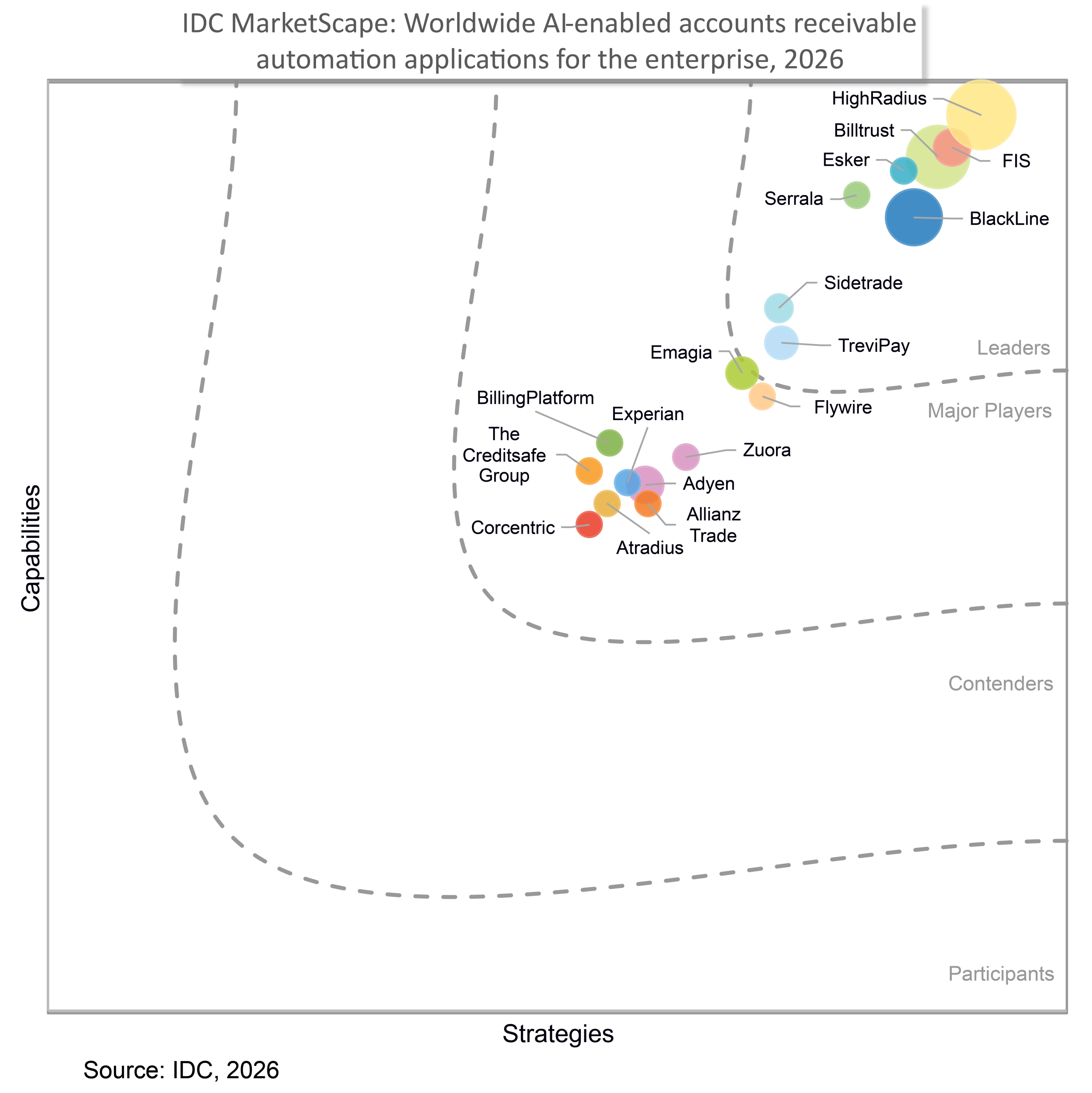
Recognized as a Leader in 2026 Vendor Assessment for unifying credit, collections, cash application, deductions, e-invoicing, and payments on one AI platform to advance enterprise-wide invoice-to-cash transformation.
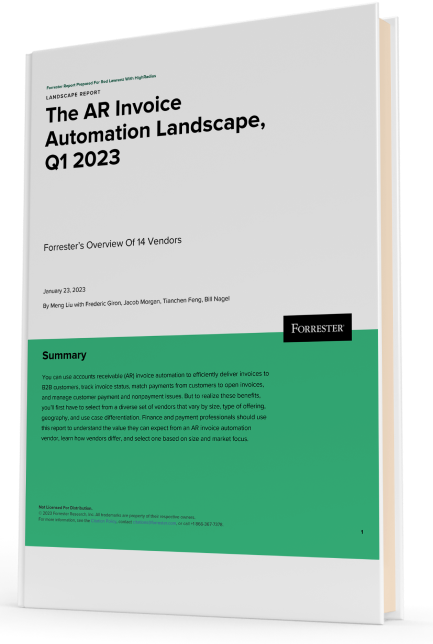
Forrester acknowledges HighRadius’ significant contribution to the industry, particularly for large enterprises in North America and EMEA, reinforcing its position as the sole vendor that comprehensively meets the complex needs of this segment.
Customers globally
Implementations
Transactions annually
Patents/ Pending
Continents
Talk with a finance expert about the processes, KPIs, and business outcomes that matter most to your organization.
Talk to a Finance ExpertExplore self-guided demos and see how finance workflows can move from manual execution to intelligent automation.
Explore the Demo CenterPlease fill in the details below
Please fill in the details below

We have seen financial services costs decline by $2.5M while the volume, quality, and productivity increase.

Colleen Zdrojewski
Trusted By 1300+ Global Businesses


