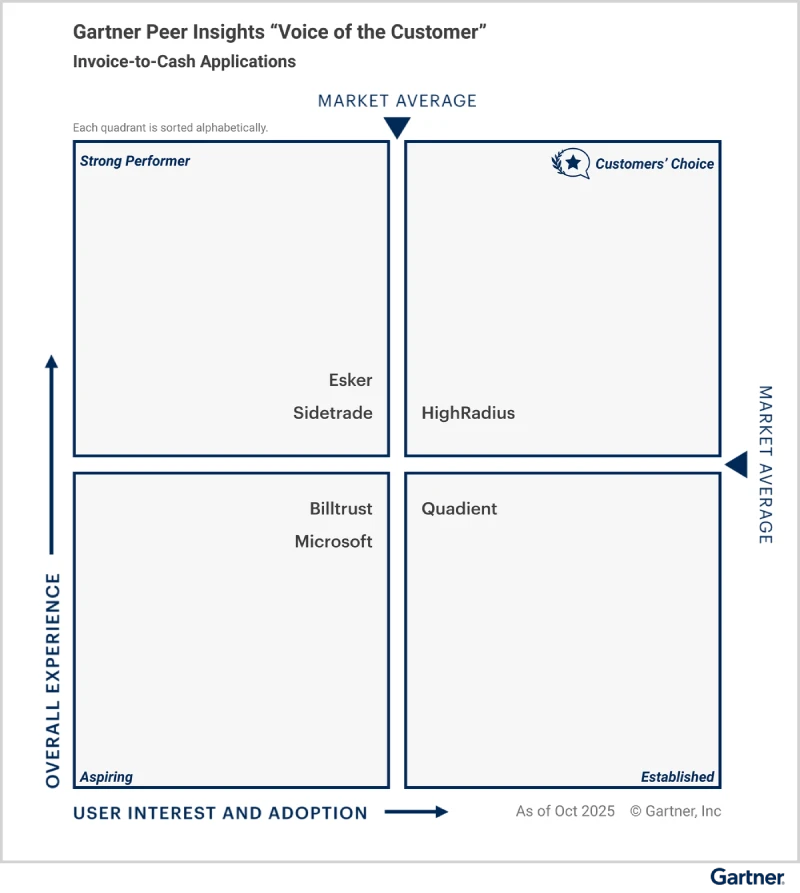
HighRadius Named a Challenger in Gartner® Magic Quadrant™ for Financial Close and Consolidation Solutions
Get the Report- Best Overall SAP BPC Alternative for Mid-Market & Enterprise: HighRadius
- Best for Excel-native FP&A automation: Datarails
- Best for Complex Multi-Entity Consolidation: OneStream
- Best for Oracle-Native Environments: Oracle EPM Cloud
- Best for Connected Planning & FP&A: Anaplan
- Best for European Mid-Market Consolidation: Lucanet
- Best for Cloud-Native FP&A Reporting: Planful
SAP Business Planning and Consolidation has served as a reliable backbone for enterprise Financial Planning, Consolidation and Reporting for over a decade. But the landscape has fundamentally changed. Finance teams that once depended on BPC are running into its architecture that was never rebuilt for cloud-native deployment, administrative workflows that require custom scripting and IT involvement for routine changes and a platform that is reaching the end of mainstream maintenance and fully exiting support by 2030
SAP's own recommended path forward splits BPC's functionality across two separate products: SAP Analytics Cloud and SAP Group Reporting embedded in S/4HANA. For organizations running multiple ERP systems, this creates compounding complexity: two platforms, two implementation tracks and a hard dependency on an ERP upgrade that many organizations are not ready for. The result? Finance teams are now being asked to manage a platform transition, an ERP migration and ongoing financial close operations simultaneously.
This guide is for CFOs, Controllers and Finance Technology leaders who are looking for Alternatives to switch from the dying SAP BPC to an alternative.
How We Selected the Best SAP BPC Alternatives
In identifying the strongest SAP BPC competitors, we evaluated each platform on five criteria that reflect what finance teams actually need from a BPC replacement, not just feature parity, but genuine operational improvement.
- Comprehensiveness: We prioritized platforms that cover the full scope of BPC's workload: financial consolidation, multi-entity close, intercompany eliminations, statutory reporting and planning within a single system. Point solutions that address only one of these workstreams were evaluated accordingly.
- ERP Integration Breadth: SAP BPC's greatest structural limitation for non-SAP organizations was its ERP dependency. We evaluated how many ERP systems each alternative connects to natively, and whether those integrations support bi-directional, real-time data exchange rather than batch file uploads.
- AI and Automation Maturity: We distinguished between platforms that have bolted AI onto legacy workflows versus those built from the ground up with autonomous intelligence. In 2026, the gap between these two categories is substantial and measurable.
- Ease of Administration: BPC required custom scripting and IT dependency for routine configuration changes. We gave priority to platforms where business users can manage and maintain the system.
- G2 Reviews and Customer Evidence: We analyzed verified customer reviews on G2 to validate whether platforms deliver on their marketing promises in production environments.
Top SAP BPC Alternatives and Accounting Software At A Glance For 2026
| Platform Software | Target Market Segment | Primary Best-For Use Case | Pros | Cons |
| HighRadius | Mid-Market & Enterprise | Unified AI-native financial consolidation, close & full Office of the CFO automation. | 190+ AI agents across the full Office of the CFO; 50+ pre-built ERP connectors; $0 until go-live. | Complete overkill for micro-businesses dealing with low-volume local bookkeeping. |
| OneStream | Enterprise | Complex multi-entity consolidation on a unified platform | Strong consolidation depth, extensible platform with add-ons, good SAP environment compatibility | Rule-based automation, not AI-native. High implementation complexity and timeline |
| Oracle EPM Cloud | Enterprise | End-to-end EPM suite for Oracle ERP environments | Comprehensive EPM modules, deep Oracle ERP integration, AI for forecasting and anomaly detection | Integration narrows outside the Oracle environment. Multi-product architecture adds complexity |
| Anaplan | Mid-Market & Enterprise | Connected planning, scenario modeling and extended FP&A | Industry-leading connected planning across finance and business functions; strong scenario modeling. | Consolidation capabilities through Fluence are newer and less proven. |
| Lucanet | Mid Market | IFRS-compliant consolidation with finance-friendly UX | Fast implementation, finance friendly interface, strong IFRS compliance. | Limits applicability for very large enterprises. Strongest fit mostly in European regulatory contexts |
| Planful | Mid Market | Cloud-native FP&A, budgeting and reporting | Fast deployment; accessible pricing; strong budgeting and management reporting. | Consolidation depth insufficient for complex statutory close. no AP, treasury or O2C coverage |
| Datarails | SMB / Lower Mid Market | Excel-native FP&A automation for smaller finance teams | Excel-native interface; near-zero change management; fast setup, SMB pricing. | Not suitable for multi-entity consolidation, no intercompany elimination or GAAP/IFRS framework |
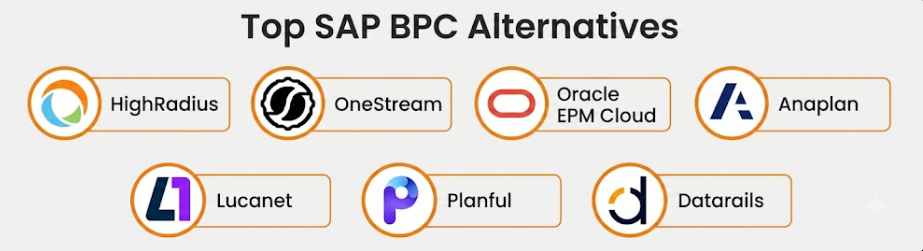
Top SAP BPC Alternatives: Quick Comparison
1. HighRadius: The Best SAP BPC Alternative for Mid-Market and Enterprise Businesses
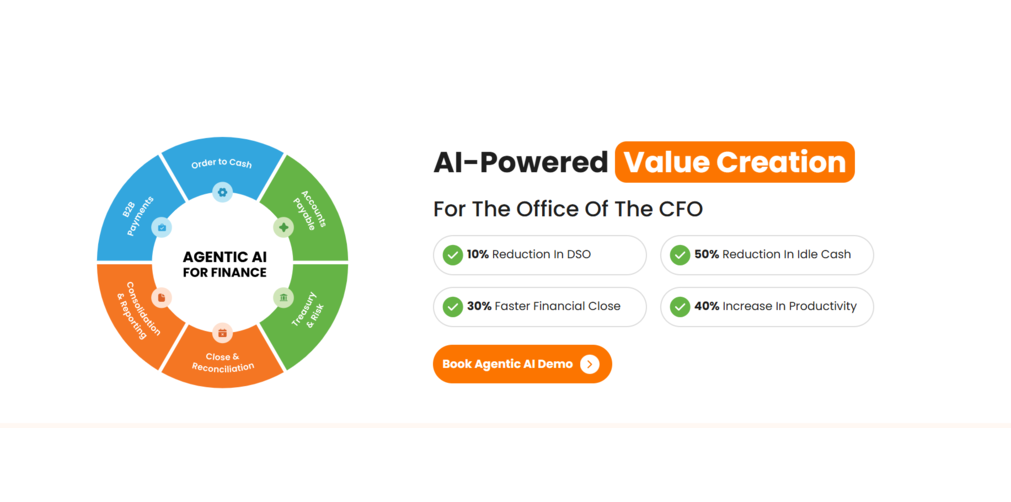
HighRadius is built as an AI-native, unified finance automation platform for the Office of the CFO. It publicly positions 190+ AI agents across Order to Cash, Accounts Payable, Consolidation & Reporting, Close & Reconciliation, and Treasury, helping finance teams automate consolidation, reporting, close, reconciliations, and Intercompany Management on one platform.
For organizations migrating off SAP BPC, HighRadius offers an ERP-agnostic modernization path. For mid-market organizations, it provides pre-built ERP integrations, AI-driven automation, and a scalable consolidation platform that grows without requiring additional finance headcount or system replacements. For enterprises, it supports complex multi-entity, multi-ERP, and multi-currency environments with automation across consolidation, close, reconciliation, treasury, and operational finance processes. Its public materials cite 50+ ERP connectors, including SAP-certified integrations for SAP ECC and SAP S/4HANA, enabling organizations to modernize finance operations without tying the project to an ERP migration decision.
HighRadius Key Capabilities
- Financial Consolidation & Reporting: AI agents automate entity ownership management, FX conversion, intercompany eliminations, Management Reporting and statutory reporting. The public pages also highlight an Excel-like interface for reporting and consolidation.
- GenAI Chart of Accounts Setup: HighRadius uses GenAI to generate Chart of Accounts mappings across legal entities using transaction history.
- Multi-Currency Automation: Automates Balance Sheet and P&L currency conversions with accurate Currency Translation Adjustment reporting. Real-time exchange rates received via ERP and third-party connectors.
HighRadius Breakdown:
- Pros: $0 implementation fees until go-live; 190+ AI agents across the Office of the CFO; 50+ ERP connectors; SAP-certified connectors for SAP ECC and S/4HANA; no-code, Excel-like user experience; GenAI-based CoA mapping; unified coverage across consolidation, close, reconciliation, AP, treasury, and O2C; outcome-based pricing.
- Cons: May not be suitable and can be an overkill for lower Mid-markets or SMB/newly emerging companies.
- Best For: Mid-market organizations scaling without adding finance headcount, and large enterprises that need multi-entity, multi-ERP, multi-currency consolidation with broader finance automation.
- Gartner Rating: 4.9/5
- Review: Customers consistently highlight the AI automation depth, SAP integration reliability, and the reduction in manual close tasks as primary reasons for switching.
Case Study: Carestream Health replaced manual, time-intensive financial consolidation and reporting workflows with HighRadius's AI-powered automation platform. This resulted in faster Report Consolidation and faster month end close.
2. OneStream
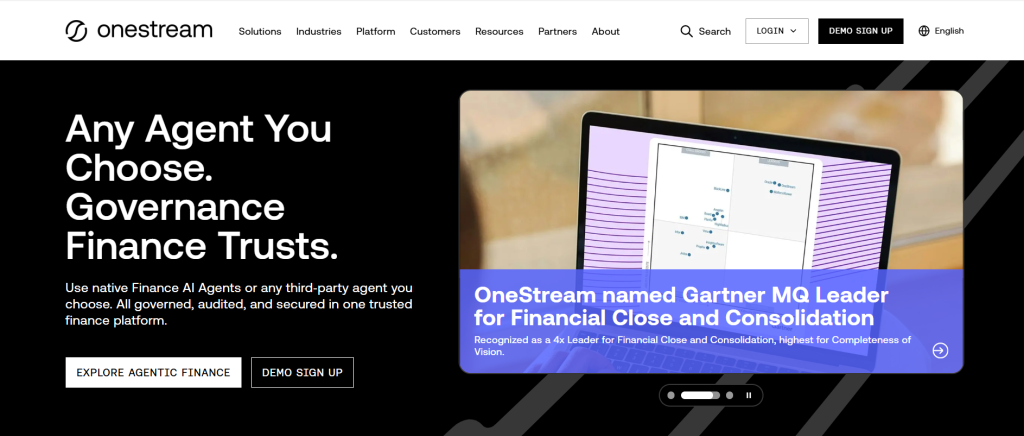
OneStream is a unified enterprise finance management platform for large organizations with complex multi-entity and multi-GAAP requirements. It combines consolidation, financial close, planning, and reporting in a single extensible system, making it a strong fit for enterprise BPC replacements that need depth and flexibility.
OneStream is a strong consolidation platform with configurable workflows and extensible dimensionality. Its AI capabilities are built into the platform through SensibleAI and other purpose-built solutions, so it is better described as AI-powered than AI-limited.
- Pros: Unified EPM for deep consolidation; extensible dimensionality for corporate reporting; marketplace for add-ons; strong fit for SAP environments.
- Cons: Complex, resource-heavy implementation; advanced configuration often requires technical support; evaluate broader finance capabilities against specific needs.
- Best For: Large enterprises with complex multi-entity, multi-GAAP consolidation requirements and dedicated EPM teams.
- Gartner Rating: 4.7/5
- Review Summary: Reviewers commend its consolidation depth and extensibility, though cite implementation complexity, a steep learning curve, and heavy reliance on partner support.
3. Oracle EPM Cloud
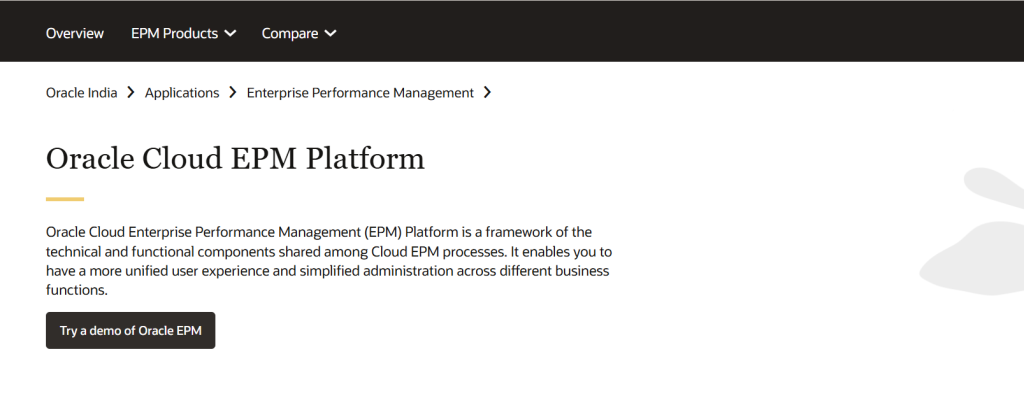
Oracle EPM Cloud is Oracle’s suite for planning, consolidation and close, account reconciliation, narrative reporting, tax reporting, profitability and cost management, enterprise data management, and ESG reporting. For organizations running Oracle Fusion Cloud ERP or Oracle EBS, it is a tightly aligned option with strong native integration.
Oracle EPM Cloud’s strongest integration advantages are typically in Oracle ERP environments. Its AI and ML capabilities are embedded within planning, consolidation, reporting, and close workflows rather than positioned as a separate automation layer.
- Pros: Comprehensive EPM suite covering consolidation, planning, close, reporting, and ESG; strong Oracle ERP integration; includes prebuilt content and embedded AI/ML.
- Cons: Complex implementation and training due to multiple modules; best suited for Oracle-centric environments. AP, treasury, and O2C are not core modules.
- Best For: Large enterprises running Oracle Fusion Cloud ERP or Oracle EBS as their primary system of record.
- Gartner Rating: 4.8/5
- Review Summary: Customers praise the deep Oracle ERP integration and broad EPM modules, though users cite complex configuration and implementation timelines.
4. Anaplan
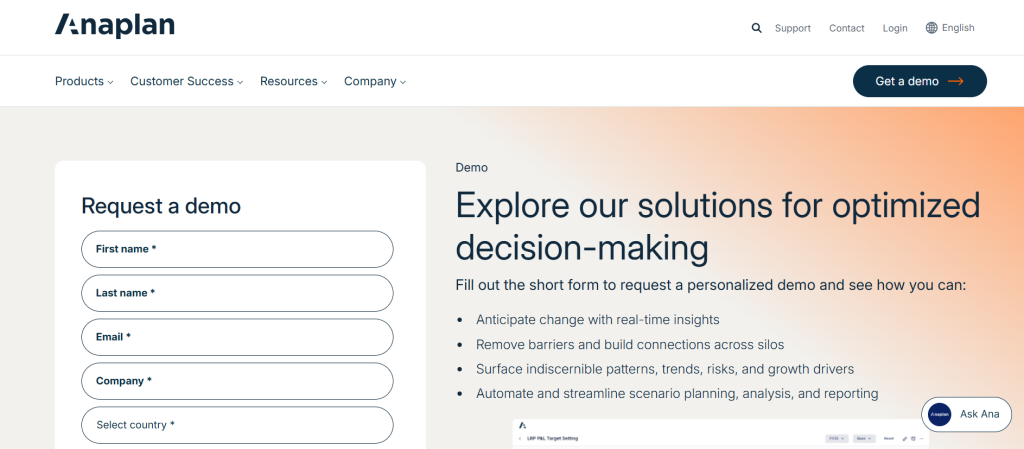
Anaplan is a connected planning platform used across finance, sales, supply chain, and HR, with financial consolidation now part of its finance offering through Fluence. It is a strong fit for organizations that want shared models, scenario planning, and cross-functional planning, especially when planning is the primary BPC use case.
Anaplan excels in planning-led use cases. For unified planning and consolidation, assess its consolidation capabilities alongside its core planning functionality. Its no-code, finance-owned approach reduces IT dependency.
- Pros: Unified cross-functional planning; flexible scenario modeling; consolidation via Fluence; modular, incremental deployment.
- Cons: Planning remains the core strength, so consolidation fit should be validated for complex close requirements.
- Best For: Organizations whose BPC use case was primarily planning and forecasting, especially those that want cross-functional connected planning beyond finance.
- Gartner Rating: 4.4/5
- Review Summary: Highly Praised for planning flexibility and collaboration. Users advise verifying consolidation fit.
5. Lucanet
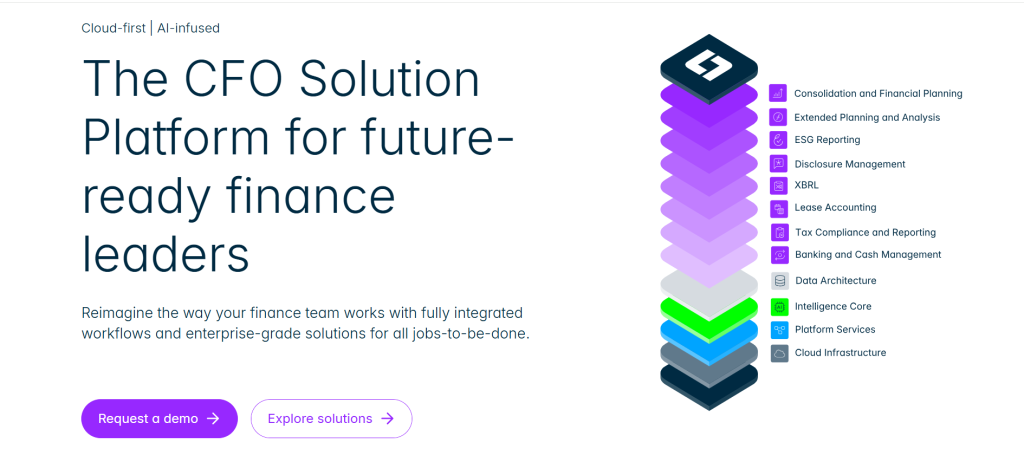
Lucanet is a cloud-first CFO solution platform centered on financial consolidation and financial planning, with additional capabilities for intercompany reconciliation, reporting, ESG, disclosure management, tax compliance, lease accounting, and banking and cash management.
It is a strong fit for mid-market finance teams, especially in Europe, and its public materials emphasize fast implementation, audit-ready financials, and finance-led administration.
- Pros: Robust multi-GAAP consolidation (IFRS, US, Local); intuitive, low-IT UI; rapid deployment; covers ESG, disclosure, tax, and cash management.
- Cons: Best for consolidation and planning. Organizations needing broader AP/O2C capabilities or managing highly complex, high-volume consolidations should evaluate fit carefully.
- Best For: European mid-market organizations needing IFRS-ready consolidation and planning with fast time-to-value and low implementation complexity.
- Gartner Rating: 4.0/5
- Review Summary: Reviewers consistently praise the intuitive interface and implementation speed. Feedback notes limitations in handling very high entity counts and complex intercompany structures.
6. Planful

Planful is a cloud-based financial performance management platform for finance teams that need budgeting, forecasting, reporting, close, and consolidation without the heavier implementation profile of larger enterprise EPM suites.
Planful’s core strength is planning and reporting, with close and consolidation also part of its platform. Organizations with more complex statutory consolidation needs should evaluate fit based on their entity structure and close requirements.
- Pros: Fast time to value; strong budgeting, forecasting, and reporting workflows; cloud-native architecture; AI-powered close, consolidation, planning, and reporting; intuitive user experience.
- Cons: Best suited to planning-led use cases. Organizations with complex consolidation requirements should evaluate fit carefully.
- Best For: Finance teams whose BPC use case was primarily budgeting, forecasting, management reporting, and straightforward close/consolidation.
- Gartner Rating: 4.5/5
- Review Summary: Customers highlight ease of use and fast time-to-value. Common feedback notes limitations in consolidation depth and the need for supplementary tools for statutory close.
7. Datarails
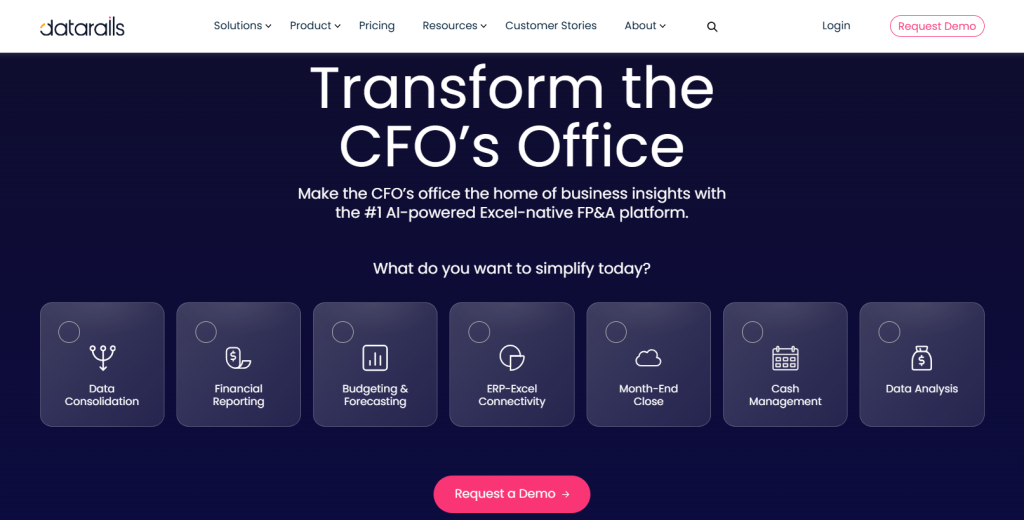
Datarails is a lightweight, Excel-native FP&A automation platform designed for small and lower mid-market finance teams. It preserves the Excel interface that finance teams are accustomed to while adding a structured database, automated data consolidation, and reporting capabilities on top of existing spreadsheet-based workflows.
Datarails is built for SMB finance teams with relatively simple data structures, low entity counts, and limited multi-currency requirements.
- Pros: Excel-native interface simplifies change management; ideal for FP&A, budgeting, and reporting with a governed data layer. Includes helpful workflows for month-end close and cash management.
- Cons: Lacks deep statutory consolidation for complex, multi-entity closes and GAAP/IFRS compliance. Does not cover AP, O2C, or full treasury. AI is limited to FP&A rather than broad finance automation.
- Best For: Ideal for SMBs needing Excel-native FP&A, reporting, and light close/cash workflows without complex statutory consolidation requirements.
- Gartner Rating: 4.2/5
- Review Summary: Extremely high satisfaction scores from SMB users. Enterprise-scale reviewers are not the primary user base, and the platform is not positioned for that segment.
Why HighRadius Is the Best SAP BPC Alternative for Scalable Finance Operations
Evaluating SAP BPC alternatives requires acknowledging the operational dividing line between platforms that solve one piece of the problem and platforms that solve all of it. HighRadius solves this with simultaneous AI-native, ERP-agnostic, enterprise-proven at scale and unified Office of the CFO platform.
For BPC customers specifically, this matters in three concrete ways.
First, it enables a flexible migration path. While SAP pushes toward SAP Analytics Cloud and S/4HANA, HighRadius offers a modern alternative compatible with all major ERPs (SAP, Oracle, NetSuite, Dynamics, Workday). Its 50+ pre-built connectors allow you to modernize consolidation and reporting without mandatory ERP upgrades.
Second, it increases automation across consolidation and close processes. While SAP BPC relies on manual rules and maintenance, HighRadius uses AI to automate consolidation, intercompany eliminations, FX, and statutory reporting, significantly reducing manual effort across the record-to-report cycle.
Third, it supports broader finance transformation beyond consolidation. While BPC replacements center on planning and consolidation, teams frequently seek to modernize adjacent workflows. HighRadius unifies consolidation and reporting with financial close, reconciliation, AP, treasury and order-to-cash, allowing teams to scale automation without adding disparate point solutions.
Total Cost of Staying on SAP BPC vs. Switching
The cost of staying - SAP automatically moves you into customer-specific maintenance at the exact same price but stops delivering security patches, legal and regulatory updates, support packages, and guaranteed SLA response times. You keep paying enterprise software rates for a support tier that no longer meets enterprise standards.
The cost of switching - HighRadius's outcome-based pricing model eliminates that friction entirely. With $0 in implementation fees until the system goes live and contractually agreed outcomes are achieved, there is no parallel cost window. HighRadius's commercial obligation does not activate until your team is live and your close cycle time, consolidation accuracy, and report preparation speed are measurably improving. The vendor's incentive is structurally aligned with your results, not just your deployment completion.
Frequently Asked Questions
1. What are the main reasons companies look for SAP BPC alternatives?
Finance teams are evaluating SAP BPC alternatives due to their end-of-maintenance roadmap, with all versions fully out of support by 2030. Beyond the deadline, BPC's structural limitations have been accumulating for years: on-premise architecture that cannot be upgraded without internal IT cycles, custom scripting requirements for routine configuration changes, single-ERP optimization that disadvantages multi-ERP organizations, and zero innovation investment from SAP, which has redirected its EPM development entirely to SAP Analytics Cloud and Group Reporting.
2. What is the best alternative to SAP BPC for financial consolidation and reporting?
For mid-market and enterprise organizations, HighRadius is the top alternative based on automation depth, ERP integration breadth, AI maturity and unified Office of the CFO scope. It delivers 50+ pre-built ERP connectors, no-code administration and $0 implementation fees until go-live. For organizations that are heavily Oracle-native, Oracle EPM Cloud is a strong fit. For those prioritizing planning over consolidation, Anaplan with Fluence is worth evaluating. For European mid-market organizations, Lucanet offers fast time-to-value with strong IFRS compliance.
3. Do we need to be on S/4HANA to migrate off SAP BPC?
Only if you choose SAP's own recommended migration path SAP Analytics Cloud plus SAP Group Reporting. Both of those products require S/4HANA for their deepest integration capabilities. Non-SAP alternatives like HighRadius, OneStream and Oracle EPM Cloud do not carry this constraint. HighRadius specifically supports SAP S/4HANA with equal depth meaning existing SAP environments connect without requiring an ERP upgrade.
4. How long does it take to migrate from SAP BPC to a modern alternative?
For mid-market organizations with straightforward consolidation requirements, a migration typically runs 3 to 6 months. Large enterprises with complex multi-entity, multi-ERP environments generally require 9 to 18 months depending on entity count, ERP landscape, and depth of existing BPC customization. HighRadius's GenAI-based Chart of Accounts migration tool and certified ABAP connector compress this timeline meaningfully for SAP-origin customers by automating the entity mapping and data migration steps that traditionally extend EPM implementations.
5. What happens to SAP BPC system after the maintenance deadline passes?
The system continues to function, but SAP stops delivering security patches, legal updates, and support packages. You are automatically enrolled in customer-specific maintenance at the same licensing cost with no guaranteed SLA on issue resolution, no regulatory updates as compliance requirements evolve, and no security patches for newly discovered vulnerabilities. The operational risk compounds over time: talent pools shrink, audit exposure increases, and the cost of staying grows with every quarter of inaction.
6. How does HighRadius handle multi-currency consolidation across entities?
HighRadius automates Balance Sheet and P&L currency conversions with accurate Currency Translation Adjustment reporting. Real-time exchange rates are received via pre-built connectors as well as direct ERP data feeds. Non-Controlling Interest calculations are automated. The entire multi-currency consolidation workflow from FX rate ingestion to CTA reporting is executed by HighRadius's AI agents without manual intervention.
7. What is the difference between SAP Analytics Cloud and HighRadius as BPC alternatives?
SAP Analytics Cloud is SAP's own recommended cloud migration path for BPC. It integrates tightly with S/4HANA and offers modern data visualization. One limitation is its S/4HANA dependency. Organizations not on S/4HANA, or those running non-SAP ERPs alongside SAP, face significantly more complexity. HighRadius covers all of these in a single platform, is ERP-agnostic and deploys 190+ AI agents across the full Office of the CFO rather than planning alone. For organizations that want to modernize the entire finance function, not just replace BPC's planning module, HighRadius is the stronger long-term investment.
8. Are there SAP BPC alternatives designed for mid-market companies?
Yes. HighRadius also serves mid-market organizations with out-of-the-box configurations for ERP environments like NetSuite, Workday and Microsoft Dynamics, alongside its enterprise-grade SAP and Oracle connectors. Lucanet and Planful also target mid-market teams effectively, with fast implementation timelines. The key distinction for mid-market buyers is whether the platform's automation depth scales with you. Lucanet and Planful serve current mid-market needs well, while HighRadius provides a platform that handles mid-market complexity today and enterprise complexity as you grow, without requiring a second migration.
9. How does HighRadius's pricing model compare to SAP BPC's licensing?
SAP BPC operates on a traditional enterprise software licensing model with upfront fees with no support or servicing experience in the near future. HighRadius uses an outcome-based pricing model with $0 implementation fees until the system goes live. This eliminates the double-cost risk during the migration period, a common financial objection that delays BPC migration decisions and aligns the vendor's incentive directly with your measurable outcomes.
10. What is the difference between a Point Solution and a full-suite SAP BPC Alternative?
Point solutions such as Lucanet, Planful, or Datarails address one specific workstream from BPC's functionality. Choosing a point solution means your team must still maintain separate systems for the workstreams that point solution does not cover and manually manage the integrations between them. A full-suite alternative like HighRadius replaces the entire BPC operational stack with consolidation, close, reconciliation and reporting while also extending into AP, treasury and O2C on the same platform. For organizations whose goal is simplifying their finance technology landscape rather than just replacing one aging tool, the distinction between a point solution and a unified platform is the most consequential factor in platform selection.