Deductions Management with Agentic AI
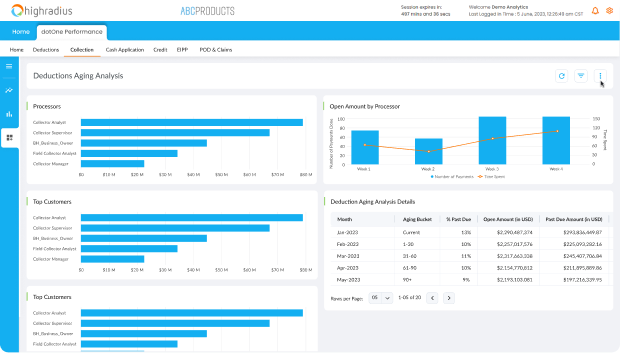
AI agents predict trade & non-trade deductions validity & use auto-match algorithms to speed up research & resolution of deductions

Improve net recovery by 30%
Increase FTE productivity by 40%
AI agents predict trade & non-trade deductions validity & use auto-match algorithms to speed up research & resolution of deductions
Improve net recovery by 30%
Increase FTE productivity by 40%
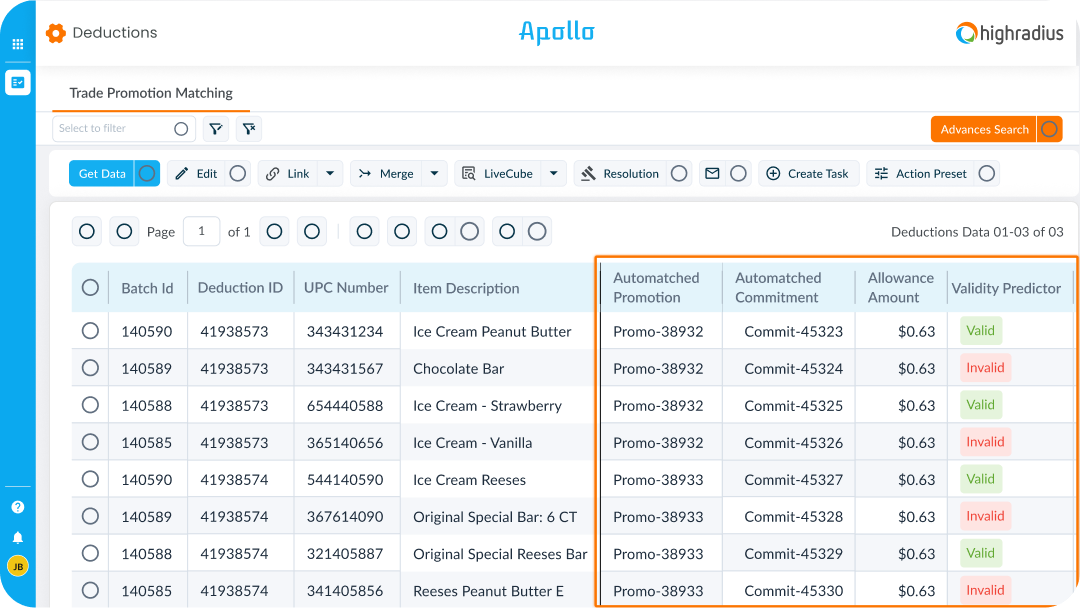
Enables deduction identification and routing. It manages reason code libraries, maps customer reason codes to ERP systems, and utilizes an auto-routing algorithm to instantly direct claims to the correct personnel for resolution
Talk To An Expert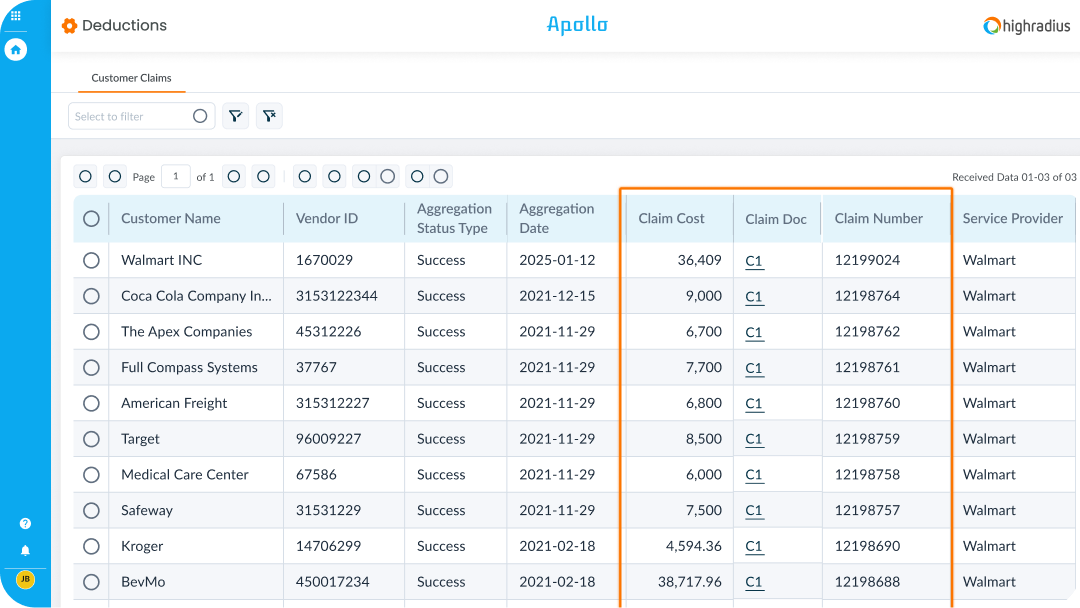
Automates claim and back up documents retrieval from customer, AP, and third party portals like Ariba, Coupa, etc. The agent manages credentials, navigates customer portals, and extracts item level data for deduction validation
Talk To An Expert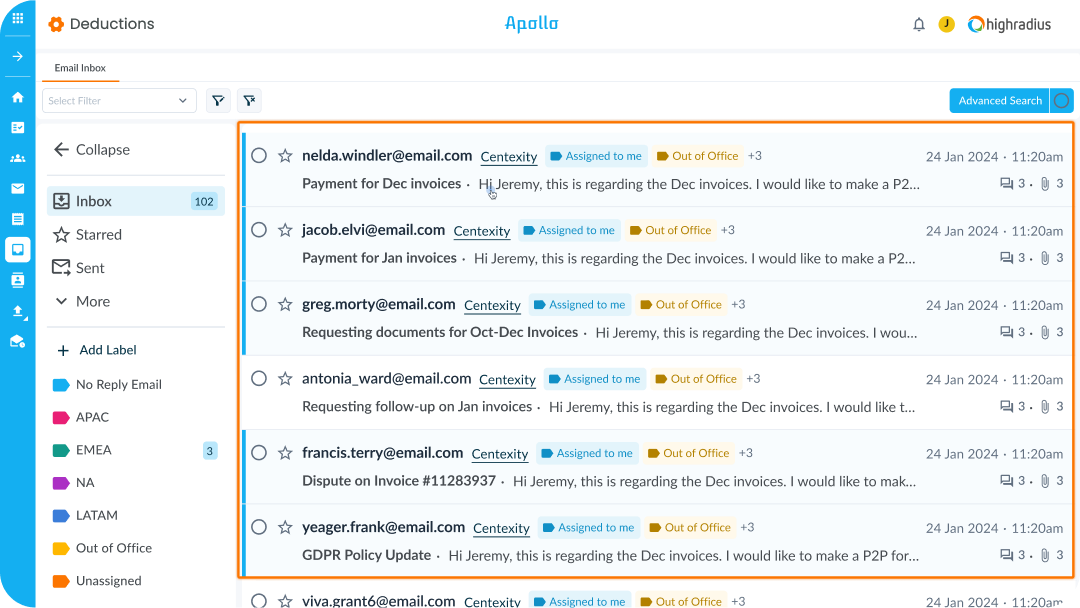
Automates extraction of the header and item level data from the claims sent via email. The agent parses incoming messages to extract data, maps fields to claim documents, and auto-links deductions using reference numbers
Talk To An Expert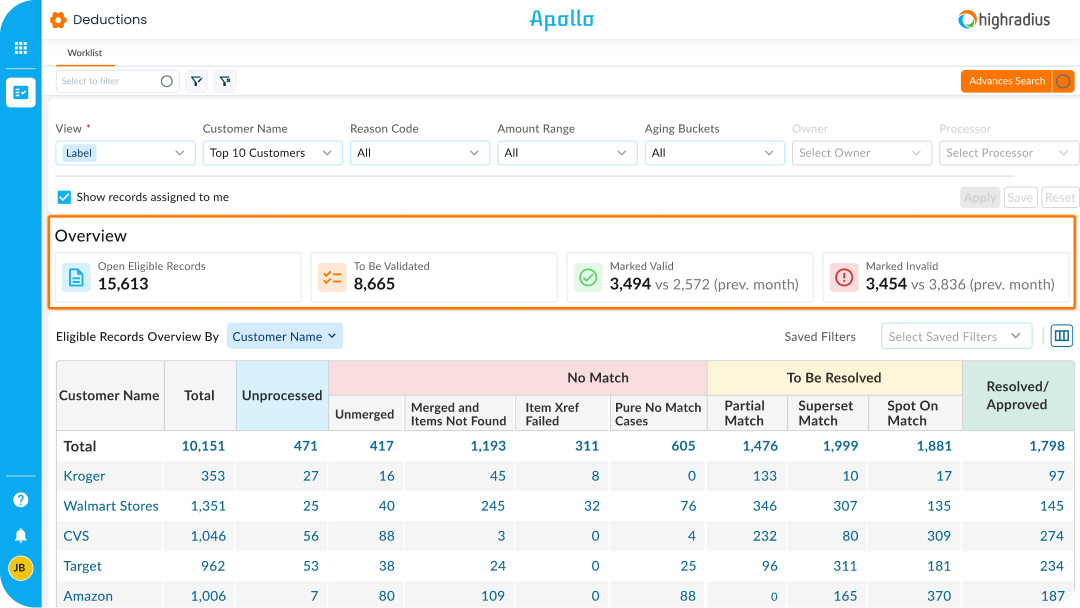
Retrieves proof-of-delivery from carrier sites like FedEx, UPS and emails. The agent also facilitates internal aggregation requests for POD within organizations for Deduction validation
Talk To An Expert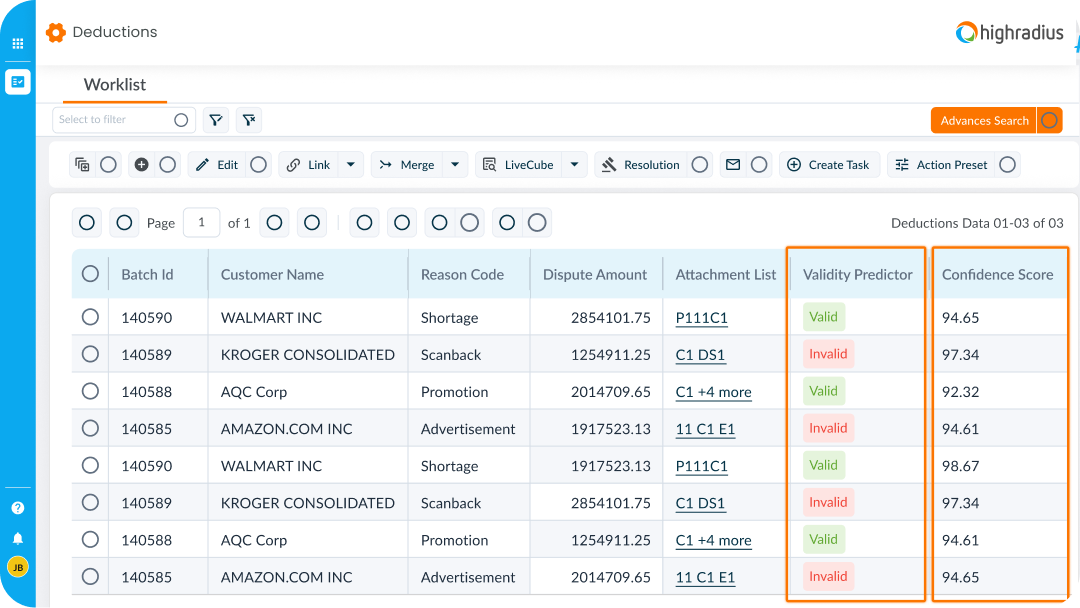
Enhances ERP master data with Collector-defined hierarchies, including virtual groups, and auto-rolls up all transactional activity to the parent level for easy parent/child navigation
Talk To An Expert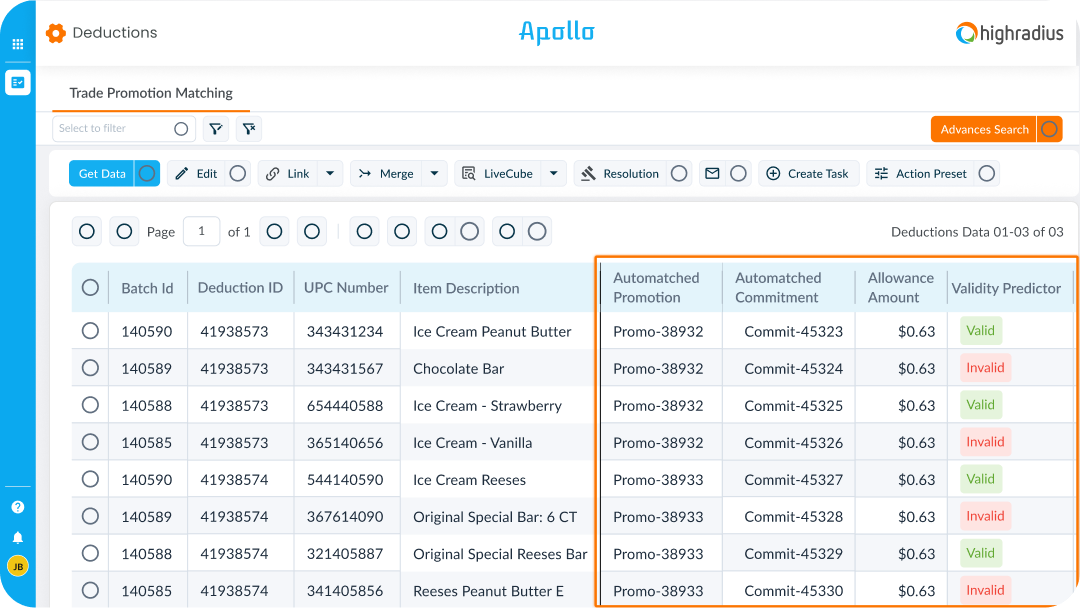
Supports seamless connectivity with major systems like ERP, TPM, Contract to validate trade-related deductions. It uses multi-way matching of data points across different systems and mapping deductions to promotions
Talk To An Expert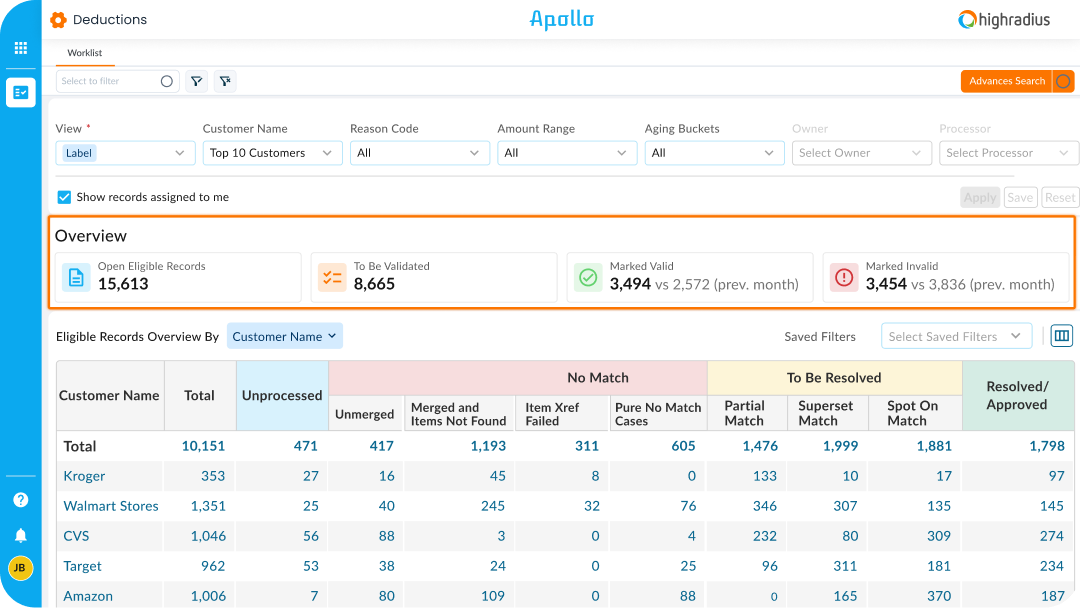
Captures relevant data from internal promotional agreements or Customer portals to bring in key contract data. The agent performs a four-way match between deductions, claims, invoices, and contracts
Talk To An Expert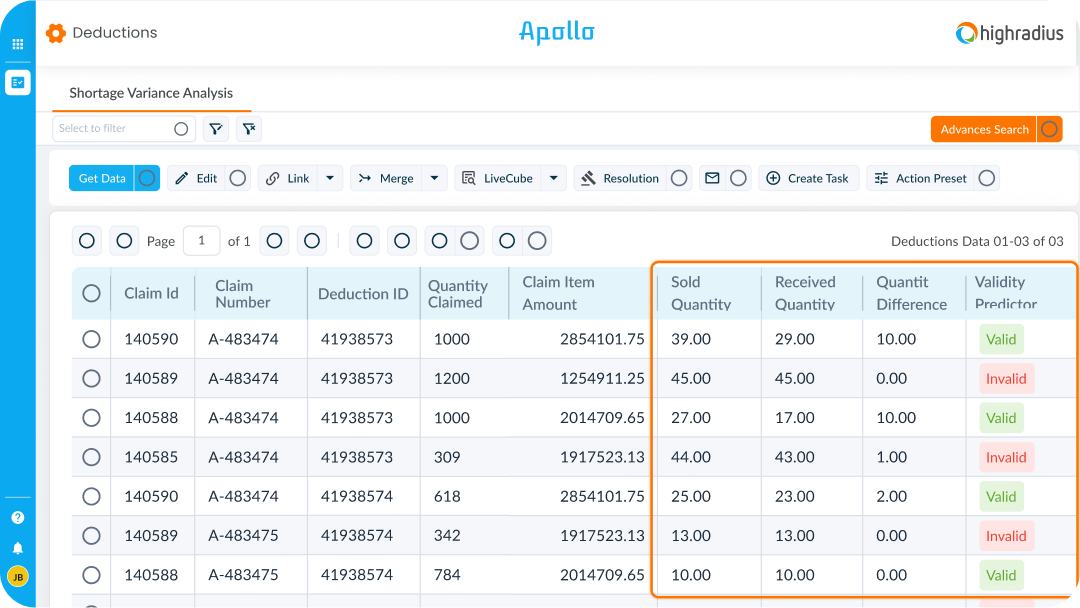
Automates the verification of shortage claims. It utilizes RPA to aggregate carrier PODs and applies rules to auto-link them with claims, streamlining the analysis process
Talk To An Expert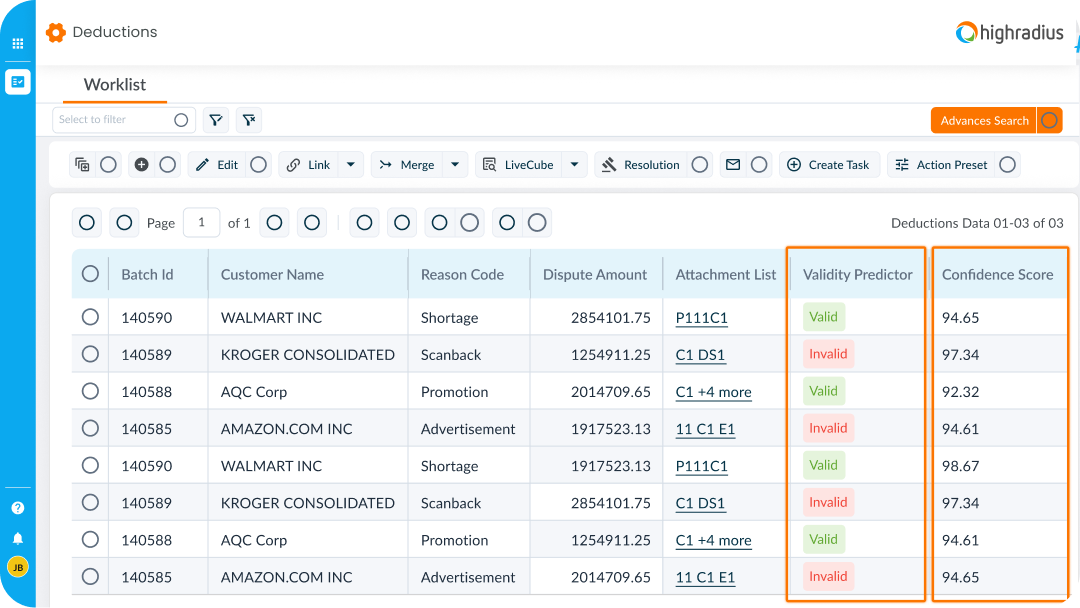
Utilizes a collaboration engine to validate policies with logistics, manages multi-level approval workflows, and automates resolution by initiating credit memos once returns are verified
Talk To An Expert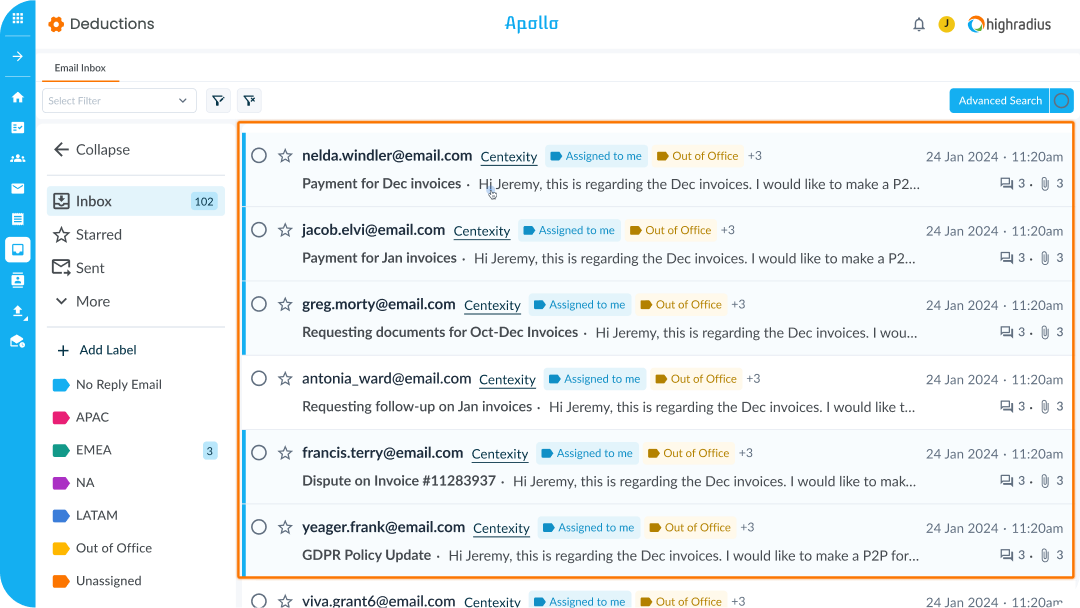
Provides the workspace enabling action tracking and approval hierarchies needed for analysts to perform the final resolution and approval
Talk To An Expert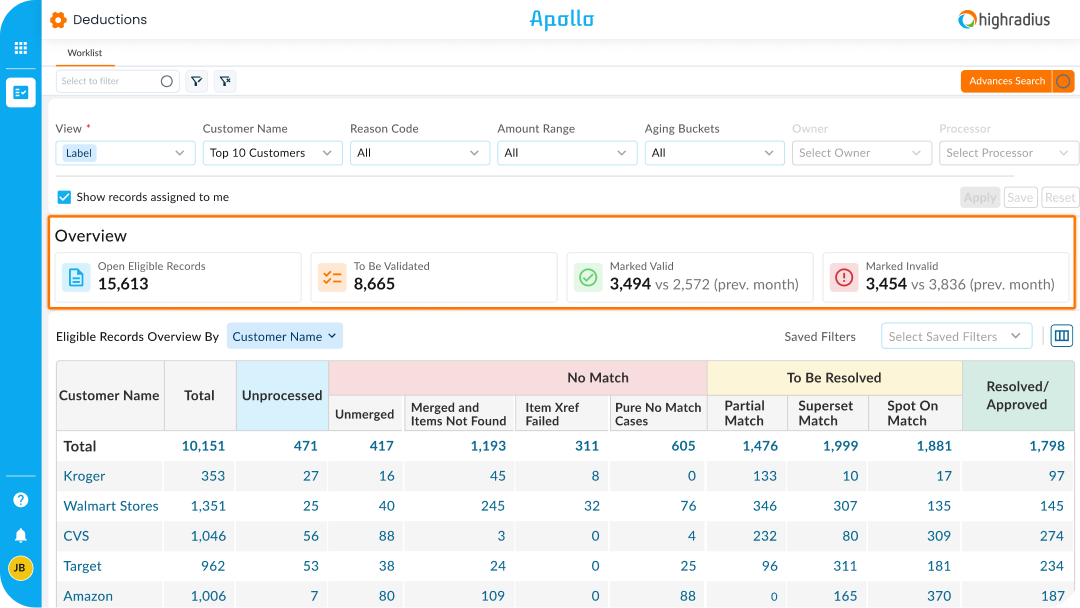
Flags invalid deductions and initiate the dispute process, including submission of backup documents, with a single click
Talk To An ExpertProduct
Value
A direct discount (cents-off or percentage off) on the price of the goods listed on the invoice
A deduction where the retailer bills the supplier for the actual quantity of discounted units scanned and
sold to consumers
A fixed fee paid to retailer to secure shelf space or slots for new products
A deduction when the retailer claims the supplier charged them the wrong price
A type of financial incentive where a retailer earns a percentage of their money back after hitting a specific purchase milestone
A reconciliation process where a distributor is reimbursed by the supplier for the "price gap" between the standard wholesale cost and a lower, pre-negotiated contract price for a specific end-customer
A deduction taken when customer receives more product than what was listed on the shipping documents or
Purchase Order (PO)
A deduction taken when the retailer claims the quantity of goods received is less than the quantity listed on the invoice
A deduction taken for goods that arrived at the retailer’s location in a damaged, unsellable or broken condition
Penalties for system downtime or failure to meet service level agreements
Deducting the value of "out of tolerance" parts rather than returning the
entire shipment
If an agency owes the carrier for net premiums (money collected from customers), the carrier will deduct those owed premiums from the agency's monthly commission payout
Deductions initiated by third-party auditors reviewing historical data to find missed promotions, pricing errors, or duplicate payments
Deductions management is the process of researching customer short-payments on invoices to distinguish valid discounts from invalid claims, recover revenue, and maintain low Days Deduction Outstanding using internal documents such as invoices and contracts along with third-party evidence like PODs, BOLs, and claim documents.
Manual deductions management creates hidden costs, leads to small deductions being written off, and erodes profits in thin-margin businesses. Automation reduces processing effort, lowers operational cost, improves recovery, and makes low-value deductions profitable to recover.
Deductions management is measured by its ability to maintain a high recovery rate, keep Days Deduction Outstanding (DDO) low, and minimize write-offs. Operational performance is tracked using KPIs such as average days to validate, deductions validated per analyst per day, average days to close, and the percentage of invalid deductions identified.
In deductions management, short payments are identified during cash application and recorded as deductions with reason codes such as shortage, damage, pricing, or trade promotion-related issues.
Deductions management involves gathering PODs, BOLs, contracts, claims, and ERP data, cross-referencing multiple data sources, disputing invalid deductions on customer portals, and clearing valid deductions through accounting entries. These activities ensure accurate validation, timely resolution, and proper financial closure of deductions.
Most analyst time during deductions resolution is spent on intra-departmental collaboration with Sales for trade and pricing validation, Logistics and Warehouses for PODs and BOLs, and Cash Application and Collections to finalize credits or re-bills.
Trade deductions are planned, pre-negotiated incentives like promotions, discounts, rebates, and pricing agreements. Most are valid, with only a small percentage becoming invalid due to execution or data mismatches.
Non-trade deductions are unplanned and arise from supply chain, billing, delivery, or operational issues. 10-20% of them are invalid, requiring detailed investigation across logistics, documentation, and process failures.
Common trade deductions include off-invoice promotions, bill-backs or scan-downs, slotting fees, pricing disputes, rebates, and tender protection, all made under pre-approved sales, pricing, or promotional agreements.
Non-trade deductions include shortages, damages, overages, compliance fines, OTIF penalties, freight or tax miscalculations, and returns, usually caused by shipment errors, warehouse issues, or retailer compliance programs.
Outside CPG, non-trade deductions include SLA credits, quality rejections, under-delivery of services or impressions, rework allowances, ad fraud adjustments, premium offsets, and post-audit deductions across industries.
A significant portion of non-trade deductions is invalid, and recovery rates can be high when supported by documentation. Effective deductions management directly improves recovery, reduces revenue leakage, and protects margins.
Deduction coding standardizes customer reason codes, maps them to ERP systems, and automatically routes deductions to the right teams, reducing manual effort and improving speed and accuracy of downstream resolution.
Analysts spend significant time collecting PODs, BOLs, claim copies, and contracts from emails, customer portals, and third-party systems, making data aggregation one of the most manual and repetitive steps.
Automated portal claim retrieval manages credentials, navigates customer and third-party portals, and extracts item-level claim data, enabling centralized aggregation of claims and supporting faster deduction validation.
Email-based claims are parsed to extract header and line-level data, mapped to claim documents, and automatically linked to deductions using reference numbers, reducing manual data entry and errors.
Proof of Delivery is retrieved from carrier portals, emails, and internal systems, supporting validation of shortage and delivery-related deductions by confirming shipment completion and quantities delivered.
Machine learning models assess whether a deduction is valid or invalid with confidence scores, helping prioritize analyst effort, automate low-risk write-offs, and improve overall resolution timelines.
Trade deductions are validated through multi-way matching across ERP, Trade Promotion Management, contracts, invoices, and claims, ensuring deductions align with approved promotions or negotiated agreements.
Shortage and return deductions are validated by aggregating carrier PODs, verifying shipment discrepancies, collaborating with logistics teams, managing approvals, and initiating credit memos once verified.
Analysts use approval workflows to resolve deductions. Invalid deductions are disputed on customer portals with supporting documents, while valid deductions are cleared through ERP accounting entries to close open items.