Surcharge Management
AI agents calculate & process surcharges compliant with global regulations & pass the payment processing costs to the buyer.

100% Interchange Fee Recovery for Eligible Transactions

AI agents calculate & process surcharges compliant with global regulations & pass the payment processing costs to the buyer.
100% Interchange Fee Recovery for Eligible Transactions
Product
Value

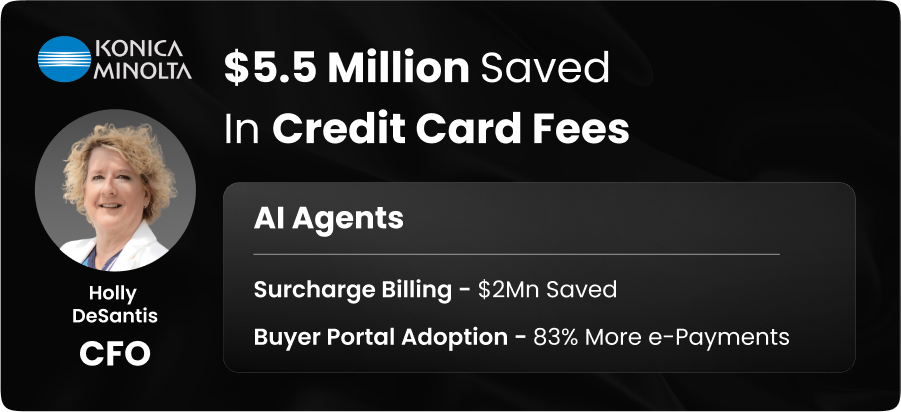
Surcharge management in B2B payments is the process of automatically applying a credit card surcharge to recover payment processing fees from customers. A surcharge management software ensures the surcharge is calculated correctly based on card type, transaction value, and regulatory limits. It helps businesses reduce interchange costs while maintaining transparency with buyers. This approach is commonly used by enterprises processing high-volume B2B card payments.
Surcharge management software works by detecting eligible credit card transactions and applying a compliant surcharge in real time. The system validates surcharge rules against card-network regulations and regional laws before processing the payment. It then displays the surcharge clearly to the customer and records it separately for reporting. This removes manual calculations and compliance risks.
The main benefits of surcharge management software include recovering credit card processing fees, improving profit margins, and ensuring surcharge compliance. It eliminates manual surcharge calculations and reduces the risk of regulatory violations. Businesses also gain visibility through surcharge reporting and analytics. This makes surcharge management scalable for enterprise B2B payments.
Yes, surcharge management helps reduce credit card processing fees by passing eligible interchange costs to the customer. Instead of absorbing card fees, businesses recover them automatically through compliant surcharges. This can significantly lower payment acceptance costs, especially for high-value B2B transactions. Over time, it improves net revenue without changing pricing models.
Surcharge management software is designed to comply with card network rules and regional surcharge regulations. It applies limits defined by Visa, Mastercard, and local laws to prevent overcharging. Automated compliance checks reduce the risk of fines or payment disputes. This makes it safer than manual surcharge handling.
A surcharge management solution should include automated surcharge calculation, real-time compliance validation, processor integration, and detailed reporting. It should support configurable surcharge rules by region or business unit. Audit-ready reports are essential for finance and compliance teams. These features ensure accurate and scalable surcharge processing.
Surcharge management improves cash flow by recovering credit card fees that would otherwise reduce revenue. Instead of absorbing processing costs, businesses receive the full invoice value. This is especially valuable for enterprises with large B2B payment volumes. Over time, it strengthens working capital and margin predictability.
In B2B surcharge management, the customer pays the surcharge when choosing to pay by credit card. The surcharge amount is disclosed upfront during the payment process. Businesses collect the surcharge automatically through the payment system. This ensures transparency while shifting processing costs away from the seller.
Yes, surcharge management software allows businesses to customize surcharge rules based on geography, transaction type, or card network. Rules can be adjusted to align with local regulations and business policies. This flexibility ensures compliance while supporting different operational needs. Customization also helps enterprises scale surcharge programs globally.
Automated surcharge management uses software to apply compliant surcharges automatically, while manual surcharging relies on human calculation and enforcement. Manual methods increase the risk of errors, non-compliance, and inconsistent customer experiences. Automated systems ensure accuracy, transparency, and audit-ready reporting. This makes automated surcharge management more reliable for B2B payments.
The module determines the surcharging amount by applying predefined criteria based on the merchant’s business unit(BU) or geographical location. The module assesses factors such as the type of card used, transaction amount, and regional regulations to calculate the appropriate surcharge.
Yes, we do offer the capability to configure surcharges selectively, however, this is typically done on an exceptional basis. Given the strict regulations surrounding surcharges, the standard practice is to apply surcharges uniformly across all customers. Selective surcharging is generally only permissible if a client has a specific agreement with their payment processors that allows for such practices.
Yes, the module displays the surcharged amount to the buyer as confirmation. This ensures transparency and allows the buyer to make an informed decision. It also helps comply with regulatory requirements that mandate clear disclosure of additional fees.
Yes, you can customize the surcharge criteria for different regions or business units. The module enables merchants to configure the surcharging rules according to their preferences. The module entitles you to set up rules based on various parameters, including the address linked to buyer’s card, the buyer’s headquarter(HQ), or invoice-level details such as Bill to or ship to location.


