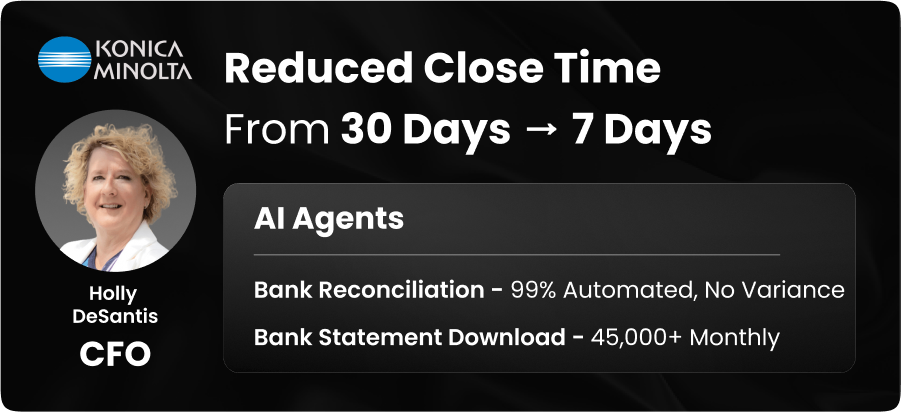
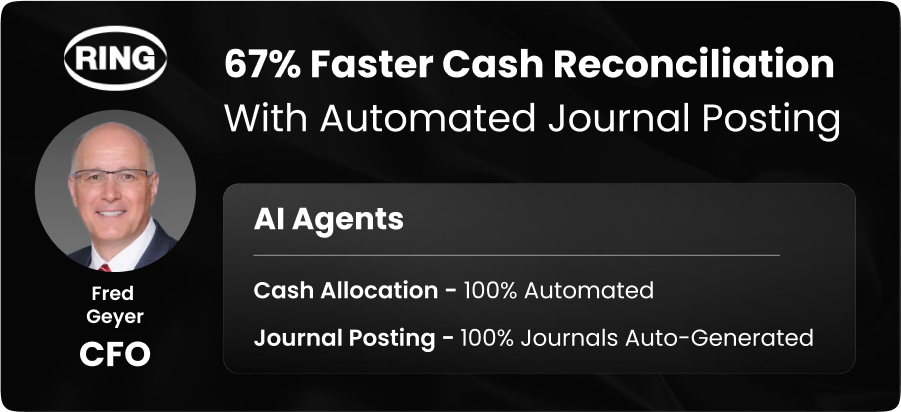
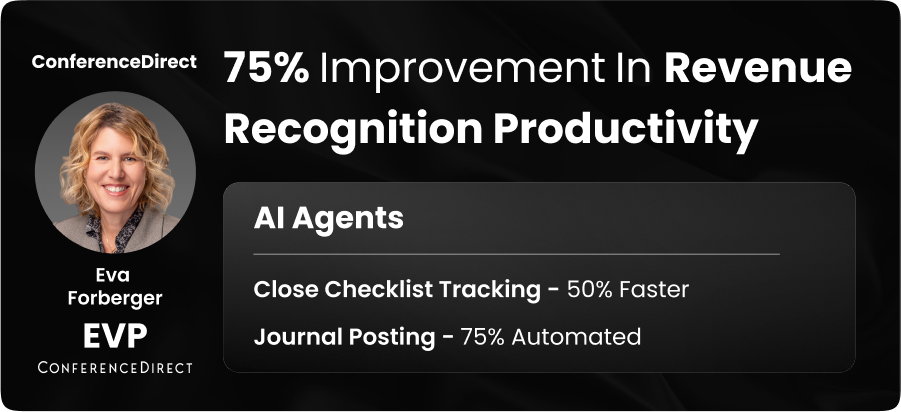
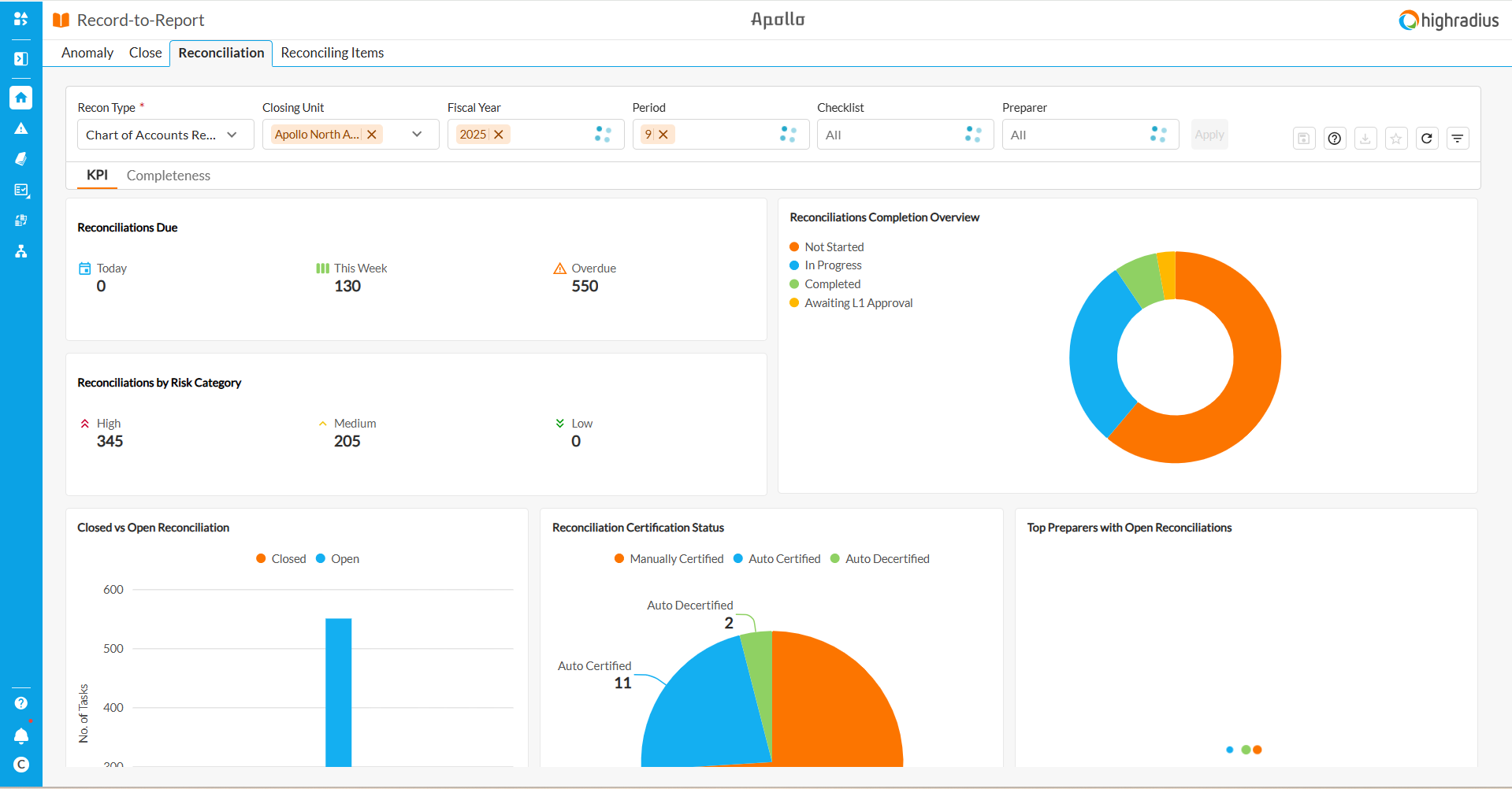
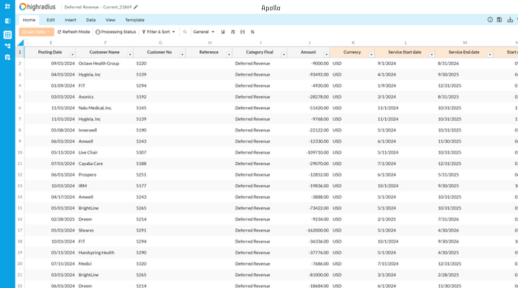
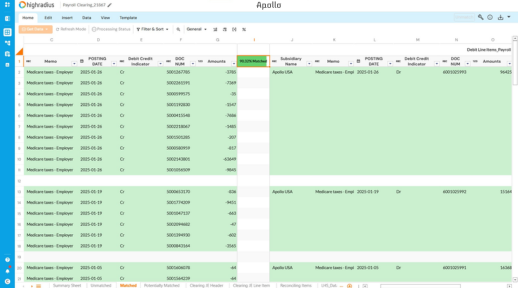
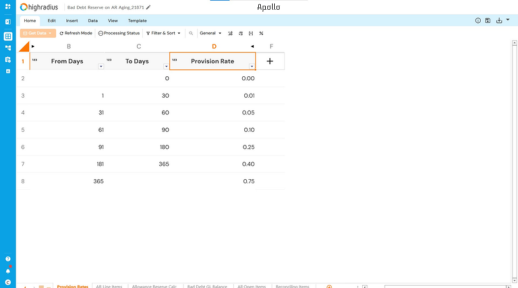
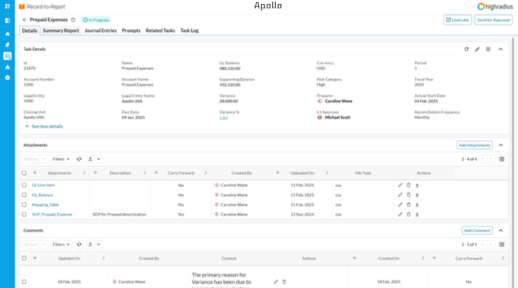
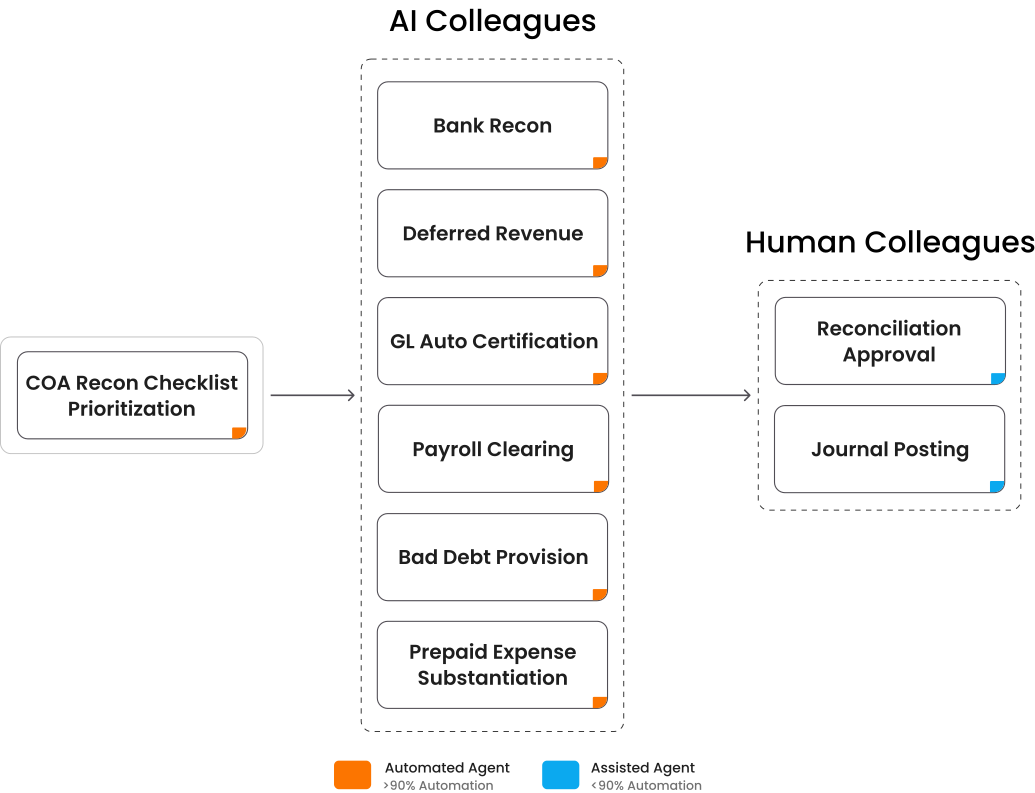
AI agents automate balance sheet reconciliations, flag exceptions, auto-certify recons, classify variances, and post journals, ensuring compliance and real-time visibility.
Boost reconciliation productivity by 50%
Reduce days to reconcile by 30%
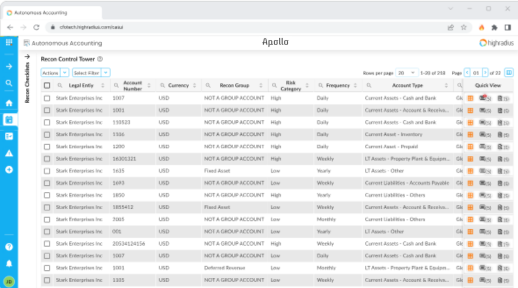
Companies can upload 2,000+ Excels to the R2R Agent Builder, which converts them into 200+ agents—one for each close and consolidation use case.
Product
Value
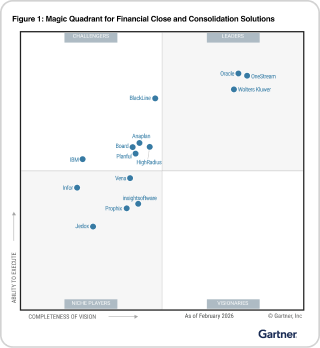
A 3X Leader in I2C | Now Recognized In FCCS
Get The ReportHighRadius Named ‘Rising Star’ In 2024 ISG Provider Lens™ Finance And Accounting Platforms Report
Chosen For AI Driven Innovations | Comprehensive Suite
Get The ReportHighRadius balance sheet reconciliation software offers a flexible solution, seamlessly integrating with major ERPs like SAP, Microsoft Dynamics 365, Oracle, NetSuite, Sage Intacct, and Workday. This adaptability ensures the effortless extraction of data from GL accounts for reconciliation, facilitating a timely close. Moreover, the system must send journal entries back to the ERP in the supported format.
The implementation time for HighRadius balance sheet reconciliation software varies based on the complexity of your organization’s requirements. However, our Speed to Value methodology guarantees swift implementation and ROI realization within 3 to 6 months.
HighRadius balance sheet reconciliation software, prioritizes your data security and privacy, meeting key compliance standards such as GDPR, HIPAA, SOC 1 Type 2, and SOC 2 Type 2. This ensures that your data remains confidential and secure, giving you peace of mind while managing your finances.
HighRadius balance sheet reconciliation software provides a comprehensive view of fixed assets, including cost, depreciation schedules, and remaining value. It generates tailored depreciation schedules, integrates with ERPs, tracks depreciation, and automates journal postings.
HighRadius balance sheet reconciliation software automates SAP open item clearing by matching transactions in G/L accounts with the OIM flag. It imports and splits G/L data, uses a customizable rule engine for matching, and handles exceptions manually. A multi-level approval workflow ensures review before posting cleared transactions back into SAP.
As transaction volumes grow, manual reconciliation becomes a bottleneck that slows down the entire close cycle. Automation continuously matches transactions throughout the period, flags exceptions the moment they appear, and maintains a complete audit trail without any manual effort. The result is a faster close, fewer errors, and a finance team that spends less time on repetitive matching and more time on meaningful analysis.
Open item clearing is the process of matching outstanding debits and credits in an account, such as payments against invoices and closing them out once they offset each other. Without automation, uncleared items accumulate over time and create a significant backlog that someone has to sort through at close. Automating this process keeps accounts consistently clean throughout the period, reduces manual effort, and ensures nothing gets missed during reconciliation.
A good reconciliation platform covers the full balance sheet such as cash and bank, accounts receivable, accounts payable, fixed assets, prepayments, accruals, and intercompany accounts. Each account type has its own complexity and matching requirements, and the right software handles that through configurable rules rather than a rigid one-size-fits-all approach. This means your team isn’t working around the tool, it adapts to how your accounts actually work.
Audit preparation is one of the clearest wins of automation. Every reconciliation is stored with a timestamp, preparer details, reviewer sign-off, and all supporting documentation attached, maintained automatically throughout the year. When auditors request evidence, everything is already organized and accessible in one place. There’s no scrambling to reconstruct trails from old spreadsheets or digging through email threads to find approvals.
Yes, and high volume is precisely where automation delivers the most value. A rules-based matching engine processes thousands of transactions in minutes, applying consistent logic every single time, something manual processes simply can’t replicate at scale. Beyond speed, consistency matters just as much. There are no fatigue-related errors or missed items. And as your business grows, the system scales with it without requiring additional headcount to keep up.
Account reconciliation focuses on verifying that a single account’s balance is accurate and properly supported. Balance sheet reconciliation is the broader process of doing that across every account on the balance sheet, ensuring the overall financial position is materially accurate, fully documented, and audit-ready. When choosing software, it’s important to pick a platform built for the full scope of your balance sheet, not one that handles certain account types well but leaves gaps in others.