Financial Reporting Software For Faster, Audit-Ready Reports

Eliminate 100% of Manual Reporting Errors Via 5+ AI Agents

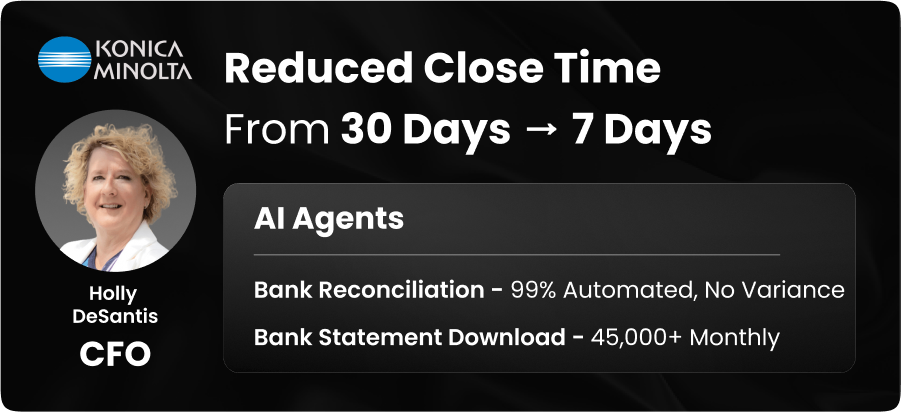
  • 30% Reduction in Days to Close
  • 80% Faster Financial Reporting
  • 90% Faster Time-to-Variance Analysis

Trusted by 1300+ Global Businesses

trusted customer's logos
Gartner

HighRadius recognized as a Challenger in the 2026 Gartner® Magic Quadrant™ for Record to Report (R2R)

Key AI Agents For Financial Reporting Software

AI-Powered Value Creation at 1300+ Enterprises & Mid-Market

Are reporting delays slowing down your financial decisions?

Eliminate reporting delays and make faster decisions with Agentic AI

Watch Product Demo

How Does Financial Reporting Software Work?

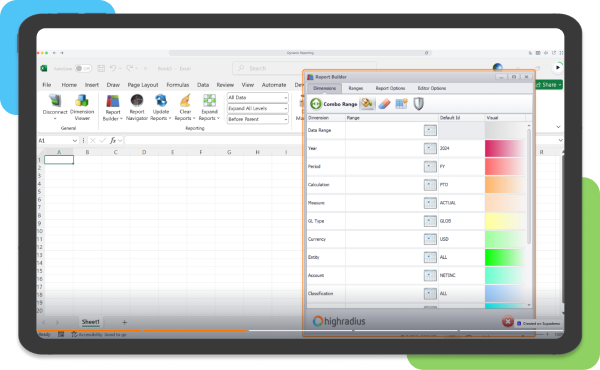
  • Seamless ERP to Reporting Connectivity: Pull and validate data from ERPs, CRMs, and sub-ledgers in real time.
  • Eliminate Manual Extraction: Eliminate spreadsheet errors with auto-ingestion and transformation rules.
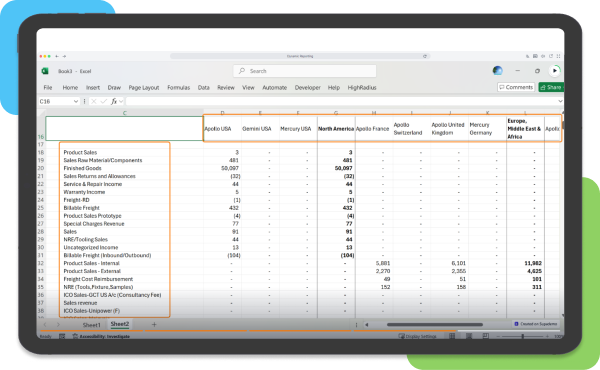
  • Cross-System Sync: Unify data across legal entities, currencies, and business units.
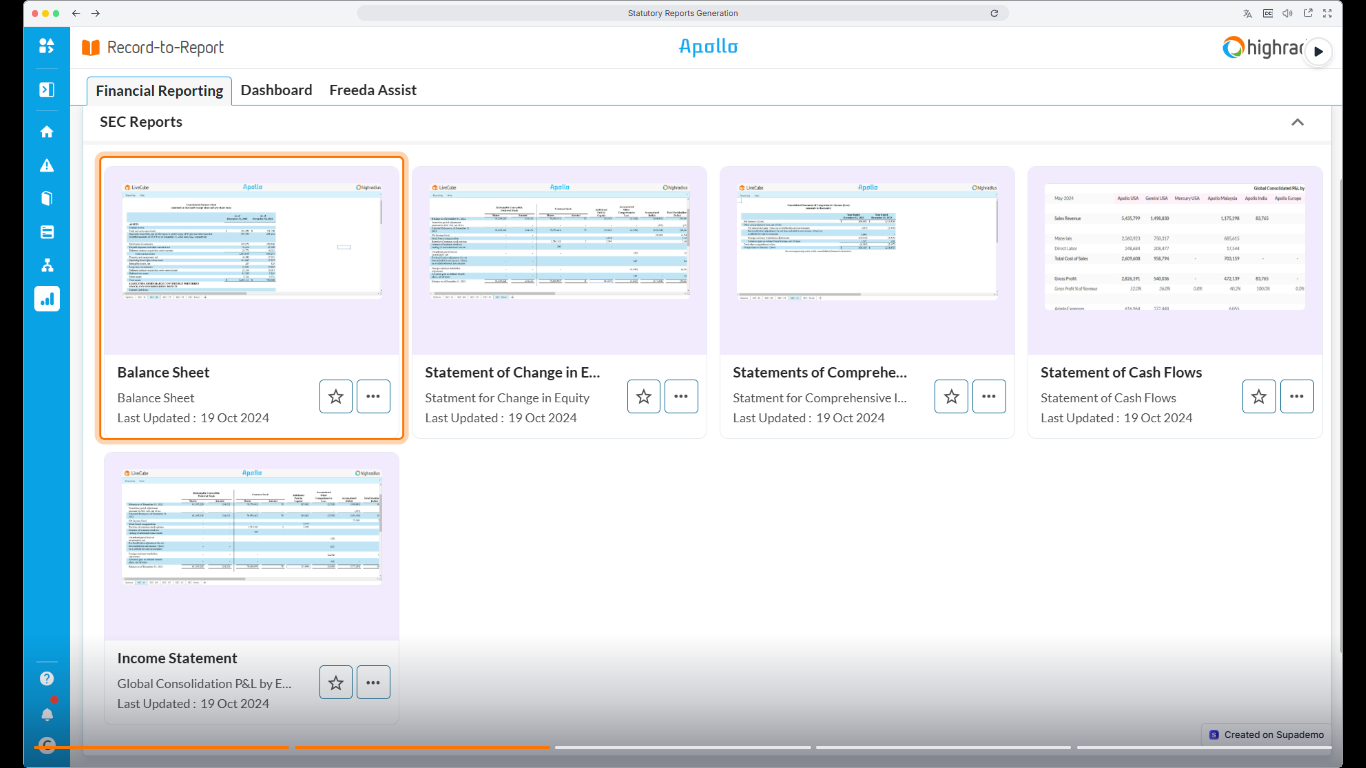
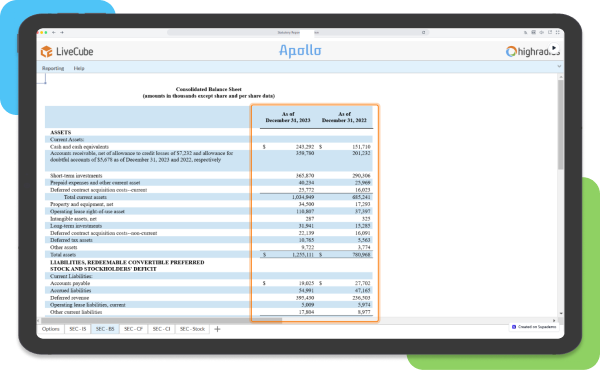
  • Fast, Audit-Ready Reports: Generate balance sheets, P&Ls, and cash flow statements in seconds.
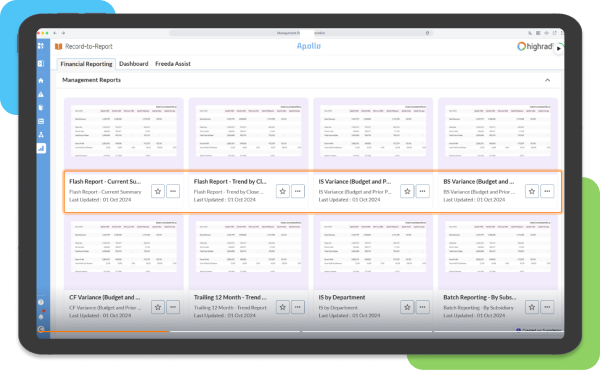
  • Configurable Templates: Customize reports by entity, region, or segment without IT dependency.
  • Narrative Reporting: Combine data and commentary in a single, export-ready report pack.
  • Automated Compliance and Disclosures: Ensure multi-standard compliance while automatically flagging missing disclosures and financial inconsistencies.
  • End-to-End Audit Trails and Governance: Maintain complete traceability with built-in audit logs, role-based approvals, and secure segregation of duties.
  • Real-Time Collaboration: Review, annotate, and finalize reports in real time with full team collaboration and version control.
  • Dynamic Dashboards: Monitor margins, cash positions, and working capital in real-time.
  • Exception Alerts: Flag anomalies or outliers before the books close.
  • Drill-Down Capabilities: Click from consolidated to transactional data in one step.

Financial Reporting Software Use Cases

SAP

Leverage financial close software for SAP to automate high-volume Open Item Clearing and streamline complex intercompany reconciliations with native, real-time data synchronization.

Read More

Netsuite

Deploy pre-built close automation integrations for NetSuite to replace static spreadsheets, automate inventory substantiation, and maintain continuous, audit-ready compliance.

Read More

Oracle

Streamline global operations with financial close solutions for Oracle Cloud to automate recurring journal postings, manage complex accruals, and centralize multi-entity financial consolidation.

Read More

Sage

Utilize native close connectors for Sage to automatically synchronize diverse revenue streams, automate bank reconciliations, and accelerate localized financial reporting cycles.

Read More

Manufacturing

Deploy record-to-report automation to eliminate manual multi-ERP data reconciliations and automate high-volume journal entries for shared cost allocations across global plants.

Read More

Software

Leverage automated financial close solutions to streamline complex subscription revenue recognition and accelerate multi-currency consolidation for recurring revenue models.

Read More

Retail

Utilize automated close solutions to dynamically match high-volume daily POS transactions against bank deposits and gain real-time visibility across storefronts.

Read More

Healthcare

Adopt financial close software to bridge the gap between clinical billing tech stacks and general ledgers while ensuring audit-ready compliance for facility-level allowances.

Read More

Enterprise

Unify multi-entity trial balances across disparate ERP landscapes to automate global statutory reporting.

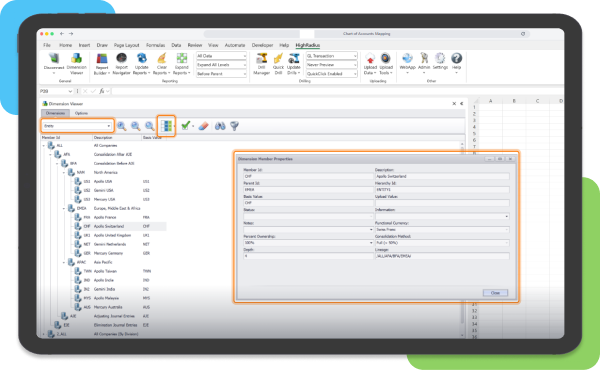
  • 80% faster reporting: Automatically extract and map global Chart of Accounts data to eliminate manual data silos.
  • 90% faster variance analysis: Generate AI-driven variance commentary to turn consolidated numbers into decision-ready insights.
  • Continuous compliance: Enforce strict governance across subsidiaries with secure workflows and automated data tracking.

Mid Market

Eliminate manual spreadsheet-driven data pulling to deliver boardroom-ready financial statement packages without IT dependency.

  • 95% less prep time: Generate balance sheets, income statements, and cash flows with one-click automated ingestion.
  • 30% faster close cycles: Shift lean teams from manual formatting to high-impact analysis via live dashboards.
  • Unified narrative reporting: Combine financial metrics and management commentary automatically into export-ready report packs.
Read More

Must-Have Resources for Smarter Financial Reporting

Maximize Revenue: Step-By-Step Guide to Implementing an Automated Billing System

Buyer’s Guide to AI-Driven Financial Reporting

Learn the key metrics businesses must consider when evaluating vendors for financial reporting software.

Download Vendor Guide
The Ultimate Guide to Adopting B2B Payment Processing Solutions in 2024

Monthly Financial Reporting Template for CFOs

Download this ready-to-use template to track essential financial KPIs and business health that CFOs care about most

Download Temlplate
11 Global Payment Formats

Top 10 Use Cases for AI-led Financial Reporting

Discover proven use cases of how AI is transforming financial reporting by accelerating month-end close by 30%.

Download Guide

See Why Industry-Leading Brands Choose HighRadius

Feature / Vendor HighRadius Other Competitors (Vena, BlackLine, OneStream, LucaNet, & Prophix)

Automation & Intelligence

Intercompany Elimination Automation

Currency Translation Automation

AI-Driven Automation

Integration & Compatibility

Prebuilt ERP Integrations

50+

Excel-Like Interface

Adoption

Scalability to Large Entities

Learning Curve

<30 days

4 -6 months

Benefits of Agentic-AI Led Financial Reporting Software

With HighRadius AI agents orchestrating the financial reporting process, finance teams gain real-time visibility and control. The result: faster closes, stronger compliance, and more reliable financial statements.

1

Automated Workflows for Transactions

Managing high-frequency transactions across multiple entities, currencies, and jurisdictions should not slow down accounting workflows. With built-in automation, financial reporting scales effortlessly to support growing transaction volumes while maintaining accuracy and compliance.

2

Eliminate manual reconciliations

Reconciliation should not be a bottleneck slowing down businesses’ financial close. Automate data validation, instantly flag discrepancies, and streamline adjustments with intelligent workflows. With fewer manual touchpoints, finance teams can shift focus from fixing errors to driving strategic financial decisions, improving overall efficiency and accuracy.

3

Compliance with GAAP and IFRS

Keeping up with changing financial reporting standards shouldn’t be a burden. The system automatically applies the latest compliance rules whether GAAP, IFRS, or industry-specific guidelines—so your reports remain accurate, consistent, and audit-ready.

4

AI-powered audit-ready reports

Eliminate guesswork from financial reporting with AI-powered automation that ensures compliance, accuracy, and transparency. Every report is generated with built-in validation checks, reducing human errors and creating a clear audit trail.

5

Gain real-time financial visibility

Access up-to-the-minute financial data in a centralized dashboard that provides leadership with a 360-degree view of financial performance. Interactive reports allow instant drill-downs into key metrics like revenue, expenses, and cash flow, ensuring data-backed decisions at every level.

6

Enhanced forecasting accuracy

With machine learning and predictive analytics, transform raw financial data into powerful business intelligence. Identify revenue trends, forecast cash flow with greater accuracy, and proactively detect financial risks before they escalate.

Rising logo

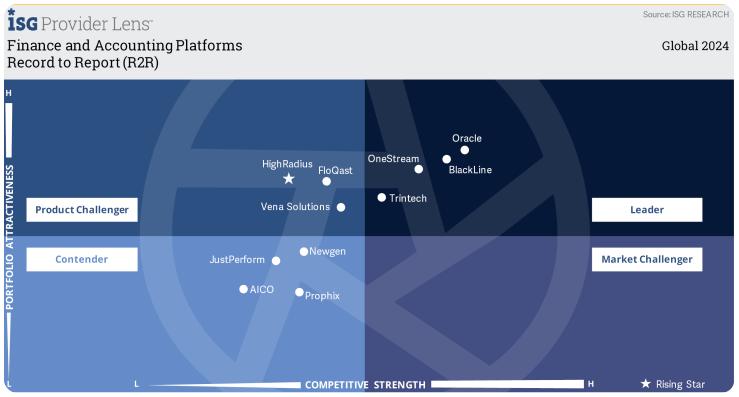
HighRadius Named ‘Rising Star’ in 2024 ISG Provider Lens™ Finance and Accounting Platforms Report

IDC frame

AI Driven Innovations | Comprehensive R2R Suite

Get The Report
IDC frame

With HighRadius’ Automated Financial Reporting Software, You Can Achieve

Here’s how HighRadius advanced financial reporting software helps businesses deliver accurate, timely, and audit-ready financial reports with AI-driven precision

95% Reduced report preparation time
80% Faster financial reporting
100% Reduced errors in financial reporting

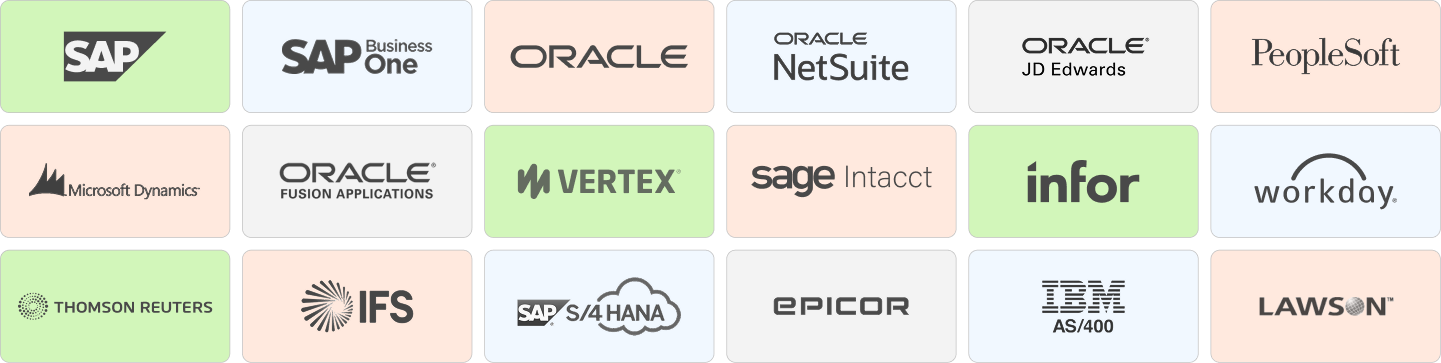
HighRadius Financial Reporting Software Integrates with 50+ ERPs

erp-solutions

Smarter And Faster Financial Reporting Starts With Agentic AI

Agentic AI brings speed, accuracy, and self-learning capabilities to financial reporting—automating complex data tasks and enabling CFOs to lead with precision and confidence.

icons

Agents That Close the Books with You

AI automates validation, variance checks, and report compilation—freeing your team to focus on strategic analysis.

icons

Narrative Generation with Business Context

AI builds narrative commentary using historicals, actuals, and variances—tailored for CFO-level storytelling.

icons

Live Audit Trail, Not Afterthoughts

Every data change, logic update, and reviewer comment is logged by AI for audit-proof transparency.

icons

Proactive Risk and Error Alerts

Before submission, agents flag potential compliance risks, data gaps, or late entries, eliminating surprises.

What Is Financial Reporting Software?

Financial reporting software streamlines financial statement preparation by automating reconciliations, consolidations, and compliance processes. This financial reporting system eliminates reporting errors, reduces manual workloads, and ensures real-time regulatory alignment. With AI-driven insights and automated workflows, finance teams can replace outdated, manual processes with a modern financial reporting platform that enhances efficiency.

Moreover, with AI-powered accuracy and seamless ERP integration, teams can eliminate reporting bottlenecks and mitigate financial risks. Automated audit trails and compliance checks ensure that every report is accurate and regulatory-ready, reducing the risk of misstatements. By accelerating month-end close and enhancing transparency, businesses are able to shift their focus from reactive reporting to proactive financial strategy.

Isometric illustration showing a financial dashboard with an upward arrow, coins, and a calculator, representing optimized reporting

How To Choose The Right Financial Reporting Software

From selecting the right software to scaling workflows, these steps guide businesses in successfully transitioning to automated financial reporting and improving reporting outcomes

1 Identify Reporting Gaps and Risk Areas

Start by evaluating where manual work causes delays, errors, or compliance gaps, like slow reconciliations or inconsistent data accuracy. This helps prioritize automation where it adds the most impact.

2 Look for Scalable, ERP-Compatible Solutions

Choose a platform that integrates easily with your existing ERP and accounting systems. Prioritize solutions that support multi-entity consolidation, global reporting, and growth.

3 Prioritize Real-Time Data and Custom Reporting

Ensure the software enables live dashboards, self-service report building, and automated variance analysis, which will empower faster, insight-driven decisions.

4 Ensure Built-In Compliance & Workflow Automation

Opt for tools with embedded frameworks (GAAP, IFRS, ASC 606) and automated approval workflows to reduce manual oversight while maintaining audit-readiness.

FAQs: Automated Financial Reporting Software

What is the objective of financial reporting?

The objective of financial reporting is to provide stakeholders with reliable and relevant financial information. This supports decision-making, evaluates performance, reveals financial position, and tracks cash flows—ensuring transparency and accountability in an organization’s operations.

Financial reporting also helps organizations maintain credibility and trust by showcasing their financial health and performance. By standardizing financial data, it enables comparisons across periods and industries, supporting strategic planning, risk management, and long-term growth while ensuring compliance with regulatory requirements.

What is the financial reporting framework?

It is a structured set of accounting principles, standards, and guidelines that govern how financial statements are prepared and presented. It ensures consistency, accuracy, and compliance with regulations like GAAP or IFRS, enabling transparent financial communication and informed decision-making.

A strong financial reporting framework provides a standardized approach to measuring, recognizing, and disclosing financial data, ensuring stakeholders receive reliable and comparable information. By adhering to established frameworks, businesses enhance credibility, streamline audits, and maintain regulatory compliance across jurisdictions.

What are International Financial Reporting Standards (IFRS)?

IFRS are a globally recognized set of accounting rules that standardize financial reporting across countries. IFRS enhances transparency, comparability, and consistency in financial statements, ensuring businesses comply with international regulations and attract global investors.

IFRS provides a common financial language for companies operating in multiple jurisdictions, simplifying cross-border transactions and financial analysis. By adopting IFRS, businesses can improve stakeholder confidence, streamline financial consolidation, and ensure compliance with evolving global accounting standards.

How to make a financial report in Excel?

To create a financial report in Excel, start by gathering data, then organize it using structured tables. Utilize formulas, pivot tables for analysis, and charts for visualization. Ensure accuracy with automated functions, and format the report professionally for clear insights.

Enhance your financial report by linking data dynamically to ensure real-time updates. Use conditional formatting to highlight key metrics and automate repetitive tasks with macros. Incorporate templates for consistency and export reports as PDFs for easy sharing, ensuring a simplified and professional presentation.

How does financial reporting software help speed up the month-end close process?

Financial reporting software automates data collection, consolidation, reconciliation, and report generation across entities and business units. Instead of manually compiling spreadsheets, finance teams use a centralized financial reporting platform to monitor close activities, approvals, and reporting workflows in real time. Automated financial reporting software reduces manual effort, shortens close cycles, and improves reporting accuracy.

Can financial reporting software integrate with ERP and accounting systems?

Yes. Most financial reporting software solutions integrate directly with ERP and accounting systems to automatically collect and consolidate financial data. A modern financial reporting system eliminates manual data transfers, provides a single source of truth, and ensures finance teams can generate accurate reports using real-time information across the organization.

How does financial reporting software improve audit readiness?

Financial reporting software maintains complete audit trails, approval histories, and supporting documentation throughout the reporting process. Financial reporting automation software creates a transparent record of financial activities, helping organizations comply with IFRS and GAAP requirements while reducing audit preparation time and improving reporting accuracy.

What benefits can companies expect from financial reporting software?

Companies using financial reporting software benefit from faster reporting cycles, reduced manual effort, improved data accuracy, and better visibility into financial performance. Automated financial reporting software streamlines report preparation, while advanced financial reporting tools provide real-time dashboards, variance analysis, and actionable insights that help leaders make better business decisions.

How does automated financial reporting software reduce report preparation time for mid-market teams?

Automated financial reporting software consolidates data from multiple entities, business units, and ERP systems into a centralized reporting platform. Finance teams can generate financial statements, management reports, and board-ready reports in minutes rather than days. Financial reporting automation tools eliminate repetitive manual processes and help mid-market organizations scale reporting without increasing headcount.

Can a mid-market company accelerate its month-end close using financial reporting tools?

Yes. Financial reporting tools provide real-time visibility into financial performance throughout the reporting cycle, allowing teams to identify and resolve issues earlier. By replacing spreadsheet-based processes with an automated reporting system, organizations can reduce close timelines, improve reporting accuracy, and generate audit-ready reports faster.

Accounts Receivable Solutions

Accounts Receivable Software | Collection Software | Cash Application Automation | Credit Risk Management | Credit Management | Credit & Collection | EIPP | Electronic Invoicing | Invoice to Cash | Invoice Collection | B2B Payments | Order to Cash | O2C Analytics | Integrated Receivable | Deduction Management | Credit Application | Credit Scoring | Exception Management | Dispute Management | Trade Promotion | Dunning Management | Financial Data Aggregation | Remittance Processing | Collaborative Accounts Receivable | Remote Deposit Capture | Credit Risk Monitoring | Credit Decisions Engine

Accounts Payable Solutions

AP Automation | Invoice Processing | Invoice Scanning & Capture | Invoice Coding | Invoice Approval | Invoice Matching | Invoice Management | Supplier Management | Supplier Onboarding | Dynamic Discounting | Vendor Payment

Financial Reconciliation & Close Solutions

Account Reconciliation | Financial Close | Bank Reconciliation | Balance Sheet Reconciliation | Payment Reconciliation | Transaction Matching | SOX Software | General Ledger Reconciliation | Journal Entry | Variance Analysis| Financial Consolidation | Financial Reporting | Financial Statement | Financial Reconciliation | Cash Reconciliation

Treasury & Cash Management Solutions

Treasury Management | Cash Flow Forecasting | Cash Management | Cash Flow Management | Revenue Recognition | Liquidity Management

Resources:

Month End Close Process | SOX Controls | Transactional Reconciliation | Automated Reconciliation | Intercompany Accounting | Intercompany Transactions | Matching Principle In Accounting | Working Capital Management | Payment Reconciliation | ERP vs Accounting Software | Cost Allocation | Intercompany Reconciliation | Payroll Reconciliation | Automated Accounting | Credit Card Reconciliation | Financial Close Management | Financial consolidation tools | What is Account Reconciliation | What is General Ledger Reconciliation | Bank Reconciliation

Ebooks, Templates, Whitepapers & Case Studies:

Financial Close Buyers Guide | ROI of Automated Accounting | Automated Financial Close Use Cases | AI In Account Reconciliation | Impact Of Implementing AI In R2R Processes | Month End Close Accuracy | Bank Reconciliation Template | Month End Close Checklist | Anomaly Management Dashboard | Financial Close Vendor Evaluation Scorecard | Variance Analysis