Payment Reconciliation: How to Automate with a Modern Payment Reconciliation System
1 August, 2024
10 minute read
Arjobi Gautam, Finance Content Expert
A
Arjobi Gautam
Arjobi specializes in finance transformation, crafting content that bridges the gap between traditional financial operations and modern, technology-driven processes. With a strong focus on automation, efficiency, and strategic value creation, Arjobi brings clarity to complex transformation journeys within the B2B SaaS and FinTech landscape. Leveraging deep domain expertise, Arjobi translates evolving financial practices into actionable insights for forward-thinking finance teams. Beyond work, Arjobi has a keen interest in exploring emerging trends in digital finance and enjoys content that challenges conventional thinking. Their writing style combines analytical depth with a practical, results-oriented perspective on the future of finance.
Last updated: 14 July, 2026
What if payment reconciliation could run on autopilot? Learn how AI speeds your close.
Payment reconciliation is the process of verifying that payments received or made by a business match the corresponding invoices, bank statements, and accounting records. Unlike general account reconciliation, it tracks each payment against invoices or orders, identifies exceptions such as partial payments or chargebacks, and proactively resolves mismatches, forming the foundation for accurate reporting, audit readiness, and cash flow visibility.
Yet, for most organizations, this critical process remains one of the most time-consuming and error-prone tasks in finance. Teams spend hours or even days manually matching transactions across multiple systems. The result? Delays in the financial close, frustrated teams, and higher risks of reporting errors.
A PwC Global Finance Survey found that finance professionals spend 30–40% of their time on transactional activities like reconciliation, leaving little room for strategic decision-making. Another study by Deloitte highlighted that more than 70% of finance leaders see manual reconciliations as a leading cause of inefficiency.
With rising transaction volumes, traditional methods can’t keep up. To solve this, leading organizations now automate payment reconciliation by implementing a modern payment reconciliation system. By leveraging AI-driven automation, finance teams can reduce manual effort, improve accuracy, and accelerate the close process. In this blog, we’ll discuss why this transition is critical and how the right payment reconciliation software helps achieve a faster, more confident financial close.
Key Takeaways
Payment reconciliation ensures every transaction matches invoices, bank records, and accounting entries accurately.
Manual reconciliation is error-prone and slow; automation is the only scalable fix.
A modern reconciliation system brings real-time visibility, faster close, and audit readiness.
Table of Contents
What is Payment Reconciliation?
Key Takeaways
Types of Reconciliation: Payment, Bank, AR/AP, and GL
Step-by-Step Guide to Payment Reconciliation Process
How to Automate Payment Reconciliation
Common Challenges With Manual Payment Reconciliation Process
Why Accuracy Matters in Payment Reconciliation & How Automation Helps
Core Components of a Modern Payment Reconciliation System
Best Practices for Effective Payment Reconciliation
How Can HighRadius Help Simplify Payment Reconciliation?
Types of Reconciliation: Payment, Bank, AR/AP, and GL
Payment reconciliation processes vary depending on transaction types and business operations. Each reconciliation type serves a specific purpose and requires a tailored approach to ensure all financial activities are accurately recorded in the company’s accounting books. The most common forms of reconciliation include:
Step-by-Step Guide to Payment Reconciliation Process
An efficient payment reconciliation process is critical to maintaining financial accuracy and cash flow visibility. Whether done manually or through automation, following a structured approach ensures that all transactions are accounted for and exceptions are resolved promptly. Here’s a step-by-step guide to effective payment reconciliation:
Collect Payment Data:
Gather all payment information from bank statements, ERP systems, and payment gateways. Centralizing data ensures that every transaction is captured for reconciliation.
Match Payments to Invoices:
Compare received payments against corresponding invoices or orders. Automated reconciliation tools can perform this step instantly, reducing manual effort and errors.
Identify Exceptions:
Flag unmatched or partial payments, duplicate transactions, or discrepancies. Early identification helps prevent delays in the financial close.
Investigate and Resolve Discrepancies:
Work with relevant teams to resolve exceptions by verifying customer payments, correcting data entry errors, or adjusting records as needed.
Update Accounting Records:
Once discrepancies are resolved, update the general ledger and ERP systems to reflect accurate payment and invoice status.
Review and Approve Reconciliation:
Finance managers should review reconciled transactions for accuracy and approve them before finalizing the financial close.
Report and Analyze:
Generate reports to track reconciliation metrics, cash flow trends, and exception patterns. Insights from these reports can drive process improvements and optimize working capital.
Ebooks
Unlock the ROI of AI in Finance
See how predictive analysis and automation in payment reconciliation boost accuracy, efficiency, and strategic decision-making.
Manual payment reconciliation is one of the biggest bottlenecks in finance, slowing down the financial close and increasing the risk of errors. By adopting AI-driven and automated reconciliation solutions, organizations can transform this critical process, reducing manual effort, improving accuracy, and gaining real-time cash flow visibility. Here’s how automation makes a difference:
Automated Matching of Payments and Invoices:
AI-driven tools automatically match payments to invoices, orders, or bank statements. This eliminates the need for tedious manual reconciliation and speeds up the month-end close.
Exception Management Made Easy:
Automation identifies unmatched or partial payments and flags exceptions instantly. Finance teams can resolve issues quickly without spending hours manually investigating discrepancies.
Faster and More Accurate Financial Close:
By reducing manual reconciliation tasks, organizations can close books faster and with higher accuracy. Automation minimizes errors and ensures reliable reporting.
Real-Time Cash Flow Visibility:
AI-powered reconciliation provides a live view of incoming and outgoing payments. CFOs and finance teams can make better decisions about liquidity and working capital.
Audit-Ready and Compliance-Friendly:
Automated reconciliation creates a transparent audit trail, helping organizations maintain regulatory compliance and simplifying audits.
Scalability for Growing Transaction Volumes:
AI can handle large volumes of payments effortlessly, enabling businesses to scale without adding additional resources or manual effort.
HighRadius Named ‘Rising Star’ In 2024 ISG Provider Lens™ Finance And Accounting Platforms Report
Common Challenges With Manual Payment Reconciliation Process
Payment reconciliation is often a complex and time-consuming R2R process. Finance teams face multiple challenges that can slow down the month-end close, increase errors, and affect cash flow visibility. Here are the most common obstacles businesses encounter:
Manual Reconciliation and Human Errors:
Relying on spreadsheets and manual reconciliation increases the risk of mistakes. Even small errors in matching invoices to payments can delay the financial close and create reporting inaccuracies.
High Transaction Volumes:
Organizations processing hundreds or thousands of payments daily face reconciliation challenges. Manual tracking becomes inefficient, increasing the likelihood of unmatched or misposted transactions.
Fragmented Systems and Siloed Data:
Payment data spread across multiple ERPs, banks, and payment gateways slows down reconciliation. Lack of centralized information hinders accuracy and reduces cash flow visibility.
Partial or Delayed Payments:
Customers may make payments in installments or at unexpected times. Resolving these exceptions manually consumes time and can affect the overall accuracy of the reconciliation process.
Limited Reporting and Visibility:
Finance teams often struggle to get real-time insights into payments and cash positions. Poor visibility makes it harder to manage liquidity, plan working capital, and meet strategic goals.
Compliance and Audit Risks:
Incomplete or inaccurate payment reconciliation increases regulatory and audit risks. Without automated tracking, maintaining an audit-ready trail is time-consuming and error-prone.
Ebooks
Still Chasing Reconciliation Gaps?
Explore AI strategies for flawless reconciliation and accurate reporting.
Why Accuracy Matters in Payment Reconciliation & How Automation Helps
Payment reconciliation is a crucial process that ensures every payment matches invoices, bank statements, and accounting records. Inefficient reconciliation can delay the financial close, reduce cash flow visibility, and increase errors. Here’s why effective payment reconciliation is essential for modern finance teams:
Ensures Financial Accuracy:
Accurate payment reconciliation prevents discrepancies in accounting records and financial statements. It helps avoid reporting errors that can impact decision-making and compliance.
Reduces Errors and Manual Reconciliation Burden:
Manual reconciliation is prone to mistakes and consumes significant time. Automating the payment reconciliation process minimizes human errors and accelerates the financial close.
Improves Cash Flow Visibility:
Automated payment reconciliation provides real-time insight into cash positions and outstanding payments. Enhanced visibility supports better liquidity management and strategic financial planning.
Supports Compliance and Audit Readiness:
A clear reconciliation trail ensures organizations meet regulatory requirements and are prepared for audits. Automated payment reconciliation tools make it easier to maintain accurate records.
Frees Up Time for Strategic Work:
By reducing manual reconciliation tasks, finance teams can focus on trend analysis, working capital optimization, and improving overall business performance.
Enhances Stakeholder Trust:
Reliable payment reconciliation reduces disputes with customers and vendors, increasing confidence in financial reporting for management, investors, and auditors.
Choosing a Payment Reconciliation System: The 2026 Solution Guide
A comprehensive breakdown of core system components, AI matching logic, and enterprise-grade security requirements.
Core Components of a Modern Payment Reconciliation System
To successfully automate payment reconciliation, a system must do more than just compare two spreadsheets. A robust payment reconciliation system is built on four technical pillars that ensure data integrity and speed:
1. Real-Time Data Aggregation
The foundation of any automated payment reconciliation system is its ability to ingest data without manual uploads. Modern systems use secureAPI connectors or SFTP to pull data directly from:
Banking Institutions: Daily bank statements and transaction files.
ERP Systems: Seamless integration with platforms like SAP, Oracle, NetSuite, and Microsoft Dynamics.
Payment Gateways: Data from Stripe, PayPal, or specialized B2B gateways.
2. Advanced Matching Engine
The core of the payment reconciliation system is the matching engine. It goes beyond simple 1-to-1 matching (matching one invoice to one payment) and handles complex scenarios:
1-to-Many Matching: One bank deposit covering multiple invoices.
Many-to-1 Matching: Multiple payments (like credit card batches) settling a single bulk invoice.
AI & Fuzzy Logic: Using machine learning to match transactions even when reference numbers are missing, or date ranges differ slightly.
3. Automated Exception Management
When a discrepancy occurs—such as a short payment, a duplicate entry, or an unexpected bank fee—the system doesn’t just stop. It triggers an exception management workflow. This automatically flags the mismatch and routes it to the correct team member for resolution, ensuring nothing falls through the cracks.
4. Immutable Audit Trail
For compliance and audit readiness, every action within the reconciliation system is logged. A modern payment reconciliation system maintains a secure, timestamped record of:
Who matched which transaction?
Why was an adjustment made?
Approvals for resolved exceptions. This reduces the time spent on internal and external audits by up to 50%.
Take a deep dive into HighRadius’ R2R solutions
Getting granular visibility and control into your accounting process is just a click away.
Achieve up to 90% transaction auto-match with out-of-the-box matching rulesK
Financial Close Management
Reduce days to close by 30% with a detailed checklist for month-end close
Anomaly Management
Resolve 80% of anomalies with auto-suggested actions.
Best Practices for Effective Payment Reconciliation
Effective payment reconciliation requires a combination of structured processes, automation, and regular monitoring. By following best practices, finance teams can minimize errors, accelerate the financial close, and maintain accurate cash flow visibility. Here are some key best practices:
Consolidate all payment information from ERPs, banks, and payment gateways.
Use AI-driven tools to match payments and invoices efficiently.
Identify and resolve unmatched or partial payments promptly.
Keep accurate records for compliance and audit readiness.
Implement consistent procedures across teams and systems.
Track reconciliation accuracy, exception rates, and cycle times.
Ensure reconciliation is linked to overall cash flow visibility.
How Can HighRadius Help Simplify Payment Reconciliation?
Traditional payment reconciliation is often a manual, error-prone process that slows down financial operations. HighRadius Payment Reconciliation Software revolutionizes this by leveraging Agentic AI and automation to achieve up to 80% reconciliation automation, 30% faster close cycles, and 100% reporting accuracy. Integrated seamlessly with your ERP, it ensures real-time transaction matching, proactive exception management, and audit-ready compliance, empowering finance teams to close faster and make more informed decisions.
Intelligent Automated Matching: AI-powered algorithms instantly match payments to invoices, orders, or bank statements, eliminating manual reconciliation and drastically reducing errors.
Proactive Exception Management: Identify mismatches, partial payments, and duplicates automatically. Finance teams can resolve exceptions quickly, preventing delays in reporting.
Unified Dashboard for Full Visibility: All reconciliations, exceptions, and reports are accessible in one centralized platform, giving CFOs and finance teams complete control over cash flow and working capital.
Audit-Ready and Compliance-Friendly: Maintain a full, traceable audit trail for every transaction, simplifying audits and ensuring regulatory compliance.
Accelerated Financial Close: Automation shortens month-end and period-end close cycles, freeing up finance teams to focus on strategic initiatives instead of manual tasks.
Scalable for Growing Businesses: Handle high volumes of payments effortlessly, allowing organizations to scale without adding manual resources.
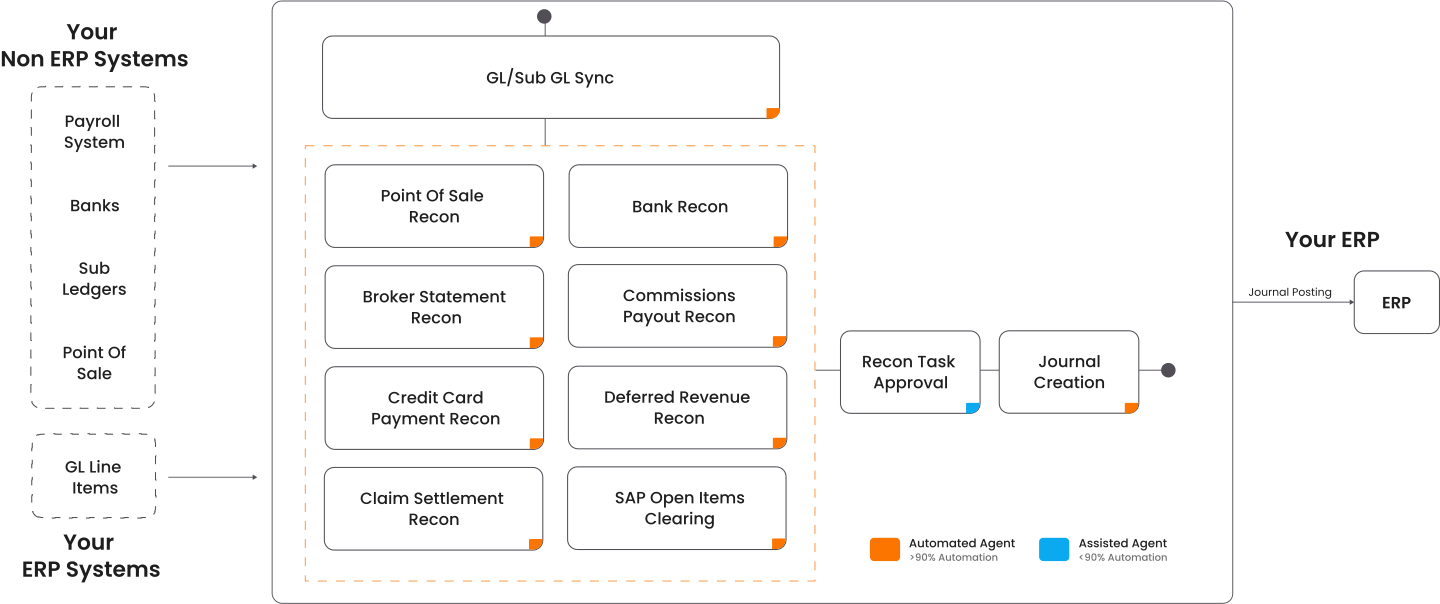
Reconciliation Software Agentic AI Orchestration
Frequently Asked Questions (FAQs)
1. What is payment reconciliation in accounting?
Payment reconciliation in accounting is the process of matching incoming payments with issued invoices. It ensures accurate cash posting, helps detect duplicate or missing entries, prevents revenue leakage, improves transparency, supports audits, and keeps financial reporting complete, timely, and fully compliant.
Payment reconciliation in accounting is the process of matching incoming payments with issued invoices. It ensures accurate cash posting, helps detect duplicate or missing entries, prevents revenue leakage, improves transparency, supports audits, and keeps financial reporting complete, timely, and fully compliant.
2. What is the difference between payment and bank reconciliation?
Payment reconciliation focuses on matching customer payments with invoices to ensure cash is applied correctly, while bank reconciliation compares company records with bank statements. Both processes keep books accurate, highlight discrepancies, and help businesses prevent costly errors and potential fraud.
Payment reconciliation focuses on matching customer payments with invoices to ensure cash is applied correctly, while bank reconciliation compares company records with bank statements. Both processes keep books accurate, highlight discrepancies, and help businesses prevent costly errors and potential fraud.
3. How does AI help in payment reconciliation?
AI helps payment reconciliation by automating transaction matching, spotting anomalies, and learning from payment patterns. It minimizes manual effort, speeds up processing, improves accuracy, provides real-time cash visibility, supports compliance, and enables finance teams to close books faster and with greater confidence.
AI helps payment reconciliation by automating transaction matching, spotting anomalies, and learning from payment patterns. It minimizes manual effort, speeds up processing, improves accuracy, provides real-time cash visibility, supports compliance, and enables finance teams to close books faster and with greater confidence.
4. How often should payments be reconciled?
Payments should ideally be reconciled daily in high-volume businesses and at least monthly for smaller ones. Regular reconciliation minimizes errors, detects fraud early, prevents duplicate entries, keeps financial data reliable, ensures cash visibility, and gives finance teams greater control and confidence in reporting.
Payments should ideally be reconciled daily in high-volume businesses and at least monthly for smaller ones. Regular reconciliation minimizes errors, detects fraud early, prevents duplicate entries, keeps financial data reliable, ensures cash visibility, and gives finance teams greater control and confidence in reporting.
5. Can payment reconciliation detect fraud or duplicate payments?
Yes, payment reconciliation can detect fraud or duplicate payments by flagging mismatches, irregular transactions, and unusual payment patterns. Beyond accuracy, it helps safeguard company cash flow, prevent revenue leakage, strengthen compliance, support audits, and reduce overall financial risks for businesses of every size.
Yes, payment reconciliation can detect fraud or duplicate payments by flagging mismatches, irregular transactions, and unusual payment patterns. Beyond accuracy, it helps safeguard company cash flow, prevent revenue leakage, strengthen compliance, support audits, and reduce overall financial risks for businesses of every size.
6. What happens if payment reconciliation is not done properly?
If payment reconciliation is not done properly, it can lead to inaccurate books, missed or duplicate payments, delayed closes, compliance risks, and even fraud going undetected. Poor reconciliation reduces cash visibility, weakens audits, and undermines stakeholder trust in financial reporting.
If payment reconciliation is not done properly, it can lead to inaccurate books, missed or duplicate payments, delayed closes, compliance risks, and even fraud going undetected. Poor reconciliation reduces cash visibility, weakens audits, and undermines stakeholder trust in financial reporting.
7. What tools are used for payment reconciliation?
Tools for payment reconciliation include spreadsheets, ERP systems, accounting software, and advanced AI-driven payment reconciliation software. Modern tools like HighRadius automate matching, flag anomalies, centralize data, ensure audit readiness, and provide real-time cash and working capital visibility.
Tools for payment reconciliation include spreadsheets, ERP systems, accounting software, and advanced AI-driven payment reconciliation software. Modern tools like HighRadius automate matching, flag anomalies, centralize data, ensure audit readiness, and provide real-time cash and working capital visibility.
8. Why is automated payment reconciliation better than manual methods?
Automated payment reconciliation is faster, more accurate, and scalable than manual methods. It eliminates human errors, reduces close cycles, and ensures compliance. AI-driven tools like HighRadius provide real-time cash visibility, proactive exception handling, and audit-ready records for finance teams.
Automated payment reconciliation is faster, more accurate, and scalable than manual methods. It eliminates human errors, reduces close cycles, and ensures compliance. AI-driven tools like HighRadius provide real-time cash visibility, proactive exception handling, and audit-ready records for finance teams.
9. What is a payment reconciliation system?
A payment reconciliation system is a specialized financial software solution designed to automatically compare and match internal accounting records (such as invoices, receipts, and ledgers) with external financial data (such as bank statements and payment gateway reports). Unlike manual reconciliation, a modern payment reconciliation system uses sophisticated algorithms to identify matches based on transaction IDs, amounts, dates, and vendor names. By centralizing data from multiple sources, including ERPs, banks, and merchant accounts, the system ensures that every dollar recorded in your books is accounted for in your bank account, providing a single source of truth for the office of the CFO.
A payment reconciliation system is a specialized financial software solution designed to automatically compare and match internal accounting records (such as invoices, receipts, and ledgers) with external financial data (such as bank statements and payment gateway reports). Unlike manual reconciliation, a modern payment reconciliation system uses sophisticated algorithms to identify matches based on transaction IDs, amounts, dates, and vendor names. By centralizing data from multiple sources, including ERPs, banks, and merchant accounts, the system ensures that every dollar recorded in your books is accounted for in your bank account, providing a single source of truth for the office of the CFO.
10. How do you automate payment reconciliation?
To automate payment reconciliation, finance teams use AI-driven software to replace manual data entry with a streamlined digital workflow. Follow these steps to automate the process:
Establish Bank Feeds: Use APIs or SFTP to connect your banking data directly to your payment reconciliation system.
Configure Matching Logic: Set up AI matching engines to cross-reference transaction IDs, dates, and amounts across your ERP and bank statements.
Handle Exceptions by Exception: Allow the system to auto-clear perfect matches while flagging only discrepancies (like bank fees or partial payments) for human review.
Sync to General Ledger: Automatically update your accounting software once transactions are reconciled to ensure real-time cash visibility.
To automate payment reconciliation, finance teams use AI-driven software to replace manual data entry with a streamlined digital workflow. Follow these steps to automate the process:
Establish Bank Feeds: Use APIs or SFTP to connect your banking data directly to your payment reconciliation system.
Configure Matching Logic: Set up AI matching engines to cross-reference transaction IDs, dates, and amounts across your ERP and bank statements.
Handle Exceptions by Exception: Allow the system to auto-clear perfect matches while flagging only discrepancies (like bank fees or partial payments) for human review.
Sync to General Ledger: Automatically update your accounting software once transactions are reconciled to ensure real-time cash visibility.
HighRadius Named a Challenger In 2025 Gartner® Magic Quadrant™ for Financial Close and Consolidation Solutions
HighRadius stands out as a challenger by delivering practical, results-driven AI for Record-to-Report (R2R) processes. With 200+ LiveCube agents automating over 60% of close tasks and real-time anomaly detection powered by 15+ ML models, it delivers continuous close and guaranteed outcomes—cutting through the AI hype. On track for 90% automation by 2027, HighRadius is driving toward full finance autonomy.
HighRadius Named ‘Rising Star’ in 2024 ISG Provider Lens™ Finance and Accounting Platforms Report
HighRadius leverages advanced AI to detect financial anomalies with over 95% accuracy across $10.3T in annual transactions. With 7 AI patents, 20+ use cases, FreedaGPT, and LiveCube, it simplifies complex analysis through intuitive prompts. Backed by 2,700+ successful finance transformations and a robust partner ecosystem, HighRadius delivers rapid ROI and seamless ERP and R2R integration—powering the future of intelligent finance.
HighRadius Named As A Major Player For Treasury & Risk Management Software By IDC
HighRadius is redefining treasury with AI-driven tools like LiveCube for predictive forecasting and no-code scenario building. Its Cash Management module automates bank integration, global visibility, cash positioning, target balances, and reconciliation—streamlining end-to-end treasury operations.