Here's a number that should stop any CFO cold: corporate cross-border payments are sized at $23.5 trillion annually - and the transaction costs attached to moving that money exceed $120 billion every year. That's not a rounding error. That's $120 billion in fees, FX spreads, and processing costs that businesses pay simply to move money from one country to another. And for most finance teams, the process still involves logging into multiple banking portals, manually reconciling currency mismatches, and chasing settlement confirmations that seem to disappear into a correspondent banking black hole.
This is the gap that modern cross-border payment software are designed to close. The best international payment platforms today don't just move money across borders; they automate the entire international payment lifecycle, from FX optimization and multi-rail routing to real-time reconciliation and ERP posting. AI is accelerating cross-border payment processing by cutting transaction times by up to 90% and reducing operational costs by 30–50% through the elimination of manual workflows.
This guide is a complete reference for finance leaders, AR/AP teams, and enterprise decision-makers who need to understand, evaluate, and modernize their cross-border B2B payment operations. We cover how cross-border payments work, the payment rails that carry them, the challenges that slow them down, and what the best international payment software looks like in 2026.
Table of Contents
- What Are Cross-Border Payments?
- How Do Cross-Border Payments Work?
- Types of Cross-Border Payment Methods
- Key Challenges of Cross-Border B2B Payments
- Benefits of Adopting a Cross-Border Payment Platform
- How to Choose the Right Cross-Border Payment Software
- How AI Is Transforming Cross-Border Payment Processing
- The Future of Cross-Border Payments
- Conclusion
What Are Cross-Border Payments?
Cross-border payments are financial transactions where the payer and the payee are located in different countries. They are the backbone of global commerce, covering everything from a US manufacturer paying a supplier in Taiwan, to a SaaS company collecting subscription revenue from customers in Germany, to a multinational enterprise settling intercompany balances across 12 legal entities on three continents.
At the simplest level, a cross-border payment involves moving money across national boundaries in a way that accounts for different banking systems, currencies, regulatory environments, and settlement timelines. In practice, that simplicity quickly unravels. Every cross-border transaction introduces variables that don't exist in domestic payments: foreign exchange conversion, correspondent bank chains, country-specific compliance requirements, and multi-day settlement windows that create cash flow uncertainty.
Cross-border payments can be broadly categorized by the parties involved:
Business-to-Business (B2B): The largest segment by value, covering supplier payments, trade settlements, intercompany transfers, and treasury operations between companies. The B2B segment held the largest revenue share globally in 2024 with a 52% share of the cross-border payments market, driven by high-value corporate transactions, global supply chain settlements, and treasury operations.
Business-to-Consumer (B2C): Payments from businesses to individuals, such as gig economy payouts, insurance settlements, and affiliate payments to international recipients. B2C cross-border payments are forecast to grow 131% between 2024 and 2032, climbing at an 11.1% CAGR, driven largely by the continued rise of the gig economy.
Consumer-to-Business (C2B): International e-commerce transactions, where consumers pay businesses across borders for goods and services.
Consumer-to-Consumer (C2C): Personal remittances, money sent by individuals to family or contacts in other countries. While smaller by transaction value, this segment remains critically important and has historically been the most expensive corridor.
For enterprises, cross-border B2B payments are the primary focus and the most operationally complex. High transaction values, multi-entity accounting structures, strict regulatory requirements, and the need to reconcile payments across currencies and ERP systems make B2B international payments a category where the right cross-border payment platform can deliver measurable financial and operational impact.
How Do Cross-Border Payments Work?
Understanding how cross-border payment processing actually works, a step-by-step guide, is essential for any finance team looking to optimize it. At its core, a cross-border payment follows a chain of instructions, verification steps, and fund movements across multiple institutions.
Here is the end-to-end flow for a typical B2B cross-border transaction:
Payment Initiation
The payer (typically an AP team or treasury function) initiates the payment through their bank, ERP system, or cross-border payment platform. They provide the recipient's bank details, the payment amount, the currency, and the payment purpose.
Compliance Screening
Before the payment is processed, it is screened against sanctions lists (OFAC, EU, UN), AML requirements, and KYC data. A 2025 survey by the Association of Finance Professionals found that 79% of US organizations faced payment fraud attempts in 2024, with wire transfers, the backbone of cross-border payments, most vulnerable to attack. This is why compliance screening is a non-negotiable gate in every international payment flow.
Routing and Rail Selection
The payment is routed through the appropriate payment rail: SWIFT for global bank-to-bank messaging, SEPA for euro-denominated European payments, local ACH networks for domestic-equivalent processing, or real-time payment rails like Faster Payments or RTP for eligible corridors. The rail selected determines cost, speed, and settlement certainty.
Correspondent Banking
If the sending and receiving banks don't have a direct relationship, intermediary (correspondent) banks are used to relay funds. Each correspondent bank in the chain adds time, cost, and a layer of opacity, one of the most persistent pain points in traditional cross-border B2B payment processing.
Foreign Exchange Conversion
If the payment involves a currency change, FX conversion occurs, either at the sending bank, an intermediary bank, or the receiving bank. Each conversion point is an opportunity for markup and cost leakage, which is why centralized FX management is a key capability of modern international payment software.
Settlement
Funds are settled into the recipient's bank account. Settlement timelines vary widely: SEPA Instant can settle in under 10 seconds, Faster Payments in the UK settles in seconds, SWIFT wires can take 1–5 business days, and international ACH transfers can take 3–5 days, depending on the corridor.
Reconciliation and GL Posting
Once settled, the payment must be matched to the original invoice, currency differences reconciled, and the transaction posted to the general ledger. For enterprises managing high-volume international receivables and payables, this step is where the most manual effort, and the most errors occur. Treasury teams managing cross-border payments through local bank accounts in multiple markets face the overhead of reconciling and funding multiple accounts, often holding balances in currencies with low or negative yields, a model that becomes unsustainable as businesses scale.
Types of Cross-Border Payment Methods
Not all cross-border payment solutions use the same underlying infrastructure. Finance teams need to understand the major payment rails and methods available, because the right choice can mean the difference between a payment settling in seconds or sitting in limbo for five business days.
SWIFT (Society for Worldwide Interbank Financial Telecommunication)
SWIFT is the global messaging fabric for cross-border payments, used by 11,500+ institutions in 200+ countries. SWIFT reports that about 90% of cross-border payments reach the destination bank within one hour, a significant improvement driven in part by SWIFT gpi. However, "reaching the destination bank" and "settling in the recipient's account" are not the same thing. Total end-to-end settlement can still take 1–5 days, depending on cut-off times, correspondent bank chains, and the currencies involved.
Best for: High-value B2B transactions, multi-currency international wires, and payments to countries outside regional payment zones.
Limitations: Higher cost due to correspondent bank fees, less transparency in intermediary steps, and slower settlement than newer alternatives.
Key development: SWIFT's ISO 20022 migration, with coexistence ending in November 2025 , now enables enriched, structured data in cross-border messages, improving automation, fraud management, and reconciliation straight-through processing rates.
SEPA (Single Euro Payments Area)
SEPA harmonizes euro payments across 41 countries. SEPA Credit Transfer follows D+1 execution on banking business days, while SEPA Instant aims to make funds available in under ten seconds, any time, any day, for participating providers. For any enterprise with EUR-denominated transactions within Europe, SEPA is the most efficient rail available.
Best for: EUR payments within Europe, supplier and customer settlements in the SEPA zone, high-frequency euro flows where speed and cost both matter.
Limitations: EUR-denominated transactions only; not applicable outside the SEPA region.
ACH and International ACH (Global ACH)
Global ACH moves money between US and foreign bank accounts using other country payment rails, including EFT, SEPA, BACS (UK), and BECS (Australia). Within the US, Same Day ACH can settle within hours with a per-payment limit of $1 million, while the FedNow service runs 24x7x365 for instant USD transfers between participating institutions.
Best for: Regular, high-volume, lower-value cross-border transactions; payroll for international workforces; recurring supplier payments in established corridors.
Limitations: Slower processing for true international ACH (3–5 days); not ideal for urgent, high-value payments.
Local Payment Rails
Modern cross-border payment platforms increasingly combine local rails with global orchestration to optimize delivery. Paying USD into a US bank account via ACH can be cheaper than sending a USD SWIFT wire; paying EUR within Europe via SEPA is cheaper than using cross-border SWIFT messaging.
Key local rails include: Faster Payments (UK, near-instant settlement), BACS (UK, 3-day settlement for direct debits), BECS (Australia, batch clearing), CIPS (China, CNY-denominated cross-border), Pix (Brazil, real-time), and UPI (India, real-time). Real-time links such as UPI-PayNow and FedNow pilots have compressed settlement windows from several days to seconds, prompting corporates and consumers to migrate volume to instant channels.
Virtual Cards and Digital Wallets
Virtual cards enable controlled, one-time or recurring cross-border payments without requiring bank account details, making them particularly useful for B2B supplier payments where card rails are preferred. Global virtual card payments are forecast to grow 235% by 2029, rising from $5.2 trillion in 2025. Digital wallets are gaining ground in B2C corridors and increasingly in B2B supply chain payments across the Asia-Pacific.
Stablecoins and Blockchain-Based Payments
Stablecoins can provide an alternative way to settle cross-border payments by providing an "always on" real-time version of the correspondent banking network, and in regions with volatile currencies, they can provide businesses a hedge against inflation. While still emerging for enterprise B2B use, stablecoin-based cross-border settlement is gaining institutional momentum, particularly for treasury management and supply chain finance. The GENIUS Act of July 2025 created a unified regulatory framework for fiat-backed stablecoins, boosting institutional trust and accelerating adoption in payment corridors where traditional rails are expensive or slow.
Key Challenges of Cross-Border B2B Payments
Despite the scale of the market and the evolution of payment technology, cross-border B2B payments remain one of the most friction-filled areas of enterprise finance. Understanding the root causes of that friction is the first step toward eliminating it.
1. Hidden FX Costs and Spread Opacity
Foreign exchange remains the single largest source of hidden cost in international payment operations. Traditional banks embed markups into exchange rates while layering on transfer fees, making it nearly impossible for finance teams to predict the true cost of a cross-border transaction in advance. Approximately 68% of businesses globally report paying unnecessarily high cross-border transaction fees because they're processing payments where their business is headquartered rather than where their customer or entity is located. For enterprises handling thousands of international transactions monthly, the cost leakage compounds quickly.
2. Low Straight-Through Processing Rates
For FX-related B2B payments, the straight-through processing (STP) rate is just 26%, according to a LexisNexis report. Challenges such as a lack of standardization across countries, incomplete payment data, and compliance requirements contribute to these low rates. Every transaction that fails STP requires manual intervention, slowing settlement, consuming finance team capacity, and increasing error risk.
3. Settlement Delays and Cash Flow Uncertainty
Correspondent banking chains introduce delays at every hop. Despite advances in domestic payments, many international transactions still take several business days to settle, especially when multiple banks and currencies are involved. These delays can disrupt supply chains, hobble financial forecasting, and leave accounts receivable teams chasing down confirmations.
For AR teams, this translates directly into Days Sales Outstanding (DSO) inflation. For treasury teams, it means holding larger precautionary cash buffers, a capital efficiency problem at enterprise scale.
4. Reconciliation Complexity Across Currencies and Entities
Matching international payments to invoices across multiple currencies, entities, and settlement timelines is one of the most labor-intensive tasks in enterprise finance. When a payment arrives in a different currency from the invoice, or when a single settlement covers multiple invoices across different entities, manual reconciliation can take days, and errors can persist through financial close if not caught.
Treasury teams that manage cross-border payments through local bank accounts in multiple markets must reconcile and fund multiple accounts, often holding balances in currencies with low or negative yields, a model that becomes unsustainable as businesses expand into multiple markets.
5. Compliance Complexity Across Jurisdictions
Cross-border payments must comply with an intricate web of local and international regulations, ranging from KYC and AML laws to sanctions screening and tax reporting, and managing this compliance burden internally is costly and risky, especially for smaller businesses.
With over 19,000 tax jurisdictions worldwide, businesses face complex compliance requirements that can hinder efficient cross-border transactions. A payment that clears compliantly in the US may face additional screening requirements in the EU, local licensing requirements in Southeast Asia, or currency controls in emerging markets. Without embedded compliance controls, every international payment carries regulatory risk.
6. Payment Fraud and Cybersecurity Risk
In a recent survey, 88% of respondents reported being a victim of payment fraud in 2022–2023, with cybertheft and fraud among the major challenges in cross-border payments. Business email compromise (BEC), account takeovers, and phishing attacks specifically targeting international wire instructions are among the most common and costly fraud vectors. The irreversible nature of many cross-border payment rails, particularly SWIFT wires, means that once a fraudulent payment is processed, recovery is rarely guaranteed.
7. Visibility Gaps in Payment Status
A major complaint from CFOs and treasury teams is the lack of visibility into payment status and settlement timelines. Funds can go missing for days in the correspondent banking chain, with no way to track their movement in real time. This uncertainty complicates cash flow forecasting and supplier relationships.
For enterprises managing global operations, this opacity isn't just operationally frustrating; it creates material cash flow forecasting gaps that affect financial planning accuracy.
Modern cross-border payment solutions are designed specifically to eliminate the friction points described above. For finance teams that have historically managed international payments through banking portals and manual workflows, the operational shift is significant.
Automated FX Cost Optimization
Rather than accepting the FX spread, a correspondent bank applies mid-transaction, modern international payment platforms provide centralized FX rate management with preferred-rate routing. By netting multi-currency positions across entities and applying AI-driven routing to select the lowest-cost conversion path per transaction, enterprises can systematically reduce FX leakage, often recovering meaningful basis points per transaction at scale.
Multi-Rail Payment Flexibility
The right cross-border B2B payment platform connects to SWIFT, SEPA, local direct debit, real-time rails, and virtual card networks, selecting the most cost-effective and fastest route for each payment automatically. This eliminates the need for manual rail selection and removes dependency on a single banking relationship for international flows.
Real-Time Payment Visibility
Modern international payment software provides unified dashboards showing payment status across all global corridors in real time, from initiation and compliance screening to settlement and GL posting. Real-time dashboards, transaction alerts, and automated reconciliation are becoming the new standard, reducing the traditional black box of cross-border transfers.
Automated Multi-Currency Reconciliation
AI-powered reconciliation engines ingest settlement files from multiple processors and payment rails, match receipts to invoices automatically across currencies and entities, and post GL entries without manual intervention. This capability, arguably the highest-value feature of enterprise-grade cross-border payment software, transforms month-end reconciliation from a multi-day manual exercise into a largely automated, real-time operation.
Embedded Compliance Controls
Enterprise cross-border payment platforms embed AML screening, sanctions monitoring, KYC validation, and country-level controls directly into payment workflows. Machine learning models are enhancing AML processes, reducing manual effort, and improving fraud prevention, while simultaneously ensuring that compliance checks don't become bottlenecks in payment processing speed.
ERP Integration and Straight-Through Processing
Native integration with SAP, Oracle, NetSuite, and other major ERP systems enables payments to be initiated, settled, reconciled, and posted to the general ledger without leaving the financial system of record. This drives STP rates well above the 26% industry average for manual approaches, dramatically reducing the operational cost per transaction.
How to Choose the Right Cross-Border Payment Software
With dozens of cross-border payment platforms available in 2026, ranging from simple FX transfer tools to enterprise-grade payment orchestration systems, selecting the right one for your business requires careful evaluation across multiple dimensions.
Understand Your Payment Profile First
Before evaluating vendors, finance teams should map their own payment profile: How many currencies do you transact in? Which corridors account for most of your volume? Do you need to manage both payables and receivables internationally, or primarily in one direction? Are your volumes concentrated in large enterprise-to-enterprise transactions, or distributed across many smaller supplier payments? The answers to these questions will determine which capabilities matter most.
Multi-Rail Connectivity
A credible international B2B payment platform should support SWIFT, SEPA (both Credit Transfer and Instant), local ACH networks, Faster Payments, BECS, BACS, and emerging real-time rails across your key markets. Platforms that rely on a single rail or banking relationship create concentration risk; when that rail has issues, your entire international payment operation is affected.
FX Management Depth
Evaluate how the platform handles foreign exchange, not just whether it can convert currencies, but whether it offers preferred-rate routing, FX netting across entities, forward contracts or hedging integration, and per-invoice FX impact reporting. FX is often the highest hidden cost in cross-border payments, and the platform you select should give you both transparency and control over it.
AI-Powered Routing and Optimization
Leading cross-border payment solutions in 2026 use AI to score each transaction in real time, selecting the optimal processor, rail, and FX path based on cost, success rate, and settlement speed. AI is cutting cross-border transaction times by up to 90% and reducing operational costs by 30–50% in platforms that have fully embedded intelligent routing. Ask any vendor how routing decisions are made, and static rules are a red flag.
ERP and TMS Integration
Evaluate the depth of integration with your financial systems. Native connectors that support real-time payment initiation from ERP, automatic invoice matching, and GL posting in your local currency are table stakes for enterprise deployments. Point solutions that require manual export/import workflows will constrain the automation ROI.
Global Compliance Coverage
Does the platform embed AML screening, sanctions monitoring, and country-level compliance controls as part of the payment workflow, or are these external steps? The former is significantly more operationally efficient and reduces the risk of compliance gaps during high-volume processing periods.
Security and Certifications
PCI DSS compliance, tokenization, multi-factor authentication, and real-time fraud monitoring are non-negotiable for any enterprise cross-border payment platform. Verify the scope of certification, "PCI DSS compliant" at a component level is not the same as 100% global PCI DSS coverage across all payment rails and currencies.
Reporting and Multi-Entity Visibility
For CFOs and treasury teams, consolidated reporting across all currencies, entities, and payment corridors is essential. The platform should provide unified cash position visibility, settlement analytics, FX impact reporting per invoice, and audit trails that support both internal governance and external regulatory requirements.
Artificial intelligence is not a future capability in cross-border payments. It is actively reshaping how international transactions are routed, screened, reconciled, and optimized, right now, in 2026. For enterprise finance teams, understanding where AI creates real, measurable value in cross-border payment processing is essential for evaluating modern platforms.
Intelligent Payment Routing
The traditional approach to cross-border payment routing was static: a set of rules determined which bank or rail to use for each currency pair. AI replaces this with dynamic, real-time scoring. An AI-powered international payment platform analyzes dozens of variables per transaction, current FX spreads, processor success rates by corridor, settlement speed, regulatory flags, and cost models, and selects the optimal routing path in milliseconds. AI-powered tools help businesses analyze payment data, identify anomalies, and predict liquidity needs, while machine learning models are enhancing AML processes and improving fraud prevention.
Automated Reconciliation at Scale
AI-driven reconciliation engines are eliminating one of the highest-effort tasks in enterprise finance. By ingesting multi-currency settlement files from dozens of payment processors and rails simultaneously, AI can match receipts to invoices, resolve currency differences, flag exceptions, and post GL entries, all without human intervention for the majority of transactions. For enterprises processing thousands of international payments monthly, this capability alone can recover hundreds of analyst-hours per month.
Fraud Detection and Prevention
AI-powered systems offer the capability to analyze transaction patterns at lightning speed, detecting anomalies and flagging potential fraud before damage occurs. Visa predicts that AI in fraud protection will be a defining trend, while SWIFT has launched an AI-enhanced fraud detection service developed in collaboration with banks worldwide. Unlike rule-based fraud filters that generate high false positive rates, AI models learn from transaction history and adapt to emerging fraud patterns, reducing both fraud losses and the operational cost of false declines.
AML and Compliance Automation
AI is transforming compliance functions, with agentic AI driving payment innovation and shifting human roles from transaction-level review to oversight. In cross-border payment operations, this means AI can handle first-pass AML screening, sanctions matching, and documentation verification, escalating only genuine exceptions to human review. AI supports compliance by monitoring regulations and automating documentation, lowering the risk of violations in cross-border payment operations.
FX Optimization and Predictive Analytics
In currency conversion, AI analyzes market data, transaction history, and economic indicators to optimize exchange timing and routing. Predictive models can forecast optimal conversion windows, flag unusual FX exposure, and generate cash flow projections that account for multi-currency settlement timelines. This transforms FX management from a reactive cost center into a proactive treasury optimization function.
Agentic AI in Cross-Border Payments
The emerging frontier is agentic AI, autonomous AI agents that can execute complex cross-border payment workflows end-to-end without human initiation for each step. NatWest has noted that AI agents can execute complex banking workflows on behalf of customers, while Remitly has announced plans to deploy agentic technology across productivity, operations, fraud risk, and product development.
For enterprise finance teams, agentic AI represents the next step toward fully automated cross-border B2B payment operations, where payment capture, FX optimization, compliance screening, routing, settlement, and reconciliation happen as a single, AI-orchestrated workflow.
The Future of Cross-Border Payments
Global cross-border payments are projected to exceed $250 trillion by 2027, driving rapid innovation in international payment infrastructure. As global trade expands, businesses will demand faster settlement, lower costs, better transparency, and seamless global payment experiences. Over the next few years, several key trends will shape the evolution of cross-border payments.
1. Expansion of Real-Time Payment Rails
One of the biggest shifts will be the linking of domestic real-time payment systems into global networks.
Initiatives like Project Nexus aim to connect national RTP systems to enable faster, more cost-efficient international transactions.
Key impact:
- Faster cross-border settlements
- Lower transaction costs
- Greater payment traceability
- Seamless movement across payment corridors
2. ISO 20022 as the Data Standard
The adoption of ISO 20022 is transforming cross-border payment data quality.
Structured payment data improves automation and reduces manual intervention across global payment workflows.
Key benefits:
- Higher straight-through processing (STP) rates
- Better reconciliation accuracy
- Improved fraud monitoring
- Enhanced data visibility across payment rails
3. Stablecoins Entering Enterprise Payments
Stablecoins are gradually emerging as an alternative settlement mechanism for global B2B transactions. Enterprises are beginning to explore their use in:
- Treasury management
- Supply chain financing
- Institutional settlements
- Cross-border escrow transactions
With increasing regulatory clarity, adoption is expected to grow in high-cost or slow payment corridors.
4. Embedded Global Payment Experiences
International payments are increasingly becoming embedded within enterprise financial workflows. Instead of relying on separate banking portals, payments will be initiated and reconciled directly within:
- ERP systems
- Procurement platforms
- Order-to-cash workflows
- Treasury management systems
This shift will enable fully automated, end-to-end payment operations.
5. AI-Driven Treasury Intelligence
The convergence of AI, real-time payment data, and multi-currency reporting will redefine treasury operations. AI-powered systems will help finance teams:
- Monitor global cash positions in real time
- Predict FX exposure and liquidity risks
- Optimize payment timing and routing
- Automate international payment decisions
For CFOs and treasury leaders, this represents a major shift toward data-driven global payment management.
What This Means for Global Businesses
Organizations that modernize their payment infrastructure will gain clear advantages:
- Faster global payment cycles
- Reduced FX and transaction costs
- Automated reconciliation and reporting
- Greater visibility into international cash flows
As cross-border payments grow in scale and complexity, automation, interoperability, and intelligent payment routing will become essential capabilities for global finance teams.
Conclusion
Cross-border payments have always been essential to global commerce. What's changing in 2026 is the degree to which they can be automated, optimized, and made intelligent. B2B cross-border payments will grow 43% by 2030, reaching $56.1 trillion , and the businesses that manage that growth efficiently will be the ones that have moved beyond legacy banking portals and manual reconciliation toward modern cross-border payment platforms built for enterprise scale.
The challenges are real: hidden FX costs, low STP rates, settlement delays, compliance complexity, and reconciliation overhead. But each of these challenges has a technology solution in 2026. AI-powered routing eliminates guesswork in rail selection. Automated reconciliation engines replace manual matching. Embedded compliance controls remove the bottleneck of manual AML review. Real-time reporting gives CFOs and treasury teams the visibility they need to manage global cash flows with precision.
The question for enterprise finance leaders in 2026 is not whether to modernize international B2B payment operations. It's which cross-border payment solution to trust with the $23.5 trillion in annual corporate transactions that flow across borders, and the $120 billion in costs that currently attach to moving them.
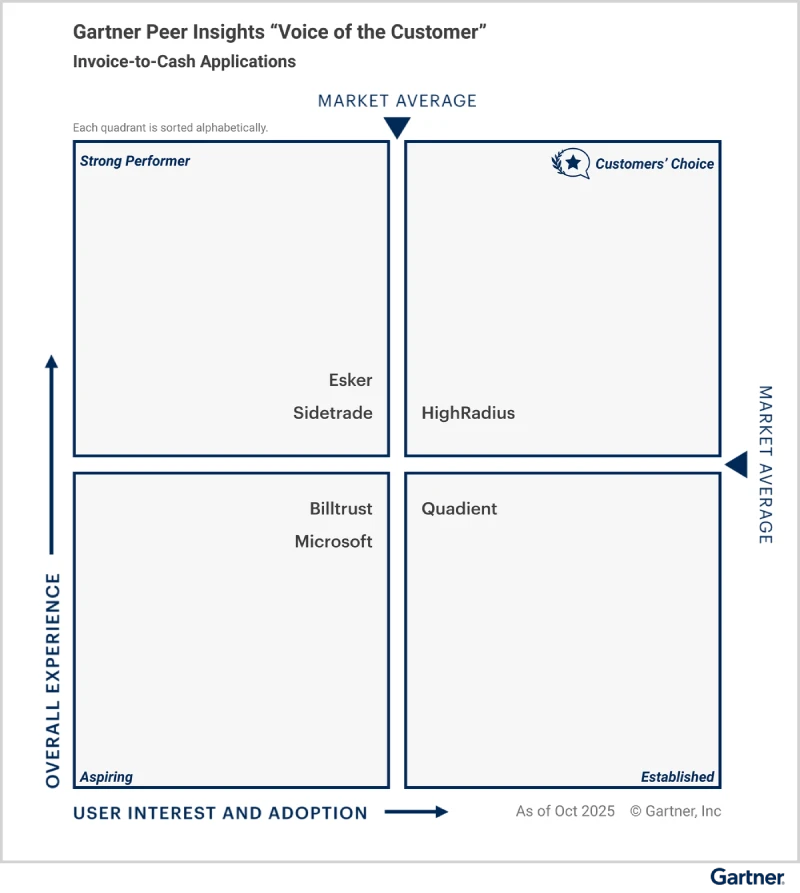
HighRadius directly addresses this challenge by combining enterprise-grade cross-border payment processing, agentic AI-driven FX optimization, multi-rail connectivity across SEPA, SWIFT, RTP, Faster Payments, BECS, BACS, and NACHA, and deep ERP integration into a unified platform. By automating payment capture, routing, multi-currency reconciliation, and GL posting across global entities, HighRadius enables finance teams to reduce DSO by up to 10 days, automate up to 90% of payment workflows, and maintain 100% global PCI DSS compliance, making it the platform of choice for enterprises that can't afford gaps in their global payment infrastructure.
Frequently Asked Questions (FAQs)
Cross-border payments are financial transactions where the payer and the payee are located in different countries. They include B2B supplier payments, B2C payouts, C2B e-commerce transactions, and personal remittances , any payment that crosses national borders and involves different banking systems, currencies, or regulatory environments.
Cross-border payments are financial transactions where the payer and the payee are located in different countries. They include B2B supplier payments, B2C payouts, C2B e-commerce transactions, and personal remittances , any payment that crosses national borders and involves different banking systems, currencies, or regulatory environments.
Cross-border B2B payments begin when a business initiates a payment instruction through their bank, ERP, or cross-border payment platform. The transaction is screened for compliance (AML, sanctions), routed through an appropriate payment rail (SWIFT, SEPA, local ACH), potentially passed through correspondent banks, converted into the recipient’s currency if needed, settled into the payee’s bank account, and finally reconciled against the original invoice in the payer’s financial systems.
Cross-border B2B payments begin when a business initiates a payment instruction through their bank, ERP, or cross-border payment platform. The transaction is screened for compliance (AML, sanctions), routed through an appropriate payment rail (SWIFT, SEPA, local ACH), potentially passed through correspondent banks, converted into the recipient’s currency if needed, settled into the payee’s bank account, and finally reconciled against the original invoice in the payer’s financial systems.
SWIFT is a global messaging network used by 11,500+ financial institutions across 200+ countries for international bank-to-bank payment instructions , it supports multiple currencies and has broad global reach, but settlement can take 1–5 business days. SEPA is a regional EUR payment system covering 41 European countries that enables fast, low-cost, standardized euro transactions , SEPA Instant can settle in under 10 seconds. SWIFT is used for global multi-currency transactions; SEPA is the preferred rail for EUR-denominated European payments.
SWIFT is a global messaging network used by 11,500+ financial institutions across 200+ countries for international bank-to-bank payment instructions , it supports multiple currencies and has broad global reach, but settlement can take 1–5 business days. SEPA is a regional EUR payment system covering 41 European countries that enables fast, low-cost, standardized euro transactions , SEPA Instant can settle in under 10 seconds. SWIFT is used for global multi-currency transactions; SEPA is the preferred rail for EUR-denominated European payments.
The cost of cross-border B2B payments comes from multiple sources: FX conversion markups applied by banks and intermediaries, correspondent bank fees at each hop in the payment chain, compliance and sanctions screening costs, and the operational overhead of manual reconciliation. Businesses using legacy banking infrastructure often pay unnecessarily high fees because they route transactions through single banking relationships rather than optimizing across available rails and FX providers.
The cost of cross-border B2B payments comes from multiple sources: FX conversion markups applied by banks and intermediaries, correspondent bank fees at each hop in the payment chain, compliance and sanctions screening costs, and the operational overhead of manual reconciliation. Businesses using legacy banking infrastructure often pay unnecessarily high fees because they route transactions through single banking relationships rather than optimizing across available rails and FX providers.
Cross-border payment processing refers to the end-to-end workflow of authorizing, routing, settling, and reconciling international payments. Modern cross-border payment processing platforms automate this entire workflow , from rail selection and FX optimization to settlement matching and ERP posting , replacing manual banking portal workflows with intelligent, integrated automation.
Cross-border payment processing refers to the end-to-end workflow of authorizing, routing, settling, and reconciling international payments. Modern cross-border payment processing platforms automate this entire workflow , from rail selection and FX optimization to settlement matching and ERP posting , replacing manual banking portal workflows with intelligent, integrated automation.
The best cross-border payment solution for an enterprise depends on transaction volume, currency mix, existing ERP infrastructure, and geographic footprint. Key capabilities to look for include: multi-rail connectivity (SWIFT, SEPA, local rails), AI-powered FX optimization, automated multi-currency reconciliation, native ERP integration, embedded compliance controls, and 100% PCI DSS compliance. Platforms like HighRadius are designed specifically for enterprise-scale cross-border B2B payment operations with these capabilities built in.
The best cross-border payment solution for an enterprise depends on transaction volume, currency mix, existing ERP infrastructure, and geographic footprint. Key capabilities to look for include: multi-rail connectivity (SWIFT, SEPA, local rails), AI-powered FX optimization, automated multi-currency reconciliation, native ERP integration, embedded compliance controls, and 100% PCI DSS compliance. Platforms like HighRadius are designed specifically for enterprise-scale cross-border B2B payment operations with these capabilities built in.
AI improves cross-border payment processing by dynamically routing each transaction to the most cost-effective rail in real time, automating reconciliation by matching settlements to invoices across currencies, detecting fraud patterns and anomalies before damage occurs, automating AML and compliance screening, and optimizing FX conversion timing. Leading platforms use agentic AI to execute end-to-end payment workflows autonomously, reducing manual intervention to exception handling only.
AI improves cross-border payment processing by dynamically routing each transaction to the most cost-effective rail in real time, automating reconciliation by matching settlements to invoices across currencies, detecting fraud patterns and anomalies before damage occurs, automating AML and compliance screening, and optimizing FX conversion timing. Leading platforms use agentic AI to execute end-to-end payment workflows autonomously, reducing manual intervention to exception handling only.
An international payment platform is software that centralizes the processing, management, and automation of cross-border payments for businesses. Unlike traditional banking portals that handle individual transactions, international payment platforms provide multi-rail connectivity, centralized FX management, automated reconciliation, ERP integration, and compliance controls in a single system, enabling enterprises to scale global payment operations efficiently.
An international payment platform is software that centralizes the processing, management, and automation of cross-border payments for businesses. Unlike traditional banking portals that handle individual transactions, international payment platforms provide multi-rail connectivity, centralized FX management, automated reconciliation, ERP integration, and compliance controls in a single system, enabling enterprises to scale global payment operations efficiently.
International B2B payments can use SWIFT wires for global multi-currency transactions, SEPA for EUR-denominated European payments, ACH and International ACH for US and global batch transfers, Faster Payments (UK), BECS (Australia), BACS (UK), Pix (Brazil), UPI (India), FedNow (US real-time), virtual cards, and , increasingly , stablecoin-based settlement rails. Modern cross-border payment platforms connect to all of these and select the optimal rail per transaction automatically.
International B2B payments can use SWIFT wires for global multi-currency transactions, SEPA for EUR-denominated European payments, ACH and International ACH for US and global batch transfers, Faster Payments (UK), BECS (Australia), BACS (UK), Pix (Brazil), UPI (India), FedNow (US real-time), virtual cards, and , increasingly , stablecoin-based settlement rails. Modern cross-border payment platforms connect to all of these and select the optimal rail per transaction automatically.
According to FXC Intelligence, the total cross-border payments market , including wholesale and retail flows , reached $208 trillion in 2025 and continues to grow. Within that, the B2B cross-border payments segment is forecast to grow 43% by 2030, reaching $56.1 trillion. Corporate cross-border payments alone generate over $120 billion in annual transaction costs , making cost optimization through modern international B2B payment platforms one of the highest-ROI investments available to enterprise finance teams.
According to FXC Intelligence, the total cross-border payments market , including wholesale and retail flows , reached $208 trillion in 2025 and continues to grow. Within that, the B2B cross-border payments segment is forecast to grow 43% by 2030, reaching $56.1 trillion. Corporate cross-border payments alone generate over $120 billion in annual transaction costs , making cost optimization through modern international B2B payment platforms one of the highest-ROI investments available to enterprise finance teams.