- Financial reconciliation is the process of comparing internal records against external sources to confirm they agree and it sits at the center of every close cycle, touching every account before financial statements can be trusted.
- The most common reconciliation challenges fragmented data, high exception volumes, limited visibility, and resourcing pressure which do not get any easier as organizations scale without a systematic approach.
- Automation addresses these challenges at the root, enabling continuous matching, system-generated audit trails, and real-time visibility that manual processes cannot deliver at volume.
See how finance teams are achieving 30% faster reconciliation
Download NowFor finance teams, reconciliation is one of the most recurring and demanding activities in the close cycle. Only 18% close their books within three days, while half still take longer than a week, and reconciliation is consistently identified as one of the largest contributors to that timeline. Cash reconciliation alone can consume 30 or more hours a month for some teams, and a single delayed data source is often enough to push the entire close back.
At volume, reconciliation becomes one of the most resource-intensive and risk-bearing functions in finance, touching every account, every entity, and every data source before financial statements can be trusted.
This guide covers what financial reconciliation involves, the types every finance team should understand, the standard process, and where automation is changing the economics of reconciliation at scale.
Key Takeaways
What Is Financial Reconciliation?
Financial reconciliation is the accounting process of comparing two sets of records, typically internal general ledger entries and external independent sources (such as bank statements), to ensure the figures are in agreement.
If the balances match, the account is reconciled. If they do not, the discrepancy is identified as a variance, which must be investigated and adjusted through journal entries.

Why Is It Critical?
At its most basic, financial reconciliation exists to answer one question: do the numbers in the books reflect what actually happened? Every financial statement, board report, audit, and business decision made from financial data depends on the answer being yes.
The Fundamental Reasons
- Financial statement accuracy — Unreconciled accounts introduce misstatements that compound across periods, making financial statements progressively less reliable the longer discrepancies go unresolved.
- Error detection before they compound - An error caught during reconciliation is a correction. The same error discovered during an audit is a credibility problem.
- Documented audit trail - Every completed, reviewed, and signed-off reconciliation becomes evidence that account balances are supported, not just reported.
- Foundation for downstream decisions - Budgeting, forecasting, and strategic planning all depend on verified financial data. Reconciliation is what makes those numbers actionable.
The Strategic Consequences
- Regulatory compliance - For public companies, reconciliation is a primary internal control under SOX, providing documented evidence that financial reporting is accurate and controls are operating effectively.
- Fraud detection - Regular reconciliation surfaces unauthorized transactions and duplicate payments. The more frequently accounts are reconciled, the smaller the window in which fraud can occur undetected.
- Cash visibility - Reconciled cash positions give CFOs an accurate view of liquidity, essential for working capital management and avoiding costly surprises.
The Types of Financial Reconciliation
While the underlying logic of reconciliation is the same across the board, in matching one record against another, the accounts being reconciled and the data sources involved vary significantly. Most financial reconciliations fall into three broad categories.
1. Transaction-Level Reconciliations
These reconciliations deal with individual transactions flowing through specific accounts, typically reconciled most frequently given their volume and direct impact on cash visibility.
- Bank Reconciliation
Bank Reconciliation is the comparison of the cash balance on your company's books against the corresponding balance on your bank statement. It accounts for timing differences such as deposits in transit and outstanding checks, along with bank fees and other adjustments that haven't yet been recorded internally.
- Cash Reconciliation
Closely related to bank reconciliation but broader in scope, cash reconciliation verifies that all cash inflows and outflows across every account and payment channel are accurately reflected in the books. For businesses handling multiple payment processors or point-of-sale systems, this often means reconciling several disparate cash sources into a single, consistent view.
- Accounts Receivable Reconciliation
Accounts Receivable reconciliation compares the outstanding balances customers owe against your own AR ledger. It's essential for resolving billing disputes early, ensuring revenue is recognized accurately, and keeping metrics like Days Sales Outstanding (DSO) reliable.
- Accounts Payable Reconciliation
This ensures that what your organization believes it owes vendors matches what vendors believe they're owed. Reconciling vendor statements against your AP ledger prevents duplicate payments, missed invoices, and strained supplier relationships.
2. Ledger-Level Reconciliations
These reconciliations verify accuracy at a broader structural level, ensuring that the general ledger itself, and every account that rolls up into it, is correct.
- General Ledger Reconciliation
General ledger reconciliation involves verifying that subsidiary ledgers and supporting schedules tie out to their corresponding general ledger accounts. Because the general ledger is the foundation for every financial statement a company produces, errors here have the broadest downstream impact.
- Account Reconciliation
Account Reconciliation is a broader discipline that encompasses reconciling any individual GL account, not just bank or AR/AP accounts, against independent supporting documentation. This includes accounts like prepaid expenses, accrued liabilities, and fixed assets, each requiring its own verification logic.
- Balance Sheet Reconciliation
Balance sheet reconciliation is often the most comprehensive reconciliation activity in the close. This involves verifying the accuracy of every account on the balance sheet, from cash and receivables to accrued liabilities and equity. It's typically the final checkpoint before financial statements are finalized.
3. Entity-Level Reconciliations
These reconciliations verify that financial relationships between separate legal entities within the same organization are accurate and properly eliminated before consolidation.
- Intercompany Reconciliation
For organizations with multiple subsidiaries or legal entities, intercompany reconciliation ensures that transactions between related entities, such as internal billing, shared services, or intercompany loans, net to zero upon consolidation. Without this, consolidated financial statements will misstate the organization's true financial position.
The Standard Financial Reconciliation Process
The types of reconciliation determine what is being compared, and the process describes how that comparison is performed. Regardless of whether a team is reconciling bank accounts, intercompany balances, or the full balance sheet, the workflow generally follows the same sequence.
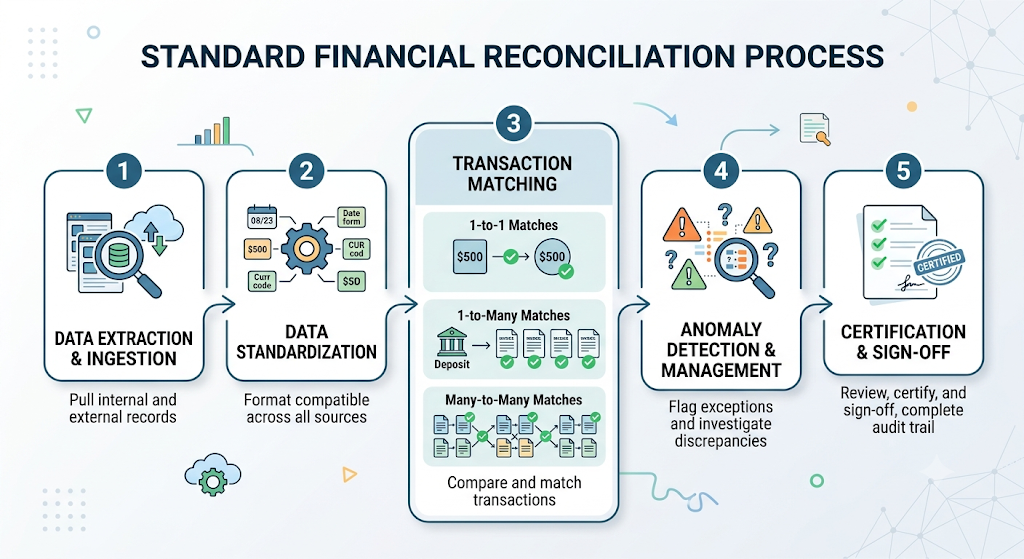
1. Data Extraction & Ingestion: The accounting team pulls internal records from the ERP and gathers external sources like bank statements, vendor portals, subledger exports, etc., to establish the two sets of data that will be compared.
2. Data Standardization: Before records can be matched, they need to be in a compatible format. This includes aligning date formats, currency codes, and transaction reference fields across sources that may have been generated by different systems
3. Transaction Matching: Transactions are compared in the following manner:
- 1-to-1 Matches: A single transaction on one side matches a single transaction on the other, for example, a $500 check matches a $500 ledger entry.
- 1-to-Many Matches: 1-to-Many Matches: One entry matches multiple transactions, for example, a lump sum bank deposit matching five individual customer invoices.
- Many-to-Many: Multiple transactions on one side match multiple transactions on the other, common in high-volume environments where payments are batched or consolidated across periods.
4. Anomaly Detection & Management: Items that don't match are flagged as exceptions. Accountants investigate each discrepancy to determine whether it's a timing difference, a data entry error, a missing transaction, or something that requires an adjusting entry.
5. Certification & Sign-Off: Once all variances are explained and adjusting entries are booked, the reconciliation is reviewed, certified, and signed off, completing the audit trail for that account and period.
Challenges with Manual Reconciliation
Manual reconciliation remains one of the most resource-intensive activities in the close cycle. The challenges fall into three broad categories - data problems, process problems, and scale problems.
Data Issues
- Data fragmentation - Financial data lives across ERP systems, bank portals, payment processors, and subledgers, each generating records in different formats. Extracting and standardizing that data before matching can begin consumes significant time and introduces errors before reconciliation has even started.
- Duplicate entries & data quality - Manual extraction introduces errors that are difficult to detect until they surface as unexplained variances. Duplicate transactions, transposition errors, and mismatched reference fields create exceptions that require investigation time disproportionate to their underlying cause.
- Late data & timing differences - Critical inputs like vendor invoices, bank statements, intercompany entries, etc., frequently arrive after the reconciliation cycle has already begun, forcing teams to reopen completed work and post last-minute adjustments.
Process Issues
- Lack of visibility & process control - There is rarely a single real-time view of reconciliation status in manual environments. Progress lives in spreadsheets and email, and delays are often discovered too late to address without impacting the close date.
- Audit & compliance risk - Without a system-generated audit trail, every exception and sign-off has to be reconstructed from emails and spreadsheets. For organizations subject to SOX requirements, this creates material control risk that extends well beyond the close itself.
- Resource constraints & talent dependency - Manual reconciliation depends heavily on experienced individuals who know where discrepancies originate. When those people are unavailable, the entire timeline is at risk with no system to absorb the gap.
Scale Issues
- Volume - At enterprise scale, the number of transactions, accounts, and entities requiring reconciliation each month makes manual matching structurally unsustainable across dozens of subsidiaries and millions of transactions.
- Multi-currency & exchange rate complexity - Reconciling across multiple currencies requires applying correct exchange rates, accounting for translation adjustments, and explaining rate-driven variances, even when local entity records are accurate.
- Resourcing pressure at scale - According to EY's Tax and Finance Operations research, 69% of routine finance activities, including reconciliation, are performed by external providers in organizations that have co-sourced, a direct reflection of how unsustainable manual reconciliation becomes at scale.
How Automation Is Changing Financial Reconciliation
The structural problems that make manual reconciliation unsustainable, fragmented data, high exception volumes, limited visibility, and resourcing pressure at scale, don't get easier as organizations grow. It is automation that addresses them at the root rather than working around them.
Rather than manually pulling in data from various source systems like ERPs, bank portals, payment processors, and subledgers, ingesting and standardizing data at period end, automated reconciliation platforms connect directly to these systems to pull data continuously. This eliminates the data preparation bottleneck and ensures that by the time the close begins, data is already clean, current, and ready to match.
Matching logic that would take a team days to work through manually runs in minutes. Configurable rules handle 1-to-1, 1-to-many, and many-to-many match scenarios simultaneously, with match rates of 90% or higher achievable on high-volume accounts. Exceptions are surfaced automatically and routed for review so the team's time is applied to discrepancies that genuinely require judgment, not routine matching.
Process visibility and audit readiness are built into the system rather than reconstructed after the fact. Real-time dashboards give finance leaders a live view of reconciliation status across every account and entity. Maker-checker workflows enforce review and approval at every stage, creating a system-generated audit trail that satisfies SOX and internal control requirements without manual documentation overhead.
The scale of investment in reconciliation automation reflects how significant this shift is. The global reconciliation software market was valued at $2.30 billion in 2025 and is projected to reach $8.10 billion by 2034, a compound annual growth rate of 15%, driven by organizations that have concluded manual reconciliation is no longer a viable operating model at enterprise scale.
How HighRadius Accelerates Days to Reconcile
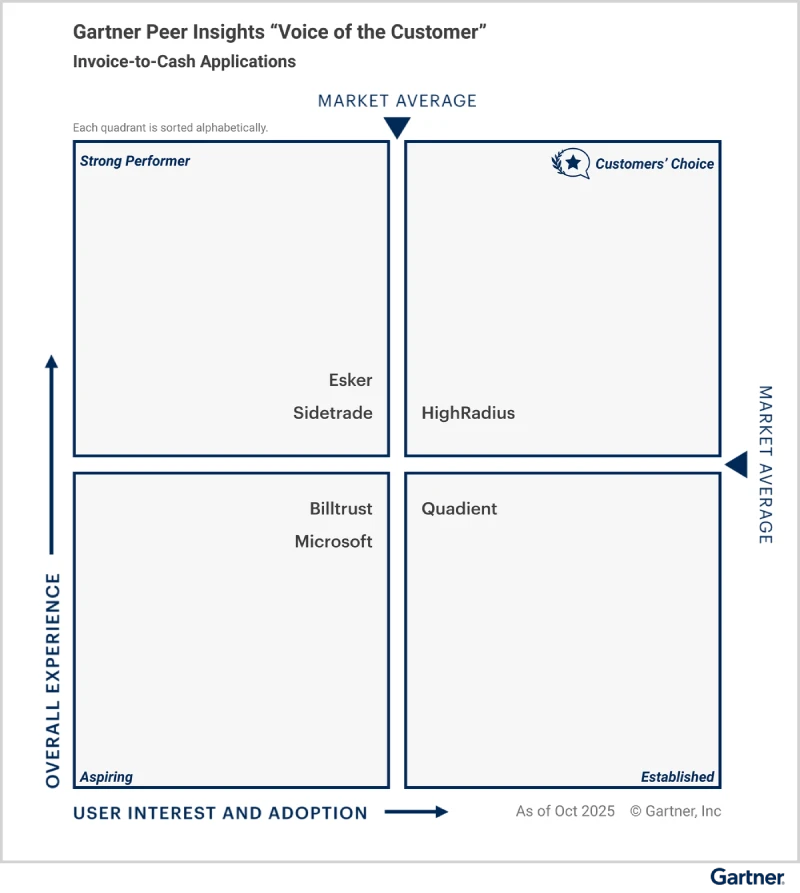
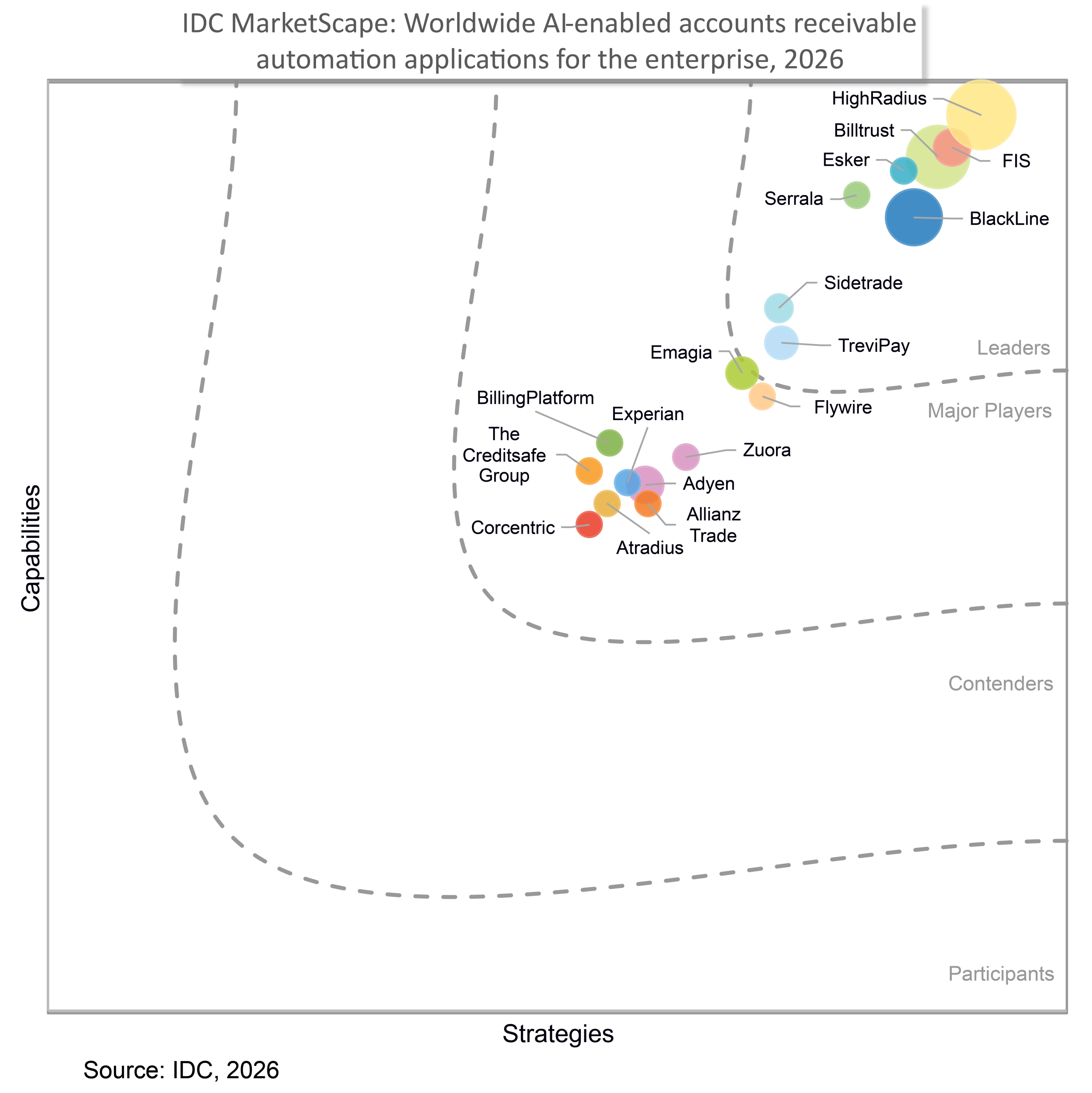
The automation shift described above, continuous data ingestion, high-volume matching, system-generated audit trails, and real-time visibility, is the foundation on which HighRadius's Financial Reconciliation Software is built. Rather than treating reconciliation as a period-end activity, HighRadius runs it continuously, connecting directly to ERPs, bank portals, and payment systems to keep data current and matches progressing throughout the month.
What distinguishes the platform is its use of AI agents that learn from past reconciliations to improve matching accuracy and exception handling over time. This adaptive intelligence, combined with configurable workflows and deep ERP connectivity, enables finance teams to achieve up to 99% transaction accuracy and a 50% boost in reconciliation productivity, without expanding headcount or rebuilding existing systems.
A strong example of this impact comes from Konica Minolta, which achieved approximately 75% faster reconciliation and a 99% automated bank reconciliation across 45,000+ monthly transactions after implementing HighRadius Reconciliation Solution. By leveraging AI-powered matching logic and auditable workflows, the company reduced manual intervention and redirected focus toward strategic financial oversight. With comprehensive governance, audit trails, and built-in data security controls, HighRadius enables organizations to reconcile confidently while supporting faster, more accurate financial closes.
Key Features:
- AI-Driven Reconciliation Agents: Automate transaction matching, variance identification, and exception handling with learning-based logic.
- Seamless ERP & Bank Integration: Supports SAP, Oracle, NetSuite, Sage, and 10,000+ global banks through API and file-based connectivity.
- Automated Journal Creation & Posting: Generate and post journals for missed or cleared transactions directly into the ERP after approval, with 95% automated journal posting.
- Auto-Discovery of Matching Rules: Dynamically identifies optimal rules for reconciling cash GL and bank data without manual setup.
- Real-Time Reconciliation Dashboards: Filter to monitor reconciliation status and analyze data by entity, account, or time period.
- End-to-End Auditability: Maintain transparent audit trails with role-based access and encryption for data at rest and in transit.
Proven Business Impact: 80% reconciliation automation, 90% auto-match rate, and up to 30% reduction in days to reconcile.
Take a deep dive into HighRadius’ R2R solutions
Getting granular visibility and control into your accounting process is just a click away.
Request a Demo
Account Reconciliation
Achieve up to 90% transaction auto-match with out-of-the-box matching rules
Financial Close Management
Reduce days to close by 30% with a detailed checklist for month-end close
Anomaly Management
Resolve 80% of anomalies with auto-suggested actions.
FAQs
- How often should financial reconciliation be performed?
At a minimum, reconciliation should be performed monthly during the financial close process. However, best-in-class finance teams are moving toward continuous reconciliation (daily or weekly), especially for high-volume accounts like cash and accounts receivable. This prevents bottlenecks at month-end.
2. What are the most common causes of financial reconciliation discrepancies?
Discrepancies usually stem from three sources:
- Timing Differences: Funds that have been withdrawn from the bank but not yet reflected in the ledger (e.g., outstanding checks).
- Data Errors: Manual data entry mistakes.
- Bank Fees: Service charges or interest that haven't been recorded in the ERP yet.
3. What is the difference between account matching and reconciliation?
Matching is a specific step within the reconciliation process. Matching involves pairing individual transactions (like an invoice with a payment). Reconciliation is the broader end-to-end process that includes matching, investigating exceptions, and certifying the final account balance.
4. Is financial reconciliation required by law?
For public companies in the US, yes. The Sarbanes-Oxley Act (SOX) mandates strict internal controls over financial reporting, and reconciliation is a primary control to prove financial statements are accurate. Private companies are not legally mandated in the same way, but it is essential for audit readiness and tax compliance.
5. Can you automate financial reconciliation without replacing your ERP?
Yes. Modern reconciliation software (like HighRadius) is designed to sit on top of existing ERPs (SAP, Oracle, NetSuite, etc.). It pulls data directly from the ERP and bank portals to automate the matching process, meaning you do not need to overhaul your core accounting system.