Automate invoice processing, approvals, matching, and supplier payments across your Oracle ERP environment. HighRadius’ pre-built Oracle ERP connectors synchronize supplier master data, purchase orders, receipts, invoices, GL codes, and payment status in real time, eliminating manual intervention and enabling AI-driven accounts payable automation within Oracle ERP.
Just complete the form below
HighRadius captures supplier invoices from every intake channel and uses AI to extract, validate, and standardize invoice data before it enters Oracle Accounts Payable.

Before processing begins, HighRadius AP auotmation solution validates invoices against Oracle supplier records, purchase orders, accounting dimensions, and payment terms to ensure data consistency.

HighRadius performs intelligent 2-way and 3-way matching by comparing invoices with Oracle purchase orders and receiving documents while identifying discrepancies automatically.

HighRadius routes invoices through configurable approval workflows based on Oracle business rules, approval hierarchies, departments, and spend thresholds.

Approved invoices are automatically synchronized and posted into Oracle ERP with validated accounting information, eliminating manual ERP updates.

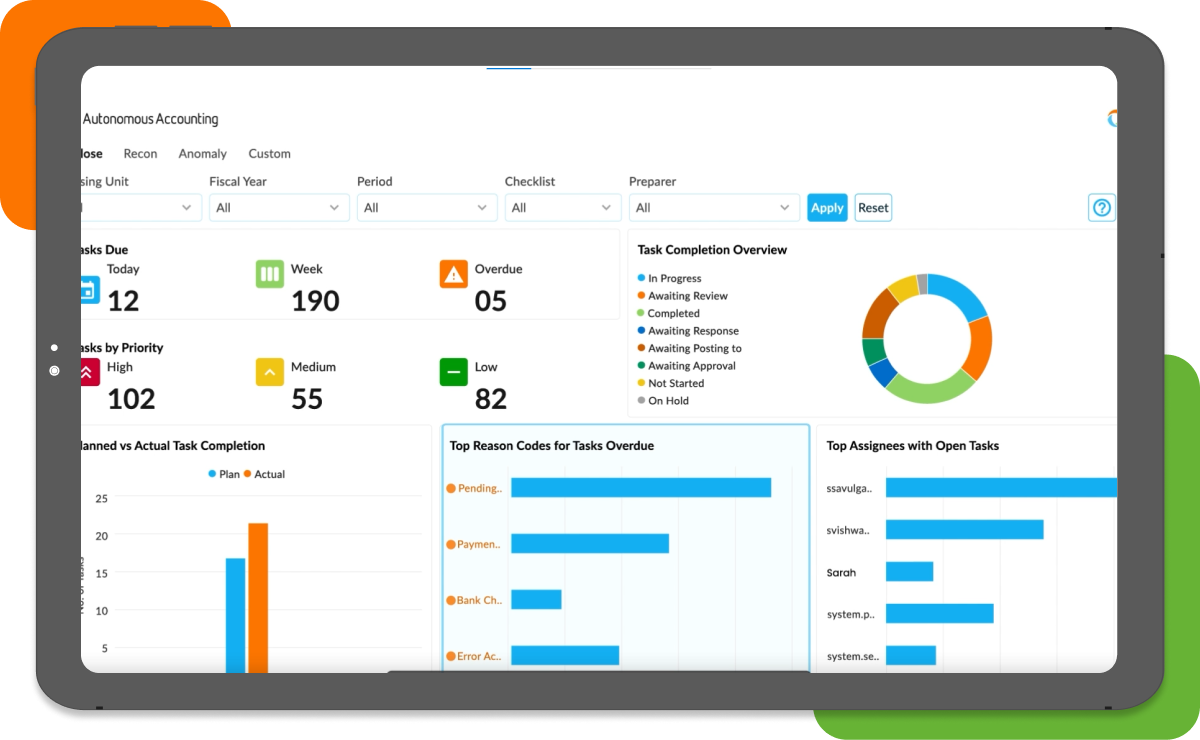
HighRadius AP automation software provides complete visibility into invoice status, liabilities, approvals, and payment readiness through dashboards synchronized with Oracle ERP.

40% Higher AP Productivity
Automate invoice capture, AI-powered matching, approvals, and ERP posting to reduce invoice processing time by up to 2X. HighRadius eliminates manual data entry, accelerates touchless invoice processing, and enables AP teams to process significantly more invoices with the same resources.

95% Data Accuracy + Real-Time Oracle Sync
Capture PO and non-PO invoices with up to 95% extraction accuracy. Bi-directional Oracle integration continuously synchronizes supplier records, purchase orders, receipts, invoices, GL accounts, and payment data, ensuring both systems remain aligned and audit-ready.
Unified Visibility Across Every Oracle Business Unit
Gain a single, real-time view of invoice status, approvals, exceptions, supplier liabilities, and AP performance across all Oracle entities. Flexible synchronization schedules, real-time, hourly, daily, or on demand—keep finance teams working from consistent, up-to-date financial data while improving visibility and decision-making at scale.

The Agent connects to SAP in real time to validate vendor, company code, and GL data—preventing mismatches and errors.

Immediately after approval, invoices and attachments post into SAP via secure APIs, ensuring instant ERP visibility.

For large volumes, the Agent compiles invoices into AES-256–encrypted batches and sends via API or SFTP.

The Agent polls SAP for payment settlements and updates invoice statuses in HighRadius at the line level.
Failed postings appear in a worklist; AP processors correct data and retry with one click—preserving audit trails.
Once approved, invoices are automatically posted to the ERP in real-time or in batch, with master data validation and error handling built in. Failed postings are flagged and resolved through a guided workflow.

With HighRadius' Agentic AI-powered AP automation software, organizations achieve 2X faster invoice processing and up to 40% higher AP productivity.
Book a Discovery Call
Yes, Oracle provides accounts payable capabilities within its ERP platform. However, many organizations extend Oracle with specialized AP automation software like HighRadius to automate invoice capture, AI-powered matching, approval workflows, exception handling, and touchless invoice processing. This reduces manual effort while improving accuracy and processing speed.
Oracle AP automation integrates invoice processing with Oracle ERP data. HighRadius captures supplier invoices, validates them against Oracle purchase orders and vendor records, performs AI-powered 2-way and 3-way matching, routes invoices for approval, and posts approved invoices back into Oracle automatically, creating an end-to-end automated AP workflow.
HighRadius integrates securely with Oracle using enterprise-grade authentication methods supported by Oracle, including OAuth, API-based authentication, and secure service accounts, depending on the Oracle deployment. All data transfers are encrypted to ensure compliance with enterprise security and governance requirements.
The integration synchronizes purchase orders, supplier master records, goods receipts, invoice details, payment terms, GL accounts, approval statuses, accounting dimensions, and posted invoice information. This ensures AP teams always work with accurate, up-to-date ERP data throughout the invoice lifecycle.
Implementation timelines depend on factors such as Oracle deployment type, number of business entities, customization requirements, and existing AP processes. Most organizations can complete integration within a few weeks using pre-built Oracle connectors, while larger global deployments may require additional configuration and testing.
Look for software that offers native Oracle integration, AI-powered invoice capture, intelligent 2-way and 3-way matching, configurable approval workflows, automated exception management, secure ERP synchronization, and scalability for high invoice volumes. The right solution should minimize manual intervention while fitting seamlessly into your Oracle financial ecosystem.