When enterprise finance and IT leaders design their Accounts Payable infrastructure, they inevitably face a foundational choice: Should invoice processing live natively inside the ERP, or should it run on a specialized, decoupled layer?
For over a decade, SAP Vendor Invoice Management (VIM) powered by OpenText has been the standard answer for SAP-centric organizations. The rationale was simple: deep integration, native authorization tables, and an unbroken audit trail directly within SAP ECC or S/4HANA.
However, as business models become more complex and IT departments prioritize "Clean Core" S/4HANA architectures, the operational trade-offs of ERP-native processing are coming under sharper scrutiny.
Here is an objective breakdown of where SAP VIM excels, where its structural limits create friction, and how modern autonomous AP architectures approach the problem differently.
Where SAP VIM Works Well-and Where It Hits Limits
To evaluate SAP VIM fairly, one must acknowledge its core strengths:
- Native SAP Security & Roles: VIM inherits SAP authorization objects out of the box. Finance teams do not need to configure parallel user permission matrices.
- Direct In-Ledger Auditing: Because data lives natively in SAP tables, auditors can trace transactions without leaving the ERP environment.
However, operational challenges emerge when scaling beyond standard, predictable invoice processing:
VIM relies on traditional, rule-based optical character recognition (OCR). While it handles standardized, high-volume vendor invoices effectively, it struggles with non-standard PDF layouts, multi-page line items, or subtle vendor formatting changes. When OCR rules fail, the invoice drops into an exception queue, requiring human re-indexing.
According to research published by Forrester Research on finance automation ROI, moving away from rigid, rule-based ERP exception queues to dynamic AI-driven invoice orchestration delivers a quantified 111% ROI by reducing manual processing labor and capturing early payment discounts.
2. ABAP Customization & Technical Debt
Adapting VIM to custom approval matrices, complex line-item matching logic, or unique business rules requires writing and maintaining custom ABAP code inside the SAP core. Over time, these custom objects create technical debt that complicates future system upgrades.
3. S/4HANA Upgrade Friction
SAP’s official directive for S/4HANA migrations is maintaining a "Clean Core"-minimizing custom code directly inside the ERP. Heavily customized VIM workflows directly conflict with this principle, often requiring costly code remediation during upgrades.
4. The Multi-ERP & Mid-Market Reality
VIM is built specifically for SAP. If an enterprise acquires a company running NetSuite, Workday, or Oracle, VIM cannot natively orchestrate payables across those subledgers without complex custom bridges.
For mid-market firms growing rapidly, this introduces a double bind: they face enterprise-level invoice complexity but lack the dedicated bench of SAP developers needed to maintain custom VIM workflows.
The Modular Alternative: Decoupled Autonomous AP
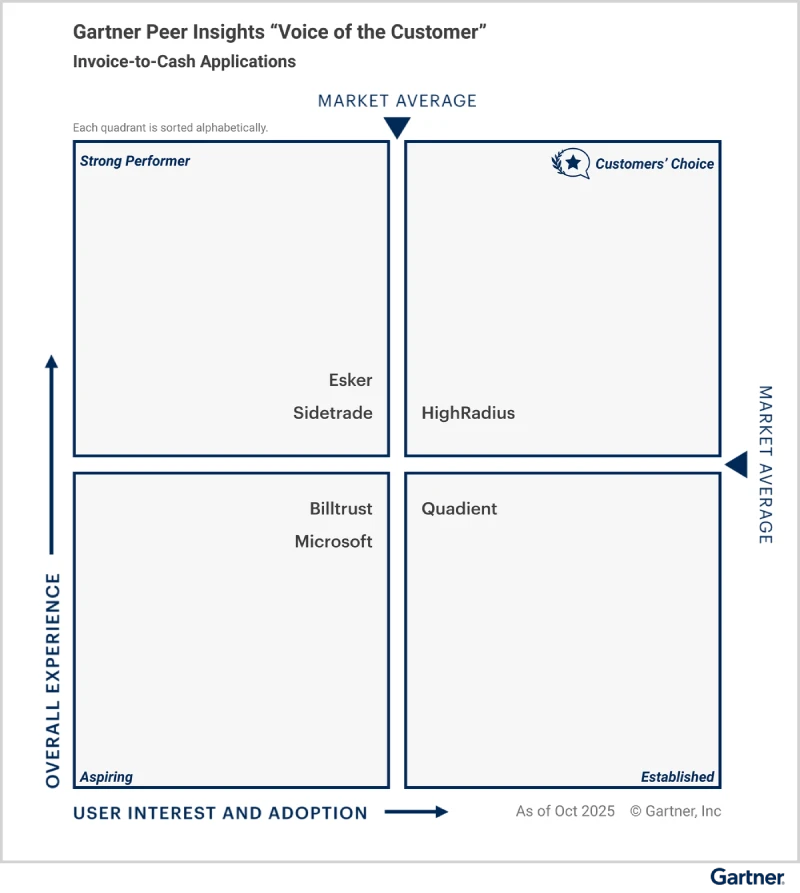
Rather than building invoice logic inside the core ledger, solutions like HighRadius approach payables as a specialized, decoupled layer. The processing engine sits outside the ERP, handling document ingestion, data extraction, and exception management via AI, then passing clean, pre-validated posting payloads directly into SAP or non-SAP subledgers.
HighRadius structures this work through an architecture of nine specialized AP agents split into seven automated agents and two assisted agents. In this framework, an automated agent is defined as one capable of completing tasks with 10% or less human intervention.
1. Ingestion Beyond Static Templates
Instead of relying on rigid OCR zonal mapping, the Email Invoice Capture agent identifies invoice and credit memo documents directly from email attachments. It extracts both header data (Invoice Number, PO Number, Supplier Name) and line-item details while checking for duplicate documents or missing mandatory fields.
- Performance Target: The agent targets an overall 80% Invoice Capture Automation rate, aiming for 90% header capture and 80% line-item capture accuracy before posting.
2. Item-Level Matching & Variance Handling
Where traditional engines trigger manual exceptions for minor line-item variances, the 3-Way AP Matching agent automatically evaluates price differences against the Purchase Order, quantity differences against the PO, and received quantities against the Goods Receipt Note (GRN).
- Performance Target: This multi-variable check aims to achieve a 75% PO Invoice Matching Automation rate.
3. Automated Non-PO Coding
For Non-PO invoices, traditional workflows require routing documents to business users who manually select GL accounts. The Invoice Coding agent uses supplier context and line-item descriptions to automatically assign General Ledger accounts, departments, and expense types.
- Performance Target: Replaces manual drop-down selection with a 70% Non-PO Invoice Coding target.
4. Human-in-the-Loop Approval Orchestration
When human oversight is required, assisted agents like the AP Invoice Approval agent route documents based on organizational hierarchy, enable multi-level parallel approvals, and automatically approve exception-free invoices below defined dollar thresholds.
- Operational Outcome: Reduces average invoice approval cycles to 7 days or fewer, while targeting an overall 50% Touchless Invoice Automation rate across the entire operation.
Choosing the Right Fit for Your Strategy
The decision between SAP VIM and an autonomous AP platform ultimately comes down to your enterprise architecture goals:
- Choose SAP VIM if: Your organization operates in a single, static SAP environment, has abundant internal ABAP development resources, and prioritizes keeping all processing logic strictly inside core SAP tables despite customization overhead.
- Choose Autonomous AP if: You want to protect your "Clean Core" for an S/4HANA migration, operate across multiple ERPs, or need out-of-the-box AI automation that minimizes IT maintenance overhead while delivering high touchless processing rates for both enterprise and mid-market teams.