Avoid the #1 mistake buyers make! Select the software that’s engineered to guarantee 90% touchless processing.

Get the Buyer’s Guide

Accounts Payable (AP) used to be just paperwork. Now, it’s a strategic asset for cash flow and risk management. But turning manual AP into an automated engine requires more than just buying software; it requires a proven project plan.

If you’re aiming for the modern standard of 90% touchless invoice processing and 2X faster payment cycles, the results, HighRadius customers regularly achieve, you need a disciplined roadmap.

This is the CFO’s 7-Phase plan for a successful AP automation project, built for global organizations with complex processes.

Table of Contents

    • Phase 1 of an AP Automation Project: The Strategic Mandate 
    • Phase 2 of an AP Automation Project: Discovery and Vendor Selection 
    • Phase 3 of an AP Automation Project: Readiness and Data Hygiene 
    • Phase 4 of an AP Automation Project: Technical Implementation 
    • Phase 5 of an AP Automation Project: Change Management & Training 
    • Phase 6 of an AP Automation Project: Go-Live, Hypercare, and Risk Mitigation
    • Phase 7 of an AP Automation Project: Optimization and Expansion 
    • How HighRadius Guarantees 90% Touchless Success for Your AP Automation Project
    • FAQs on AP Automation Project

The decision to launch an AP automation solution marks a pivotal shift, moving from reactionary paperwork to strategic financial management. Yet, many organizations treat automation as a simple technology replacement, focusing on software features instead of end-to-end transformation. This oversight is why many projects fail to deliver promised returns.

For enterprise finance leaders managing complex global operations and multiple ERP environments, success requires a disciplined, structured approach that addresses risk, scalability, and, most importantly, change management. In this blog, we provide the necessary structure to define measurable goals, navigate technical integration, and ensure your team achieves the ultimate benchmark: automated, touchless AP.

The AP Leader's Checklist: Control Audit Risk and Erase Hidden Errors

Use this 40-point framework to assess your current AP process, benchmark against the industry, and pinpoint the exact areas needing automation for 100% compliance.

Download the AP Audit Checklist

Phase 1 of an AP Automation Project: The Strategic Mandate 

An AP automation project is a business investment, not an IT upgrade. Before you start, you must define its financial value to the CFO.

Calculate the hidden cost of manual AP

The cost of manual processing goes far beyond data entry. Build your case by quantifying these critical losses:

  • Inefficiency: Manual tasks hold your team back. Automation drives a 40% increase in productivity, freeing your team for higher-value finance work.

  • Lost discounts: Slow processes mean missing out on valuable 1–2% early payment discounts offered by suppliers.

  • Risk: Paper trails increase the chance of errors and fraud. Automation ensures 100% policy adherence and provides crucial audit security.

  • Poor Visibility: Delayed processing makes real-time cash flow forecasting unreliable.

Defining success: Setting clear goals (KPIs)

Success should be measured by straight-through processing (STP), where invoices flow without human touch.

KPIEnterprise Goal with AIWhat This Means for Finance
Touchless Processing Rate90%Freedom from manual intervention for most invoices.
Invoice Cycle Time2X LowerFaster payments to capture discounts and strengthen supplier relationships.
Productivity40% IncreaseReallocating AP staff to focus on strategic exceptions and analysis.

Phase 2 of an AP Automation Project: Discovery and Vendor Selection 

This phase is about understanding your unique complexities before choosing a solution.

Critical scope: global entities and multi-ERP

Most large companies don't use a single system. Your AP automation project must handle a complex, global environment.

  • Process Mapping: Document processes across all global entities and every ERP instance (SAP, Oracle, etc.). The goal is to standardize the process, not force a change in your core systems.

  • Invoice Channels: Map all invoice sources (email, mail, portal). The solution must capture data from everywhere to ensure a 95% invoice capture rate.

Choosing the right partner (beyond basic features)

Your vendor must be a strategic fit for enterprise scale. Look for:

  • Native integration: Can the solution integrate with your specific, multiple ERP versions easily, without requiring heavy custom IT work?

  • True AI/ML: Look past simple OCR. Does the AI learn from your history to suggest GL coding for 100% non-PO invoices auto-coded? Look for Intelligent Document Processing (IDP).

  • Future vision: Does the platform offer capabilities for fraud detection and future integration with payments and treasury?

Phase 3 of an AP Automation Project: Readiness and Data Hygiene 

Even the best AI can't fix bad data. This preparation phase is crucial for avoiding expensive delays.

Vendor master data cleanup

Inaccurate vendor records cause most post-launch problems.

  • Data audit: Consolidate and deduplicate vendor records across all your systems.

  • Compliance: Verify all payment terms, tax IDs, and banking details are complete and compliant. Clean data is key to a high auto-match rate on PO invoices.

Building the project team

Treat this like the major internal project it is. Your team must include:

  • Executive sponsor (CFO/VP Finance): To champion the change and resolve roadblocks.

  • Core AP lead: The process owner who defines the "future state" workflow.

  • Dedicated IT/ERP resource: To manage system access and integration points.

Phase 4 of an AP Automation Project: Technical Implementation 

This is where you configure the rules and AI to deliver the promised high STP rates.

Configuring AI for touchless processing

The solution should prioritize processing without human touch:

  • Intelligent data extraction: The AI is trained on your invoices to achieve a 90% line item capture rate with high accuracy.

  • AI-Powered matching: Set up 2-way and 3-way matching rules so the system can achieve 90% PO invoices automatched.

Automate 3-Way Matching: Eliminate Invoice Exceptions.

The ultimate guide to solving the complexity of manual matching and leveraging AI to guarantee straight-through invoice processing for your AP automation project.

  • Accelerate Payment Cycles
  • Cut Manual Exceptions
  • Guarantee Data Accuracy
Download the 3-Way Matching Guide

Mapping approval workflows

Automated routing must respect all spending limits and policy rules.

  • Dynamic routing: Implement a system that routes based on the GL codes, cost centers, and user roles, letting approvers use one-click email actions for speed.

  • Non-PO invoices: Configure the AI to suggest GL codes, eliminating manual coding time.

Phase 5 of an AP Automation Project: Change Management & Training 

Technology is the easy part; getting people to adopt it is the challenge. Training must focus on empowering the team.

  • The AP team: Train your analysts to become exception specialists. Their job shifts from data entry to high-value analysis and resolving complex issues, leading to 3X Faster Exception Resolution.

  • The approver: Training should be quick, focusing only on the simple mobile/email approval experience.

  • The supplier: Deploy a supplier portal so vendors can submit invoices and check status, cutting down on the 20% of analyst time previously spent answering supplier calls.

Phase 6 of an AP Automation Project: Go-Live, Hypercare, and Risk Mitigation

A phased launch (pilot groups) is safer than a big-bang approach.

  • Hypercare period: The 30–90 days immediately following launch is critical. The project team must be on standby to fine-tune AI rules, catch edge cases, and ensure smooth data posting to the ERP.

  • Audit readiness: The system provides detailed audit trails and real-time visibility to demonstrate compliance immediately.

Phase 7 of an AP Automation Project: Optimization and Expansion 

Transformation is continuous. After stability, you leverage the platform for greater strategic value.

  • Continuous improvement: Use your performance dashboards to see which invoices are not touchless. Refine the AI models and rules based on real-world exceptions.

  • Expanding scope: With AP running smoothly, integrate payments and supplier financing to maximize cash flow and capture those 1–2% early payment discounts.

How HighRadius Guarantees 90% Touchless Success for Your AP Automation Project

Incorporating sophisticated AP automation software is the necessary final step to realizing the vision laid out in this 7-Phase blueprint. A true enterprise-grade solution must do more than just digitize invoices; it must revolutionize operations by enhancing efficiency, eliminating errors, and providing comprehensive oversight. This is only possible by leveraging advanced features like AI-driven invoice processing, automated validation, and seamless two-way integration with all major ERP systems.

HighRadius offers an end-to-end AP automation solution built specifically to manage the complexity of a global AP automation project. Our platform streamlines invoice handling, ensures accuracy through auto-validation and three-way matching, and provides robust exception handling, all leading to industry-leading outcomes. By choosing a partner with a proven record of achieving 90% touchless processing and accelerating payment cycles by 2X, you ensure your AP automation project delivers substantial savings and sustainable financial success.

FAQs on AP Automation Project

1. How long does an AP automation project take to show ROI? 

Most enterprises see tangible ROI within 6 to 9 months, primarily driven by reduced invoice processing costs and eliminated late payment penalties. Successful projects often accelerate payment cycles by 2X and boost team productivity by 40%.

2. Can AP automation software handle our multiple, complex ERP systems? 

Yes, an enterprise-grade solution must be ERP-agnostic. The project's critical step (Phase 2) is ensuring native, two-way integration with all your systems (SAP, Oracle, etc.), allowing the AP process to be standardized even when the ERP platforms remain separate.

3. What is the biggest risk to a successful AP automation project? 

Poor change management poses the greatest risk. While technology implementation is straightforward, failure to drive adoption among the AP team, approvers, and suppliers will stall the project. Phase 5 focuses on shifting team roles from clerical entry to strategic exception handling.

4. What is the primary measure of success for this project? 

The ultimate goal is achieving a high touchless processing rate (STP). The benchmark for a successfully scaled AP automation project is reaching 90% of invoices processed without human intervention, which enables massive efficiency gains.

Loved by brands, trusted by analysts

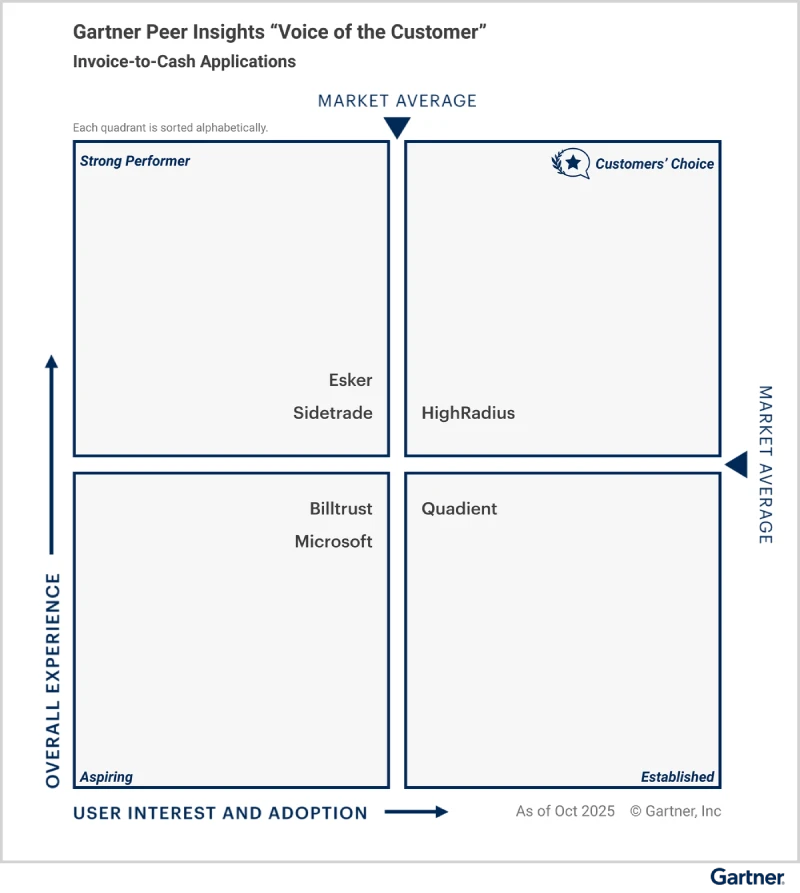
HighRadius Named as a Leader in the 2024 Gartner® Magic Quadrant™ for Invoice-to-Cash Applications

Positioned highest for Ability to Execute and furthest for Completeness of Vision for the third year in a row. Gartner says, “Leaders execute well against their current vision and are well positioned for tomorrow”

Gartner Banner

The Hackett Group® Recognizes HighRadius as a Digital World Class® Vendor

Explore why HighRadius has been a Digital World Class Vendor for order-to-cash automation software – two years in a row.

Hackett Banner

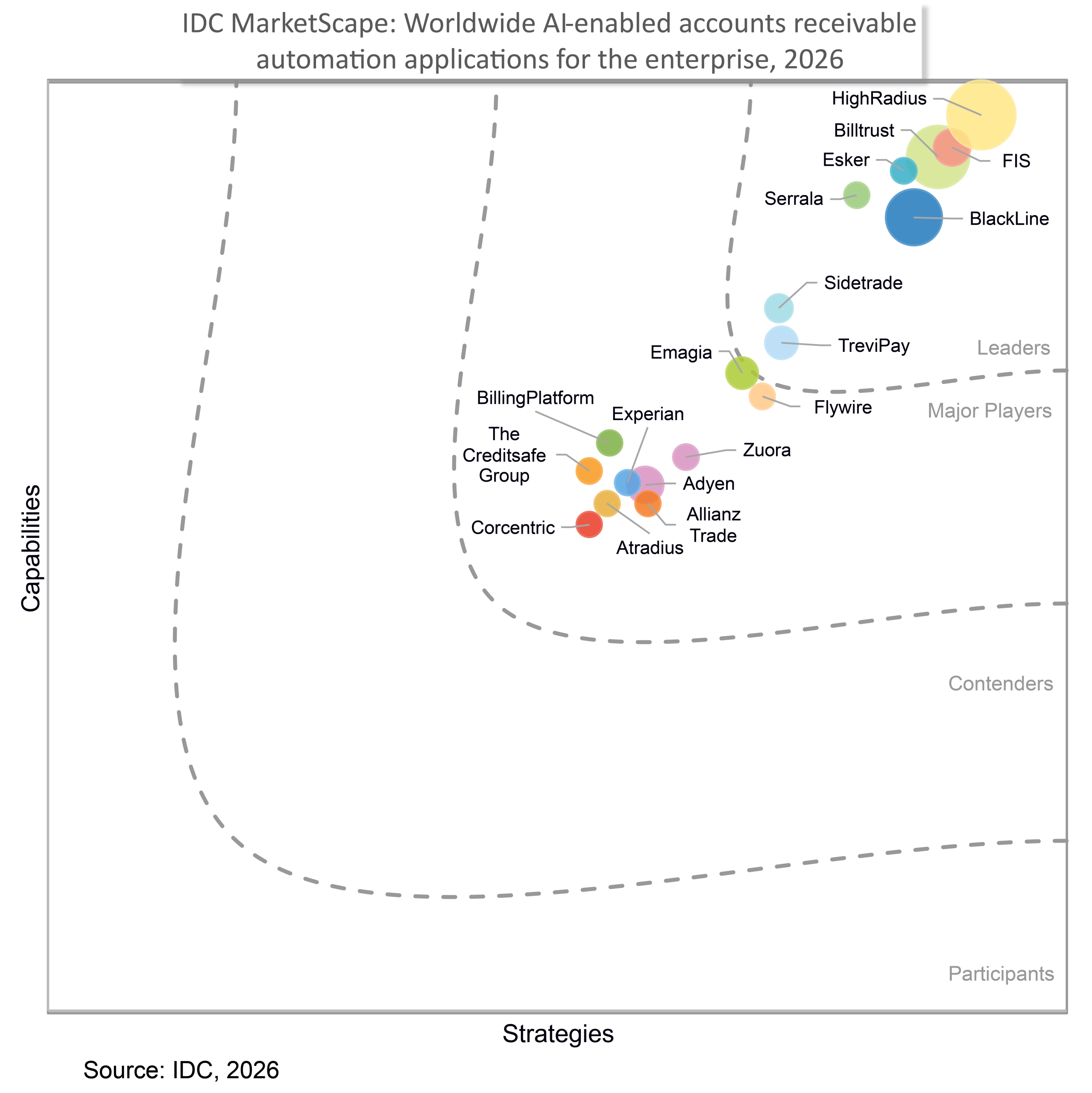
HighRadius Named an IDC MarketScape Leader for the Second Time in a Row For AR Automation Software for Large and Midsized Businesses

HighRadius stands out as an IDC MarketScape Leader for AR Automation Software, serving both large and midsized businesses. The IDC report highlights HighRadius’ integration of machine learning across its AR products, enhancing payment matching, credit management, and cash forecasting capabilities.

IDC Banner

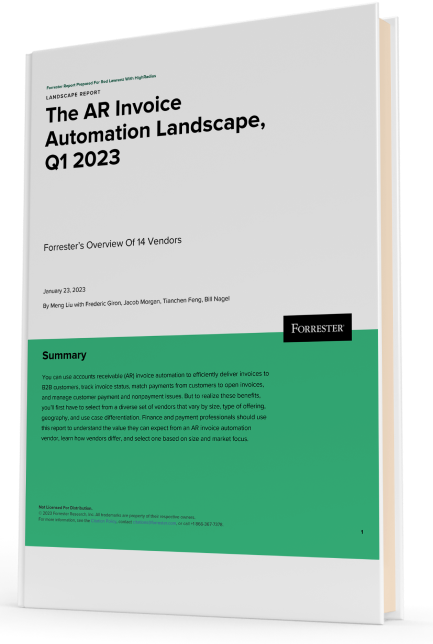
Forrester Recognizes HighRadius in The AR Invoice Automation Landscape Report, Q1 2023

Forrester acknowledges HighRadius’ significant contribution to the industry, particularly for large enterprises in North America and EMEA, reinforcing its position as the sole vendor that comprehensively meets the complex needs of this segment.
Forrester Banner

1100+

Customers globally

3400+

Implementations

$18.9 T.

Transactions annually

37

Patents/ Pending

6

Continents

Ready to Experience the Future of Finance?

Talk to an expert

Learn more about the ideal finance solution for your needs

Book a meeting

Watch On-demand Demo

Explore our products through self-guided interactive demos

Visit the Demo Center

Resources

What Is Accounts Payable | Accounts Payable Process | Accounts Payable Reports | Accounts Payable Reconciliation | Managing Accounts Payable | Accounts Payable Audit | Accounts Payable Goals | Accounts Payable Internal Controls | Accounts Payable Department | Accounts Payable Automation ROI | Accounts Payable Workflow | Benefits Of AP Automation | What Is Invoice Processing | Three Way Invoice Matching | What Is Dynamic Discounting | Accounts Payable Vs Accounts Receivable | Accounts Payable Forecasting | Accounts Payable Metrics | AI In Accounts Payable | AP Automation ERP Integration

Ebooks, Templates, Whitepapers & Case Studies

AP Buyers Guide | AI in Accounts Payable Use Cases | AP Vendor Evaluation Template | AP Forrester Prediction | AP Automation Datasheet