Divya Verma specializes in finance transformation strategy, bringing a content-driven perspective to the rapidly changing FinTech space. With seven years of experience navigating the B2B SaaS landscape, she understands how modern finance leaders think and delivers insights that speak directly to their priorities. When she is not analyzing the latest in enterprise finance, Divya enjoys traveling and getting lost in a good book. Her writing is rooted in sharp domain thinking and a deliberate focus on clarity that finance leaders can act on.
2026 Automation Benchmark Report
HighRadius 2026 Automation Benchmark Report For The Office Of The CFO
Understand if your performance is on par with top 10% of the organizations. Identify gaps, best practices and know how you can drive value through Agentic AI-Driven Automation.
Best overall Billtrust alternative for mid-market & enterprise: HighRadius
Best for customer payment portals & AR self-service: Versapay
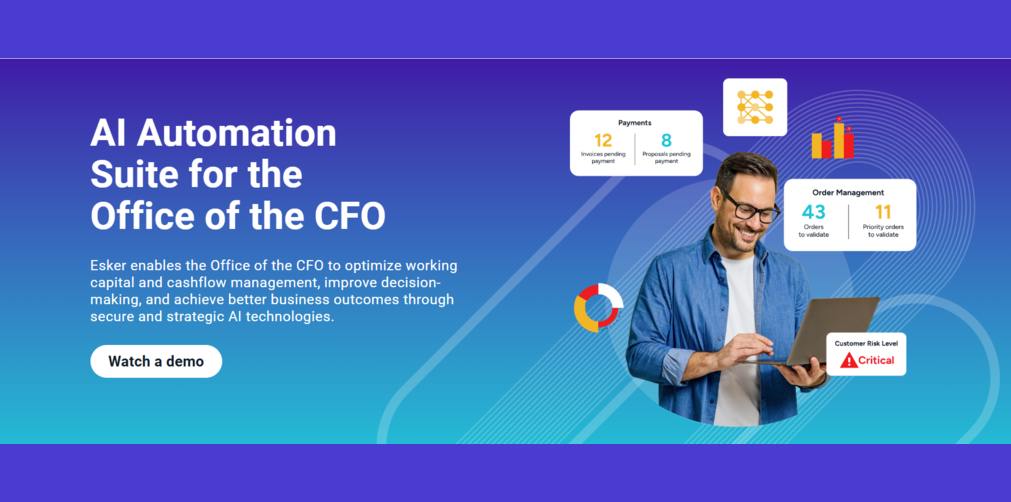
Best for AI-driven collections and process unification: Esker
Best for mid-market AR workflow automation: Quadient AR
Best for SMB & mid-market AR automation: Invoiced
Best SMB AR & AP automation platform: BILL.com
Best for collections dunning workflow automation: Gaviti
Accounts receivable has evolved far beyond simple invoicing, payment collection and matching. For years, platforms like Billtrust have set a high industry standard, helping teams digitize billing networks and establish highly structured B2B payment workflows. However, as mid-market firms scale rapidly and enterprise operations expand into intricate, multi-entity setups, their financial priorities naturally change. For some organizations, the operational focus shifts toward managing highly complex, granular dispute categories; for others, it means needing deeply integrated data synchronization across mixed ERP landscapes.
Choosing an alternative isn’t about escaping a flawed process, it’s about matching your unique business footprint with a platform whose technical architecture aligns precisely with your next phase of growth. Whether you require specialized autonomous deduction management, simplified small business tools, or targeted payment gateways, this definitive guide charts the top 7 Billtrust alternatives available in 2026 to help clarify your path forward.
How We Selected the Best Billtrust Alternatives
In selecting the premier alternatives to Billtrust, we focused heavily on data accuracy, operational velocity, and architectural depth. Specifically, our evaluation framework analyzed:
Comprehensiveness: We prioritized robust, end-to-end platforms that automate nearly all phases of the Order-to-Cash (O2C) cycle, effectively eliminating manual checks, fragmented tracking, and spreadsheet dependencies.
Flexibility: We targeted cloud-native platforms capable of scaling alongside rapid organizational growth without accumulating massive IT debt or requiring custom re-coding.
Ease of Use: We looked for sophisticated automation suites that eliminate technical friction for everyday accounting teams, optimizing onboarding times.
Integration and Compatibility: Deep ERP synchronization is critical. We analyzed how seamlessly these tools link with core ledgers, ensuring bi-directional data flow whether your team relies on mid-market systems or legacy enterprise infrastructure.
G2 Reviews: We audited real-world peer reviews on G2 to separate marketing promises from actual user experiences, prioritizing platforms that customers genuinely enjoy using due to modern UI and AI applications.
Top Billtrust Alternatives At A Glance for 2026
Platform Software
Target Market Segment
Primary Best-For Use Case
Pros
Cons
HighRadius
Mid-Market & Enterprise
Complete Autonomous Order-to-Cash Automation
190+ Agentic AI agents; $0 setup fees until go-live; unified finance capabilities.
More comprehensive than required for smaller businesses with simple AR operations.
Lacks multi-entity enterprise compliance; no advanced dispute processing.
Gaviti
Niche Point Solution
Lightweight collections automation
Fast implementation; intuitive collections workflows; simple automated dunning and invoice-to-cash automation.
No advanced AI invoice reconciliation tools; requires manual reviews.
Top Billtrust Alternatives: Deep Dive
1. HighRadius: The Best Billtrust Alternative for Mid-Market and Enterprises
HighRadius stands as a premier global accounts receivable software designed specifically for finance teams outgrowing traditional software frameworks. Powered by native Agentic AI and advanced Large Language Models, HighRadius expands beyond basic email automation to function as an autonomous operational execution engine.
While Billtrust delivers excellent core billing functionality, complex customer disputes often require manual case-management steps within collections teams. HighRadius addresses this by embedding an Agentic AI-driven Deduction Management solution that autonomously researches and validates disputes across 600+ AP portals, which typically improves net recovery by 30% and boosts department productivity by 40%. The platform is built to provide mid-market players with major processing power without heavy IT overhead, while offering global enterprises bulletproof multi-entity scaling.
Uniquely, HighRadius doesn't stop at Accounts Receivable Software. The platform spans the full finance function - Accounts Payable, Treasury, and Record-to-Report, integrating with 100+ banks and 20+ payment processors to deliver true end-to-end finance automation across O2C, Treasury, AP, and R2R. Recognized as a Leader by Gartner, IDC, and The Hackett Group, HighRadius processes $18.9 trillion+ in AR transactions annually and is trusted by 1,500+ leading companies worldwide, including 3M, Unilever, and Anheuser-Busch.
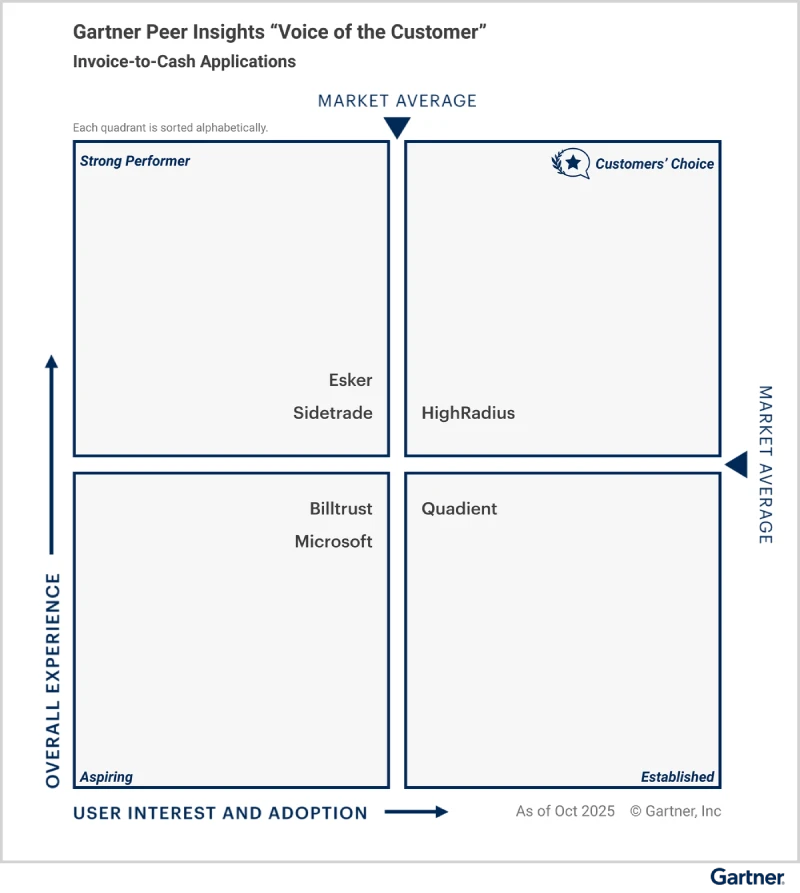
Pros: 190+ Agentic AI agents spanning the full O2C cycle; autonomous deduction management with retailer portal access (Amazon, Kroger, and more); zero-touch cash application achieving 90%+ straight-through posting; out-of-the-box native integrations for mid-market ERPs (NetSuite, Sage Intacct, Workday) plus deep pipelines for enterprise configurations (SAP S/4HANA, Oracle); unified finance automation across O2C, Treasury, AP, and R2R; 100+ bank integrations; outcome-based pricing with $0 implementation fees until system go-live; Gartner Magic Quadrant Leader for three consecutive years.
Cons: Complete overkill for micro-businesses and low-volume consumer retail billing.
Best For: Fast-growing mid-market firms looking to scale AR operations without hiring additional back-office headcount, and multinational global enterprises with complex deductions, multi-entity cash clearing, and high-volume transaction workflows.
Pricing: Outcome-Based Pricing (OBP) with $0 implementation fees and $0 fees until the system goes live. Post-go-live fees are structured as a gain-share percentage calculated against a Mutually Agreed Success Criteria (MASC).)
Review Summary: Reviewers consistently praise HighRadius for its powerful automation of manual tasks, particularly its AI-powered payment reconciliation and matching capabilities that users say save "countless hours" of manual work. Reviewers highlight the depth of the cash application module and collections automation as standout differentiators over competitors.
Case Studies
$30 Million Working Capital Unlocked
Learn how Konica Minolta, a global manufacturing leader, unlocked $30M in cash flows through a full-cycle F&A transformation.
2. Versapay: Best for Customer Payment Portals & AR Self-Service
Versapay focuses on customer-facing accounts receivable collaboration through its Collaborative AR model. It creates a shared digital workspace where buyer AP teams and supplier AR teams can view invoices, flag disputes, message, and process payments within a single portal. This works best for organizations where the main bottleneck is buyer miscommunication or a need to eliminate paper-based invoice delivery.
The platform combines collections automation, digital payments, and dispute collaboration into a customer-centric workspace. Businesses evaluating Versapay generally prioritize buyer-facing invoice transparency and self-service portals over high-volume backend cash application or autonomous enterprise deduction management.
Cons: Limited native backend automation for automated dispute resolution workflows or complex cross-ERP cash applications.
Best For: Mid-market organizations whose primary operational challenge is increasing online payment adoption among their buyers.
Pricing: Subscription-based pricing aligned to platform modules and usage.
Review Summary: Verified customers routinely highlight Versapay’s frictionless interface and intuitive buyer portal, noting that its built-in communication loops take the headache out of invoice disputes and notably accelerate payment cycles.
3. Esker: Best for Collections and Process Unification
Esker is a documents-focused process automation platform built to manage complex order entries, procurement files, and multi-national billing presentments. It helps globally distributed back offices streamline the formatting of high-volume incoming documents.
The architecture is heavily geared toward global document compliance, translation, and long-term electronic archiving. While it serves as a highly reliable document routing utility for massive multinational enterprises, it is positioned more as a structural workflow tool than a truly autonomous operational execution engine designed to clear line-item variances without human intervention.
Esker Breakdown
Pros: Strong multi-language support and highly compliant global document routing frameworks.
Cons: Functions primarily as a document workflow and tracking utility rather than an autonomous execution platform; setup cycles can be complex.
Best For: Enterprise organizations managing heavy volumes of multi-national physical or electronic documentation.
Pricing: Volume-based document processing metrics coupled with base software licensing fees.
Review Summary: Reviewers commend Esker for its highly dependable document routing engine but can feel somewhat rigid during custom configuration phases.
4. Quadient AR (YayPay): Best for Mid-Market AR Workflow Automation
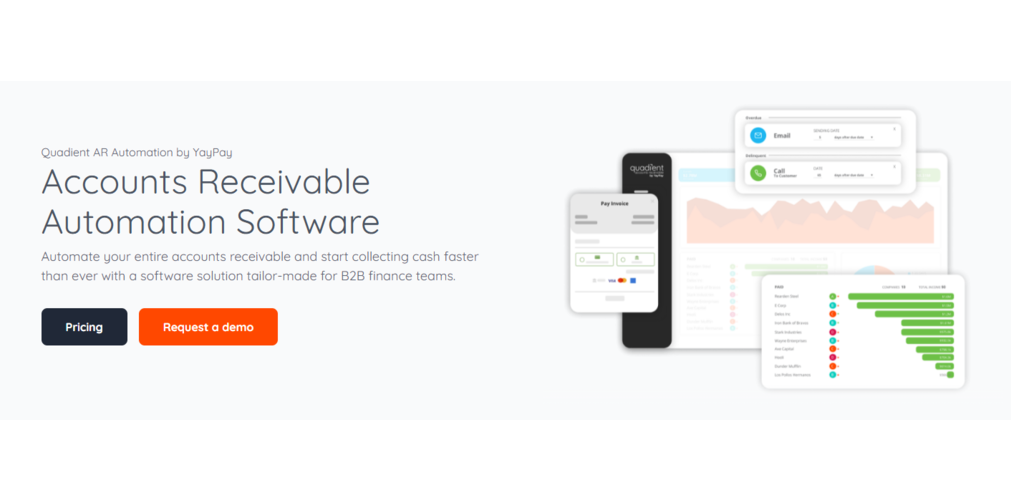
Quadient AR (formerly YayPay) provides clear collections dashboards, predictive cash flow tracking, and structured daily task queues for outreach agents. It functions as a practical pipeline management upgrade for mid-market finance teams looking to transition away from chaotic, spreadsheet-based accounts receivable practices.
The platform streamlines day-to-day workflows through automated payment reminders and intuitive promise-to-pay tracking. While its visual aging reports and native NetSuite integration are frequently cited as major usability advantages, resolving complex, high-volume dispute anomalies typically remains dependent on manual agent intervention.
Pros: Highly intuitive visual dashboards with automated reminders; smooth native ERP integrations (especially NetSuite) and predictive customer payment scoring.
Cons: Remains reliant on manual human actions for deep dispute resolution; autonomous cash matching can stall without clean incoming data.
Best For: Lower-mid-market collections teams managing moderate transaction volumes who want to trade manual spreadsheets for structured tracking dashboards without a steep learning curve.
Pricing: Custom quote-based pricing.
Review Summary: Verified users consistently praise the platform's clean interface and its ability to save collectors hours each week through automated chasing, though some note a reliance on manual rules for unique invoice exceptions.
5. Invoiced: Best for SMB & Mid-Market AR Automation
Invoiced is a highly user-friendly, cloud-based accounts receivable platform purpose-built for growing finance teams that want rapid time-to-value without heavy technical overhead. It natively unifies core invoicing, smart automated email chasing cadences, and digital customer payment portals into a clean, accessible workspace.
The platform's true strength lies in its exceptional flexibility for managing complex subscription frameworks and recurring billing models, making it a popular choice for digital-first businesses. However, because its architecture targets operational simplicity, it leaves large-scale multi-entity adjustments, deep enterprise deduction tracking, and autonomous exceptions handling to be managed manually.
Pros: Offers a highly intuitive UI; excellent flexibility for automated recurring invoicing, smart chasing cadences, and digital payments.
Cons: Minimal built-in infrastructure for enterprise deduction management; lacks the native AI depth required for high-volume, automated cash application.
Best For: Mid-market teams, SaaS firms, and digital-first businesses seeking an easy-to-implement AR layer to automate recurring billing and customer follow-ups.
Pricing: Scale-based subscription pricing.
Review Summary: Verified users routinely praise the platform's straightforward setup and highly responsive customer support, though some enterprise accounts note limitations with complex client imports or custom credit controls.
6. Bill: Best SMB AR & AP Automation Platform
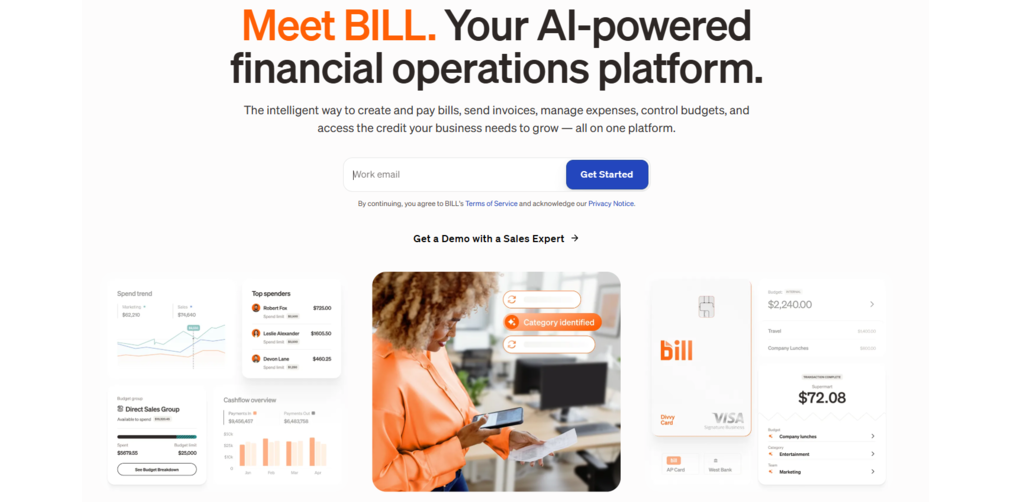
BILL is a widely adopted financial operations platform that unifies accounts payable and accounts receivable within a single, easy-to-use interface. Designed specifically for small business operators and lean finance teams, it provides an accessible entry point to automate invoice delivery, payment acceptance, and basic cash flow processing.
While BILL delivers strong cash-in and cash-out processing value for standard, single-entity workflows, its small-business framework hits a hard ceiling when exposed to high transaction volumes. Growing organizations will find it lacks the structural depth required to manage multi-entity setups.
Cons: Lacks enterprise-level data compliance protocols; cannot navigate complex multi-line dispute allocations or automated enterprise lockboxes.
Best For: Small business teams running elementary cloud accounting software like QuickBooks Online or Xero.
Pricing: Tiered monthly subscription packages based on user seats.
Review Summary: Customer reviews praise its seamless setup for small-scale billing but note it lacks the architecture for large ERP environments.
7. Gaviti: Best for lightweight collections automation
Gaviti is a dedicated software tool built specifically to centralize and organize basic client collections communication. It functions as a digital coordinator, generating automated collection checklists, aging alerts, and tracking logs for open receivables.
It focuses on centralizing accounts receivable workflows through automated dunning cadences, collection communication tracking, and routine invoice follow-ups. Organizations evaluating Gaviti typically seek fast deployment and a lightweight invoice-to-cash workflow. The software is optimized for simplified outreach management rather than high-volume enterprise cash application or complex deductions handling.
Pros: Rapid setup with highly intuitive communication tracking; powerful automated dunning schedules that eliminate manual follow-up tasks.
Cons: Missing advanced AI layers for autonomous deduction tracking; not engineered to handle high-volume cash application or multi-ERP configurations.
Best For: SMB and lower mid-market teams prioritizing quick deployment and structured customer outreach over heavy, backend data-matching engines.
Pricing: Volume-based subscription models tailored to invoice runs and workflow needs.
Review Summary: Users frequently mention ease of setup, collections visibility, and improvements in overdue invoice follow-ups and customer communication consistency.
Why HighRadius Is the Best Billtrust Alternative to Enable Scalable Finance Operations
Recognized as 3X Leader in Gartner Magic Quadrant, HighRadius' accounts receivable platform is trusted by 1300+ finance teams worldwide built to scale from mid-market growth to enterprise-grade complexity.
The defining competitive leap for HighRadius is its native Agentic AI engine, powered by 190+ specialized autonomous AI agents. Rather than operating on rigid, template-based rules that fail whenever a customer alters a file format or communication path, these autonomous agents independently log into over 600+ AP portals, extract messy remittance data from emails or lockboxes, interpret unstructured deductions, and execute straight-through data updates directly back to your ledger.
A clear validation of this operational transition is demonstrated by global companies like Coca-Cola Bottlers. By migrating away from manual legacy deduction tracking to HighRadius's automated infrastructure, they successfully recovered $33.4M in invalid deductions annually. The platform's advanced AI engine analyzed over 1.2M+ deductions, auto-resolved $600K+ worth of disputes, and automatically matched 65% of deductions directly to backup claim documentation, saving over 45,000 hours of manual team effort in the process.
HighRadius vs. Traditional AR Automation Platforms
Multi-ERP orchestration across SAP, Oracle, NetSuite, Dynamics, Workday
Stronger fit for lightweight or single-ERP environments
AI automation depth
190+ Agentic AI agents across O2C workflows
Primarily workflow automation and rules engines
Case Study: Coca-Cola bottlers Recovered $33.4 Million with AR Solution Coca-Cola Bottlers, navigating an extensive retail distribution network and massive volumes of customer deductions, deployed HighRadius to automate their complex dispute workflows, streamline backup document matching, and protect their margins from revenue leakage.
Using AI-driven deductions management, autonomous claim validation, and automated portal integration, the company achieved:
$13M recovered in invalid deductions annually
1.2M+ intricate deductions analyzed automatically by AI
65% of deductions automatically linked to backup claim files
45,000+ hours saved from manual research loops
45% reduction in overall dispute resolution time cycles
The outcome reflects the core reason many finance teams adopt HighRadius: the platform effortlessly processes extreme enterprise transaction volumes and structural complexity, protecting the bottom line without inflating back-office headcounts.
Learn More about HighRadius Accounts Receivable Software
Lower DSO, boost working capital, and increase productivity with our AI-driven accounts receivable platform, integrated with modern ERPs.
Accelerate payment recovery from delinquent customers and boost cash flow through automated collection workflows.
Cash App
Achieve same day cash application with automated remittance aggregation
Credit
Mitigate credit risk, reduce bad debt, and streamline customer onboarding with AI-powered insights.
Deductions
Reduce Revenue Leakage with AI Prediction models that identify valid and invalid deductions.
FAQs On Billtrust Alternatives & Competitors
1. What are the main reasons companies look for Billtrust alternatives?
Finance teams typically evaluate alternatives when their scaling operations outgrow rigid, rule-based workflow configurations, or when long implementation cycles and escalating transaction fees conflict with efficiency targets. As business structures expand, teams often require adaptive, automated data flows that reduce manual human intervention when managing complex buyer remittance paths.
2. What is the best alternative to Billtrust for accounts receivable automation?
The optimal alternative depends on your business scale. For mid-market growth firms and global enterprises seeking unified, end-to-end automation, HighRadius is widely considered a leading choice due to its autonomous AI agents and zero-touch cash applications. For smaller companies with fundamental invoicing needs, lightweight applications like BILL.com are frequently preferred.
3. What is the implementation timeline when migrating to a Billtrust alternative?
Historically, transitioning between enterprise accounting environments required 3 to 6 months of heavy internal IT resources. However, modern API-driven architectures significantly compress this deployment window. While lightweight SMB tools can connect in a matter of days, comprehensive automation platforms utilize pre-built ERP data pipelines to activate complete workflows in a fraction of traditional legacy timelines.
4. How do modern Billtrust alternatives use AI compared to legacy rule-based tools in 2026?
Older systems are heavily dependent on rigid optical character recognition (OCR) templates and hardcoded rules that often stall when invoice fields or formats change. In 2026, top-tier alternatives leverage advanced Agentic AI and Large Language Models. Platforms like HighRadius deploy autonomous AI agents capable of reading unstructured emails, deducing short-pay anomalies, and executing deduction reconciliations independently without manual rules.
5. What is the difference between a niche point solution and a full-suite Billtrust competitor?
Niche options (such as Gaviti for collections tracking or Versapay for customer portals) focus strictly on an isolated phase of accounts receivable. Relying on a point solution means internal teams must still manually bridge data silos between multiple tools. A full-suite alternative like HighRadius natively unifies credit, collections, cash application, and deduction management under a single architectural roof.
Resource Library
Resource Hub
Order to Cash
Order to Cash software data sheet
Disconnected workflows can leave teams chasing data, while automated O2C has delivered 20% lower past dues.
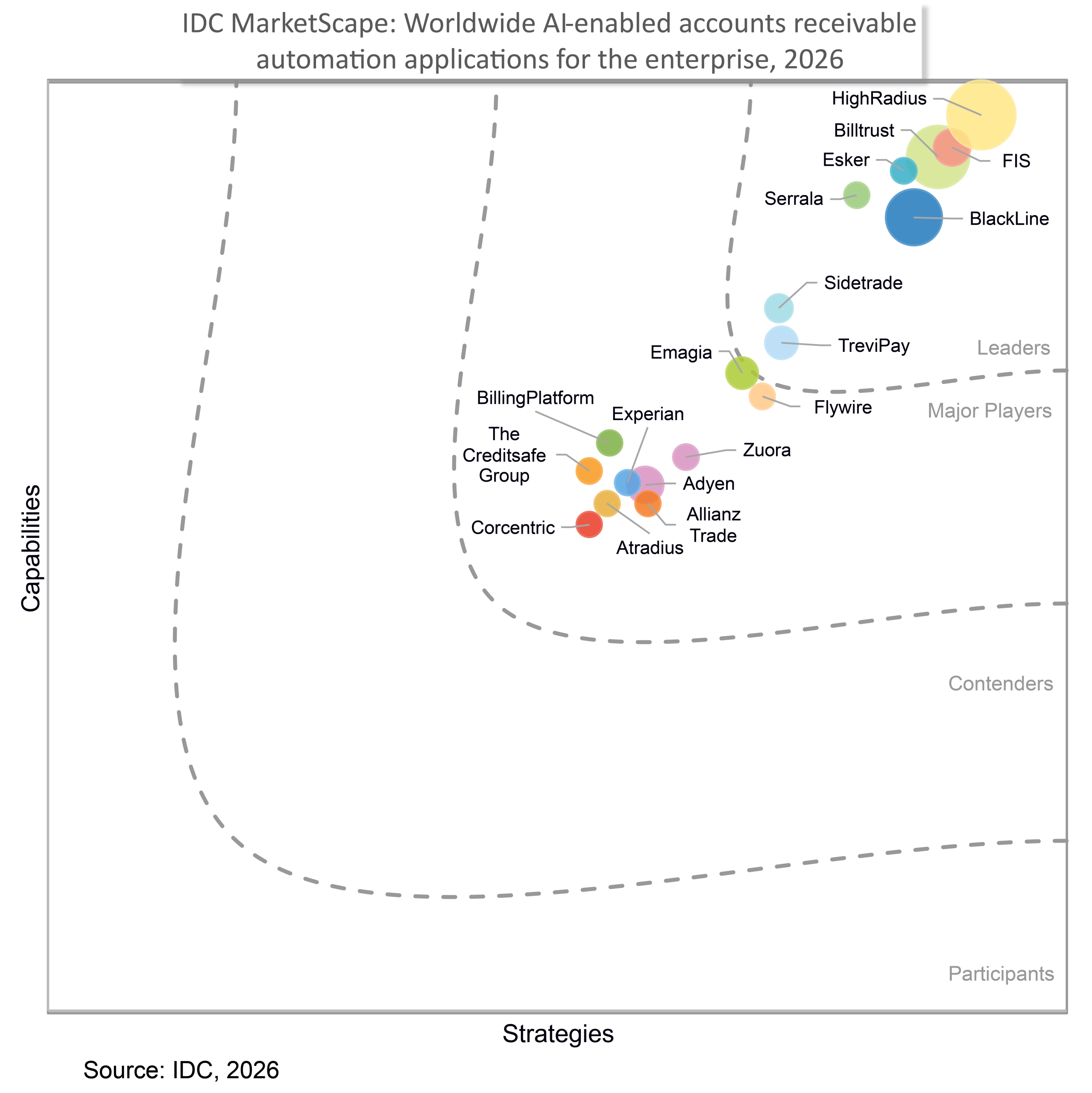
HighRadius recognized as a "Leader" in IDC Marketscape: Worldwide AI-enabled accounts receivable automation applications for the enterprise 2026 vendor assessment
Recognized as a Leader in 2026 Vendor Assessment for unifying credit, collections, cash application, deductions, e-invoicing, and payments on one AI platform to advance enterprise-wide invoice-to-cash transformation.
Forrester Recognizes HighRadius in The AR Invoice Automation Landscape Report, Q1 2023
Forrester acknowledges HighRadius’ significant contribution to the industry, particularly for large enterprises in North America and EMEA, reinforcing its position as the sole vendor that comprehensively meets the complex needs of this segment.