Artificial intelligence is no longer experimental in collections; it’s becoming a core part of how finance teams operate. The shift is structural. Instead of relying on static, rules-based workflows, teams are moving toward systems that adapt in real time to customer behavior, risk signals, and portfolio complexity.
This guide explains how AI is transforming the debt recovery process, from prioritization and outreach to automation and decision-making. It also covers key use cases, benefits, challenges, compliance considerations, and the future of debt collection.
AI in debt collection uses machine learning models, predictive modeling, and automation to improve how businesses recover outstanding payments. It helps prioritize high-risk accounts, personalize customer outreach, and streamline the collection process.
More advanced systems, such as agentic AI, go a step further by making real-time decisions, like when to contact a customer, which channel to use, and when to escalate, without relying on fixed rules.
As a result, businesses can reduce Days Sales Outstanding (DSO), improve recovery rates, and scale collections without increasing manual effort.
This shift is redefining how collections teams operate. Instead of relying on static workflows and manual prioritization, these systems enable faster, data-driven decisions across the entire collections lifecycle.
Agentic AI builds on this by introducing an autonomous layer of decision-making. It evaluates context in real time, assigns priority based on financial significance, and initiates the next best action with minimal oversight.
Let's explore how this shift is reshaping the collections function.
The result is a more innovative, more responsive process that helps teams recover payments more efficiently while maintaining a better customer experience.
Customer behavior segmentation can increase collection efficiency by up to 40%.
Are you tailoring your approach or using a one-size-fits-all strategy?
Find Out NowAI improves decision-making by continuously analyzing large volumes of customer and financial data. These systems can analyze vast datasets, including payment history, behavioral signals, and communication patterns, to guide collections strategies in real time.
At a high level, it works across three key layers:
AI systems evaluate multiple data points, including payment history, invoice aging, customer behavior, communication patterns, and external risk signals. This provides a more complete and dynamic view of each account.
Using this data, AI models predict the likelihood of payment, delay, or default. Accounts are continuously scored and reprioritized as new information becomes available, helping teams stay ahead of potential risks.
Based on these insights, the system can automate next steps, such as sending a reminder, escalating an account, or adjusting outreach strategies. This ensures that collection efforts are timely, relevant, and effective.
Advanced debt collection software, which uses agentic AI, takes this a step further by autonomously adapting strategies in real time. Instead of following predefined workflows, they learn from outcomes and continuously refine how collections are managed.
Most implementations today are advisory; they surface insights, flag risk, and recommend actions. But the final decision still sits with the collector. This is where the next phase of AI adoption is evolving.
Rather than waiting for a collector to review a worklist and decide what to do next, agentic AI evaluates each account independently and acts. It determines the right outreach timing based on a customer's payment history, selects the most effective communication channel based on past responsiveness, adjusts dunning strategies when an account shows early signs of deterioration, and escalates autonomously when recovery probability drops below a defined threshold.
For collections teams managing large portfolios across multiple aging buckets and customer segments, this matters. It means fewer accounts slip through the cracks, fewer follow-ups are missed, and the team's time is concentrated on the accounts where human judgment genuinely adds value, dispute resolution, negotiating payment plans, and managing high-value customer relationships.
That's the practical difference between AI that supports collections and agentic AI that runs it.

AI technologies are not limited to a single capability; they apply across multiple stages of the collections lifecycle. Here are the areas where they deliver the most measurable impact:
In many collection systems, the process still runs on fixed timelines. If an invoice passes its due date, an automated reminder goes out, and if there’s no response, the account moves up the escalation ladder. While this structure creates consistency, it doesn't always reflect what's actually going on with each customer.
Agentic AI introduces a more flexible way to manage this. It takes into account how a customer has paid in the past, how often they respond, their current order patterns, and even outside factors like market conditions. Considering this data, it adjusts how and when to follow up.
For instance, a customer who normally pays on time but misses by a few days probably just needs a quick nudge. Another customer, who has been slowing down for a while, might need a different approach altogether and sooner.
According to McKinsey, businesses using AI in credit and collections have improved their recovery rates by as much as 25 percent. That kind of gain is hard to ignore, especially in uncertain markets.
For collection teams, one of the biggest challenges is knowing which accounts to tackle first. When there are hundreds or even thousands of open items, choosing where to start isn’t always obvious, especially when the information being used is outdated.
Agentic AI helps streamline that decision-making. It monitors payment behavior in real-time and updates risk scores as things change. If a customer who usually pays on time starts slipping, that account is flagged sooner and bumped up the priority list.
This allows teams to act earlier before small issues turn into larger ones. And on the other hand, it helps avoid spending time on accounts that are low-risk and don’t need as much attention.
In a recent industry survey, companies using AI for prioritization reported a 10 to 15 percent drop in their average days' sales outstanding within just a few months.
Most customers have received the same generic payment reminder more than once, and many simply ignore it. Personalized messages tend to perform better, but creating those manually for each customer just isn’t practical.
Collections Agentic AI makes it easier to tailor communication at scale. It looks at each customer’s history, preferred channels, and responsiveness to past messages. Then it adjusts the tone and timing of outreach accordingly. Some customers may respond better to a softer reminder. Others might need a more direct follow-up.
It also chooses the right medium, whether that’s email, SMS, or a message through a customer portal, based on what has worked before.
According to Experian, around 80 percent of customers are more likely to engage when the communication they receive feels relevant to them. In collections, that can mean faster payments and fewer escalations.
The Agentic AI framework isn’t designed to replace human collectors. Its role is to support them, giving them more time and better information so they can focus on the work that matters most.
By handling repetitive tasks like sending standard reminders, flagging payment risks, or organizing account notes, the system reduces the burden on the team. That frees up time for conversations that require more experience and judgment, like resolving disputes or negotiating payment plans.
The Hackett Group found that finance teams using intelligent automation in their AR processes reduced manual effort by up to 40 percent. That time can be reinvested into activities that move the needle, not just keep the lights on. This not only improves operational efficiency but also helps reduce costs while maintaining effective debt collection practices.
While AI is transforming debt collection, implementing it effectively requires careful planning. For finance teams operating in regulated environments, the focus is not just on efficiency, but also on control, transparency, and compliance with regulations.
AI systems rely on large volumes of customer and financial data to function effectively. This makes data privacy and security a critical consideration. Organizations must ensure that sensitive information is handled in line with global standards such as the General Data Protection Regulation (GDPR) and other data protection frameworks. Maintaining strong controls is essential to ensure the security of debt collection processes and protect customer trust.
Collections is a highly regulated function, especially across regions like the US and EMEA. AI-driven workflows must align with debt collection laws and frameworks such as the Fair Debt Collection Practices Act (FDCPA). This requires clear audit trails, explainable decision-making, and the ability to demonstrate compliance with regulatory requirements at every step of the process.
While AI can automate large parts of the debt recovery process, not every situation should be handled without human involvement. Complex cases, such as disputes, negotiations, or high-value accounts, still require the judgment and experience of collectors. The most effective approach is a hybrid model, where AI supports decision-making while humans handle sensitive interactions.
AI models are only as reliable as the data they are trained on. Incomplete or biased data can lead to inaccurate predictions or suboptimal prioritization. Organizations need to regularly monitor model performance, validate outcomes, and ensure that ethical AI principles are followed to avoid unintended bias in decision-making.
Successfully deploying AI is not just a technology shift; it requires operational alignment. Teams need to adapt to new workflows, trust AI-driven recommendations, and integrate these systems into existing processes. Without proper change management, even the most advanced AI solutions may not deliver their full value.
As AI adoption continues to grow across the debt collection industry, addressing these challenges becomes essential. Organizations that focus on responsible implementation, balancing performance with compliance and control, are better positioned to scale effectively while maintaining trust.
The future of debt collection is moving toward more autonomous, adaptive systems that can respond to change in real time. As AI adoption continues to grow across financial services and fintech, organizations are shifting from reactive workflows to proactive, intelligence-driven operations. This evolution is not just about automation; it’s about building systems that can continuously learn, optimize, and execute with minimal manual intervention.
Generative AI and conversational AI are expected to play a larger role in customer interactions. From drafting personalized communication to enabling more natural, context-aware conversations, these technologies can improve engagement while maintaining consistency and compliance. At the same time, modern AI platforms are bringing together data, analytics, and execution into a single layer, making it easier to deploy AI solutions at scale and adapt strategies as conditions change.
Looking ahead, AI is reshaping debt collection into a more predictive and customer-centric function. Organizations that invest in the right AI tools and focus on responsible implementation will be better positioned to improve outcomes, reduce costs, and scale efficiently as complexity continues to grow.
Integrating AI Agents into your debt collections process offers significant strategic advantages, directly enhancing your financial health and operational effectiveness:
Agentic AI helps collections teams recover cash faster than traditional methods by identifying accounts at risk of delayed payments or defaults. It analyzes real-time behavior, risk signals, and past payment patterns to prioritize accounts that need attention. With this insight, teams can act faster and more strategically, leading to quicker follow-ups and improved collection efficiency.
Result: Businesses using HighRadius have reduced their average Days Sales Outstanding (DSO) by up to 12 days, significantly accelerating cash flow and boosting working capital.
Manual, repetitive tasks like sending reminders or logging follow-ups consume valuable time. Agentic AI automates these routine activities so collectors can focus on high-value work, such as resolving disputes or engaging key customers.
Result: With HighRadius, companies have seen a 30% increase in collector productivity, managing more accounts without adding headcount.
Collections often feel reactive when priorities aren’t clear. AI agents streamline the process by running background tasks and surfacing only the accounts that truly need human attention. This keeps the team organized, reduces chaos, and enables confident decision-making.
Result: HighRadius customers have achieved a 50 %+ reduction in manual follow-ups, freeing up collector time for more strategic tasks.
These outcomes do not just improve operational efficiency. They directly impact cash flow, reduce write-offs, and allow teams to support a growing customer base without scaling resources linearly.
For finance leaders looking to improve collections performance while managing costs and customer satisfaction, Agentic AI is no longer just an idea worth exploring. It is a capability worth building into the foundation of modern accounts receivable.
HighRadius offers a next-generation, cloud-native platform powered by Agentic AI to transform the Order to Cash (O2C) process for enterprise finance teams. Our Debt Collections Software stands apart by orchestrating a network of 15+ AI agents, both automated and human-assisted, to drive end-to-end efficiency across large accounts and SMB collections.
From automating AP portal tasks and tracking disputes to powering in-app calling and personalized outreach, our agents work 24/7 to reduce manual effort and accelerate cash recovery.
Trusted by over 1,000 global brands, including P&G, Ferrero, Johnson & Johnson, and Danone, HighRadius has been recognized as a Leader in Gartner’s Magic Quadrant for three consecutive years for its execution strength and innovation.
With FreedaGPT, our Gen AI assistant embedded in LiveCube, users can analyze data, generate reports, and take actions using natural language, dramatically simplifying complex workflows.
By automating routine tasks like data collection and analysis, Agentic AI frees up human agents to focus on more complex cases. It utilizes predictive analytics to assess debtor behavior, enabling tailored communication strategies that increase engagement and recovery rates. Additionally, its ability to operate continuously ensures timely follow-ups and reduces the chances of missed opportunities.
Yes, Agentic AI systems can be designed to adhere strictly to regulatory requirements by incorporating compliance protocols into their decision-making processes. They can monitor communications for adherence to legal standards and maintain detailed logs for audit purposes, thereby reducing the risk of non-compliance.
Agentic AI enhances the customer experience by enabling more personalized and empathetic interactions. It can tailor communication to individual debtor circumstances, offer flexible repayment options, and respond promptly to inquiries, thereby improving satisfaction and fostering better relationships between creditors and debtors.
AI systems evaluate factors such as payment history, responsiveness, credit risk, and invoice aging to rank accounts by recovery likelihood. This helps collectors focus on high-impact or high-risk accounts, rather than working through a static or chronological list.
Yes. The software adjusts communication style, timing, and channel based on a customer’s past payment behavior and responsiveness. This leads to more targeted outreach and a higher chance of engagement compared to generic reminders.
Yes. Routine tasks such as sending reminders, logging interactions, scheduling next actions, and tracking follow-ups are automated. This reduces manual effort, allowing collectors to spend more time on complex cases or customer disputes.
Typically, yes. Businesses using AI-driven collection tools report noticeable reductions in Days Sales Outstanding (DSO), resulting in faster collections, stronger cash flow, and more predictable working capital cycles.
Yes. Because AI continuously evaluates and prioritizes accounts, manages high-volume communication, and automates routine steps, it can support large portfolios across multiple segments or regions without requiring proportional increases in staff.

Positioned highest for delivering comprehensive automation across collections, credit, deductions, disputes, and multi-ERP integration - enabling standardized, scalable I2C transformation.
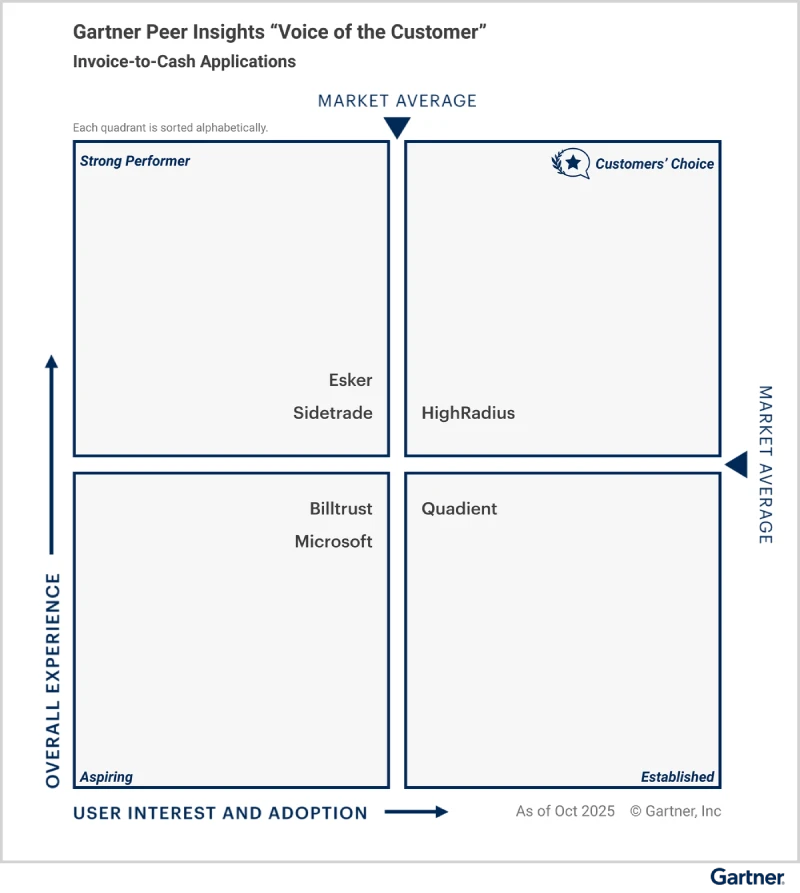
Explore why HighRadius has been a Digital World Class Vendor for order-to-cash automation software – two years in a row.

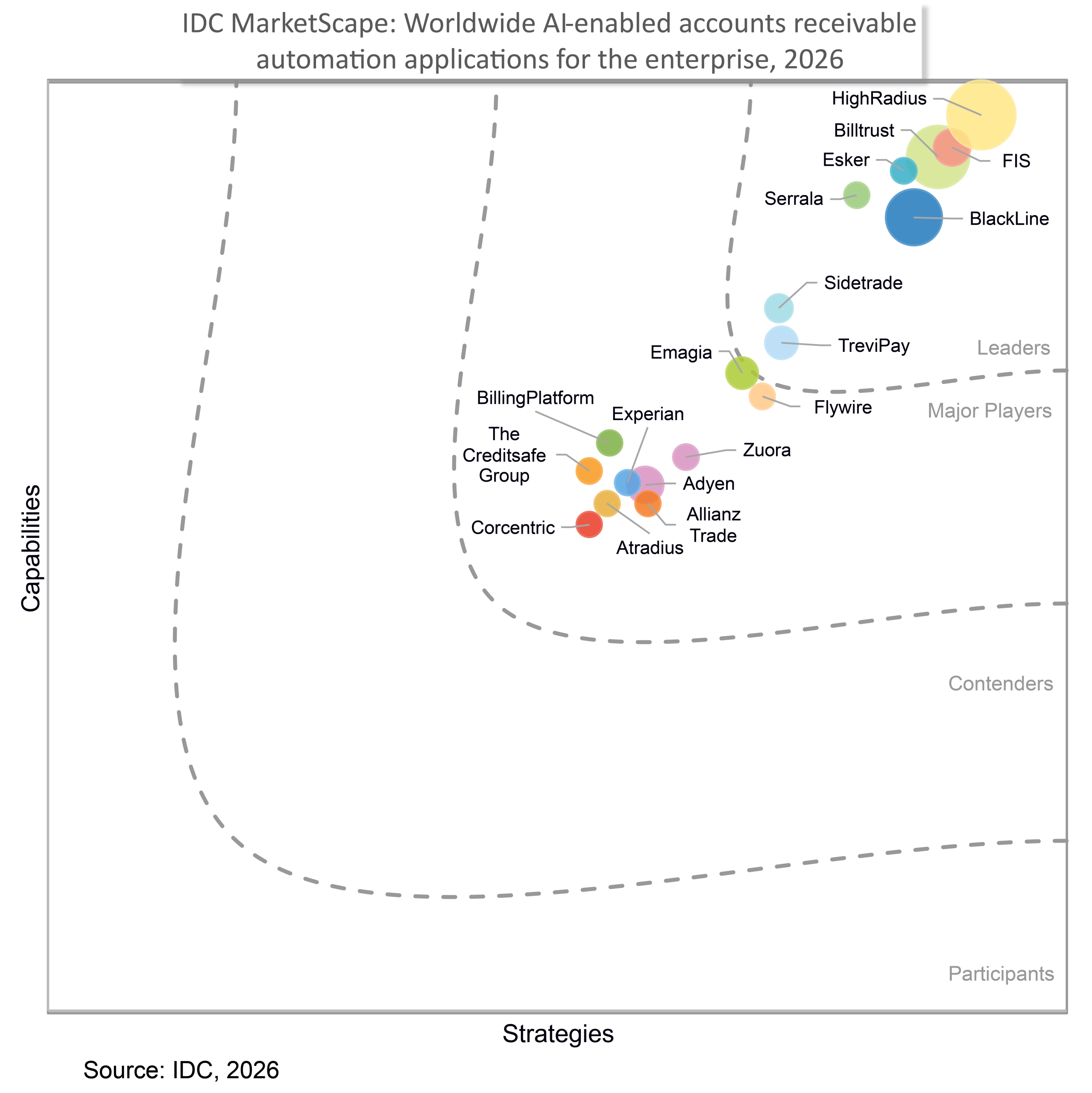
Recognized as a Leader in 2026 Vendor Assessment for unifying credit, collections, cash application, deductions, e-invoicing, and payments on one AI platform to advance enterprise-wide invoice-to-cash transformation.
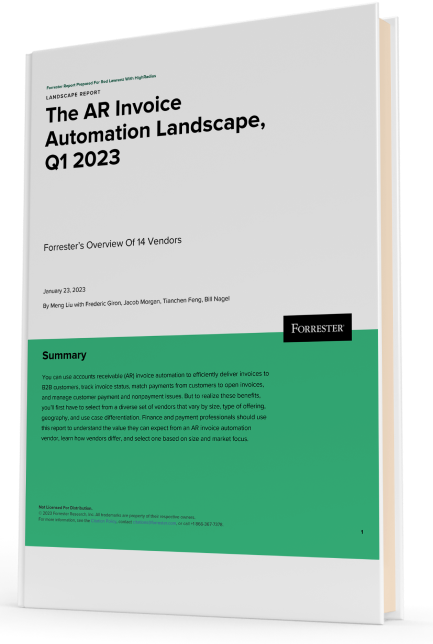
Forrester acknowledges HighRadius’ significant contribution to the industry, particularly for large enterprises in North America and EMEA, reinforcing its position as the sole vendor that comprehensively meets the complex needs of this segment.
Customers globally
Implementations
Transactions annually
Patents/ Pending
Continents
Talk with a finance expert about the processes, KPIs, and business outcomes that matter most to your organization.
Talk to a Finance ExpertExplore self-guided demos and see how finance workflows can move from manual execution to intelligent automation.
Explore the Demo CenterPlease fill in the details below
Please fill in the details below

We have seen financial services costs decline by $2.5M while the volume, quality, and productivity increase.

Colleen Zdrojewski
Trusted By 1300+ Global Businesses


