Automation is becoming a key driver of efficiency in modern finance operations. In fact, 75% of finance and accounting teams already use automation tools, making finance one of the fastest-adopting functions for automation technologies. From collections and cash application to reconciliation and reporting, automation helps organizations reduce manual effort and improve operational speed. However, many finance leaders still struggle to clearly measure the automation ROI and justify investments in automation initiatives.
The difficulty often lies in accurately calculating the ROI of automation, especially when traditional pricing models focus on licenses rather than outcomes. Without a clear automation ROI calculation, companies may underestimate potential automation cost savings or overestimate the cost of automation. In this blog, we will discuss how to measure and maximize ROI in automation using the best KPIs.
One of the biggest barriers to achieving strong automation ROI is the pricing model used by automation vendors. Many automation platforms follow traditional software pricing structures based on:
While these models may appear straightforward, they often disconnect pricing from the actual value delivered by automation. This becomes especially problematic when evaluating the cost of robotic process automation enterprise finance automation solutions. Organizations might invest heavily in licenses but struggle to demonstrate measurable financial returns. Common challenges with traditional automation pricing include:
As a result, many finance teams struggle to justify the roi of automation, even when automation capabilities are technically impressive. This is why forward-looking enterprises are adopting outcome-based pricing (OBP) models, where automation vendors align their success with measurable business results.
To accurately measure automation ROI, organizations must track the right performance metrics. The best KPIs for intelligent automation ROI should focus on measurable financial and operational improvements across the order-to-cash and finance functions. Here are some of the most important KPIs used to evaluate the roi in automation:
Days Sales Outstanding measures the average number of days it takes to collect payment after a sale. Automation in collections, dispute management, and payment matching can significantly reduce DSO, helping organizations unlock working capital faster and strengthen their automation ROI calculation.
Automation reduces manual effort in processes such as cash application, invoice processing, deduction management, and payment reconciliation. Tracking the cost per transaction before and after automation provides a clear view of automation cost savings and highlights the financial impact of automation initiatives.
Automation rate measures the percentage of transactions processed without manual intervention. Higher automation rates lead to reduced operational costs, faster processing times, and improved accuracy, factors that directly increase the ROI of automation.
Unresolved disputes can delay collections and increase operational workload. Automation helps accelerate dispute resolution by capturing documentation automatically, routing cases to the right stakeholders, and enabling faster collaboration. Reduced cycle times contribute to both automation cost savings and improved customer relationships.
Cash application match rate measures the percentage of payments automatically matched to invoices. A higher match rate reduces manual processing, improves operational efficiency, and plays a significant role in improving the overall automation ROI.
Once organizations begin tracking the best KPIs for intelligent automation ROI, the next step is converting operational improvements into measurable financial outcomes. This is where an automation ROI calculator becomes valuable. Instead of relying on assumptions, finance teams can use structured tools to estimate the ROI of automation by analyzing factors such as transaction volumes, manual processing effort, labor costs, and expected automation improvements. An automation ROI calculation framework helps organizations:
To support this process, finance teams can leverage practical tools and templates designed to evaluate automation impact. Some useful resources include:
ROI and Cost Savings Estimation Tools
Cash Application ROI Calculator – Helps estimate cost savings from automating invoice-to-payment matching and reducing manual reconciliation.
Business Case Template for Cash Application Automation – Supports finance teams in building a structured business case for automation investments.
Working Capital & Collections Impact Tools
Month-End A/R Assessment Tool: Days Sales Outstanding Calculator – Helps estimate the impact of automation on DSO reduction.
DSO Calculation Excel Template – Enables finance teams to measure improvements in collections efficiency and working capital.
Automation Readiness & Process Assessment
Accounts Receivable Automation Assessment Template – Helps organizations evaluate their current automation maturity and identify improvement opportunities.
Accounts Receivable Software Evaluation Template – Assists finance leaders in selecting the right automation solution based on business requirements.
When organizations evaluate the ROI of automation, one of the most critical considerations is the balance between implementation costs and long-term cost savings. While automation technologies require upfront investment in software, integration, and process redesign, the financial benefits typically accumulate over time through reduced operational expenses, improved efficiency, and fewer errors.
However, organizations must evaluate both sides of the equation the cost of automation implementation and the measurable savings it generates. The table below highlights how these two components typically compare in an automation ROI calculation.
| Category | Implementation Costs (Initial Investment) | Automation Cost Savings (Long-Term Benefits) |
| Software & Licensing | Subscription or licensing fees for RPA platforms, AI tools, or automation software. | Reduced dependency on manual labor and improved scalability of operations. |
| Implementation & Integration | Costs for system integration, workflow design, data migration, and IT configuration. | Faster processing times and streamlined workflows across finance and operational processes. |
| Infrastructure | Cloud hosting, servers, and IT infrastructure required to support automation tools. | Ability to process significantly higher transaction volumes without expanding infrastructure or staff. |
| Training & Change Management | Training employees to work with automation systems and redesigning internal processes. | Improved employee productivity and the ability to redeploy teams to higher-value strategic work. |
| Maintenance & Optimization | Ongoing monitoring, updates, and optimization of automation workflows. | Reduced operational errors, fewer rework cycles, and improved data accuracy. |
| Operational Efficiency | Initial effort required to redesign processes for automation readiness. | Significant reduction in cycle times, enabling faster decision-making and improved cash flow management. |
In most cases, organizations begin seeing measurable automation ROI within the first 6–12 months of implementation, especially in high-volume finance processes like invoicing, collections, and cash application. As automation scales across departments, the cumulative automation cost savings often far exceed the initial investment.
Ultimately, a successful automation ROI calculation depends on understanding both sides of the equation carefully managing implementation costs while maximizing long-term efficiency gains. Organizations that approach automation as a strategic investment rather than a short-term technology upgrade are far more likely to unlock sustainable cost savings and operational value.
Even with strong business cases and automation ROI calculators, many organizations remain cautious about automation investments. This is where Outcome-Based Pricing (OBP) fundamentally changes the automation landscape. Instead of charging based on software licenses or bots, HighRadius Outcome-Based Pricing aligns costs with measurable business outcomes. Under the Highradius OBP model, organizations pay based on results such as:
Companies no longer bear the entire risk of automation adoption.
Automation vendors are incentivized to deliver measurable improvements quickly.
Pricing is tied to tangible operational improvements.
Finance teams can confidently demonstrate the automation roi calculation to executive stakeholders.
Achieving strong automation ROI requires more than just deploying automation technology; it requires a solution designed to deliver measurable financial outcomes. HighRadius helps organizations maximize the ROI of automation by combining AI-driven automation, industry-specific finance solutions, and an Outcome-Based Pricing (OBP) model that aligns technology investments with real business results.
Here’s how HighRadius helps organizations maximize ROI in automation:
HighRadius automates key finance processes such as cash application, collections, credit management, and deductions management. By reducing manual intervention and improving processing speed, organizations can significantly lower operational costs and generate measurable automation cost savings.
The platform provides real-time analytics and dashboards that help finance teams monitor critical performance metrics such as DSO, auto-cash match rates, and dispute resolution cycle time. Tracking these best KPIs for intelligent automation ROI helps organizations continuously optimize operations and improve their automation ROI calculation.
HighRadius provides tools such as the Cash Application ROI Calculator and automation assessment frameworks to help organizations estimate potential savings before implementation. These tools help finance leaders build a clear business case and accurately evaluate the cost of automation versus the expected financial benefits.
HighRadius solutions are designed with pre-built integrations for leading ERP systems and industry best practices, enabling faster implementation and quicker realization of the roi of automation.
Unlike traditional software pricing models, HighRadius uses Outcome-Based Pricing (OBP), where pricing is aligned with measurable improvements such as reduced DSO, higher auto-cash match rates, and improved collections efficiency. This approach reduces implementation risk and ensures organizations achieve predictable automation ROI.
Automation ROI measures the financial value gained from implementing automation compared to the total investment. It includes cost savings from reduced manual work, improved efficiency, faster processing, and better cash flow management. A strong automation ROI indicates that the benefits outweigh the cost of automation.
The ROI of automation is calculated by comparing total automation cost savings with the overall cost of automation, including implementation and software expenses. Organizations typically analyze labor savings, productivity improvements, and working capital gains to complete an accurate automation ROI calculation.
The best KPIs for intelligent automation ROI include Days Sales Outstanding (DSO), cost per transaction, automation rate, dispute resolution cycle time, and cash application match rate. These metrics help finance teams measure operational efficiency and quantify the business impact of automation.
An automation ROI calculator is a tool that helps organizations estimate potential financial gains from automation. It evaluates factors such as manual processing costs, transaction volumes, labor effort, and efficiency improvements to estimate automation cost savings and payback periods.
The cost of automation depends on factors such as software licensing, implementation complexity, ERP integrations, data migration, and employee training. Evaluating these components carefully helps organizations accurately estimate the cost of robotic process automation and overall automation investment.
Most organizations begin to see ROI from automation within 6 to 12 months, depending on the process complexity and automation scope. Faster processing, reduced manual effort, and improved cash flow visibility often drive early automation cost savings and operational improvements.

Positioned highest for delivering comprehensive automation across collections, credit, deductions, disputes, and multi-ERP integration - enabling standardized, scalable I2C transformation.
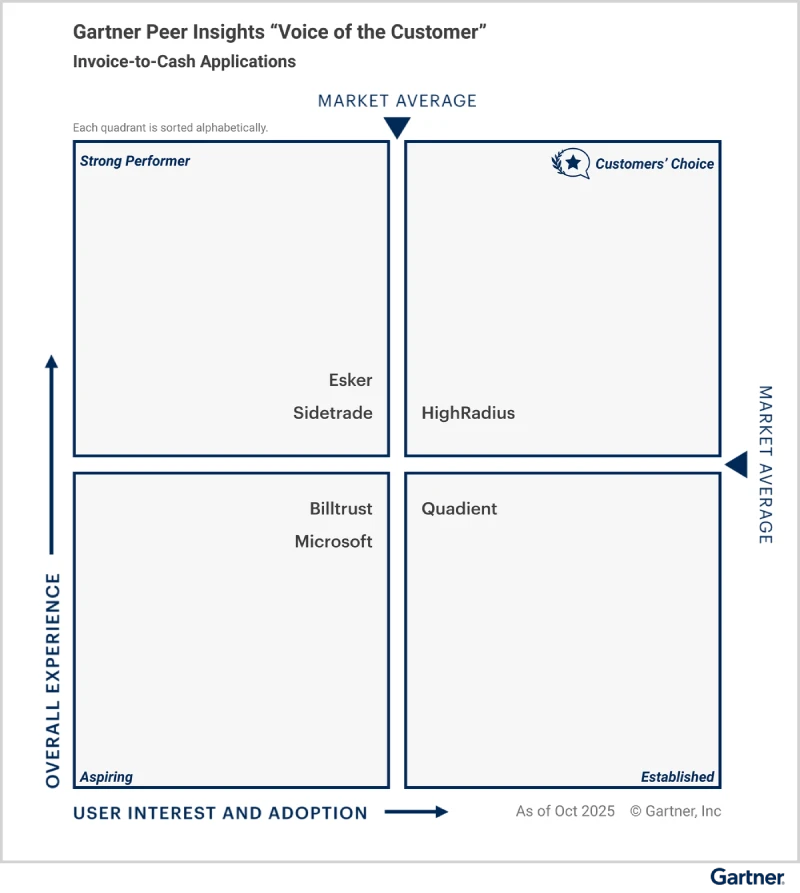
Explore why HighRadius has been a Digital World Class Vendor for order-to-cash automation software – two years in a row.

HighRadius stands out as an IDC MarketScape Leader for AR Automation Software, serving both large and midsized businesses. The IDC report highlights HighRadius’ integration of machine learning across its AR products, enhancing payment matching, credit management, and cash forecasting capabilities.

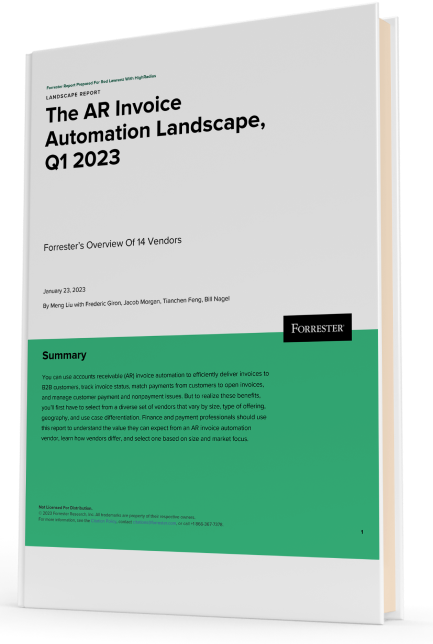
Forrester acknowledges HighRadius’ significant contribution to the industry, particularly for large enterprises in North America and EMEA, reinforcing its position as the sole vendor that comprehensively meets the complex needs of this segment.
Customers globally
Implementations
Transactions annually
Patents/ Pending
Continents
Talk with a finance expert about the processes, KPIs, and business outcomes that matter most to your organization.
Talk to a Finance ExpertExplore self-guided demos and see how finance workflows can move from manual execution to intelligent automation.
Explore the Demo CenterPlease fill in the details below
Please fill in the details below

We have seen financial services costs decline by $2.5M while the volume, quality, and productivity increase.

Colleen Zdrojewski
Trusted By 1300+ Global Businesses


