For decades, enterprise finance teams have evaluated technology investments using a familiar framework: software licenses, subscriptions, and implementation fees. While this model made sense when enterprise software was primarily infrastructure driven, it often created a disconnect between what organizations paid for and the results they actually achieved.
Finance leaders frequently invested in automation platforms expecting improvements in efficiency, working capital, and productivity. Yet in many cases, the pricing structure remained tied to software access rather than business outcomes.
As finance organizations continue their digital transformation journey, expectations from technology vendors are evolving. CFOs today want solutions that deliver measurable operational improvements, not just new features or dashboards.
This shift has given rise to outcome-based pricing models.
In an outcome based pricing structure, technology providers are compensated based on the results their solutions deliver. Instead of paying solely for licenses or seats, organizations tie pricing to metrics such as invoice processing efficiency, automation rates, cash application accuracy, or improvements in Days Sales Outstanding (DSO).
This model introduces a powerful level of accountability into finance transformation initiatives. Vendors succeed when finance teams achieve measurable improvements, creating stronger alignment between technology investments and financial performance.
Across functions such as Accounts Payable, Accounts Receivable, and Cash Application, outcome-based pricing models are already beginning to reshape how finance automation solutions are evaluated.
In this article, we explore five real-world outcome-based pricing examples in finance and how organizations can incorporate these models into their next vendor evaluation.
Outcome based pricing is a commercial model where the cost of a solution is directly linked to the measurable value it delivers to the business. Instead of paying primarily for software licenses or system access, organizations pay based on the operational and financial outcomes achieved after implementation.
In finance operations, these outcomes are typically defined using performance metrics that directly impact efficiency, cost, and working capital. Common examples include:
The core principle behind this model is shared accountability. Finance teams and technology vendors first establish baseline performance metrics and then define clear improvement targets. Pricing is structured around achieving these targets, ensuring that vendors are incentivized to deliver tangible results rather than simply deploying technology.
For finance leaders, this approach reduces the risk associated with large technology investments. It shifts the focus from purchasing software capabilities to achieving measurable improvements in productivity, automation, and cash flow performance.
As finance automation platforms become more intelligent and data driven, outcome based pricing is emerging as a practical way for organizations to ensure their technology investments consistently deliver real business value.
Several structural changes in enterprise finance operations are driving the growing adoption of outcome-based pricing models. As organizations accelerate finance transformation initiatives, CFOs are increasingly looking for technology investments that deliver measurable operational and financial impact, not just system upgrades.
Finance transformation programs often involve substantial investments in automation platforms, AI technologies, and process redesign. As a result, CFOs and finance leaders are under greater pressure to demonstrate clear return on investment (ROI) from these initiatives.
Traditional software pricing models make it difficult to directly connect spending with business outcomes. Outcome-based pricing addresses this challenge by linking vendor compensation to measurable improvements such as reduced processing costs, higher automation rates, or faster cash cycles. This creates greater transparency around the financial value generated by technology investments.
In conventional SaaS contracts, organizations typically pay upfront for software access regardless of whether the solution ultimately delivers the expected operational improvements. This places much of the implementation and performance risk on the customer.
Outcome-based pricing shifts part of this responsibility to the vendor. By tying pricing to agreed-upon performance metrics, vendors become more accountable for ensuring that their solutions drive sustained process improvements and efficiency gains across finance operations.
Advances in artificial intelligence, machine learning, and data-driven workflow automation have significantly improved the reliability of finance automation platforms. Modern solutions can now consistently deliver measurable improvements in areas such as invoice capture accuracy, cash application matching rates, and collections prioritization.
Because these outcomes can be tracked through operational metrics, it becomes easier for organizations to structure pricing models that are tied to performance improvements rather than static software subscriptions.
Working capital performance has become a major priority for finance leaders, particularly in volatile economic environments. Metrics such as Days Sales Outstanding (DSO), invoice cycle time, and dispute resolution turnaround directly influence liquidity and cash flow.
Outcome-based pricing models tied to improvements in these metrics allow organizations to align technology investments with broader financial objectives. By connecting vendor pricing to working capital outcomes, finance teams can ensure that automation initiatives contribute directly to stronger cash flow management and financial resilience.
While the concept of outcome based pricing is compelling, turning it into a practical operating model requires clear structure and measurable benchmarks. Successful implementations start with a detailed understanding of current finance operations and baseline performance metrics.
Finance teams and vendors typically begin by defining operational KPIs that directly reflect process efficiency and financial impact. Common baseline metrics include:
Establishing these baselines provides a clear picture of existing performance and helps both parties quantify the improvement potential.
Once baseline metrics are documented, organizations can define target outcomes and performance thresholds. Pricing structures are then aligned with these targets for example, improved automation rates, lower processing costs, or faster collections cycles.
This structured approach ensures transparency, aligns expectations early in the engagement, and makes it easier to measure the value delivered by automation initiatives. In practice, the most effective models rely on mutually agreed success criteria, where both the vendor and the finance organization share accountability for delivering measurable operational improvements.
Accounts Payable is one of the most practical areas for implementing outcome-based pricing because AP processes are highly measurable and transaction-driven. Metrics such as invoice processing cost, automation rate, and processing cycle time provide clear indicators of operational efficiency.
One of the most commonly used benchmarks in AP operations is Cost per Invoice Processed. This metric captures the total cost involved in processing supplier invoices, including labor, technology infrastructure, exception handling, and payment processing activities.
Consider an organization that processes 5,000 invoices per month. Their AP operating costs may include:
This results in a monthly processing cost of $100,000, or approximately $20 per invoice.
Industry benchmarks show that manual invoice processing can cost between $15 and $25 per invoice, while highly automated AP environments can reduce this to $5–$9 per invoice.
In an outcome-based pricing model, vendors may structure pricing around the number of invoices processed and the efficiency improvements achieved. As automation increases and manual effort declines, the cost savings generated can be shared between the organization and the vendor.
Another important performance metric in AP operations is the touchless invoice processing rate, which measures the percentage of invoices processed without human intervention.
Many organizations begin with touchless processing rates of around 40–50%, largely due to manual data entry, invoice exceptions, or inconsistent supplier formats. With intelligent invoice capture, AI-driven data extraction, and automated validation workflows, automation rates can often increase to 80–90%.
Outcome based pricing can be structured around improvements in this metric. For example, vendors may receive incentives as automation milestones are achieved or when a defined percentage of invoices are processed without manual intervention.
This model encourages continuous optimization of invoice capture accuracy, supplier data standardization, and workflow automation ultimately reducing processing costs and improving overall AP efficiency.
Unlike Accounts Payable, where pricing outcomes often focus on processing efficiency, Accounts Receivable (AR) outcomes are closely tied to cash flow acceleration and working capital optimization. As a result, outcome-based pricing models in AR typically align with metrics that directly influence liquidity, collections performance, and reconciliation speed.
Automation technologies in receivables operations can significantly improve metrics such as auto-cash match rates, collections productivity, dispute resolution speed, and Days Sales Outstanding (DSO). These measurable improvements make AR an ideal candidate for outcome driven pricing structures.
Below are several examples of how outcome-based pricing models are applied in AR and Cash Application environments.
Cash application teams are responsible for matching incoming customer payments with open invoices. In many organizations, this process still involves manual reconciliation of bank remittance data, lockbox files, and customer payment details, which can slow down posting cycles and increase operational effort.
An outcome-based pricing model can tie vendor compensation to the number of payments automatically matched and posted by the system.
For example:
As AI-powered cash application solutions improve matching accuracy by using remittance data, historical payment patterns, and invoice references the volume of automatically posted transactions increases. Pricing can then be structured around the incremental improvement in automated matches, ensuring the vendor is incentivized to continuously improve matching accuracy.
One of the most strategic metrics for CFOs and AR leaders is Days Sales Outstanding (DSO), which measures the average time it takes for a company to collect payment after a sale.
Even small reductions in DSO can unlock significant working capital, particularly for large enterprises with high revenue volumes.
In an outcome based pricing model, vendors may link pricing to measurable improvements in DSO achieved through automation tools such as AI driven collections prioritization, predictive payment analytics, and automated customer outreach.
For instance:
If automation enables faster collections and reduces DSO by several days, the vendor may participate in the financial value generated through improved cash flow and liquidity.
Disputes and deductions are a major source of delays in receivables management. When invoices are disputed, collections teams often spend significant time investigating issues, coordinating with internal departments, and resolving claims before payments can be collected.
Automation platforms can streamline this process by automatically identifying dispute categories, routing cases to the appropriate teams, and tracking resolution workflows.
Outcome-based pricing in this area may be tied to operational metrics such as:
By aligning pricing with these outcomes, vendors are incentivized to continuously optimize dispute identification and workflow automation, helping finance teams reduce delays and accelerate cash collections.
Adopting an outcome based pricing model requires a shift in how finance teams evaluate and select technology vendors. Traditional RFPs typically emphasize product features, implementation timelines, and subscription pricing. While these factors remain important, outcome-driven evaluations place greater focus on measurable business results and operational improvements.
To effectively evaluate vendors under this model, finance leaders should structure their RFP around clear performance expectations and mutually defined success metrics.
The first step is identifying the operational metrics that will define success for the project. These metrics should reflect areas where automation can deliver measurable improvements in efficiency, cost reduction, or working capital performance.
Common examples include:
Clearly defining these metrics ensures that both the organization and the vendor align on the outcomes the solution is expected to deliver.
Before evaluating vendors, finance teams should document their current operational performance across key metrics. Establishing these baselines provides a realistic view of existing process efficiency and helps quantify potential improvement opportunities.
For example:
| Metric | Current State | Target Outcome |
| Invoice processing cost | $22 per invoice | $8 per invoice |
| Auto-cash rate | 58% | 85% |
| DSO | 51 days | 44 days |
Having clearly defined starting points ensures that performance improvements can be measured objectively and prevents ambiguity when evaluating results after implementation.
A key advantage of outcome based pricing is the ability to align vendor incentives with the organization’s financial and operational goals. Instead of paying solely for software access, pricing structures are tied to the achievement of predefined outcomes.
This means vendors are motivated to continuously optimize automation accuracy, workflow efficiency, and analytics capabilities to deliver measurable results.
When structured effectively, this approach transforms vendors from technology providers into long-term partners responsible for driving finance transformation outcomes
Outcome-based pricing is a commercial model where the cost of a solution is tied to the measurable business outcomes it delivers, rather than simply charging for software licenses or subscriptions. In finance operations, this often means pricing is linked to metrics such as invoice processing efficiency, automation rates, cash application accuracy, or reductions in Days Sales Outstanding (DSO). This approach ensures that vendors are accountable for delivering tangible operational improvements.
Finance leaders are increasingly adopting outcome based pricing to ensure that technology investments deliver clear and measurable return on investment (ROI). Instead of paying solely for system access, organizations pay for improvements in efficiency, cost reduction, and working capital performance. This model also promotes greater vendor accountability, as technology providers are incentivized to continuously optimize processes and deliver measurable results.
Outcome-based pricing works best in finance processes where performance can be measured through clear operational metrics. Common examples include:
These metrics allow organizations to track efficiency improvements and align pricing with real operational outcomes.
By tying pricing directly to performance improvements, outcome based models ensure that finance automation initiatives generate measurable operational and financial value. For example, increased invoice automation can lower processing costs, while improved cash application accuracy can accelerate reconciliation and reduce manual effort. This structure helps organizations realize ROI faster and reduces the risk associated with large technology investments.
Before adopting outcome-based pricing, organizations should establish clear baseline performance metrics across their finance processes. These baselines help determine improvement targets and ensure outcomes can be measured objectively. Companies should also define mutually agreed success criteria with vendors, outlining the metrics that will determine pricing adjustments and performance incentives.
Finance teams can incorporate outcome-based pricing into their vendor selection process by structuring their RFPs around operational performance metrics rather than just product features. This includes defining success metrics such as automation rates, processing costs, or DSO improvements, and asking vendors to propose pricing models tied to achieving those outcomes. This approach helps ensure that technology investments align with long-term finance transformation goals.
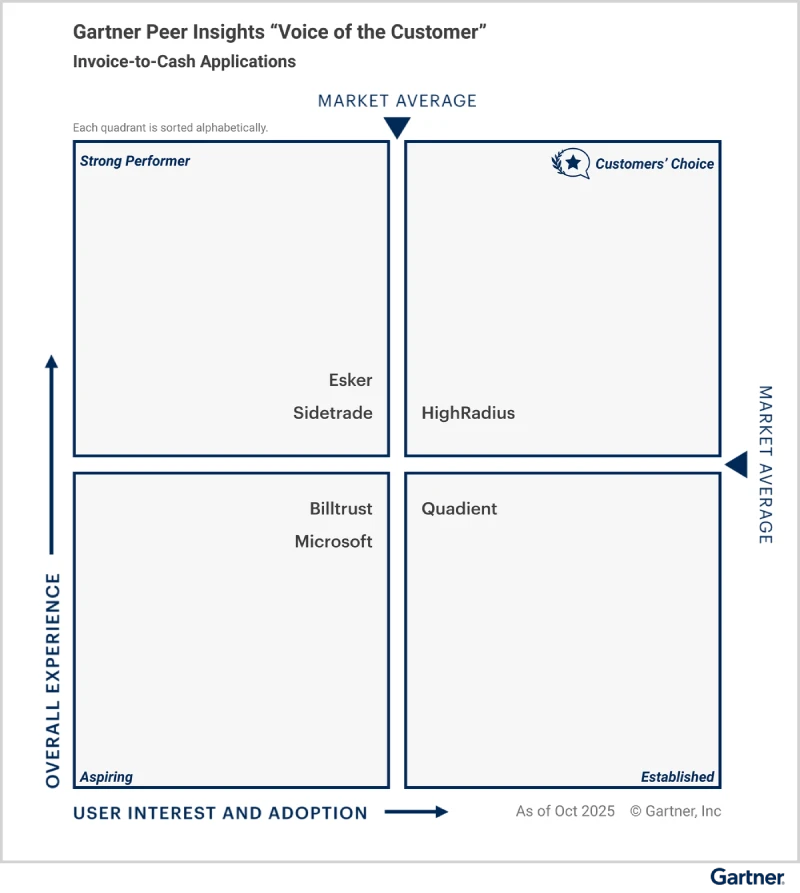
Positioned highest for delivering comprehensive automation across collections, credit, deductions, disputes, and multi-ERP integration - enabling standardized, scalable I2C transformation.
Explore why HighRadius has been a Digital World Class Vendor for order-to-cash automation software – two years in a row.

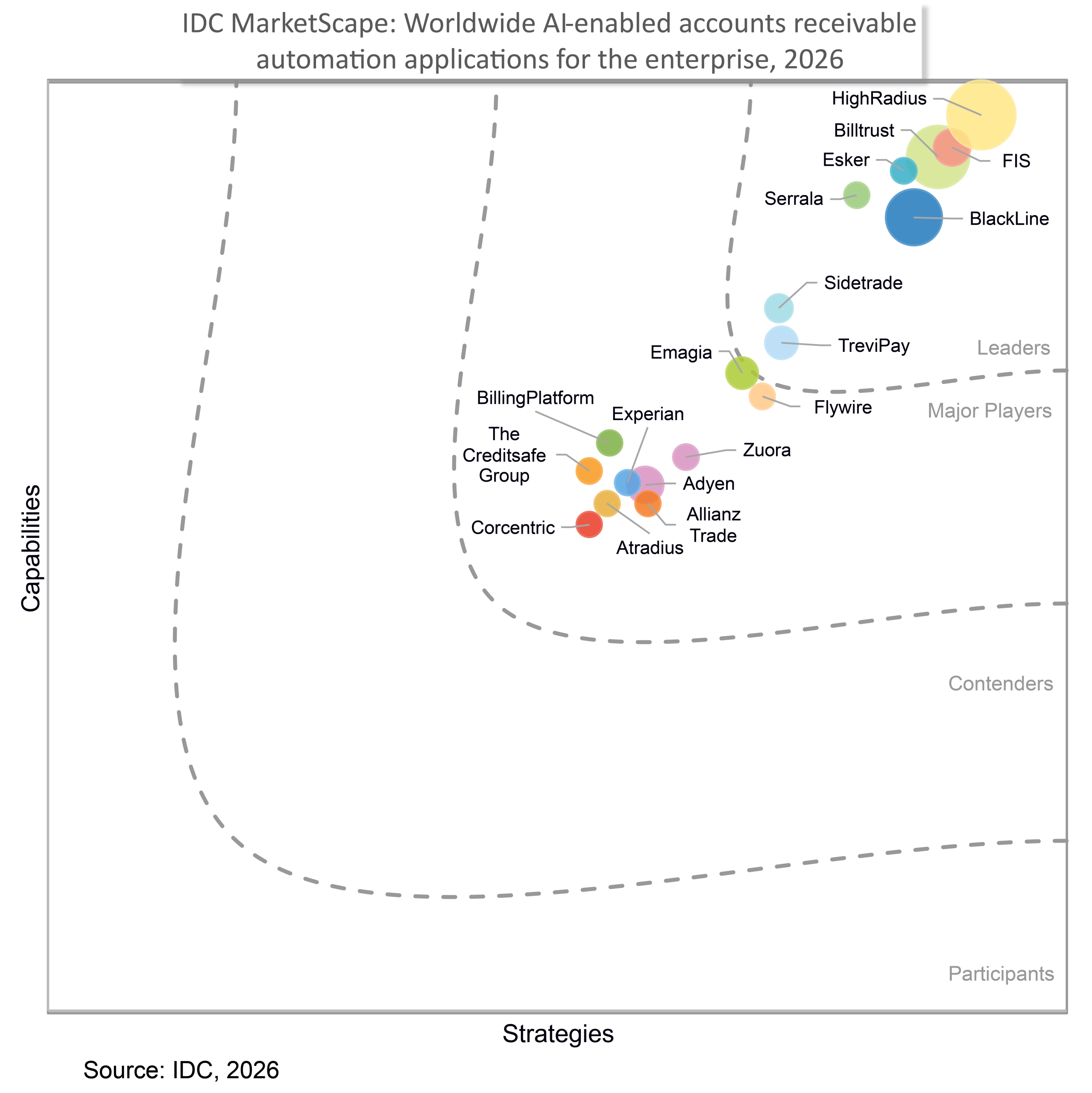
Recognized as a Leader in 2026 Vendor Assessment for unifying credit, collections, cash application, deductions, e-invoicing, and payments on one AI platform to advance enterprise-wide invoice-to-cash transformation.
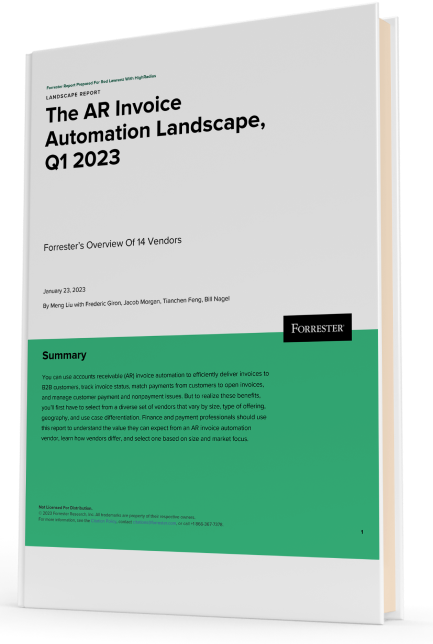
Forrester acknowledges HighRadius’ significant contribution to the industry, particularly for large enterprises in North America and EMEA, reinforcing its position as the sole vendor that comprehensively meets the complex needs of this segment.
Customers globally
Implementations
Transactions annually
Patents/ Pending
Continents
Talk with a finance expert about the processes, KPIs, and business outcomes that matter most to your organization.
Talk to a Finance ExpertExplore self-guided demos and see how finance workflows can move from manual execution to intelligent automation.
Explore the Demo CenterPlease fill in the details below
Please fill in the details below

We have seen financial services costs decline by $2.5M while the volume, quality, and productivity increase.

Colleen Zdrojewski
Trusted By 1300+ Global Businesses


