Accounts receivable automation is a strategic finance capability that uses software and AI to accelerate cash conversion, reduce operational risk, and improve working capital visibility. For CFOs, this is not just process improvement. It directly impacts liquidity, forecasting accuracy, and cost efficiency.
As transaction volumes grow and payment behaviors become less predictable, manual AR processes fail to keep pace. Automation shifts AR from a reactive function to a controlled, data-driven system that supports faster and more reliable cash flow outcomes.
Accounts receivable represents outstanding customer invoices that a business expects to convert into cash within a defined credit period. From a finance leadership perspective, AR is a core driver of working capital. The quality of receivables determines how predictable and stable cash inflows are.
Delayed collections, disputes, or inaccurate tracking directly impact liquidity and increase reliance on external financing. This is why AR performance is closely tied to DSO, cash flow stability, and credit risk exposure.
Accounts receivable automation is the systematic use of technology to execute, monitor, and optimize core AR processes with minimal manual intervention. This includes invoice generation, collections management, cash application, dispute resolution, and reporting. The objective is not just efficiency, but control and consistency at scale.
For finance leaders, automation creates a standardized operating model where execution is predictable, audit trails are clear, and decisions are supported by real-time data.
Accounts receivable automation works by orchestrating the end-to-end receivables cycle through integrated workflows, data capture, and decision logic. The system tracks invoices, triggers collections based on predefined strategies, captures incoming payment data, matches it against open invoices, and flags exceptions for review.
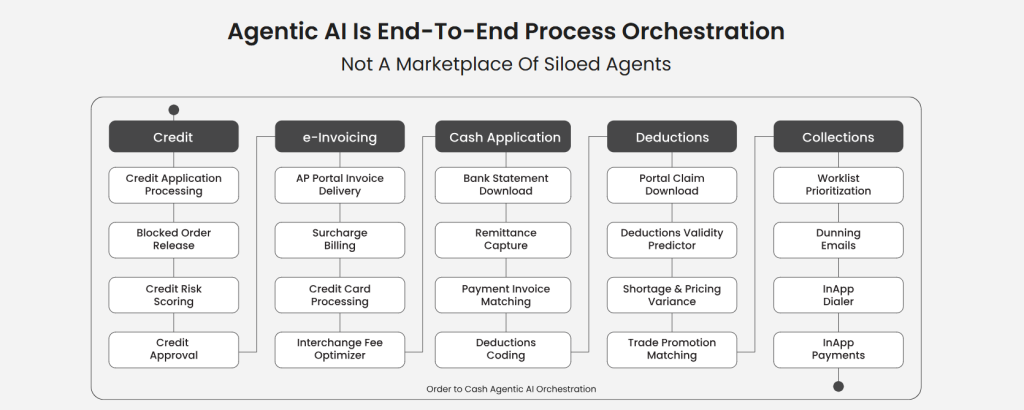
Modern systems also apply intelligence by prioritizing high-risk accounts, recommending actions, and adapting to payment behavior. This enables a shift from manual execution to performance-driven AR management.
Accounts receivable automation improves cash flow velocity, enhances operational efficiency, and strengthens financial control. For finance leaders, AR is not just about collections. It is about how quickly revenue converts into cash and how much control exists across that cycle. Automation brings structure and consistency, ensuring execution is timely and measurable.
1. Faster collections: Automation ensures invoices go out on time and follow-ups happen consistently. This reduces payment delays and accelerates the conversion of receivables into cash.
2. Reduced manual work: Repetitive tasks like tracking invoices, sending reminders, and matching payments are automated. Teams focus more on exceptions and strategic activities.
3. Improved accuracy: System-driven workflows reduce errors in reconciliation and data handling. This leads to fewer disputes and more reliable financial records.
4. Real-time visibility: Centralized dashboards provide a clear view of receivables and overdue accounts. This enables faster, informed decision-making.
5. Stronger process control: Standardized workflows and audit trails ensure consistency and compliance across AR operations.
Manual accounts receivable processes introduce inefficiencies, increase error rates, and limit visibility into financial performance. At scale, manual AR creates gaps in control and consistency. Finance teams rely on fragmented data and reactive workflows, weakening decision-making and cash flow predictability.
1. Inconsistent follow-ups: Collections depend on individual effort instead of structured workflows. This leads to missed reminders, delayed outreach, and inconsistent communication, increasing overdue balances and weakening collection consistency.
2. Delayed cash application: Manual matching slows reconciliation and creates unapplied cash backlogs. Without timely matching, teams lack clarity on receivables, making it harder to track balances and close books efficiently.
3. High error rates: Manual entry increases errors in invoices and payments. These inaccuracies lead to disputes, rework, and delays, reducing trust in financial data and impacting reporting accuracy.
4. Limited visibility: Data spread across systems limits real-time insights into receivables. Finance leaders struggle to track aging, monitor collections, and identify risks early.
5. Slow dispute resolution: Manual dispute tracking delays resolution and extends payment cycles. This locks up cash and impacts working capital performance.
6. Weak process control: Lack of standardized workflows creates inconsistencies across teams. This makes it harder to enforce policies and scale operations efficiently.
Manual accounts receivable processes rely heavily on human effort, leading to slower collections, higher error rates, and increased costs, while AR automation replaces these gaps with structured workflows, real-time visibility, and AI-driven execution.
For finance leaders, the difference is not operational. It is financial. Manual AR creates delays, errors, and blind spots that directly impact working capital, while automation improves speed, accuracy, and control across the invoice-to-cash cycle.
Here is how both approaches compare across key financial levers:
| Area | Manual Accounts Receivable | Accounts Receivable Automation |
| Invoice Processing | Invoices are created, sent, and tracked manually, often leading to delays, missed invoices, and inconsistent delivery timelines. | Invoices are generated and delivered automatically with tracking, ensuring timely dispatch and reducing delays in initiating collections. |
| Collections | Follow-ups depend on individual effort and are often inconsistent, leading to delayed payments and higher overdue balances. | Automated reminders and workflows ensure consistent follow-ups, improving payment behavior and reducing collection cycle time. |
| Cash Application | Payments are manually matched to invoices, creating delays, errors, and large volumes of unapplied cash. | AI-driven matching automates payment reconciliation, reducing unapplied cash and improving accuracy and speed of financial close. |
| Error Rates | Manual data entry increases the risk of invoice errors, mismatches, and disputes, impacting customer trust and collections. | Automation reduces manual intervention, significantly lowering errors and improving data accuracy across receivables processes. |
| Visibility and Reporting | Data is spread across spreadsheets and systems, limiting real-time visibility into receivables and aging. | Centralized dashboards provide real-time insights into AR metrics, enabling proactive decision-making and risk management. |
| Operational Cost | Manual processes require more time and workforce, increasing operational costs as transaction volumes grow. | Automation reduces labor dependency and administrative overhead, lowering overall AR processing costs. |
| Scalability | Scaling requires additional headcount and effort, making it inefficient for growing businesses. | Systems scale with transaction volume without additional resources, supporting growth without increasing cost. |
| Cash Flow Impact | Delays in invoicing, follow-ups, and reconciliation extend DSO and restrict cash flow. | Faster invoicing and collections accelerate cash flow and reduce DSO, improving liquidity. |
Accounts receivable automation delivers measurable improvements in cash flow, productivity, accuracy, and financial visibility. For finance leaders, automation ensures consistent execution and stronger control over receivables, improving both operational efficiency and financial outcomes across the invoice-to-cash cycle.
Automation ensures invoices are issued on time and follow-ups are executed consistently. This reduces delays in collections and accelerates the conversion of receivables into cash, improving liquidity and strengthening short-term financial stability.
By automating repetitive tasks such as reminders, tracking, and reconciliation, finance teams reduce manual workload. This allows them to focus on exceptions and strategic initiatives without increasing headcount or operational overhead.
System-driven workflows reduce errors in invoice handling, payment matching, and reconciliation. This improves data reliability, minimizes disputes, and supports accurate financial reporting and faster closing cycles.
Centralized dashboards provide real-time insights into receivables, aging buckets, and collection performance. This enables finance leaders to monitor trends, identify risks early, and take timely corrective actions.
Access to accurate and up-to-date receivables data improves forecasting accuracy. Finance teams can predict cash inflows more reliably, reducing uncertainty and enabling better financial planning and resource allocation.
Automation standardizes processes and improves collections efficiency, helping reduce DSO and outstanding balances. This strengthens control over working capital and ensures more predictable and stable cash flow management.
Effective AR automation requires a combination of process standardization, data integrity, and phased implementation. For finance leaders, the focus is on building a scalable and controlled receivables function that delivers consistent outcomes across regions and teams.
Define consistent invoice formats, mandatory data fields, and delivery channels across all entities. This reduces processing errors, improves customer clarity, and ensures automation systems can process invoices without exceptions or manual corrections.
Set defined credit criteria, approval workflows, and risk thresholds for all customers. This ensures consistent credit decisions, reduces exposure to high-risk accounts, and supports predictable revenue without compromising financial control.
Implement rule-based collections with scheduled reminders, escalation paths, and templates. This ensures consistent follow-ups, reduces reliance on manual effort, and improves collection efficiency across customer segments.
Use automation to capture remittance data and match payments to invoices accurately. This reduces unapplied cash, speeds up reconciliation, and ensures finance teams have a clear view of outstanding receivables.
Consolidate receivables data into a single system to eliminate silos. A unified view improves reporting accuracy, enhances visibility into aging and collections, and supports faster, data-driven financial decisions.
Ensure seamless integration between AR systems, ERP platforms, and payment gateways. This maintains data consistency, eliminates manual data transfers, and enables a connected invoice-to-cash process without operational gaps.
Start with processes like collections and cash application that deliver immediate value. This approach drives quick results, builds internal confidence, and creates a strong foundation for expanding automation initiatives.
Monitor key metrics such as DSO, aging, and collection effectiveness regularly. Continuous tracking helps identify inefficiencies early and ensures automation delivers measurable and sustained performance improvements.
Define clear processes to capture, track, and resolve disputes efficiently. Faster resolution reduces payment delays, improves customer relationships, and prevents cash from being tied up in unresolved claims.
Provide clear invoices, timely updates, and flexible payment options. A better customer experience reduces friction in the payment cycle and increases the likelihood of faster and more consistent payments.
Ensure customer, invoice, and payment data are accurate and regularly updated. High-quality data is critical for automation to function effectively and for analytics to generate reliable insights.
HighRadius enables end-to-end accounts receivable automation by combining AI-driven execution with unified control across the invoice-to-cash cycle. For finance leaders, this means moving from fragmented AR processes to a single, intelligent system that improves execution and visibility across receivables.
1. AI-driven credit management: Automates credit decisions using risk scoring and predefined policies, ensuring consistent and controlled credit evaluation.
2. Electronic invoice presentment and tracking: Enables digital invoice delivery with real-time tracking, reducing delays and improving invoice visibility.
3. Intelligent collections prioritization: Uses AI to prioritize accounts and guide collections strategies for better recovery outcomes.
4. AI-powered cash application: Captures remittance data and matches payments automatically, reducing unapplied cash and improving reconciliation speed.
5. Automated deductions management: Structures deduction capture and resolution workflows, reducing revenue leakage and improving dispute handling.
6. B2B payments and customer self-service portal: Provides a unified interface for customers to view invoices, make payments, and raise disputes easily.
7. Real-time AR analytics and dashboards: Delivers visibility into DSO, aging, and collections performance for proactive financial management.
8. Seamless ERP system integration: Ensures consistent data flow across systems, eliminating silos and reducing manual intervention.

Accounts receivable automation uses software and AI to manage invoicing, collections, cash application, and reporting. It replaces manual tracking with automated workflows, helping businesses improve accuracy, reduce effort, and accelerate the invoice-to-cash cycle.
AR automation improves cash flow by ensuring timely invoicing, consistent follow-ups, and faster payment matching. This reduces delays in collections, shortens the cash conversion cycle, and gives finance teams better control over receivables.
Accounts receivable automation can handle invoicing, payment reminders, collections, cash application, reconciliation, deductions management, and reporting. Automating these processes reduces manual effort and improves overall efficiency.
The benefits include faster collections, improved accuracy, better visibility into receivables, and reduced operational costs. AR automation also helps improve key metrics like DSO and strengthens overall working capital management.
Yes. AR automation is highly beneficial for large enterprises managing high invoice volumes and complex processes. It improves scalability, standardizes workflows, and provides better visibility across multiple business units.
AR invoice automation generates, delivers, and tracks invoices digitally. It ensures invoices are sent on time, reduces manual errors, and improves visibility into invoice status, helping accelerate the collections process.
Yes. Accounts receivable automation reduces DSO by speeding up invoicing, improving collections efficiency, and ensuring faster payment reconciliation. This helps businesses convert receivables into cash more quickly.
AR automation solves issues like delayed collections, manual errors, slow cash application, and lack of visibility. It replaces fragmented processes with structured workflows, improving efficiency and financial control.
Automation in accounts receivable reduces manual data entry and uses system-driven matching for payments and invoices. This minimizes errors, improves reconciliation accuracy, and ensures reliable financial reporting.
Businesses should evaluate AR inefficiencies, data quality, integration needs, and expected impact on cash flow. A phased approach ensures smooth adoption and measurable results.

Positioned highest for Ability to Execute and furthest for Completeness of Vision for the third year in a row. Gartner says, “Leaders execute well against their current vision and are well positioned for tomorrow”

Explore why HighRadius has been a Digital World Class Vendor for order-to-cash automation software – two years in a row.

HighRadius stands out as an IDC MarketScape Leader for AR Automation Software, serving both large and midsized businesses. The IDC report highlights HighRadius’ integration of machine learning across its AR products, enhancing payment matching, credit management, and cash forecasting capabilities.

Forrester acknowledges HighRadius’ significant contribution to the industry, particularly for large enterprises in North America and EMEA, reinforcing its position as the sole vendor that comprehensively meets the complex needs of this segment.

Customers globally
Implementations
Transactions annually
Patents/ Pending
Continents
Explore our products through self-guided interactive demos
Visit the Demo CenterPlease fill in the details below
Please fill in the details below

We have seen financial services costs decline by $2.5M while the volume, quality, and productivity increase.

Colleen Zdrojewski
Trusted By 1300+ Global Businesses


