Debit Memo vs Credit Memo: How Are They Different?
Last Updated: 28 August, 2026
•
Editorial Team HighRadius
2026 Automation Benchmark Report
HighRadius 2026 Automation Benchmark Report For The Office Of The CFO
Understand if your performance is on par with top 10% of the organizations. Identify gaps, best practices and know how you can drive value through Agentic AI-Driven Automation.
Still Taking Days to Approve New Customers? See how finance teams automate 80–90% of routine credit approvals with automated credit application platform.
Keeping track of what your customers owe you or what your company owes them is vital for managing your financial operations. To keep their financial records accurate and transparent, businesses use debit and credit memos. These documents serve distinct purposes, each addressing different situations that affect the amount owed.
Understanding the differences between credit and debit memos is essential for clear and efficient financial communication with your customers. In this blog, we will discuss debit memo vs. credit memo, their importance, and much more—keep reading.
Still Reviewing Every Customer Manually? AI Automates 80–90% of Routine Credit Decisions
See how leading finance teams accelerate customer onboarding by up to 70% and deliver 2–3× faster credit approvals with automated credit application tools.
A debit memo, also called a debit note, is a document issued by a seller to inform the buyer of an increase in the amount owed or a chargeback against the buyer’s account. However, in some cases, buyers can also issue a debit note to the seller when returning goods received on credit.
There can be instances wherein a business encounters that they have undercharged the buyer, or maybe there are some additional charges that the buyer needs to pay. In such cases, businesses can issue a debit note to the buyer, indicating the extra amount that needs to be paid by the buyer.
For example, suppose an XYZ company billed its customers $2000. Later, the company realized that there had been a pricing mistake and that it had under-billed the customer by $200. So, in this case, XYZ company will send a debit note to the customer, notifying them about the undercharging and requesting a payment of $200.
When Do Businesses Issue Debit Memos?
Issuing a debit memo may vary from business to business depending on the various circumstances that lead to an alteration in the amount owed by the customer.
Additional charges
If there are additional charges or fees incurred by the customer after the original transaction, such as late payment fees, interest charges, or penalties, the business issues a debit note to inform the customer of the amount owed.
Invoice discrepancies
When a business spots any errors or inaccuracies in the original invoice, such as undercharging the customer, incorrect pricing, or missing items, they can issue a debit note to notify the customer.
Payment reminders
While debit notes are traditionally used to inform customers of additional charges or adjustments to invoices, they can also serve as reminders for outstanding payments.
Contractual changes
In instances where there is a change in pricing structure, rates, or terms outlined in a contract after the issuance of an invoice, a debit note may be issued to reflect the updated charges or adjustments.
What Are Credit Memos?
A debit memo, also called a debit note, is a document issued by a seller to inform the buyer of an increase in the amount owed or a chargeback against the buyer’s account. However, in some cases, buyers can also issue a debit note to the seller when returning goods received on credit.
In business-to-business transactions, a company issues a credit note to the buyer to amend an incorrect invoice, acknowledge the return of goods, or adjust the prices post-purchase. Depending on the scenarios, the credit note may reduce the full or partial amount that a buyer owes.
To understand this better, let’s consider an example wherein, say, Company A supplies raw materials to Company B, a manufacturing company. However, upon receiving the shipment, Company B discovered that some of the materials were damaged during transit. Company B promptly notifies Company A about the damaged raw material. In this case, Company A takes responsibility, issuing a credit note specifying the damaged items’ value as a credit to Company B’s account, fostering positive relations.
When Do Businesses Issue Credit Memos?
A business issues a credit note under various circumstances, primarily to address situations where it owes a credit to a customer. Here are some of the reasons for businesses to issue a credit memo to a buyer:
Invoicing errors
One of the common reasons behind issuing a credit memo is to rectify errors in the invoices. For example, there are errors in the original invoice, such as overcharging the customer, applying incorrect prices, or billing for items not received.
Service failures
In cases where the business fails to deliver services as promised or experiences service disruptions that inconvenience the customer, it may issue a credit note as compensation. The credit note here serves as a gesture to acknowledge the accountability of service failure.
Product returns
When a customer returns goods to the business due to reasons such as defects, damages, incorrect items, or dissatisfaction with the product, the business issues a credit note to return the customer’s payment.
Post-purchase price adjustments
These are changes made to the price of a product or service after the sale has been completed due to reasons like price drops, promotions, or pricing errors.
Difference Between Debit Memos vs. Credit Memos
A debit memo increases the amount owed by a customer due to underpayment or additional charges, while a credit memo decreases the amount owed by a customer due to overpayment or returned goods. They serve opposite purposes in adjusting financial accounts during business transactions.
Despite being commonly used terms, understanding debit memo vs credit memo in bank reconciliation can be quite confusing at times. Let’s look at the key differences between them.
Purpose of issuing
Debit memos are issued by a business to a customer, signaling an increase in the amount owed by the customer to the business.
Unlike debit memos, which increase the customer’s financial obligations, credit memos have the opposite effect, indicating a reduction in the amount that the customer is required to pay.
Impact on account
Debit memos increase the business’s accounts receivable and may also increase revenue, depending upon the reason for the memo.
Credit memos effectively reduce a business’s accounts receivable by documenting adjustments, thus decreasing outstanding balances owed by customers.
Reason for issuance
A business issues a debit memo to its customers to acknowledge additional charges, underpayments, and billing corrections that benefit the business.
A business issues a credit note to its customer in cases of returns, billing adjustments in favor of the customer.
Impact on business relationships
Issuing a debit memo is a business practice that ensures transparent communication and elucidates why additional charges are necessary, fostering clarity and trust in client relationships.
Conversely, when a credit note is issued, it showcases the business’s dedication to customer-centricity and fairness, particularly when rectifying overcharges or addressing dissatisfaction.
Importance of Debit and Credit Memos in Business
Debit and credit memos are integral components of accounts receivable management, allowing businesses to adjust financial records accurately and efficiently. These memos are critical for recordkeeping and credit tracking.
Here are some of the benefits of issuing debit memo vs credit memos in bank reconciliation:
Amend Invoices and Rectify Discrepancies: Businesses can use these memos to make necessary amendments to invoices and correct any discrepancies.
Streamline Financial Auditing: These memos facilitate efficient tracking of transactions, streamlining financial auditing processes.
Enhance Customer Satisfaction: Timely issuance of debit and credit memos for refunds or adjustments enhances customer satisfaction.
Foster Positive Vendor Relationships: Debit and credit notes ensure transparency and promptly foster positive relationships with vendors.
6 Key Components of Credit and Debit Memos
Now that we know the purpose and differences between debit and credit memos, using them may seem pretty easy. However, while creating a debit or credit note, it is important to ensure that all the necessary information is included in it. Here are the common components that must be included in a debit or credit memo:
Buyer’s information: To start with, a debit or credit memo must contain appropriate information about the buyer’s company, including name, address, and contact information.
Seller’s details: Just like the buyer’s information, the details of the seller must also be mentioned.
Date: The date of issuing the debit or credit note. It serves as a reference point for record-keeping purposes.
Reference invoice number: Provide a reference to the original invoice number or transaction details being credited.
Memo Details: Specify if it is a debit memo or a credit memo, and furnish the memo with the relevant description.
Payment terms and
Credit note sample
Below is a structured example of a credit note, outlining essential details such as the seller’s and buyer’s information, reference invoice details, credit note number, itemized sections for description, quantity, unit price, and amount, as well as total calculations including applicable taxes. Additionally, terms and conditions related to payment and authorization details are included, ensuring compliance and accountability.
CREDIT NOTE
Details of the Seller: [Name of the Company, Address, Contact Number]
Date:
[DD/MM/YYYY]
Details of the Buyer:
[Name of the Company, Address, Contact Number]
Reference Invoice Details:
[Invoice Number, Due Date, Payment Mode]
Credit Note Number: ##
S.No.
Description
Quantity
Unit Price
Amount
1.
–
–
–
–
2
–
–
–
–
3.
–
–
–
–
Sub Total
–
–
–
–
Tax (if applicable)
–
–
–
–
Total
–
–
–
–
Terms and Conditions:
[T&C Related to Payment]
Authorized By:
[Name of Issuing Authority and Contact Details]
Download free credit memo templates
Debit note sample
Here is a sample debit memo that includes essential details such as the seller’s and buyer’s information, reference invoice details, debit note number,and itemized sections for description, quantity, unit price, and amount. It also includes calculations for subtotal, applicable taxes, and the total amount due.
DEBIT NOTE
Details of the Seller: [Name of the Company, Address, Contact Number]
Date:
[DD/MM/YYYY]
Details of the Buyer:
[Name of the Company, Address, Contact Number]
Reference Invoice Details:
[Invoice Number, Due Date, Payment Mode]
Debit Note Number: ##
S.No.
Description
Quantity
Unit Price
Amount
1.
–
–
–
–
2
–
–
–
–
3.
–
–
–
–
Sub Total
–
–
–
–
Tax (if applicable)
–
–
–
–
Total
–
–
–
–
Terms and Conditions:
[T&C Related to Payment]
Authorized By:
[Name of Issuing Authority and Contact Details]
How HighRadius Credit Risk Software Helps Improve Credit Risk Assessment
HighRadius Credit Management Platform helps mid-market finance teams automate credit decisioning, standardize risk evaluation, and gain real-time visibility into customer exposure without increasing analyst headcount. Built for organizations scaling beyond spreadsheet-driven approvals, the platform combines AI-driven credit scoring, automated workflows, and continuous monitoring to accelerate onboarding, reduce manual reviews, and improve control over credit risk.
With real-time credit risk management tools and AI-powered credit management solutions, finance teams can receive alerts for changes in customer credit profiles and make faster, data-driven decisions using unlimited credit reports. The platform integrates with ERP systems and can begin monitoring customers in as little as 30 days.
With real-time credit risk analysis software and credit decisioning software, you can receive alerts for any changes in your customers’ credit profile and make data-driven credit decisions from unlimited credit reports. Our software integrates with your ERP system and can start monitoring your customers in just 30 days.
We offer configurable credit scoring software and approval workflows that can be customized based on geography, customer segments, business units, and other factors. You can fast-track credit approvals through complex corporate hierarchies, making the credit application process more efficient and streamlined.
Our highly configurable online credit application allows you to onboard customers across the globe with multi-language, customized credit applications embedded on your website. You can automatically capture financials, personal guarantees, and check bank references, reducing the need for manual data entry.
Our software also automatically extracts credit data from over 40+ global and local agencies, including credit ratings, financials, and credit insurance information. You can configure the auto-extracted data in your preferred currency, making it easier to analyze and interpret.
With AI-based blocked order management, you can auto-predict blocked orders based on the customers’ credit limit utilization and payment history. You can leverage AI-based release or partial payment recommendations for faster credit decisions, reducing the need for manual intervention.
Struggling With Slow Credit Approvals and Credit Reviews?
Explore the #1 software that makes onboarding customer faster and easier
Accelerate payment recovery from delinquent customers and boost cash flow through automated collection workflows.
Cash App
Achieve same day cash application with automated remittance aggregation
Credit
Mitigate credit risk, reduce bad debt, and streamline customer onboarding with AI-powered insights.
Deductions
Reduce Revenue Leakage with AI Prediction models that identify valid and invalid deductions.
Online Credit Application
Onboard customers seamlessly with a configurable online credit application. Cut down on back-and-forth and collect all customer details in one go.
Frequently Asked Questions (FAQs)
1. What is a debit memo and credit memo in accounts receivable?
A debit memo is issued by a business to inform its customer about the increase in amount that a customer owes, whereas a credit memo is issued by businesses to notify the customer about the reduction in amount that the customer has to pay.
A debit memo is issued by a business to inform its customer about the increase in amount that a customer owes, whereas a credit memo is issued by businesses to notify the customer about the reduction in amount that the customer has to pay.
2. Is a debit memo positive or negative?
A debit memo created by a business for a buyer typically represents a negative amount from the perspective of the buyer. The issuance of a debit memo is necessary for correcting errors or adjusting accounts, it generally reflects a negative financial consequence for the recipient.
A debit memo created by a business for a buyer typically represents a negative amount from the perspective of the buyer. The issuance of a debit memo is necessary for correcting errors or adjusting accounts, it generally reflects a negative financial consequence for the recipient.
3. Is a credit memo a refund?
No, a credit memo is not a direct refund to the customer. It represents a credit towards future purchases or a reduction in the amount owed by the buyer to the seller. It is a document that the seller issues to the buyer to address invoice discrepancies, product returns, etc.
No, a credit memo is not a direct refund to the customer. It represents a credit towards future purchases or a reduction in the amount owed by the buyer to the seller. It is a document that the seller issues to the buyer to address invoice discrepancies, product returns, etc.
4. Is a debit memo a refund?
No, a debit memo is not a refund to the customer. This memo is issued by a seller to a buyer to request additional payment or to notify the buyer of an increase in the amount owed. Unlike a refund, which returns money to the customer, a debit memo typically indicates a need for additional payment.
No, a debit memo is not a refund to the customer. This memo is issued by a seller to a buyer to request additional payment or to notify the buyer of an increase in the amount owed. Unlike a refund, which returns money to the customer, a debit memo typically indicates a need for additional payment.
5. Who issues debit and credit memos?
A credit memo is issued by the seller to the buyer to provide a credit or refund for returned goods, overpayments, or other billing discrepancies, and a debit memo can be issued by the seller to the buyer to request additional payment or to notify them of an increase in the amount owed.
A credit memo is issued by the seller to the buyer to provide a credit or refund for returned goods, overpayments, or other billing discrepancies, and a debit memo can be issued by the seller to the buyer to request additional payment or to notify them of an increase in the amount owed.
Resource Library
Resource Hub
Order to Cash
Order to Cash software data sheet
Disconnected workflows can leave teams chasing data, while automated O2C has delivered 20% lower past dues.
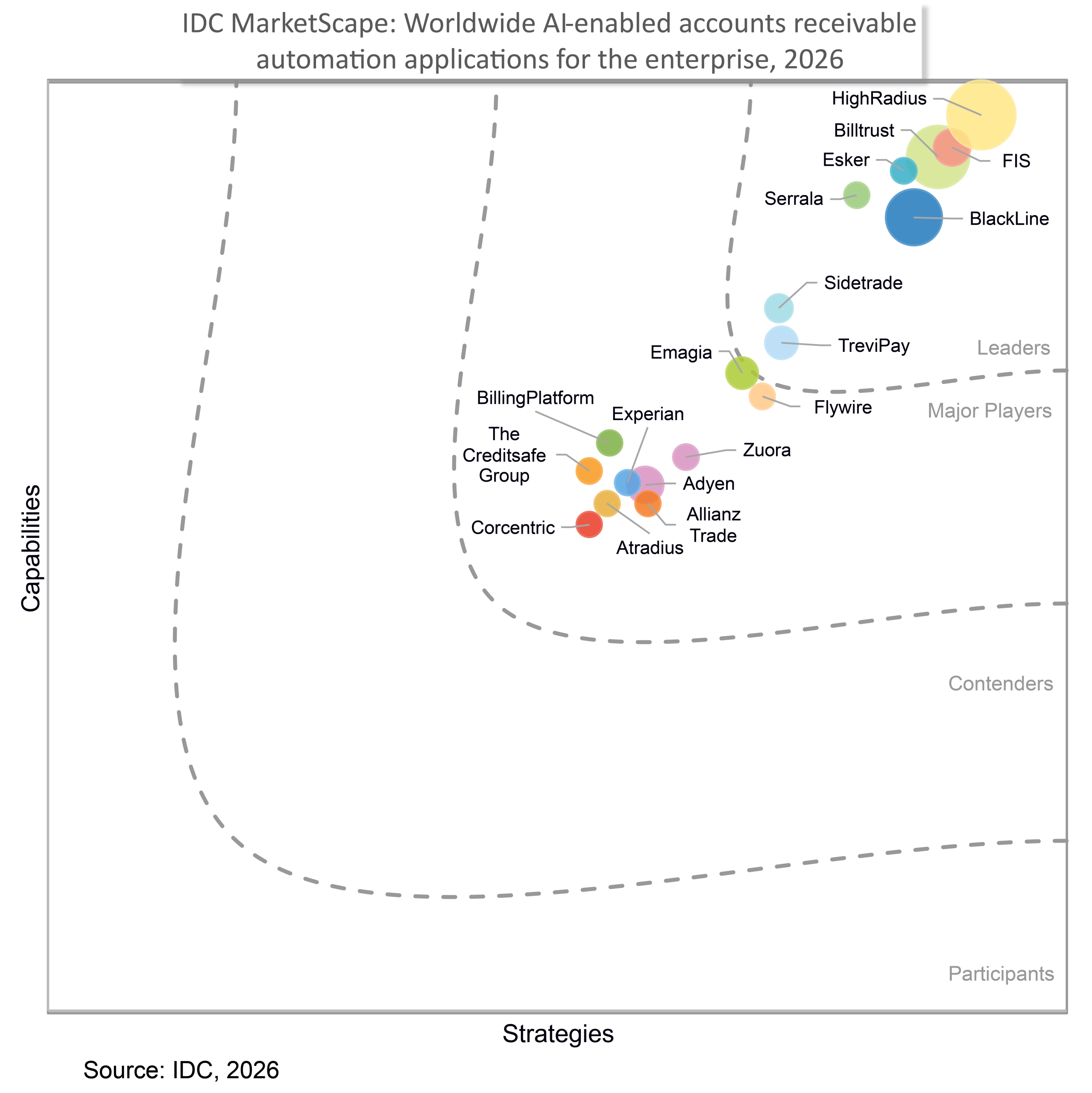
HighRadius recognized as a "Leader" in IDC Marketscape: Worldwide AI-enabled accounts receivable automation applications for the enterprise 2026 vendor assessment
Recognized as a Leader in 2026 Vendor Assessment for unifying credit, collections, cash application, deductions, e-invoicing, and payments on one AI platform to advance enterprise-wide invoice-to-cash transformation.
Forrester Recognizes HighRadius in The AR Invoice Automation Landscape Report, Q1 2023
Forrester acknowledges HighRadius’ significant contribution to the industry, particularly for large enterprises in North America and EMEA, reinforcing its position as the sole vendor that comprehensively meets the complex needs of this segment.