609 Dispute Letter: How to Dispute a Credit Report + Template
Last Updated: 22 September, 2026
•
Editorial Team HighRadius
2026 Automation Benchmark Report
HighRadius 2026 Automation Benchmark Report For The Office Of The CFO
Understand if your performance is on par with top 10% of the organizations. Identify gaps, best practices and know how you can drive value through Agentic AI-Driven Automation.
A 609 credit dispute letter is a type of credit dispute letter used to request verification of information reported on a credit report under FCRA.
Using a 609 letter template can simplify the process of writing a clear and effective credit dispute letter.
Understanding how to dispute a credit report correctly improves your chances of correcting errors and protecting your credit profile.
Disputing errors on a credit report requires a structured approach that combines legal rights, proper documentation, and clear communication with credit bureaus. One commonly used method is the 609 dispute letter, which requests verification of inaccurate or unverifiable items under the Fair Credit Reporting Act (FCRA).
However, successful credit disputes go beyond templates. They require a step-by-step process, supporting evidence, and follow-ups to ensure corrections are made.
Credit Approvals Taking Too Long?
See how modern credit decisioning solution automates credit reviews, accelerates credit applications, and risk monitoring..
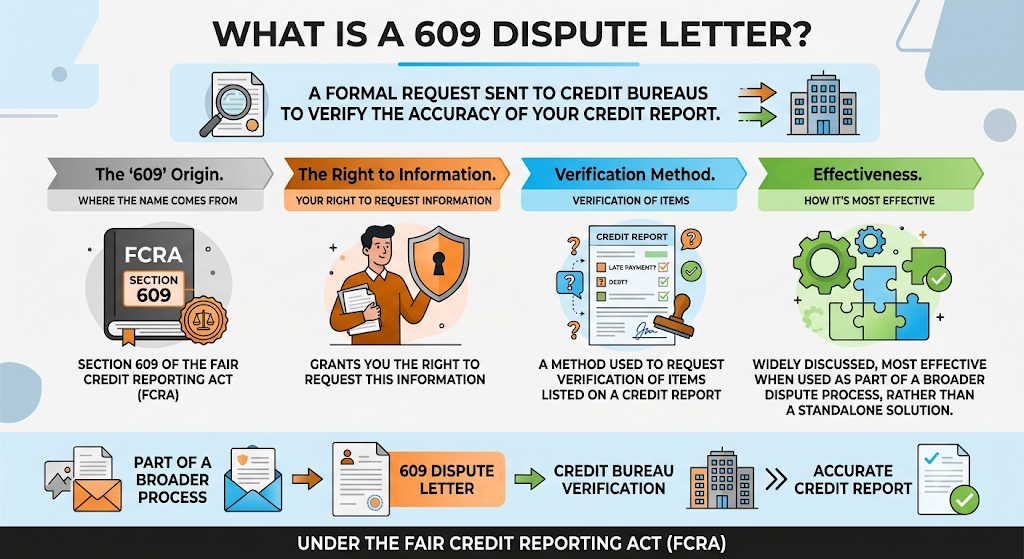
A 609 dispute letter is a formal request sent to credit bureaus to verify the accuracy of the information on your credit report. The name “609” comes from Section 609 of the Fair Credit Reporting Act (FCRA), which grants you the right to request this information.
609 dispute letters are one method used to request verification of items listed on a credit report under the Fair Credit Reporting Act (FCRA). While widely discussed, they are most effective when used as part of a broader dispute process rather than as a standalone solution.
What Is the 609 Letter Loophole? Understanding FCRA Section 609?
The 609 letter loophole is a commonly used term that refers to the consumer rights provided under FCRA Section 609. Despite its name, it is not a legal loophole that automatically removes legitimate debts or negative items from your credit report. Instead, a 609 dispute letter is used to request that credit bureaus verify the accuracy and completeness of information reported in your credit file. If an account, payment history, or other entry cannot be verified or is found to be inaccurate or incomplete, you have the right to dispute the information and request its correction or removal under the Fair Credit Reporting Act. Understanding how the process works helps consumers challenge genuine reporting errors while ensuring accurate records are maintained. Businesses can similarly streamline dispute resolution through effective Automated Dispute Management practices.
How to Dispute a Credit Report and Win
To successfully dispute a credit report, you need a structured approach that combines accuracy, documentation, and consistent follow-up. The goal is not just to send a dispute, but to ensure the credit bureau verifies or removes incorrect information.
1. Identify Inaccurate or Unverifiable Items
Review your credit report carefully to identify errors such as incorrect balances, duplicate accounts, outdated information, or accounts that do not belong to you. A 609 dispute letter should focus only on information that is inaccurate, incomplete, or cannot be verified.
2. Gather Supporting Documentation
Collect evidence such as bank statements, payment confirmations, contracts, or correspondence with lenders. Providing clear documentation strengthens your credit report dispute and improves the likelihood of a successful investigation and resolution.
3. Send a Dispute Letter to Credit Bureaus
Submit a formal credit dispute letter that clearly explains the issue, identifies the affected account, and states whether you are requesting a correction or removal. Keep the letter factual, concise, and supported by relevant documentation.
4. Follow Up Within 30 Days
Under the Fair Credit Reporting Act (FCRA), credit bureaus are generally required to investigate disputes within a specified timeframe. Monitor your submission and review the response carefully to determine whether the disputed information has been corrected or verified.
5. Escalate if the Dispute Remains Unresolved
If your dispute is denied or remains unresolved, submit additional supporting evidence, contact the creditor directly, or file a complaint with the appropriate regulatory authority. Escalating the matter ensures inaccurate information receives further review.
6. Monitor Your Credit Report Regularly
Once the dispute is resolved, continue reviewing your credit report to confirm that corrections have been applied accurately and no new discrepancies have appeared. Regular monitoring helps maintain an accurate credit history and identify future reporting errors early.
A successful credit dispute is driven by clarity, documentation, and persistence. Generic or incomplete disputes are often ignored, while well-structured requests supported by evidence are far more likely to lead to resolution.
How Effective Is a 609 Dispute Letter?
A 609 dispute letter can be effective, but only in specific situations. It does not automatically remove legitimate debts, late payments, or other accurate negative information from your credit report. Instead, it asks credit bureaus to verify that the reported information is accurate and complete under the Fair Credit Reporting Act (FCRA). If an account or entry cannot be verified, or is found to be inaccurate or incomplete, it may be corrected or removed from your credit report. This is why the idea of a 609 letter as a credit repair loophole is a common misconception. It is simply a formal way to exercise your rights under the FCRA—not a guaranteed method for improving your credit score. Ultimately, the effectiveness of a 609 dispute letter depends on the validity of your credit report dispute and the evidence supporting your claim.
What a 609 Letter Can Do
What a 609 Letter Cannot Do
Request verification of information reported on your credit report.
Remove accurate, verified negative information from your credit report.
Help dispute inaccurate, incomplete, or unverifiable accounts under the Fair Credit Reporting Act (FCRA).
Erase legitimate debts, late payments, collections, or bankruptcies simply because you request it.
Prompt credit bureaus to investigate disputed information and respond within the required timeframe.
Guarantee an increase in your credit score or immediate credit improvement.
Lead to the correction or removal of information that cannot be verified or is found to be inaccurate.
Act as a legal loophole to bypass repayment obligations or avoid valid financial liabilities.
Exercise your consumer rights under FCRA Section 609 through a formal 609 dispute letter.
Replace other dispute methods or professional credit repair strategies when information is accurate.
Templates
Choosing the Wrong Credit Vendor Can Increase Bad Debt by 20%.
Use this credit management vendor evaluation scorecard to compare credit decisioning platforms and identify the best solution for faster, safer credit decisions.
How to Write a 609 Credit Dispute Letter That Works: What to Include in a 609 Dispute Letter
Knowing how to write a 609 dispute letter starts with including accurate information that allows the credit bureau to investigate your request efficiently. A well-structured 609 dispute letter clearly identifies the disputed items, explains why they are inaccurate or unverifiable, and includes supporting evidence. If you're unsure about the overall dispute process, read our guide on how to dispute a credit report before preparing your letter.
1. Personal Information
Include your full legal name, current mailing address, Social Security Number (or the required identification details), and, if applicable, your date of birth so the credit bureau can verify your identity.
2. Credit Bureau Information
Address your letter to the appropriate credit bureau (Equifax, Experian, or TransUnion) and include its mailing address.
3. Date
Add the date the letter is written to establish a timeline for your dispute.
4. Subject Line
Use a clear subject, such as "Request for Investigation of Inaccurate Credit Information", so the purpose of your letter is immediately understood.
5. Introduction
State that you are exercising your rights under FCRA Section 609 and request an investigation into specific information on your credit report.
6. Details of the Disputed Items
For every disputed account, include:
Creditor or lender name
Account number
Reason for the dispute (such as inaccurate, incomplete, or unverifiable information)
7. Supporting Documentation
Attach copies of documents that support your claim, including payment receipts, account statements, correspondence, or identity verification documents. Never send original documents.
8. Request for Action
Clearly ask the credit bureau to investigate the disputed information and correct or remove any item that cannot be verified or is found to be inaccurate.
9. Contact Information
Provide your phone number and email address so the credit bureau can contact you if additional information is required.
10. Closing and Signature
Close the letter professionally, sign it, and print your name below the signature.
Tip: Knowing how to file a 609 dispute letter is just as important as writing one. Send your completed letter and supporting documents to the appropriate credit bureau using certified mail or another trackable delivery method, and retain copies of everything you submit for your records.
609 Credit Dispute Letter Template
A 609 dispute letter should be clear, factual, and structured to request verification of specific items on your credit report. Instead of using generic formats, focus on including the right components that improve the chances of a successful dispute. Here's a sample 609 letter template.
[Your Full Name] [Your Address] [City, State, ZIP Code] [Date]
Subject: Request for Verification of Credit Report Item
[Credit Bureau Name], I am writing to formally dispute the following item on my credit report.
Account Reference: [Account Name/Number]
Dispute Reason: [Brief explanation of the inaccuracy or issue] I request that you verify this account under the Fair Credit Reporting Act (FCRA). If the information cannot be verified, I request that it be corrected or removed from my credit report.
Please provide documentation supporting the accuracy of this item.
Sincerely, [Your Name]
Credit Dispute Letters That Work
Not all dispute letters lead to results. Credit bureaus are more likely to act on disputes that are clear, evidence-backed, and aligned with regulatory guidelines. Generic or vague requests often get ignored or verified without meaningful investigation.
1. Be Specific and Factual
Clearly identify the account you are disputing and explain the issue using accurate, verifiable facts. Avoid emotional language or unsupported claims, and focus only on information that is inaccurate, incomplete, or cannot be verified.
2. Support Your Claim with Documentation
Include copies of relevant evidence, such as payment records, account statements, contracts, or correspondence with the creditor. Strong supporting documentation increases the credibility of your 609 dispute letter and improves the likelihood of a successful investigation.
3. Clearly Request Verification or Removal
State exactly what action you want the credit bureau to take. Whether you are requesting verification, correction, or removal of disputed information, a clear and specific request helps ensure your credit report dispute is processed efficiently.
4. Align Your Letter with FCRA Guidelines
Reference your rights under the Fair Credit Reporting Act (FCRA) and ensure your dispute is based on inaccurate, incomplete, or unverifiable information, not an attempt to remove legitimate negative items. A well-structured 609 dispute letter that follows FCRA requirements is more likely to receive a proper review.
Templates
Finance Teams Waste 50%+ Time on Manual Credit Tasks. What’s It Costing You?
Use this credit ROI calculator to find out how much can you save with automated credit management processes
What Are the Alternatives to a 609 Dispute Letter?
A 609 dispute letter is one way to challenge inaccurate information on a credit report, but it is not the only option. Depending on the nature of the issue, consumers may choose other dispute methods that are better suited to their situation.
One common approach is filing a standard credit report dispute directly with a credit bureau. This is often the most appropriate option for correcting inaccurate account details, payment histories, personal information, or duplicate accounts. Consumers can also dispute information directly with the creditor or lender, especially when the reporting error originates from the furnisher rather than the credit bureau.
If the disputed item involves a debt collection account, requesting debt validation from the collection agency may be a more effective approach. Under the Fair Debt Collection Practices Act (FDCPA), consumers can ask debt collectors to verify that the debt is valid before collection efforts continue.
The best dispute method depends on the type of reporting error, who reported it, and the evidence available. Regardless of the approach you choose, providing accurate supporting documentation significantly improves the likelihood of a successful credit report dispute.
How HighRadius Credit Management Solution Helps Accelerate Credit Decisioning
HighRadius Credit Management helps finance teams automate credit decisioning, standardize risk evaluation, and gain real-time visibility into customer exposure. By combining AI-driven scoring with automated workflows, it enables faster approvals, reduces manual effort, and improves control over credit risk management .
With real-time credit risk analysis software and credit decisioning software, you can receive alerts for any changes in your customers’ credit profile and make data-driven credit decisions from unlimited credit reports. Our software integrates with your ERP system like Oracle, Netsuite, SAP, Dynamics, etc., and can start monitoring your customers in just 30 days.
We offer configurable credit scoring software and approval workflows that can be customized based on geography, customer segments, business units, and other factors. You can fast-track credit approvals through complex corporate hierarchies, making the credit application process more efficient and streamlined.
Our highly configurable online credit application allows you to onboard customers across the globe with multi-language, customized credit applications embedded on your website. You can automatically capture financials, personal guarantees, and check bank references, reducing the need for manual data entry.
Our software also automatically extracts credit data from over 40+ global and local agencies, including credit ratings, financials, and credit insurance information. You can configure the auto-extracted data in your preferred currency, making it easier to analyze and interpret.
With AI-based blocked order management, you can auto-predict blocked orders based on the customers’ credit limit utilization and payment history. You can leverage AI-based release or partial payment recommendations for faster credit decisions, reducing the need for manual intervention.
Struggling With Incomplete Credit Applications?
Explore the #1 software that makes onboarding customer faster and easier
Accelerate payment recovery from delinquent customers and boost cash flow through automated collection workflows.
Cash App
Achieve same day cash application with automated remittance aggregation
Credit
Mitigate credit risk, reduce bad debt, and streamline customer onboarding with AI-powered insights.
Deductions
Reduce Revenue Leakage with AI Prediction models that identify valid and invalid deductions.
Online Credit Application
Onboard customers seamlessly with a configurable online credit application. Cut down on back-and-forth and collect all customer details in one go.
FAQs
1. Will my credit score go up after a dispute?
A successful dispute may improve your credit score if inaccurate negative information is corrected or removed from your credit report. However, there is no guarantee of a score increase. The impact depends on the type of information removed and your overall credit profile.
2. What is the 609 loophole?
The 609 loophole is a common misconception. FCRA Section 609 does not provide a legal way to erase legitimate debts or negative credit history. Instead, it gives consumers the right to access information in their credit files and dispute inaccurate or unverifiable information through the appropriate process.
3. Does a 609 letter have to be notarized?
No. A 609 dispute letter does not need to be notarized to be valid. However, it should include accurate personal information, clearly identify the disputed items, and be supported with relevant documentation. Sending the letter by certified mail is often recommended so you can track its delivery.
4. What is the difference between a 609 and a 604 dispute letter?
A 609 dispute letter is based on FCRA Section 609 and requests verification of information on a credit report. A 604 dispute letter is widely discussed online but is not recognized as a formal dispute method under the FCRA. Consumers typically rely on the dispute rights provided by Sections 609 and 611 when challenging credit report errors.
5. What Does FCRA Law Say About Credit Disputes?
The Fair Credit Reporting Act (FCRA) gives consumers the right to dispute inaccurate, incomplete, or unverifiable information on their credit reports. Credit bureaus must investigate disputes, usually within 30 days, and correct or remove information that cannot be verified. The law helps ensure credit reports remain fair, accurate, and up to date.
6. What is Section 609 of the FCRA?
Section 609 of the Fair Credit Reporting Act (FCRA) gives consumers the right to request access to the information contained in their credit files. While it does not automatically remove negative items, it supports disputes involving inaccurate, incomplete, or unverifiable information when submitted with appropriate evidence.
7. Is there a downside to disputing a credit report?
Disputing inaccurate information generally has no negative impact. However, if a disputed item is verified as accurate, it will remain on your credit report. Filing multiple unsupported or frivolous disputes may delay the investigation process and is unlikely to change your credit history.
8. What are the limitations of a 609 dispute letter?
A 609 dispute letter cannot remove accurate, verified negative information or eliminate legitimate debts. It simply requests verification of information reported on your credit file. Its effectiveness depends on whether the disputed information is inaccurate, incomplete, or cannot be verified under the FCRA.
9. How long does it take for a 609 dispute letter to have an effect?
After receiving a 609 dispute letter, credit bureaus generally have 30 days to investigate the disputed information under the FCRA. If additional information is submitted during the investigation, the timeframe may be extended in certain cases. You should receive the investigation results once the review is complete.
Resource Library
Resource Hub
Order to Cash
Order to Cash software data sheet
Disconnected workflows can leave teams chasing data, while automated O2C has delivered 20% lower past dues.
HighRadius Named an IDC MarketScape Leader for the Second Time in a Row For AR Automation Software for Large and Midsized Businesses
HighRadius stands out as an IDC MarketScape Leader for AR Automation Software, serving both large and midsized businesses. The IDC report highlights HighRadius’ integration of machine learning across its AR products, enhancing payment matching, credit management, and cash forecasting capabilities.
Forrester Recognizes HighRadius in The AR Invoice Automation Landscape Report, Q1 2023
Forrester acknowledges HighRadius’ significant contribution to the industry, particularly for large enterprises in North America and EMEA, reinforcing its position as the sole vendor that comprehensively meets the complex needs of this segment.