Accounts Receivable (AR) platforms like HighRadius replace manual data entry with Artificial Intelligence (AI) and Robotic Process Automation (RPA). They streamline the Order-to-Cash (O2C) cycle by automatically sending rule-based email reminders to buyers, instantly pushing electronic invoices into Accounts Payable (AP) portals (such as Ariba or Coupa), and automatically reconciling incoming bank wire transfers with open invoices in Enterprise Resource Planning (ERP) software (such as SAP, Oracle, or NetSuite). This end-to-end automation eliminates the need for manual follow-ups and drastically reduces Days Sales Outstanding (DSO).
(If your Finance Department is currently evaluating automation vendors, explore our core Accounts Receivable Automation Software here).
Before implementing software, CFOs and Controllers must quantify why Business-to-Business (B2B) collections stall. Collections rarely fail because customers outright refuse to pay; they stall because the administrative friction required to execute a follow-up is too high.
In a traditional setup, the "chase" is entirely manual. Credit Analysts spend up to 30% of their workweek checking bank statements, downloading aging reports from the ERP, and manually typing out customized email reminders. Because human bandwidth is limited, low-dollar accounts often receive zero follow-ups until they are severely past due, inflating Average Days Delinquent (ADD).
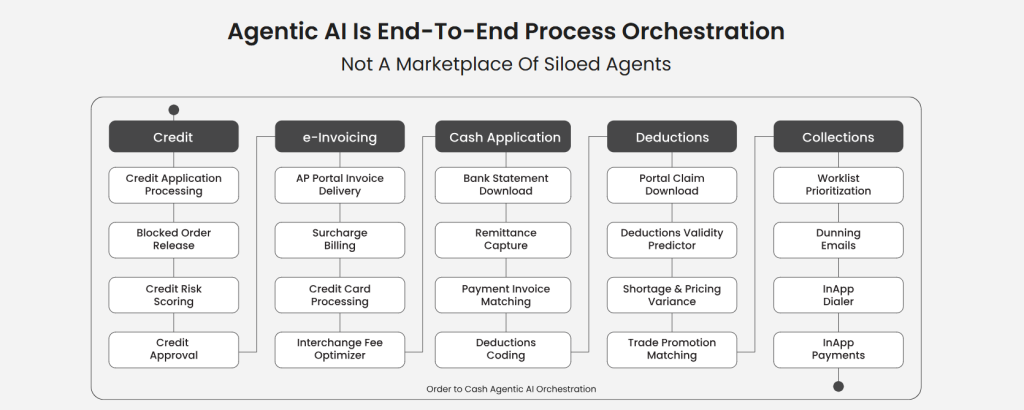
Modern AR systems shift a Finance Team's workflow from reactive chasing to proactive strategy. Here is exactly how the technology eliminates manual touchpoints across the Order-to-Cash (O2C) process:
Instead of relying on a human collector to remember to send a 30-day past-due email, AR systems utilize intelligent workflows. The software triggers personalized emails and statements based on predefined aging buckets.
Up to 40% of manual collections follow-ups are just administrative ping-pong: buyers asking for copies of missing invoices or W-9s.
The most frustrating manual follow-up is calling a customer for payment, only to find out they paid three days ago, but your team hasn't reconciled the bank data yet.
Large buyers require suppliers to submit invoices through their specific AP portals (like Ariba or Coupa). Collectors waste hours logging in manually to upload invoices and check if they are approved for payment.
When a human follow-up is required, manual teams waste time scanning alphabetical aging lists to figure out who to call, often wasting effort on low-risk accounts.
Manual teams often don't realize an invoice has been short-paid until they make a 60-day follow-up call, delaying resolution by months.
To understand the mechanical value of these six automation pillars, we can look at how leading B2B enterprises have deployed the HighRadius Autonomous Receivables platform to transform their follow-up strategies.
| Collections Task | The Manual AR Process | The Automated AR System |
| Account Prioritization | Collectors follow up based on high-dollar values or alphabetical lists. | AI Models score payment risk and generate prioritized daily worklists. |
| AP Portal Navigation | Collectors manually log into Ariba/Coupa to check if invoices are approved. | RPA Bots scrape portals daily and alert collectors if an invoice is stuck. |
| Dispute Resolution | Collectors discover a deduction weeks later during a follow-up call. | System auto-detects short-pays instantly and routes the dispute for immediate resolution. |
| Cash Reconciliation | Line-by-line matching of bank data to ERP invoices. | OCR Technology matches remittances to open invoices instantly. |
Manual accounts receivable processes create data silos, administrative bottlenecks, and an endless cycle of follow-up emails that drain corporate liquidity. By deploying a comprehensive AR system like HighRadius, intelligent software handles the repetitive dunning cadences, applies cash autonomously, manages portal uploads, and prioritizes your daily worklists.
This allows your team to stop chasing paper and start driving working capital.
Explore how our intelligent software eliminates manual follow-ups and instantly streamlines your B2B collections by visiting our Accounts Receivable Software Product Page.

1. How much time do AR systems actually save on manual follow-ups?
By deploying automated, rule-based dunning and Robotic Process Automation (RPA) for portal uploads, enterprise AR systems typically automate 80% to 90% of routine collections tasks. For the average Credit Analyst, this eliminates up to 3 hours of manual data entry, spreadsheet formatting, and email drafting per day, allowing them to focus strictly on complex accounts and strategic cash recovery.
2. Will automated payment reminders damage our customer relationships?
No, modern AR systems actually improve the customer experience. The software does not send generic, robotic blasts. It uses dynamic templates that adjust the tone based on the customer's risk profile and aging bucket (e.g., a gentle "courtesy nudge" 3 days before the due date, versus a firm notice at 30 days past due). Furthermore, giving buyers access to a Self-Service Portal to pull their own invoices often eliminates frustration on their end.
3. What happens if a buyer replies to an automated dunning email?
Advanced AR systems, like HighRadius, utilize Natural Language Processing (NLP) to read the buyer's reply. If a customer responds with a dispute (e.g., "The freight charge on this invoice is incorrect") or a Promise to Pay (P2P), the AI engine automatically halts the automated follow-up sequence. It then flags the account, categorizes the email intent, and routes it directly to a human analyst for specialized resolution.
4. How do AR systems integrate with my existing ERP to prevent double-calling?
Streamlining collections requires a single source of truth. AR systems use bi-directional APIs to connect seamlessly with major ERPs like SAP, Oracle, and NetSuite. This means the moment a payment clears or an invoice status changes in your ERP, the AR dashboard updates in real-time. This prevents the embarrassing scenario where a collector manually follows up on an invoice the buyer has already paid.
5. Which financial metrics improve the most when collections are streamlined?
When you eliminate manual follow-ups and deploy AI-driven prioritization, the most immediate impact is a reduction in Average Days Delinquent (ADD) and Days Sales Outstanding (DSO). Additionally, because automated systems execute follow-ups on 100% of accounts (instead of just the high-dollar ones human collectors have time for), companies consistently see a sharp reduction in bad debt write-offs and an increase in overall working capital liquidity.

Positioned highest for Ability to Execute and furthest for Completeness of Vision for the third year in a row. Gartner says, “Leaders execute well against their current vision and are well positioned for tomorrow”

Explore why HighRadius has been a Digital World Class Vendor for order-to-cash automation software – two years in a row.

HighRadius stands out as an IDC MarketScape Leader for AR Automation Software, serving both large and midsized businesses. The IDC report highlights HighRadius’ integration of machine learning across its AR products, enhancing payment matching, credit management, and cash forecasting capabilities.

Forrester acknowledges HighRadius’ significant contribution to the industry, particularly for large enterprises in North America and EMEA, reinforcing its position as the sole vendor that comprehensively meets the complex needs of this segment.

Customers globally
Implementations
Transactions annually
Patents/ Pending
Continents
Explore our products through self-guided interactive demos
Visit the Demo CenterPlease fill in the details below
Please fill in the details below

We have seen financial services costs decline by $2.5M while the volume, quality, and productivity increase.

Colleen Zdrojewski
Trusted By 1300+ Global Businesses


