Evaluating Scalable Credit Management Software Solution for Fast-Growing Finance Teams
Last Updated: 8 July, 2026
•
Soumi Sarkar Fintech content strategist
S
Soumi Sarkar
Soumi specializes in O2C, finance, and accounting transformation with a focus on bringing a domain-led perspective to accounting, finance and order-to-cash transformation. She crafts insight-driven, CFO-aligned content that helps finance teams optimize operational workflows and drive measurable outcomes. Beyond her professional work, Soumi is a published author of two books, a poetess, an avid reader, and a storyteller who enjoys exploring narratives across both B2B and creative formats.
2026 Automation Benchmark Report
HighRadius 2026 Automation Benchmark Report For The Office Of The CFO
Understand if your performance is on par with top 10% of the organizations. Identify gaps, best practices and know how you can drive value through Agentic AI-Driven Automation.
– Fast-growing mid-market businesses outgrow spreadsheets long before they outgrow their markets.
– AI-powered credit management helps finance teams scale approvals without adding analyst headcount.
– Standardized credit decisions and continuous risk monitoring reduce bad debt while accelerating growth.
Moving Beyond Spreadsheet-Driven Credit Decisions
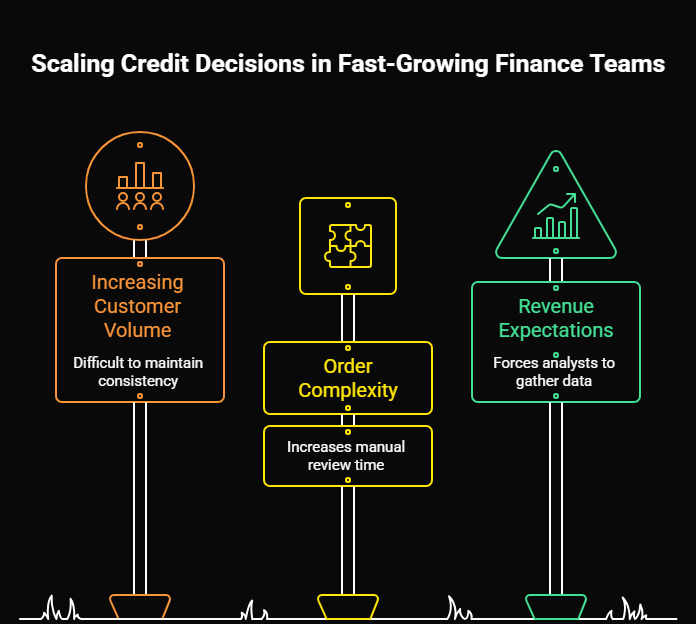
The biggest challenge facing fast-growing finance teams isn't approving more credit applications; it's maintaining consistent credit governance as customer volumes, order complexity, and revenue expectations continue to increase. Processes that once relied on spreadsheets, email approvals, and periodic customer reviews become increasingly difficult to scale, forcing analysts to spend more time gathering information than making informed credit decisions.
This is why credit management systems are shifting from workflow automation to AI-driven decision orchestration. Instead of relying on static credit scores and manual reviews, modern platforms continuously analyze ERP payment behavior, financial statements, external bureau data, and portfolio risk signals to automate routine decisions while directing analysts toward the accounts that require attention. The result is faster onboarding, standardized credit policies, reduced bad debt exposure, and scalable growth without adding operational complexity.
Why Spreadsheet-Based and Legacy Credit Management Breaks During Growth
Spreadsheets may be sufficient when a business manages a small customer base and a handful of monthly credit reviews. However, as revenue grows, finance teams face higher application volumes, larger customer portfolios, and increasing pressure to accelerate order fulfillment without taking on unnecessary risk. The challenge is no longer processing individual credit requests. It's maintaining consistent, scalable credit governance across hundreds or thousands of customer accounts.
1. Manual Approvals Slow Customer Onboarding
Credit applications often move through long email chains, spreadsheet trackers, and multiple approval levels before a decision is reached. Every additional manual step delays customer onboarding, postpones order fulfillment, and creates friction between sales and finance teams. Fast-growing businesses cannot afford approval cycles measured in days when customers expect near-instant responses.
Without standardized scoring models, analysts often rely on personal judgment, static bureau reports, or outdated financial information. Two analysts reviewing the same customer may reach different conclusions because they weigh risk factors differently. This inconsistency increases compliance risk, makes audits more difficult, and leads to uneven credit policies across the business.
3. Analysts Become Data Collectors Instead of Risk Managers
A significant portion of a credit analyst's day is spent collecting information rather than evaluating risk. Payment history must be extracted from ERP systems, bureau reports downloaded separately, financial statements reviewed manually, and customer references verified across multiple systems. As portfolios expand, the administrative burden grows faster than analyst capacity, forcing organizations to increase headcount simply to keep pace with transaction volumes.
4. Delayed Reviews Increase Credit Exposure
Most spreadsheet-based processes rely on periodic credit decisioning and reviews conducted quarterly or annually. Between reviews, customer financial health, payment behavior, and external risk indicators can change significantly without being detected. By the time issues surface, organizations may already be managing overdue invoices, blocked orders, or increasing bad debt exposure.
5. Scaling with Headcount Is Neither Efficient nor Sustainable
Many mid-market companies respond to growth by hiring more analysts rather than modernizing their credit processes. While this temporarily increases capacity, it also raises operational costs and introduces greater variability in decision-making. A scalable credit management system enables finance teams to automate routine approvals, continuously monitor portfolio risk, and standardize credit governance, allowing them to support higher transaction volumes without proportional increases in headcount.
Manual Credit Reviews Don't Scale With Business Growth.
Replace spreadsheets with AI-powered credit decisioning that reduces bad debt while accelerating customer onboarding.
Reactive credit management solutions don't just slow down the credit team. It impacts revenue growth, customer experience, and working capital performance across the business. When finance teams rely on manual reviews, disconnected systems, and periodic risk assessments, they spend more time responding to problems than preventing them.
Every delayed credit approval can postpone customer onboarding and order fulfillment, creating unnecessary friction between sales and finance. At the same time, analysts become overwhelmed by growing application volumes, manually gathering customer information from ERP systems, credit bureaus, emails, and spreadsheets instead of focusing on high-risk accounts that require strategic review.
The lack of real-time connectivity between ERP, credit, and order management systems further compounds the problem. Payment behavior, credit limit utilization, and customer risk often change long before analysts become aware of them, resulting in delayed interventions, blocked orders, and increased exposure to bad debt.
As businesses scale, these operational inefficiencies become increasingly expensive:
Slower customer onboarding, delaying revenue realization and impacting customer experience.
More blocked orders, as outdated credit information prevents timely releases.
Higher Days Sales Outstanding (DSO) due to delayed approvals and reactive collections.
Increased credit exposure, because deteriorating customer risk is identified too late.
Growing analyst workload, forcing organizations to add headcount just to maintain service levels.
The Wrong Credit Platform Can Increase Bad Debt by 20% and Slow Every Customer Onboarding.
Use this vendor evaluation scorecard to compare AI capabilities, ERP integrations, and credit decisioning before you invest.
Why Mid-Market Companies Are Replacing Legacy Credit Processes with AI-Powered Credit Management Software
Most mid-market organizations don't intentionally choose spreadsheets but inherit them. What begins as a practical way to manage a few dozen customer accounts gradually evolves into a patchwork of Excel scorecards, email approvals, static bureau reports, and disconnected ERP data. While these manual processes may support early growth, they quickly become unsustainable as customer volumes increase, approval cycles become more complex, and finance teams are expected to accelerate revenue without increasing risk.
The modern credit management solution replaces these fragmented workflows with a centralized, AI-driven credit management platform that standardizes decision-making, automates routine approvals, and continuously monitors customer risk. Instead of reacting to bottlenecks, finance teams can proactively manage credit operations while supporting business growth.
Accelerate Customer Onboarding Without Compromising Risk
Lengthy onboarding delays often stem from manual document collection, financial statement reviews, and approval routing rather than the complexity of the credit decision itself. AI-powered credit management systems automate online credit applications, financial data collection, credit scoring, and approval workflows, enabling finance teams to reduce onboarding cycles from days to hours for low-risk customers while maintaining strong risk controls.
Standardize Credit Decisions Across Every Customer
As organizations grow, inconsistent decision-making becomes a major operational risk. Different analysts may interpret financial information differently, resulting in varying credit limits and approval outcomes. A modern credit management platform applies standardized scoring models, configurable credit policies, and automated approval thresholds to ensure every customer is evaluated using the same risk framework, improving governance, compliance, and audit readiness.
Scale Credit Operations Without Growing Headcount
Increasing customer volumes shouldn't require proportional increases in analyst headcount. By automating routine low-risk approvals, prioritizing high-risk reviews, and continuously monitoring customer portfolios, AI-powered credit scoring and risk management solutions enable finance teams to support significantly more applications with the same resources. Analysts spend less time gathering information and processing repetitive tasks, allowing them to focus on complex credit decisions and strategic risk management instead of administrative work.
Analyst Reports
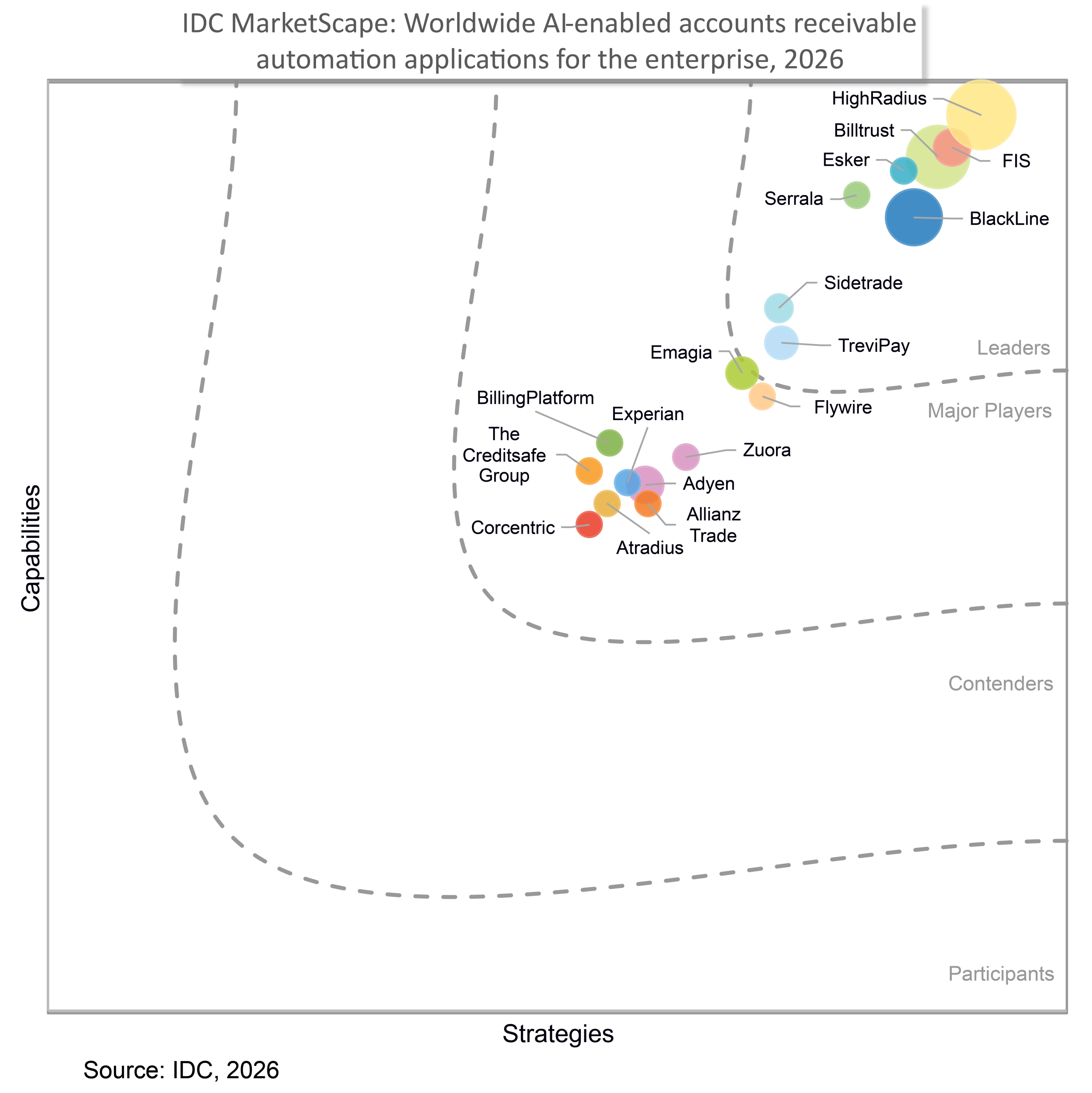
Recognized as an IDC MarketScape Leader in AR Automation
IDC recognized HighRadius for AI-driven AR automation across both enterprise and mid-market organizations.
What Mid-Market Finance Teams Should Look for in a Credit Management Platform
Not every credit management platform is built to support fast-growing finance teams. The right solution should do more than automate approvals. It should standardize credit decisions, connect seamlessly with existing systems, and scale alongside your business without increasing operational complexity. As you evaluate different credit management solutions, prioritize the following capabilities.
Capability
Why It Matters
Native ERP Connectivity
Look for pre-built integrations with NetSuite, Sage Intacct, Microsoft Dynamics, and other leading ERPs to eliminate duplicate data entry, synchronize customer information in real time, and ensure credit decisions are based on the latest payment and order data.
Online Credit Application Automation
A modern online credit application software should digitize customer onboarding through configurable applications, automated document collection, financial statement uploads, and reference verification to accelerate approvals.
AI-Driven Credit Scoring
Effective credit risk assessment software and credit analysis software should combine internal payment behavior, external bureau data, financial statements, and configurable scoring models to deliver consistent, data-driven credit decisions.
Continuous Portfolio Monitoring
Modern credit systems should monitor customer payment trends, bureau updates, financial health, and risk events in real time instead of relying on periodic manual reviews, enabling finance teams to respond before issues impact cash flow.
Automated Approval Workflows
A robust credit approval software should replace spreadsheets and email chains with configurable approval hierarchies, policy-based routing, and automated decisioning, reducing turnaround times while maintaining governance and auditability.
How HighRadius Credit Management Software Helps MidMarket Teams Scale Without Growing Credit Headcount
Fast-growing finance teams don't need more manual workflows. They need a credit management software that scales decision-making, not headcount. HighRadius credit management for midmarket businesses combines Agentic AI, ERP-native integrations, and automated credit workflows to help mid-market organizations standardize credit governance, accelerate approvals, and continuously monitor portfolio risk without increasing operational complexity.
1. Automate Routine Credit Decisions with AI
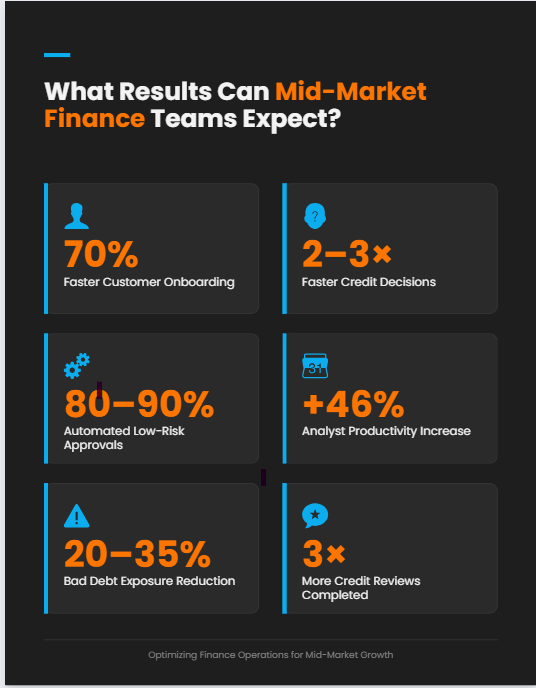
HighRadius automates 80–90% of low-risk credit approvals using configurable AI scoring models that evaluate ERP payment behavior, credit bureau data, financial statements, credit utilization, and customer payment trends. Instead of manually reviewing every application, analysts focus on high-risk accounts while Agentic AI handles routine decisioning, enabling 2–3× faster approvals and significantly accelerating customer onboarding.
2. Replace Fragmented Reviews with a Single Customer Risk View
Rather than consolidating ERP records, bureau reports, trade references, and financial statements across multiple systems, HighRadius creates a centralized customer risk profile that continuously updates as new information becomes available. This enables standardized credit decisions, improves audit readiness, and eliminates the inconsistencies that often arise from spreadsheet-based reviews.
3. Continuously Monitor Risk Instead of Reacting to It
Traditional credit reviews are often performed only during onboarding or periodic account reviews. HighRadius continuously monitors customer payment behavior, bureau updates, financial deterioration, bankruptcy indicators, and credit limit utilization to identify emerging risks before they impact cash flow. AI-driven worklist prioritization automatically surfaces the accounts requiring immediate attention, helping finance teams reduce bad debt exposure while protecting revenue.
4. Connect Credit Decisions to Revenue Operations
HighRadius integrates natively with leading ERPs, including NetSuite, Microsoft Dynamics, SAP, and Sage Intacct, ensuring that credit decisions, customer risk, blocked orders, and payment activity remain synchronized across finance and sales. Real-time visibility helps reduce unnecessary blocked orders, shortens approval cycles, and improves collaboration between sales and finance teams.
5. Proven Results Across Growing and Enterprise Finance Teams
Organizations using HighRadius have demonstrated measurable improvements in both operational efficiency and credit performance. BlueLinx, which manages more than 15,000 customer accounts, achieved 70% faster customer onboarding, 30% fewer blocked orders, and 3× more credit reviews per day after automating credit applications, approvals, and predictive risk monitoring. Similarly, Foundation Building Materials increased analyst productivity by 46%, completed 17,000+ annual credit reviews, and achieved 6× more credit reviews through AI-driven scoring, automated workflows, and centralized portfolio visibility.
Case Studies
How BlueLinx Achieved 70% Faster Onboarding with AI-led Credit Solution
See how this firm managed high-volume credit operations across 15,000+ customers.
Enterprise Or MidMarket - Scale With HighRadius’ Automated Credit Risk Solutions
As mid-market businesses grow, credit operations become increasingly difficult to manage through spreadsheets, manual approvals, and disconnected systems. HighRadius Credit Management Software helps finance teams transition to AI-driven credit operations by standardizing credit policies, automating routine decisioning, and continuously monitoring customer risk, all without increasing analyst headcount. Built for organizations that need to balance faster customer onboarding with stronger risk controls, the platform combines credit management software, credit risk management software, and intelligent workflow automation into a single, scalable solution.
Powered by Agentic AI and integrated with leading ERP systems, HighRadius automates up to 80–90% of routine low-risk credit approvals, prioritizes high-risk accounts for analyst review, and continuously evaluates customer risk using internal payment behavior, financial statements, and data from 35+ global credit agencies. The result is 2–3× faster credit decisions, up to 70% faster customer onboarding, reduced bad debt exposure, and standardized credit governance that enables finance teams to support business growth without expanding operational complexity.
With real-time credit risk analysis software and credit decisioning software, you can receive alerts for any changes in your customers’ credit profile and make data-driven credit decisions from unlimited credit reports. Our software integrates with your ERP system and can start monitoring your customers in just 30 days.
We offer configurable credit scoring software and approval workflows that can be customized based on geography, customer segments, business units, and other factors. You can fast-track credit approvals through complex corporate hierarchies, making the credit application process more efficient and streamlined.
Our highly configurable online credit application allows you to onboard customers across the globe with multi-language, customized credit applications embedded on your website. You can automatically capture financials, personal guarantees, and check bank references, reducing the need for manual data entry.
Our software also automatically extracts credit data from over 40+ global and local agencies, including credit ratings, financials, and credit insurance information. You can configure the auto-extracted data in your preferred currency, making it easier to analyze and interpret.
With AI-based blocked order management, you can auto-predict blocked orders based on the customers’ credit limit utilization and payment history. You can leverage AI-based release or partial payment recommendations for faster credit decisions, reducing the need for manual intervention.
Struggling With Slow Credit Approvals and Credit Reviews?
Explore the #1 software that makes onboarding customer faster and easier
Accelerate payment recovery from delinquent customers and boost cash flow through automated collection workflows.
Cash App
Achieve same day cash application with automated remittance aggregation
Credit
Mitigate credit risk, reduce bad debt, and streamline customer onboarding with AI-powered insights.
Deductions
Reduce Revenue Leakage with AI Prediction models that identify valid and invalid deductions.
Online Credit Application
Onboard customers seamlessly with a configurable online credit application. Cut down on back-and-forth and collect all customer details in one go.
FAQs
1. What is credit management software?
Credit management software helps businesses automate customer credit applications, credit scoring, approval workflows, and ongoing risk monitoring. By replacing spreadsheets with AI-driven workflows, it enables finance teams to make faster, more consistent credit decisions, reduce bad debt exposure, and scale credit operations without increasing headcount.
2. How does credit risk management software improve credit decisions?
Credit risk management software combines ERP payment history, credit bureau data, financial statements, and customer payment behavior to evaluate risk in real time. It standardizes credit scoring, automates low-risk approvals, and continuously monitors customer portfolios, enabling faster and more accurate credit decisions.
3. What should mid-market companies look for in a credit management platform?
A modern credit management platform should offer native ERP integrations, AI-driven credit scoring, online credit application automation, continuous portfolio monitoring, configurable approval workflows, and real-time risk alerts. These capabilities help growing finance teams scale efficiently while maintaining consistent credit governance.
4. How can AI-powered credit management software help growing finance teams?
AI-powered credit management software automates routine credit approvals, prioritizes high-risk reviews, analyzes financial statements, and continuously monitors changing customer risk. This helps finance teams accelerate customer onboarding, improve analyst productivity, reduce bad debt exposure, and support business growth without adding operational complexity.
Resource Library
Resource Hub
Order to Cash
Order to Cash software data sheet
Disconnected workflows can leave teams chasing data, while automated O2C has delivered 20% lower past dues.
HighRadius recognized as a "Leader" in IDC Marketscape: Worldwide AI-enabled accounts receivable automation applications for the enterprise 2026 vendor assessment
Recognized as a Leader in 2026 Vendor Assessment for unifying credit, collections, cash application, deductions, e-invoicing, and payments on one AI platform to advance enterprise-wide invoice-to-cash transformation.
Forrester Recognizes HighRadius in The AR Invoice Automation Landscape Report, Q1 2023
Forrester acknowledges HighRadius’ significant contribution to the industry, particularly for large enterprises in North America and EMEA, reinforcing its position as the sole vendor that comprehensively meets the complex needs of this segment.