Top 9 Credit Risk Management Solutions And Platform in 2026
Last Updated: 19 October, 2026
•
Soumi Sarkar Fintech content strategist
S
Soumi Sarkar
Soumi specializes in O2C, finance, and accounting transformation with a focus on bringing a domain-led perspective to accounting, finance and order-to-cash transformation. She crafts insight-driven, CFO-aligned content that helps finance teams optimize operational workflows and drive measurable outcomes. Beyond her professional work, Soumi is a published author of two books, a poetess, an avid reader, and a storyteller who enjoys exploring narratives across both B2B and creative formats.
2026 Automation Benchmark Report
HighRadius 2026 Automation Benchmark Report For The Office Of The CFO
Understand if your performance is on par with top 10% of the organizations. Identify gaps, best practices and know how you can drive value through Agentic AI-Driven Automation.
Still Using Spreadsheets for Credit Risk Reviews? Use automated credit risk management to unlock 40% reduced blocked orders 3x faster credit decisions.
– This guide evaluates top 9 credit risk solutions based on AI-driven credit scoring, continuous risk monitoring, blocked-order prevention, ERP integration depth, automation maturity, and scalability across mid-market and enterprise finance environments.
– HighRadius’ credit risk solutions and credit management platform helps both mid-market and enterprise to leverage AI-led real-time credit risk monitoring, automated credit approvals, predictive blocked-order management, and integrations with 35+ credit agencies.
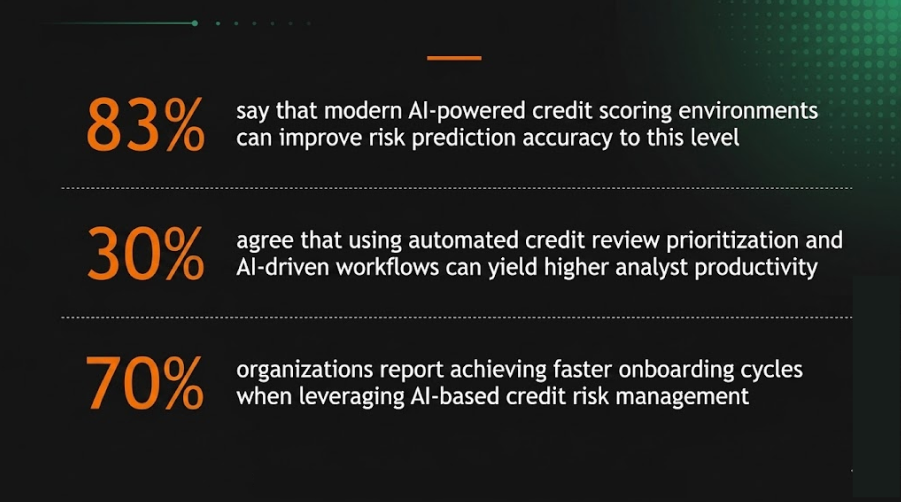
– Top credit risk management solutions are no longer limited to static scoring. Organizations now use AI-driven credit risk solutions to automate up to 80–90% of low-risk approvals, reduce blocked orders by up to 30–40%, improve onboarding speed by up to 70%, and continuously monitor business-wide risk exposure in real time.
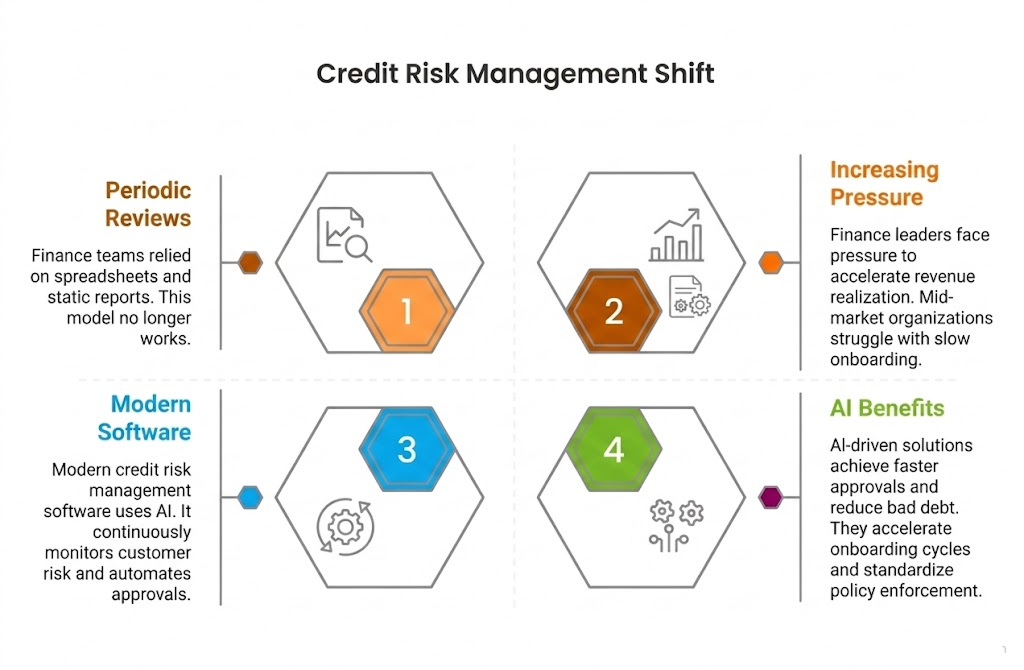
Credit Risk Management Has Shifted From Periodic Reviews to Continuous Risk Orchestration
Credit risk decisions shape how confidently businesses extend credit, protect margins, and convert orders into cash. But periodic reviews, fragmented customer data, and manual approvals can leave finance teams reacting to risk instead of anticipating it.
Modern credit management tools bring together credit scoring, payment behavior, external risk intelligence, and approval workflows to help teams assess customer exposure and act earlier. Organizations adopting AI-powered credit management solutions now automate up to 80–90% of routine approvals, accelerate credit decisions by 2–3×, reduce blocked orders by 30–40%, and lower bad debt exposure by 20–40%.
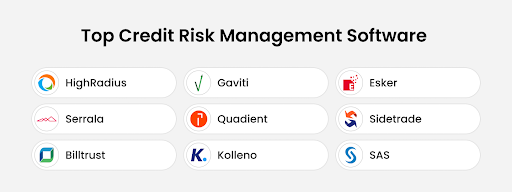
This guide compares nine leading providers, including HighRadius, Esker, Gaviti, Serrala, Billtrust, Sidetrade, SAS, Kolleno, and Quadient on scoring capabilities, continuous monitoring, ERP integration, automation, and scalability for mid-market and enterprise finance teams.
Top 9 Essential Credit Risk Mitigation Tools at a Glance
Credit risk management tools bring remarkable improvements to organizations that implement it including robust credit scoring, block order review and much more. Here are the leading 9 credit risk management platforms transforming how businesses analyze and manage credit exposure.
Mid-market and enterprise organizations seeking AI-driven credit decisioning, predictive blocked-order prevention, and continuous risk monitoring. With 35+ credit agency integrations, it combines AI-powered scoring, automated approvals, and real-time credit risk analysis to automate 80–90% of low-risk approvals, accelerate onboarding by up to 70%, reduce blocked orders by 40%, and lower bad debt exposure by 20%. Its breadth may be more than organizations seeking only a narrowly focused scoring tool require.
Businesses looking to automate credit applications, track customer risk changes, and streamline approval workflows, with reporting flexibility and performance worth considering as credit operations grow.
Organizations aiming to digitize credit processes, connect internal and external data, and manage risk within broader finance workflows, with workflow complexity and customization worth evaluating against specific requirements.
Scaling companies focusing on real-time analytics, automated scoring, and centralized visibility into credit operations, with implementation and configuration requirements worth considering for more complex credit rules.
Finance teams aiming to combine AR automation with proactive credit evaluation and improved collaboration across teams, with workflow flexibility and customization worth evaluating for more complex operating environments.
Companies seeking data insights to track customer behavior, predict payment risks, and adjust credit policies quickly, with buyers should evaluate the depth of credit-specific scoring, monitoring, and decisioning capabilities required for their use case.
Businesses streamlining client onboarding, automating credit checks, and maintaining visibility into credit exposure, with reporting depth and workflow customization worth considering as requirements become more complex.
Finance organizations using advanced analytics and data models to strengthen credit scoring and portfolio management, with buyers should evaluate how its modeling capabilities align with broader requirements for continuous monitoring, decisioning, and AR workflows.
What could 70% faster customer onboarding mean for your bottom line?
Calculate your potential annual savings from automating credit reviews, customer onboarding, approvals, reporting, and risk monitoring.
A credit risk management platform helps businesses assess customer creditworthiness, monitor changing payment and financial conditions, and manage exposure throughout the customer lifecycle. Depending on the provider, capabilities may include credit scoring, external data integration, credit-limit monitoring, approval workflows, and early-warning alerts.
Traditional, manual methods are now outdated. Credit management solutions identify, monitor, and controls potential risks in credit activities. The system protects businesses from losses when credit companies default. Modern credit management solutions combine several key features: credit decisioning and review features, credit scoring models, limits monitoring, strong stress-testing features, and data visualization tools.
These platforms excel at automating data integration from multiple sources. The software analyzes financial statements along with credit bureau reports, market data, public records, internal payment history, and alternative data sources. This complete approach leads to more accurate risk assessment.
What if you could cut bad debt by 20% and accelerate credit reviews 3×?
Use AI-powered credit management to automate low-risk decisions, monitor customer risk, and predict blocked orders before they impact revenue.
Traditional credit risk management processes rely on spreadsheets, static bureau reports, and manual approvals to evaluate customer risk. As businesses scale across customers, entities, and geographies, these manual credit management processes create slower onboarding, inconsistent credit decisions, blocked orders, limited portfolio visibility, and higher bad debt exposure. Enterprises managing multiple integration and global receivables portfolios face even greater challenges standardizing credit policies and monitoring customer risk in real time.
Businesses need advanced credit risk management solutions to replace manual reviews with continuous risk monitoring, automated credit scoring, predictive blocked-order prevention, and real-time portfolio visibility. An AI-led credit risk management platform automates routine approvals, detects early warning signals proactively, standardizes enterprise-wide policy enforcement, and scales credit operations without increasing operational complexity.
Top 9 Essential Credit Risk Mitigation Tools: A Comprehensive View
The best credit risk management tools no longer operate as standalone scoring systems. Modern platforms combine AI-driven decisioning, automated workflows, real-time monitoring, and ERP-integrated orchestration to help finance teams accelerate revenue while controlling risk exposure.
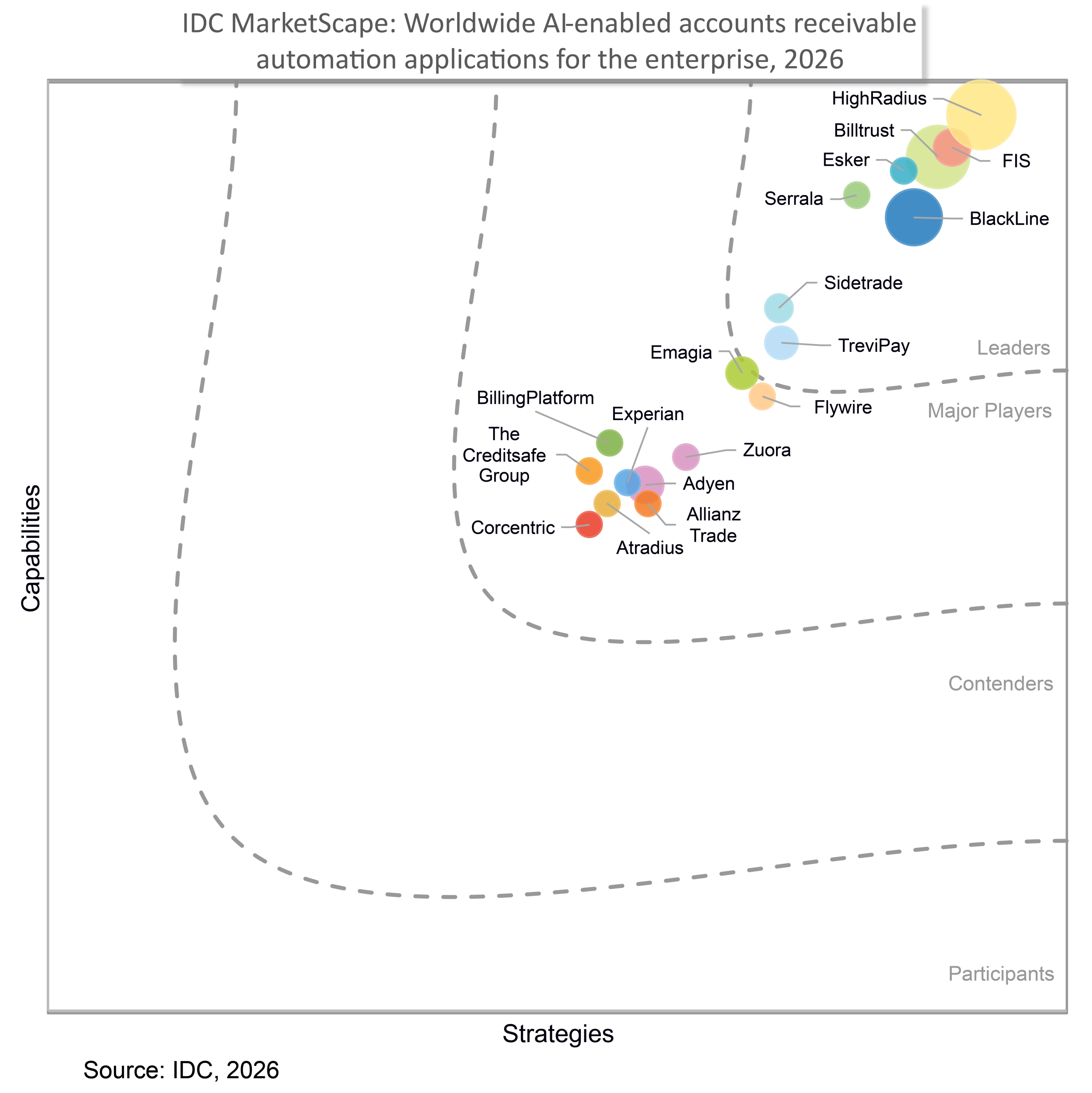
HighRadius' Credit management platform is the IDC MarketScape-recognized Agentic AI platform is built to automate credit decisioning and credit scoring for both fast-growing mid-market companies and complex global enterprises. With integrations with 35+ credit agencies & AI agents for predictive risk analysis, HighRadius helps in minimizing credit risk and reducing bad debt exposure by 20%.
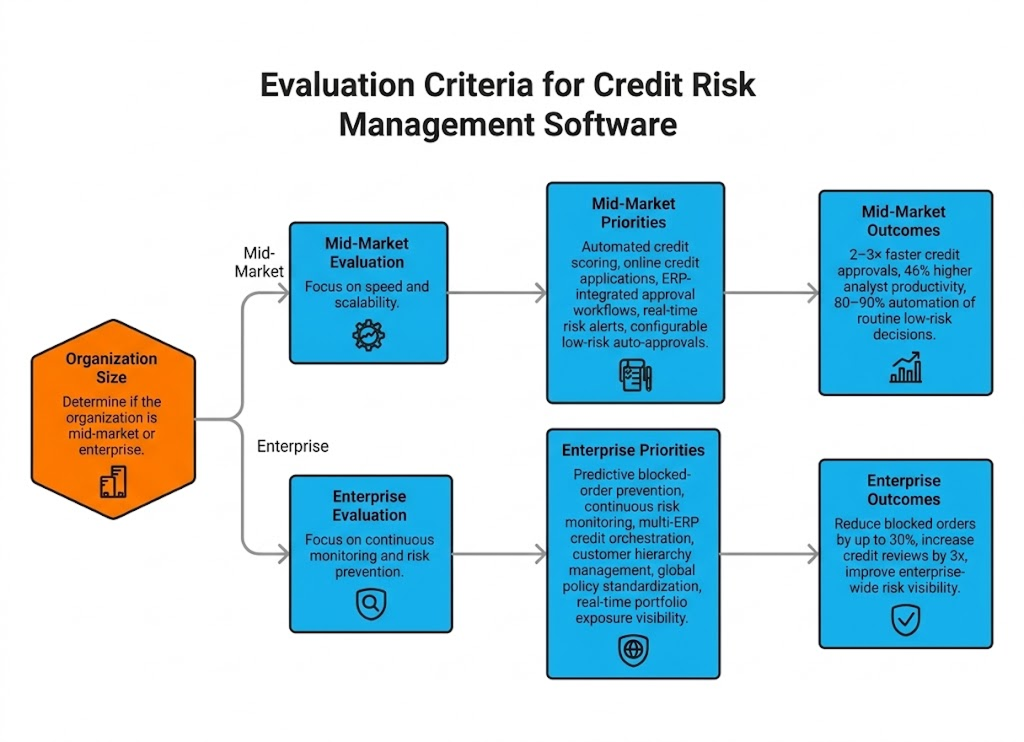
For growing mid-market businesses, HighRadius credit management tool replaces spreadsheet-driven credit reviews with AI-powered scoring, automated approvals, and ERP-integrated workflows that accelerate onboarding by up to 70%, automate 80–90% of low-risk approvals, and improve analyst productivity by 46% without increasing headcount.
For enterprises managing receivables across multiple ERPs, regions, and legal entities, HighRadius credit risk management platform delivers predictive blocked-order prevention, real-time portfolio monitoring, and enterprise-wide policy orchestration powered by integrations with 35+ credit agencies and external risk sources. Businesses that use HighRadius reduce blocked orders by up to 30%, perform 3× more credit reviews daily, and lower bad debt exposure by 20–40%.
Key Features:
Agentic AI-Driven Credit Decisioning: Autonomous agents evaluate applications using configurable scorecards, real-time risk signals, and policy rules to accelerate approvals and enforce consistency.
Automated Online Credit Applications: Digital intake captures, validates, and routes applications through intelligent workflows with automated document extraction and verification.
Global Credit Data Integration: Connects to 35+ credit bureaus and 15+ public data sources to automatically pull and analyze 100+ financial and risk data points.
Predictive Blocked Order Management: Machine learning models anticipate order blocks and recommend proactive credit actions to protect revenue and customer relationships.
Multi-Level Credit Workflows: Configurable approval routing, SLA tracking, and automated decision correspondence streamline reviews and governance.
Continuous Risk Monitoring & Alerts: Real-time triggers for bankruptcies, rating changes, and exposure thresholds enable instant reassessment and limit optimization.
Benefits Of HighRadius Credit Risk Management Software:
Up to 90% Faster Credit Approvals
Up to 20% Reduction in Bad Debt
Proactive Blocked Order Prevention
Policy-Driven Credit Consistency
Real-Time Global Risk Visibility
In addition to this, our 13+ agents help businesses achieve:
Zero Bad Debt Performance: Achieved zero bad debt across billions in receivables for four consecutive years through proactive risk monitoring and automated decisioning
Accelerated Credit Reviews: Reduced credit review time by 89% and significantly expanded annual credit review coverage
Faster Customer Onboarding: Digitized applications and automated workflows shortened onboarding cycles and approval timelines
Higher Productivity & Control: Automated data gathering and scoring improved analyst productivity while strengthening policy enforcement
Analyst Reports
Recognized as an IDC MarketScape Leader in AR Automation
IDC recognized HighRadius for AI-driven AR automation across both enterprise and mid-market organizations.
Considerations: HighRadius brings together credit scoring, decisioning, monitoring, data integration, and broader credit-management workflows. Organizations evaluating the platform should consider which capabilities they need today and how much automation and scalability they expect as their credit operations grow.
2. Gaviti
Gaviti credit risk platform provides an automation tool designed to enhance overall accounts receivable processes. The platform offers credit management as a core product in its suite. Their credit risk solutions help finance teams spot potential credit risks before they affect cash flow. Their credit analysis software accelerates credit approval by consolidating all prospect information in one place.
Key Features:
Credit limit management enables teams to temporarily or permanently revoke credit limits when customer amounts due exceed predefined thresholds.
Online credit applications make customer onboarding easier with accessible interfaces.
Complete reporting within credit management platform shows credit risk trends, customer profiles, and overall credit management performance for better credit management.
Real-time risk alerts notify collections teams about changes in a customer's credit risk profile. This enables quick action based on predefined thresholds.
Considerations: Gaviti's emphasis on usability and receivables workflows can be relevant for teams prioritizing straightforward day-to-day credit and collections management. Buyers should evaluate reporting flexibility, performance requirements, and the level of customization needed as credit portfolios and analytical requirements become more complex.
3. Esker
Esker's credit management platform focuses on making the credit risk process better for businesses. The process spans from customer onboarding to risk monitoring. This tool enables credit teams with helpful information and automates routine decisions. The credit teams can focus on managing actual risk situations. Additionally, the credit risk solution offers a unified interface that consolidates internal and external data, such as ERP records, CRM data, and third-party credit scores, into a single view of customer risk.
Key Features:
Customizable credit applications with templates that adapt to business types, industries, and languages of all sizes.
Automated credit management tool based on predetermined rules that streamline approvals for low-risk cases so that credit teams can concentrate on complex situations.
Credit management system integrated with third-party credit bureau integration with providers like Altares Dun & Bradstreet, CreditRiskMonitor, Ellisphere, and others to get comprehensive external risk data.
Customizable internal scoring models that automatically determine customer risk levels by combining internal and external indicators.
Immediate dashboards and alerts showing credit alerts, reviews, blocked orders, and performance metrics to track credit management activity.
Considerations: Esker's broader finance automation approach can be valuable for organizations connecting credit with wider O2C workflows. Buyers evaluating the platform should assess how its workflow design, integration requirements, and customization options align with the complexity of their credit processes.
4. Serrala
Serrala revolutionizes financial risk management with its AI-powered credit risk management platform. The FS² Credit & Risk solution brings all credit data to one place. It automates decisions and gives a clear view of all credit operations. It brings together internal ERP data and third-party agency scores, delivers real-time risk alerts, supports rule-based workflows, and generates actionable KPIs for control and transparency.
Key Features:
Extensive task automation reduces the manual efforts required for daily credit tasks with advanced credit risk analysis tools.
AI-driven credit risk analysis capabilities intelligently classifies risks automatically based on precise, up-to-date financial data.
An up-to-the-minute data analysis dashboard inside credit risk assessment tools provide instant updates on customer accounts.
Integrated financial analysis in credit risk platform continuously tracks vital performance metrics to strengthen due diligence.
Informed decision-making utilizes various KPIs and predictive analytics to expedite risk assessments.
Considerations: Serrala combines credit and financial process automation with analytics and workflow capabilities. Organizations evaluating it should consider the implementation and configuration effort required for more complex rules and processes, particularly where credit policies need extensive customization.
6 questions to ask before investing in AI for Credit and AR.
Use this decision-maker’s guide to evaluate AI and automation across 6 critical vendor criteria and build a business case for measurable A/R transformation.
Quadient AR is a resilient credit risk management tool that combines accounts receivable automation with advanced credit assessment capabilities. This cloud-based credit management solutions, previously known as YayPay, enables finance teams to monitor credit risk exposure through intelligent workflows. Designed for transparency and control, the solution automates approvals, instantly flags changes in risk, and promotes cross-team visibility.
Key Features:
Intelligent credit risk tools enable comprehensive credit checks directly within the platform, adjusting limits based on buyer profiles to facilitate faster credit decisions.
Multi-source data integration in their credit risk solutions combines external data with internal payment history to provide a detailed customer risk assessment.
Live dashboards provide instant visibility into accounts receivable metrics with accurate cash flow forecasting.
Custom credit scorecards assess customer creditworthiness automatically based on payment behavior and financial health.
Advanced risk detection through integration with credit bureaus like Creditsafe and Dun & Bradstreet alerts early about deteriorating credit profiles.
Considerations: Quadient combines AR automation, collections, customer visibility, and credit capabilities. Buyers should evaluate the platform's support model, workflow flexibility, and customization requirements alongside their credit and collections priorities, particularly when multiple teams depend on the same workflows.
6. Sidetrade
Sidetrade's credit risk mitigation tools bring analytical insights to credit risk management through its Augmented Cash platform. The credit risk solutions help make real-time decisions based on detailed customer risk profiles and enables risk analysts to monitor credit changes for each account in real-time. Additionally, credit teams can set up alerts for warning signs and coordinate actions across customer-facing teams.
Key Features:
Their credit risk monitoring tools consolidate internal payment data, external credit reports, and insurance information into a unified, actionable customer risk profile.
Uses AI-driven insights to predict payment behavior and assess evolving customer risk in real time with precision analytics.
Automatically sends timely alerts for deteriorating credit conditions or changes in insurance coverage instantly.
Enables dynamic credit limit adjustments based on up-to-date risk assessments and portfolio performance.
Credit limit management makes sales negotiations better by quickly updating limits to all stakeholders.
Considerations: Sidetrade's broader O2C approach connects credit, collections, analytics, and payment intelligence. Buyers should evaluate the specific credit-risk capabilities available for their use case, including scoring, monitoring, decisioning, and governance requirements, rather than assessing the platform solely on its broader O2C functionality.
7. Billtrust
Billtrust credit management tool helps businesses manage customer credit risk more efficiently through automation and data-driven insights. The credit risk management platform combines internal payment data, credit bureau information, and predictive analytics to facilitate accurate and timely credit decisions. By automating key processes and offering visibility into portfolio performance, Billtrust enables teams to reduce manual work, lower bad debt risk, and maintain stronger financial control.
Key Features:
Centralized view of customer credit profiles combining transaction data, payment history, and external credit reports.
Dynamic monitoring detects early signs of customer risk through real-time account and payment behavior tracking.
Flexible policy controls in credit risk monitoring system allows teams to adjust credit terms, limits, and reviews based on changing risk.
Their credit automation platform offers interactive dashboards and analytics that highlight emerging trends to guide better credit and collection strategies.
Considerations: Billtrust connects credit activity with invoicing, payments, and receivables workflows. Organizations evaluating it should consider reporting flexibility, usability, integration requirements, and how its credit capabilities align with the depth of risk analysis and governance required across their customer portfolio.
8. Kolleno
Kolleno provides credit risk solutions for protecting business financial health through automated credit risk management. The platform automates new client's full credit checks and monitors portfolio risk exposure with up-to-the-minute data analysis. This helps finance teams keep up with trends in potential credit risks.
Key Features:
Real-time credit alerts notify users right away when client credit profiles change. This enables proactive risk management.
Automated credit checks enable efficient onboarding processes for new clients while continuously monitoring risk exposure.
External credit agencies integration delivers reliable third-party data for better credit management.
AI-powered workflows with conditional branches automate routine tasks. They ensure consistent risk assessment.
Configurable credit management lets teams create custom processes that match their business needs.
Consideration: Kolleno emphasizes automation, collections efficiency, integrations, and ease of use. Buyers should evaluate reporting depth, workflow customization, and navigation requirements alongside their credit-management needs, particularly when credit policies involve complex processes or multiple review steps.
9. SAS
SAS's integrated credit scoring offers effective credit risk solutions that helps financial institutions and companies review risk exposures and make smart lending decisions. The tool utilizes advanced AI models to assess customer risk, track credit performance, and adjust decision parameters in response to changing conditions. It gathers financial and behavioral data to provide early insights into potential exposure, helping teams improve portfolio outcomes.
Key Features:
Superior model deployment cuts development time by avoiding recoding during credit risk model building and deployment.
Detailed scoring methodologies help assess risk exposures and guide credit and pricing decisions.
AI-powered credit scoring models assess customer risk using predictive, behavioral, and financial data patterns.
Advanced analytics support scenario planning, stress testing, and strategic decision-making for risk optimization.
Quick, flexible scorecard development lets teams create, validate and implement risk models together.
SAS is particularly focused on credit scoring, analytics, and model development. Organizations evaluating it for B2B credit risk should assess how its modeling capabilities align with broader requirements for continuous monitoring, workflow automation, credit decisioning, and integration with day-to-day AR operations.
Payment Challenges Faced by Mid-Sized Businesses
Understand the challenges involved in traditional payment methods and how it affects the overall cash flow
Real-World Use Cases of AI-Driven Credit Risk Management
Modern credit risk management solutions is no longer limited to basic scoring and approvals. Organizations now use AI-driven credit management platforms to accelerate onboarding, automate periodic reviews, reduce blocked orders, and continuously monitor customer risk across complex portfolios. From lean mid-market finance teams to global enterprises managing thousands of accounts, the focus has shifted toward scalable, real-time credit decisioning that protects both revenue and working capital.
1. Accelerating customer onboarding for growth-focused finance teams and preventing blocked orders
Fast-growing finance organizations with different size and complexity often struggle with spreadsheet-driven onboarding, delayed approvals, and blocked orders that disrupt fulfillment and revenue realization. HighRadius' advanced credit management platform automates online credit applications, credit scoring, approval routing, and predictive blocked-order monitoring to help teams accelerate onboarding while proactively reducing operational disruption.
Using HighRadius Credit Risk Management tools, BlueLinx achieved:
70% faster customer onboarding
30% fewer blocked orders
3× more credit reviews per day through AI-driven workflows and predictive monitoring
Case Studies
How BlueLinx Achieved 70% Faster Onboarding with AI-led Credit Solution
See how this firm managed high-volume credit operations across 15,000+ customers.
2. Standardizing global credit reviews across enterprise portfolios
Large enterprises managing multiple ERPs, regions, and business units often struggle with fragmented credit policies and inconsistent risk evaluation. HighRadius centralizes credit scoring, customer hierarchies, approval workflows, and real-time portfolio monitoring into a unified global credit management platform.
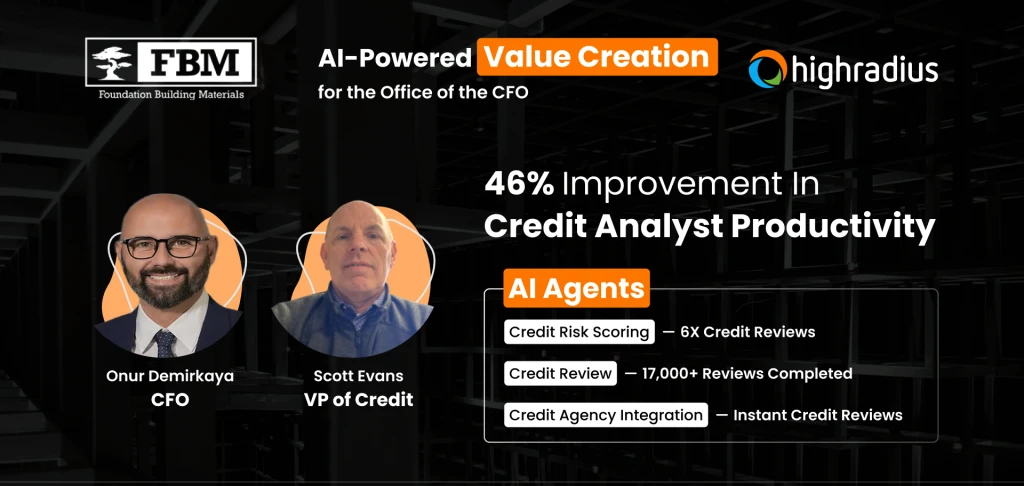
Foundation Building Materials increased analyst productivity by 46%, completed 17,000+ annual reviews, and achieved 6× more credit reviews through AI-driven credit automation.
Case Studies
How this manufacturing giant unlocked 17,000+ annual credit reviews
Learn how FBM modernize credit operations with AI-driven scoring, automated workflows, and centralized visibility across entities.
How To Choose The Best Credit Management Platform for Your Business
Modern finance teams evaluate top credit risk management platform differently based on enterprise risk, ongoing monitoring, audit trail, operational scale and portfolio complexity. Mid-market organizations when looking for in advanced credit risk management tools typically prioritize faster onboarding, automated credit scoring tools, ERP-integrated approvals, and low-risk auto-approvals and credit decision platforms to eliminate spreadsheet-driven reviews and scale without increasing analyst headcount. Enterprises focus more on continuous risk monitoring, predictive blocked-order prevention, global policy standardization, and real-time portfolio visibility across multiple ERPs and business units. Here are a few things to keep in mind when choosing the best credit management system for your business.
Identify Core Risk Needs
Your organization's specific needs should drive the selection of a robust credit risk management platform. The original step involves identifying credit risk priorities that will shape your review process. These could range from customer assessment to portfolio management or counterparty risk.
Check Credit Scoring Strength
The best credit risk management tools come with detailed credit scoring capabilities and risk metrics that review creditworthiness through various data inputs and advanced scoring models. Good credit management tools should update credit scores continuously to reflect current financial conditions and alert users about key changes in borrower creditworthiness.
Review Limit and Portfolio Tools
Credit limit management tools play a vital role. They let teams set, track, and modify limits based on a customer's financial health and payment patterns. Portfolio management features should provide analytical insights into overall credit health, including concentration risk and exposure analysis.
Confirm Security and Compliance
Success in implementation of credit risk solutions depends on verified data security measures and regulatory compliance frameworks. Sensitive information needs protection through robust security features such as encryption and multi-factor authentication.
Ensure Scalability and Flexibility
The usage flexibility for a credit management platform becomes critical as your business expands. Your credit risk management needs will change, and your tools must adapt accordingly. This comprehensive approach helps organizations pick tools that align perfectly with their risk management goals.
It helps businesses shift from a reactive to a predictive approach, empowering finance teams to make more confident, data-driven decisions while maintaining compliance and control.
How HighRadius Credit Risk Software Helps Improve Credit Risk Assessment
HighRadius Credit Management Platform helps mid-market finance teams automate credit decisioning, standardize risk evaluation, and gain real-time visibility into customer exposure without increasing analyst headcount. Built for organizations scaling beyond spreadsheet-driven approvals, the platform combines AI-driven credit scoring, automated workflows, and continuous monitoring to accelerate onboarding, reduce manual reviews, and improve control over credit risk.
With real-time credit risk management tools and AI-powered credit management solutions, finance teams can receive alerts for changes in customer credit profiles and make faster, data-driven decisions using unlimited credit reports. The platform integrates with ERP systems and can begin monitoring customers in as little as 30 days.
With real-time credit risk analysis software and credit decisioning software, you can receive alerts for any changes in your customers’ credit profile and make data-driven credit decisions from unlimited credit reports. Our software integrates with your ERP system and can start monitoring your customers in just 30 days.
We offer configurable credit scoring software and approval workflows that can be customized based on geography, customer segments, business units, and other factors. You can fast-track credit approvals through complex corporate hierarchies, making the credit application process more efficient and streamlined.
Our highly configurable online credit application allows you to onboard customers across the globe with multi-language, customized credit applications embedded on your website. You can automatically capture financials, personal guarantees, and check bank references, reducing the need for manual data entry.
Our software also automatically extracts credit data from over 40+ global and local agencies, including credit ratings, financials, and credit insurance information. You can configure the auto-extracted data in your preferred currency, making it easier to analyze and interpret.
With AI-based blocked order management, you can auto-predict blocked orders based on the customers’ credit limit utilization and payment history. You can leverage AI-based release or partial payment recommendations for faster credit decisions, reducing the need for manual intervention.
Struggling With Slow Credit Approvals and Credit Reviews?
Explore the #1 software that makes onboarding customer faster and easier
Accelerate payment recovery from delinquent customers and boost cash flow through automated collection workflows.
Cash App
Achieve same day cash application with automated remittance aggregation
Credit
Mitigate credit risk, reduce bad debt, and streamline customer onboarding with AI-powered insights.
Deductions
Reduce Revenue Leakage with AI Prediction models that identify valid and invalid deductions.
Online Credit Application
Onboard customers seamlessly with a configurable online credit application. Cut down on back-and-forth and collect all customer details in one go.
Frequently Asked Questions (FAQs)
1. What are credit risk management tools?
Credit risk management tools help businesses assess, monitor, and reduce customer credit risk using AI-driven scoring, automation, and real-time analytics. Modern credit management platform centralizes financial data, automate approvals, monitor payment behavior continuously, and improve visibility into customer exposure across the entire credit lifecycle.
Credit risk management tools help businesses assess, monitor, and reduce customer credit risk using AI-driven scoring, automation, and real-time analytics. Modern credit management platform centralizes financial data, automate approvals, monitor payment behavior continuously, and improve visibility into customer exposure across the entire credit lifecycle.
2. What features should businesses look for in a credit management platform?
The best credit management platform includes AI-driven credit scoring, automated approval workflows, real-time risk monitoring, ERP integration, blocked-order management, customer hierarchy visibility, and predictive analytics. Leading credit risk management tools also support automated onboarding, configurable policy enforcement, and continuous monitoring across global portfolios.
The best credit management platform includes AI-driven credit scoring, automated approval workflows, real-time risk monitoring, ERP integration, blocked-order management, customer hierarchy visibility, and predictive analytics. Leading credit risk management tools also support automated onboarding, configurable policy enforcement, and continuous monitoring across global portfolios.
3. How does AI improve credit risk management?
AI-powered credit risk solutions analyze payment trends, financial statements, ERP data, credit bureau information, and behavioral signals in real time to identify early risk indicators. This helps businesses automate low-risk approvals, predict blocked orders, reduce bad debt exposure, and accelerate credit decisioning with greater accuracy and consistency.
AI-powered credit risk solutions analyze payment trends, financial statements, ERP data, credit bureau information, and behavioral signals in real time to identify early risk indicators. This helps businesses automate low-risk approvals, predict blocked orders, reduce bad debt exposure, and accelerate credit decisioning with greater accuracy and consistency.
4. Is credit management tool suitable for both mid-market and enterprise businesses?
Yes. Modern credit management solutions support both mid-market and enterprise organizations. Mid-market businesses use credit management systems to automate spreadsheet-driven approvals and scale onboarding without increasing headcount, while enterprises use AI-driven credit risk management platforms to standardize global policies, monitor portfolio-wide exposure, and manage blocked orders across multiple ERPs and business units.
Yes. Modern credit management solutions support both mid-market and enterprise organizations. Mid-market businesses use credit management systems to automate spreadsheet-driven approvals and scale onboarding without increasing headcount, while enterprises use AI-driven credit risk management platforms to standardize global policies, monitor portfolio-wide exposure, and manage blocked orders across multiple ERPs and business units.
Resource Library
Resource Hub
Order to Cash
Order to Cash software data sheet
Disconnected workflows can leave teams chasing data, while automated O2C has delivered 20% lower past dues.
HighRadius recognized as a "Leader" in IDC Marketscape: Worldwide AI-enabled accounts receivable automation applications for the enterprise 2026 vendor assessment
Recognized as a Leader in 2026 Vendor Assessment for unifying credit, collections, cash application, deductions, e-invoicing, and payments on one AI platform to advance enterprise-wide invoice-to-cash transformation.
Forrester Recognizes HighRadius in The AR Invoice Automation Landscape Report, Q1 2023
Forrester acknowledges HighRadius’ significant contribution to the industry, particularly for large enterprises in North America and EMEA, reinforcing its position as the sole vendor that comprehensively meets the complex needs of this segment.