AI-Powered Credit Score Software for Predictive Risk Control

Outdated credit scoring models increase default risk.

HighRadius’ automated credit scoring tool reduces $57 million credit risks annually.

  • 20% lower bad-debt exposure with predictive credit scoring
  • 50% faster credit limit decisions with AI-based risk models
  • 80–90% automated credit risk evaluations using AI scoring agents
D Tech data logo

CUSTOMER SUCCESS STORY

$160K Saved Annually by Standardizing Credit Workflows

Know how
chevron-logo

CUSTOMER SUCCESS STORY

89% Reduction In Time Taken For Credit Reviews

Know How

Key Agentic AI Features For Credit Scoring Software

Top Benefits Of Agentic AI-Led Credit Score Software

Credit scoring software, powered by AI agents, transforms manual credit analysis into AI-driven, real-time scoring, improving speed, accuracy, and governance.

1

2–3× More credit reviews per analyst

Automated credit scoring software removes manual spreading, data hunting, and spreadsheet-based scoring calculations. Analysts shift from clerical work to high-risk exception handling and strategic credit analysis.

2

70–80% Automation of credit evaluation tasks

Automated credit scoring AI software orchestrates scoring, reviews, alerts, and limit recommendations across the lifecycle. Eliminates dependency on fragmented systems, emails, and manual software credit scoring workflows.

3

Continuous audit trails and model governance

The credit scoring platform tracks scoring model updates, data inputs, overrides, and approvals automatically. Strengthens compliance, audit readiness, and governance across enterprise credit score systems.

4

Increased risk prediction accuracy

AI-powered credit scoring engine evaluates behavioral payment trends, financial ratios, and exposure patterns. Predictive scoring identifies default risk earlier than static bureau-driven credit scoring tools.

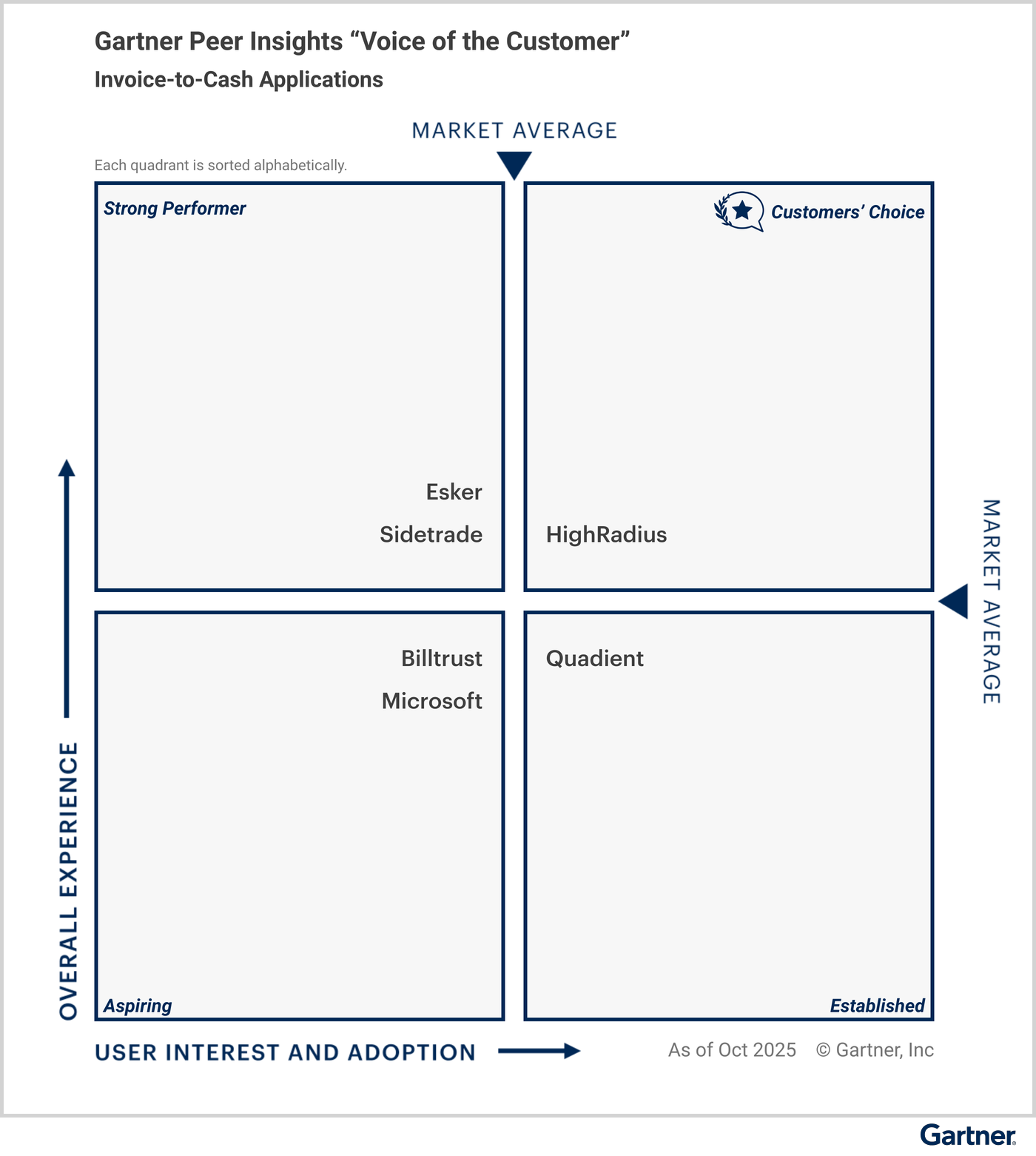
HighRadius is the ONLY Vendor named a Leader in all 3 major analyst reports for Accounts Receivable

Gartner logo 2024 Gartner Magic Quadrant
Hackett logo Digital World Class
idc logo IDC MarketScape Leader

How Does Automated Credit Score Software Work?

Build a mathematically reliable foundation for credit scoring

  • Aggregate credit intelligence across systems: The credit scoring software combines bureau data, ERP exposure, payment behavior, and financial statements into a unified scoring layer.
  • Normalize data for scoring accuracy: The credit scoring platform resolves duplicate entities, parent–child hierarchies, and inconsistent formats across enterprise credit score systems.
  • Maintain real-time scoring context: Automated credit scoring AI software continuously refreshes inputs, preventing decisions based on static bureau snapshots.

Replace static scorecards with predictive risk intelligence using AI algorithms

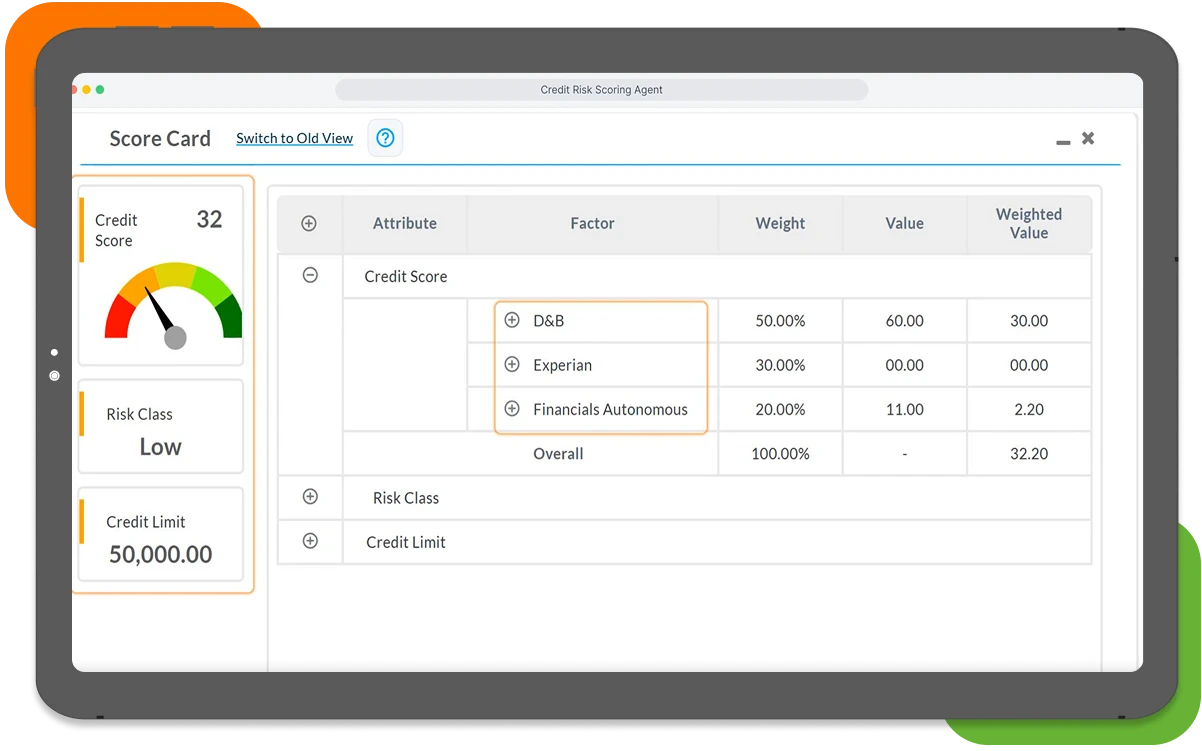
  • Run ML-driven Probability of Default (PD) models: The credit scoring engine evaluates behavioral payment trends, bureau variables, and financial ratios.
  • Apply hybrid AI + rule logic: The software credit scoring framework overlays deterministic policy controls onto AI predictions.
  • Adjust scoring weightages dynamically: The credit scoring tool recalibrates models based on customer segment, region, and exposure profile.

Convert scoring outputs into exposure control actions

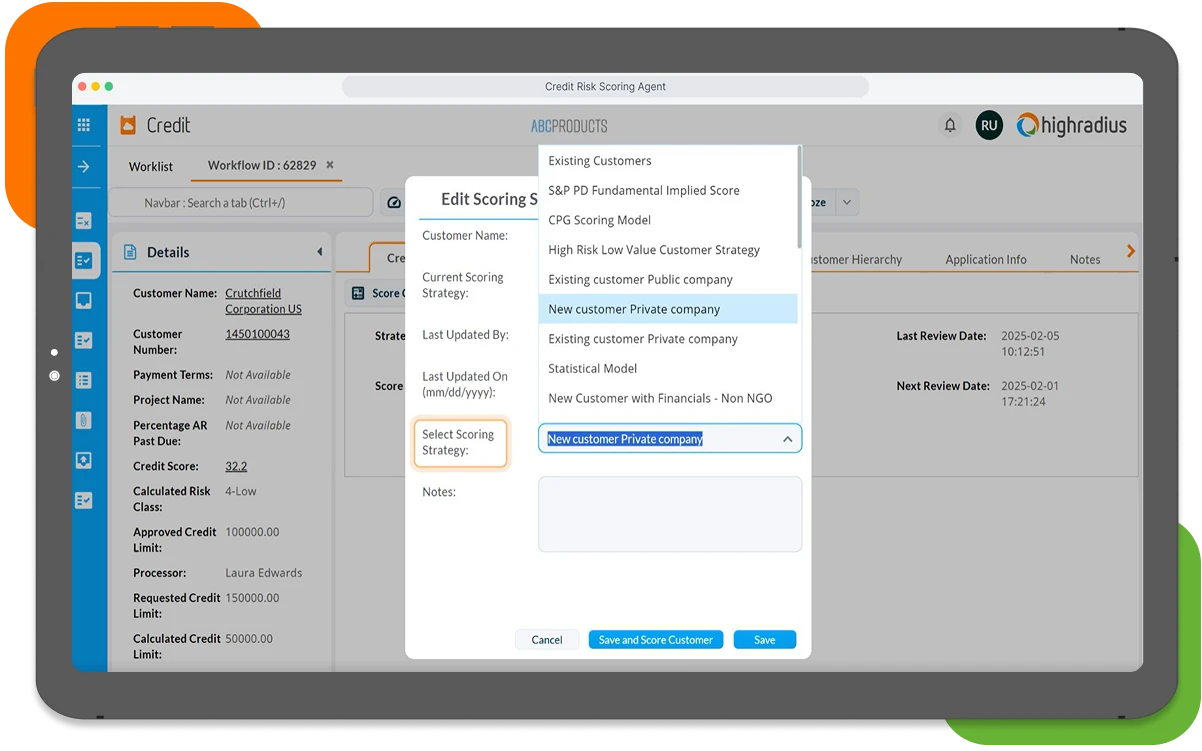
  • Assign risk classes automatically: The credit score software categorizes customers into risk tiers based on PD outputs.
  • Generate optimized credit limits: The credit analysis software links scoring results to limit recommendations.
  • Enforce policy-aligned thresholds: The credit scoring platform ensures limit decisions remain within predefined governance rules.

Detect deterioration before losses accumulate

  • Track behavioral risk drift: The credit scoring AI software monitors ADP shifts, disputes, and utilization spikes.
  • Capture external risk signals: The credit scoring platform detects bankruptcy alerts, rating changes, and M&A events.
  • Trigger automated score recalculation: The credit scoring engine dynamically updates scores and recommended limits.
automated credit score software improves predictive accuracy than rule-based models, reducing default risk by 15–25%.

What Customers Are Saying About Our Credit and Collections Solution

Ebsco Logo
1000+ Work Hours Recovered
Every month with advanced dunning.
Read more
american greetings Logo
5.5 Days Reduction in DSO
With AI-based worklist prioritization.
Read more
Brightstar Logo
20% Bad Debt Reduction
By automating paper-based collections.
Read more

Integrate Effortlessly with Your Existing ERP Systems

HighRadius builds solid partnerships and offers robust integration capabilities by integrating with 110+ banks, 40 credit agencies, 50+ ERPs, and 15+ billing systems globally.

ERP Solutions

Ready to Connect HighRadius with Your ERP?

Download ERP Factsheet

Within 6 months, our AI-powered credit scoring platform delivers

3X Credit Reviews per Day
20% Reduced Bad Debts
30% Increased Productivity

Must-Have Resources For Automated Credit Analysis Software

Excel Credit Scoring

An Excel-Based Credit Scoring System

Test the model with Factors & Weights and compare current and suggested credit score

Download Free Template
B2B Credit Scoring

Top 15 Parameters For B2B Credit Scoring Model

Use a robust set of data parameters and see through the 'cloaking effect' and more.

Download eBook
Consumer Goods Risk

Credit Risk Mitigation for A/R In The Consumer Goods Industry

Balance credit risk within the consumer goods industry with a five-step roadmap.

Download eBook

What is Credit Score Software?

Credit score software is an enterprise credit scoring system that calculates, monitors, and continuously updates a customer’s credit risk using AI-driven analytical models. Unlike static bureau scores or spreadsheet-based evaluations, modern credit scoring software combines internal payment behavior, ERP exposure data, financial statements, and external bureau intelligence to generate dynamic credit scores, Probability of Default (PD), Risk Class, and recommended credit limits.

Moreover, advanced credit scoring AI software replaces manual credit analysis and periodic reviews with agentic AI agents that evaluate risk signals in real time. For example, when payment behavior deteriorates, utilization spikes, or a bureau rating changes, the credit scoring engine recalibrates scores instantly, allowing credit teams to adjust limits proactively, prevent blocked orders, and reduce bad-debt exposure before losses accumulate.

Automated credit scoring

Static Credit Scoring Engine Can’t Keep Up with Real-Time Risk

Traditional credit scoring methods were built for periodic evaluation, not real-time risk volatility. As customer exposure, payment behavior, and financial conditions shift daily, static scoring models create decision blind spots.

Legacy Systems
Legacy Credit Scoring Software Creates Invisible Risk

Spreadsheet-driven credit scoring and rule-heavy analysis led credit scoring tools depend on manual updates, fragmented bureau pulls, and periodic reviews. Risk signals—payment deterioration, utilization spikes, financial stress, often surface too late. Credit teams spend more time reconciling data than interpreting risk, while exposure accumulates outside the visibility of outdated credit score systems.

Agentic AI
Agentic AI Credit Scoring Software Restores Risk Control

Our credit scoring AI software continuously ingests bureau data, ERP exposure, and behavioral signals to recalibrate scores dynamically. Agentic AI agents detect early risk drift, trigger reviews, and recommend credit limit actions before losses or blocked orders occur. Credit decisions become predictive, mathematically consistent, and explainable, without dependency on spreadsheets or delayed human intervention.

From Rule-Based Automation to Agentic AI Credit Scoring Engine

icons

Continuously Recalculate Credit Risk as Conditions Change

Conventional credit scoring software depends on periodic reviews and static bureau updates that quickly lose relevance. Agentic AI-driven credit scoring AI software recalibrates Probability of Default (PD), Risk Class, and Credit Scores using live payment behavior, exposure levels, and external risk signals.

Outcome: Credit risk assessment reflects current reality, not historical snapshots.

icons

Remove Manual Credit Analysis and Financial Spreading

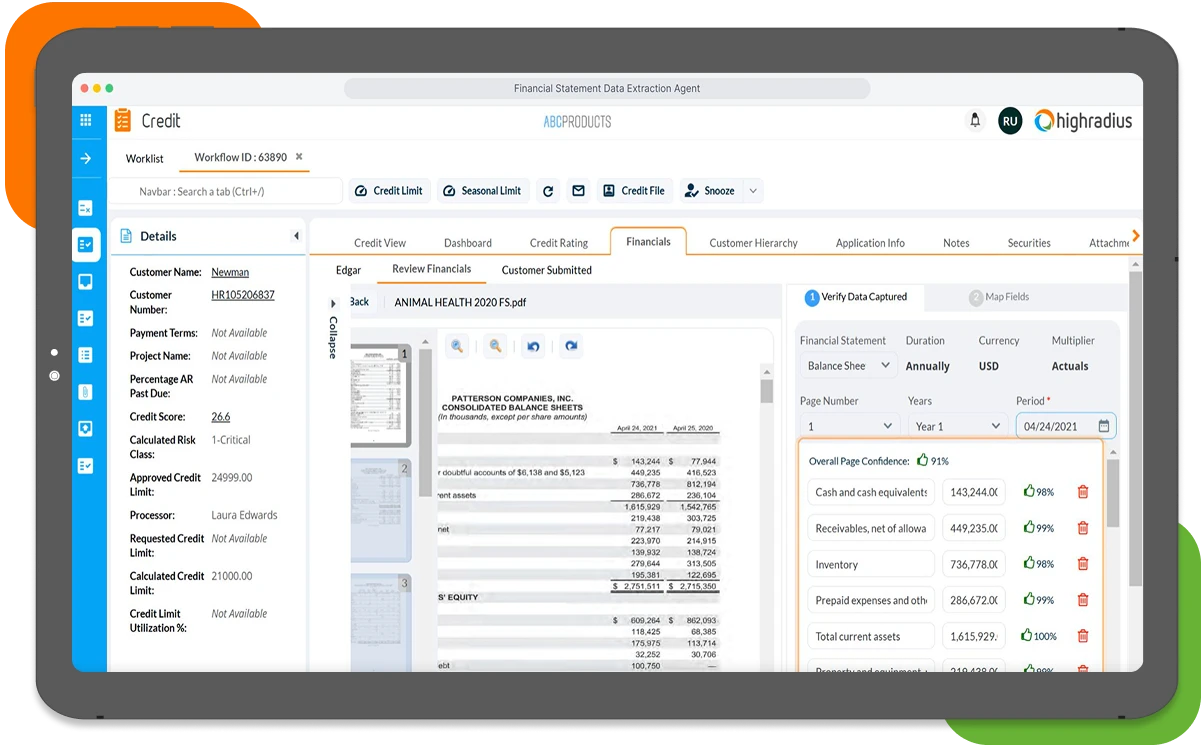
Legacy credit analysis software requires analysts to manually extract ratios, reconcile bureau data, and maintain spreadsheet-based scorecards. Our credit score software automates financial statement spreading, bureau data extraction, and scoring calculations across integrated credit score systems.

Outcome: Credit teams eliminate operational drag without compromising analytical rigor.

icons

Strengthen Predictive Accuracy Beyond Static Scorecards

Traditional software credit scoring models rely heavily on fixed scorecards and limited bureau variables. Our credit scoring engine evaluates behavioral payment trends, utilization shifts, financial ratios, and bureau intelligence simultaneously using AI-driven scoring models.

Outcome: Early detection of default risk and behavioral deterioration.

icons

Scale Credit Risk Evaluations Without Creating Bottlenecks

Manual reviews and fragmented credit scoring tools introduce delays as portfolios and transaction volumes expand. Agentic AI-enabled credit scoring platforms automate scoring, monitoring, and credit limit recommendations while enforcing policy thresholds.

Outcome: Higher decision throughput with consistent scoring logic.

Agentic AI Logic

Why Agentic AI Changes Credit Scoring

Unlike traditional credit scoring software that applies static scorecards, agentic AI continuously recalibrates credit scores using live payment behavior, exposure shifts, and external risk signals. Scoring evolves as customer risk conditions change, not just during onboarding or scheduled reviews. This transforms software credit scoring from a periodic evaluation tool into a dynamic risk intelligence system.

Manual vs Automated Credit Score Software

Manual software credit scoring relies on backward-looking data snapshots and analyst-driven calculations. Credit scores degrade quickly when financial conditions or payment behavior shifts. Automated credit score software applies AI models that evaluate behavioral trends, exposure volatility, and financial signals to maintain continuously accurate credit scores.

Capability Manual Credit Score Software Automated Credit Score Software
Score Calculation Built in Excel using static scorecards and manually updated financial ratios. AI-driven credit scoring engine calculates Probability of Default (PD), Risk Class, and Credit Score dynamically.
Data Inputs Limited to periodic bureau pulls and manually collected documents. Aggregates bureau, ERP, behavioral, and financial data via credit scoring AI software.
Risk Freshness Scores updated quarterly or annually, missing emerging risk signals. Real-time recalibration within the credit scoring platform based on payment and exposure changes.
Consistency Scores vary by analyst interpretation and spreadsheet logic. Standardized scoring logic enforced across enterprise credit score systems.
Handling Thin Files Private or new customers often declined due to limited bureau data. Alternative and behavioral data modeled using automated credit scoring tools.
Scalability Portfolio growth requires more analysts and manual spreading effort. Credit scoring software scales evaluations without proportional headcount increase.
Auditability Score changes and assumptions are difficult to reconstruct. Full traceability maintained by AI-enabled credit analysis software.
Risk Detection Deterioration is often identified after delinquency occurs. Early-warning alerts generated by predictive credit scoring engine models.

How To Choose The Right Credit Score Software

Not all credit scoring software is built equally. Many tools calculate scores; few deliver predictive accuracy, continuous monitoring, and enterprise-grade governance. Here are a few things to consider when selecting a credit scoring software.

1 Predictive Scoring vs Static Scorecards

Move from backward-looking ratings to forward-looking risk intelligence

Prioritize software credit scoring that models Probability of Default (PD), not just bureau-based ratings. The right credit scoring engine should combine behavioral, financial, and exposure variables to generate forward-looking credit scores.

2 Depth of Data Aggregation

Build scoring accuracy on unified, decision-grade credit data

Ensure the credit analysis software integrates bureau, ERP, financial, and payment behavior data. Modern credit scoring software must eliminate fragmented inputs that distort scoring accuracy.

3 Configurability of the Credit Scoring Engine

Adapt scoring models to your unique risk strategy

Avoid rigid vendor-defined scoring logic. An effective credit scoring tool allows teams to configure models, weightages, thresholds, and segment-specific scorecards.

4 Real-Time Score Recalibration

Ensure scores reflect current risk, not periodic snapshots

Choose a credit scoring AI software that updates scores continuously, not quarterly. Risk signals such as payment delays, utilization spikes, or financial deterioration must trigger dynamic recalculation.

5 Thin-File & Alternative Data Handling

Score beyond traditional bureau limitations

Evaluate whether the credit scoring platform can assess private or thin-file customers. Advanced credit score systems incorporate alternative financial and behavioral data beyond traditional bureau reports.

6 Governance, Explainability & Auditability

Make every credit score transparent and defensible

Enterprise credit score software must provide transparent scoring logic and reason codes. Complete audit trails ensure every score, override, and model update remains defensible.

Value Creation

From Chaos to Cash: How Finance Teams Reclaimed Millions in 6 Months

Leading enterprises are rethinking credit and collections with AI—automating everything from credit scoring and blocked order prediction to high-risk account follow-ups and dispute resolution. In just 6 months, they’ve seen 20% drop in bad debt, and unlocked over $2M in additional cash flow.

Book A Discovery Call
konica-minolta-eipp bsn-sports-eipp

FAQs: AI-Powered FAQs For Automated Credit Score Software Solutions

What is the most commonly used credit scoring system?

The most commonly used credit scoring system relies on bureau-based risk models that predict borrower default probability using historical credit data. While widely adopted, enterprises now extend these methods with credit scoring software that incorporates ERP balances, payment behavior, and financial ratios. Platforms like HighRadius credit score software deliver more business-specific, real-time scoring.

What is the most common credit scoring system?

The most common credit scoring system is traditionally bureau-driven, using statistical risk models based on repayment history and credit exposure. However, modern software credit scoring expands this approach through credit scoring platforms and credit scoring engines that evaluate behavioral, financial, and operational signals. AI-powered credit scoring software improves predictive accuracy beyond static ratings.

What is a credit scoring system in banks?

A credit scoring system in banks is a statistical or AI-based model used to assess borrower risk and Probability of Default (PD). It evaluates financial history, credit exposure, repayment behavior, and external credit intelligence. Banks increasingly use credit scoring AI software, credit scoring tools, and advanced credit scoring engines to automate evaluations, recalibrate risk dynamically, and maintain compliance.

What is the importance of an automated credit scoring platform?

An automated credit scoring platform improves risk accuracy, scoring consistency, and decision speed. Unlike manual models, credit scoring software continuously recalibrates scores using behavioral, financial, and exposure data. Solutions such as HighRadius credit scoring software help enterprises reduce bad-debt risk, scale evaluations, and generate explainable outputs, transforming scoring into continuous risk monitoring.

Accounts Receivable Solutions

Accounts Receivable Software | Collection Software | Cash Application Automation | Credit Risk Management | Credit Management | Credit & Collection | EIPP | Electronic Invoicing | Invoice to Cash | Invoice Collection | B2B Payments | Order to Cash | O2C Analytics | Integrated Receivable | Deduction Management | Credit Application | Credit Scoring | Exception Management | Dispute Management | Trade Promotion | Dunning Management | Financial Data Aggregation | Remittance Processing | Collaborative Accounts Receivable | Remote Deposit Capture | Credit Risk Monitoring | Credit Decisions Engine

Accounts Payable Solutions

AP Automation | Invoice Processing | Invoice Scanning & Capture | Invoice Coding | Invoice Approval | Invoice Matching | Invoice Management | Supplier Management | Supplier Onboarding | Dynamic Discounting

Financial Reconciliation & Close Solutions

Account Reconciliation | Financial Close | Bank Reconciliation | Balance Sheet Reconciliation | Payment Reconciliation | Transaction Matching | SOX Software | General Ledger Reconciliation | Journal Entry | Variance Analysis| Financial Consolidation | Financial Reporting

Treasury & Cash Management Solutions

Treasury Management | Cash Flow Forecasting | Cash Management | Cash Flow Management | Revenue Recognition | Liquidity Management

Resources

Days Sales Outstanding | Collection Dispute Letter | Accounts Receivable Days Formula | Credit Dispute Letter | Accounts Receivable Days Outstanding | Accounts Receivable Collections | Accounts Receivable Report | Accounts Receivable Aging Report | Accounts Receivable Process | Credit Scoring Model | Dispute Management | Debt Collection Call Script | Credit Risk Management Techniques | Accounts Receivable Department | 609 Credit Dispute Letter | Order to Cash Automation | Collections Performance Metrics | How to Determine Credit Worthiness | B2B Credit Application | Credit & Collection Technology | Accounts Receivable Automation | Accounts Receivable Solutions | Electronic Invoicing Process

Ebooks, Templates, Whitepapers & Case Studies

Accounts Receivable Dashboard | Credit and Collection Goals | DSO Calculation Template | Accounts Receivable Aging Report Template | Business Credit Scoring Model | AR Aging Worklist Prioritization | Collection Email Templates | Strategies to Reduce DSO | Collection Maturity Model Template | Credit & Collection Email Templates | Credit Policy Sample | Credit Application Checklist Spreadsheet Template | Collection Email Automation with Excel