A Gartner Magic Quadrant Invoice-to-Cash Leader
Highest in Execution | Furthest in Vision
A Gartner Magic Quadrant Invoice-to-Cash Leader
Highest in Execution | Furthest in Vision
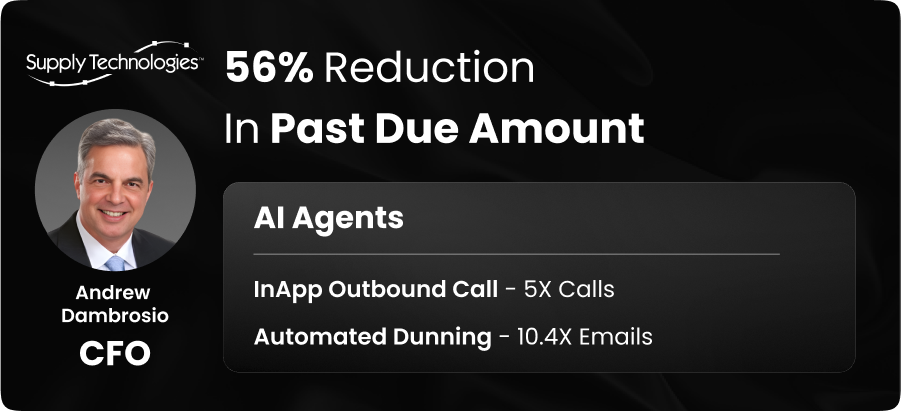
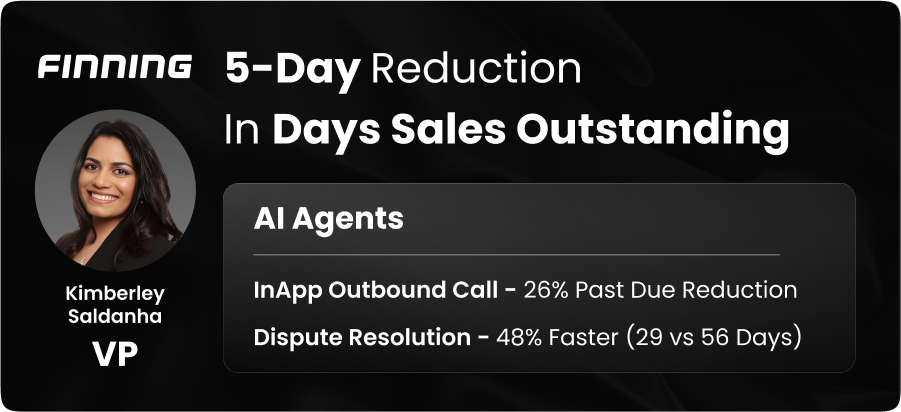
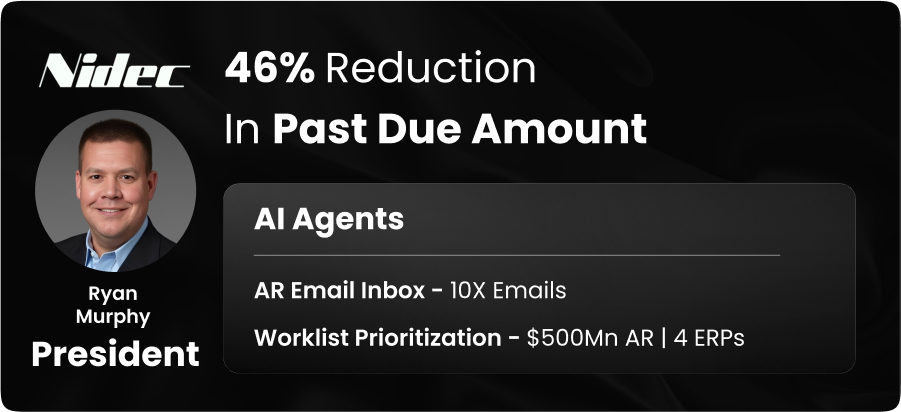
Achieve 20%+ Reduction in Past Dues via 15 AI Agents.




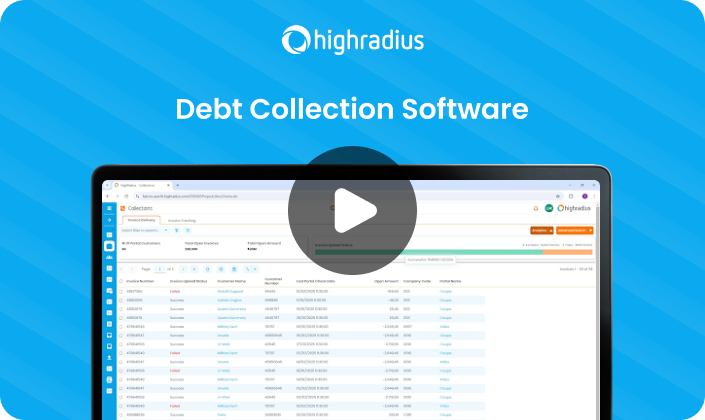
HighRadius is an Agentic AI-powered debt collection software that automates prioritization, task allocation, and outreach to slash past-due accounts and streamline recovery.



HighRadius AI agents provide real-time visibility and autonomous control, accelerating recoveries and maximizing cash flow efficiency.
Autonomous Dunning and AI-Driven Customer Outreach
Simplify communication with customers by automating follow-ups, reminders, and dunning emails. Personalized email templates and AI-driven recommendations ensure timely and accurate messaging, improving response rates and speeding up payments.
Personalized Outreach to Minimize Churn and Past-Due Accounts
Not all customers are the same, and your collection strategies should reflect that. With the right integrated receivables solution, you can tailor your approach to different customer segments. From polite reminders to more urgent follow-ups, personalized communication ensures timely payments and helps minimize customer churn.
Centralized Dashboards to Maximize Collector Productivity
Streamline collectors' workflows with centralized dashboards, automated call logging, and intelligent task assignments. These features allow collectors to focus on value-added activities, doubling their efficiency.
Data-Driven Insights for Proactive Decision-Making and Strategy
Gain actionable data on collection performance, account status, and cash flow trends. Interactive dashboards provide instant visibility into critical metrics, enabling informed decision-making and proactive collection strategies.


HighRadius offers seamless global connectivity through robust integrations with 110+ banks, 40 credit agencies, 50+ ERPs, and 15+ billing systems.

Ready to Connect HighRadius with Your ERP?
Download ERP Factsheet
Optimize collections through five success pillars and a maturity model roadmap.
Download Ebook
Download 6 expert built RFP templates + 129 must ask vendor evaluation questions.
Download Template
Struggling with overdue invoices? This aging dashboard makes prioritization effortless.
Download TemplateMore than automation, Agentic AI takes initiative and learns to drive superior recovery outcomes.

Traditional automation handles repetitive tasks but can’t respond to real time shifts in customer behavior often missing critical context.

Agentic AI prioritizes accounts, chooses outreach channels, and escalates cases based on live data not static rules.

The system evolves with every interaction refining strategies across customer segments to increase collection success rates.

With Agentic AI handling execution, collectors focus on exception management, approvals, and strategic account resolution.
Debt collection automation software leverages technology to optimize tasks like sending payment reminders, tracking overdue accounts, and prioritizing collection efforts. By automating these processes, businesses can reduce delays, ensure timely follow-ups, and enhance operational efficiency.
This collection software streamlines collections workflows, minimizes errors, and enables collectors to focus on high value accounts while maintaining effective and professional communication with clients.

Businesses need a debt collection management system to streamline and enhance the recovery of overdue payments efficiently. The software automates follow-ups, prioritizes accounts, and provides real-time tracking, improving cash flow and reducing overdue balances.
Automated debt collection software offers several key benefits, including streamlined processes that automate reminders and account tracking, making collections more efficient. It accelerates payment recovery, reduces manual errors, and enhances cash flow by minimizing delinquencies. Additionally, it supports better client relationships by ensuring professional and consistent communication throughout the collection process.
See how it works
Manual debt collection is tedious and error heavy, leading to late payments and stagnant business growth.
Collectors spend significant time on repetitive tasks like sending reminders, logging communications, and updating spreadsheets, reducing the time available for strategic collection efforts.
Without collections automation, identifying high risk accounts or prioritizing tasks becomes difficult, leading to missed opportunities to recover overdue payments quickly.
Manual data entry and tracking increase the likelihood of errors in account information, payment details, or follow-up actions, leading to inefficiencies and customer dissatisfaction.
Collectors lack real time insights into overdue accounts, payment trends, or performance metrics, making it harder to optimize strategies or forecast cash flow accurately.
Inconsistent or poorly timed follow-ups can irritate customers, risking damage to long-term relationships and goodwill.
As businesses grow, managing larger volumes of overdue accounts manually becomes unmanageable, leading to longer collection cycles and increased past-due amounts.
Understanding these challenges is the first step to improvement. Implement these strategies to overcome inefficiencies and optimize your collections.
Streamline follow-ups with automated dunning to address unpaid invoices and identify problem accounts quickly. Ensure reminders follow a structured timeline, with clear escalation steps for faster resolution of issues.
Adapt your approach to match the customer’s business context. Avoid generic messaging and use personalized reminders to increase response rates. Address root causes like payment methods or regional differences to resolve late payments effectively.
Leverage diverse communication channels such as emails, calls, and texts for tailored outreach. Align the right stakeholders on both sides of the conversation to increase impact and urgency. Multi channel strategies help gauge feedback and drive faster payments.
Set clear, measurable objectives like reducing overdue invoices or Days Sales Outstanding (DSO). Track and communicate progress with your team to ensure alignment and sustained improvements in cash collection.
Transform your recovery process by strategically implementing collections automation. Follow this streamlined, step-by-step approach to ensure a smooth transition, maximize efficiency, and accelerate cash flow.
Identify your business challenges, such as high past-due accounts or low collector productivity. Determine the features you need, like AI prioritization, automation, or ERP integration.
Choose a collections automation platform that fits your requirements. Consider factors like scalability, customization, integration capabilities, and user-friendliness.
Create an implementation roadmap with clear timelines, milestones, and responsibilities. Ensure alignment with stakeholders like finance, IT, and collections teams.
Gather and clean your existing collection data. Work with your vendor to migrate customer records, outstanding invoices, and payment history into the new system.
Customize workflows for dunning emails, reminders, and account prioritization. Configure automation rules for seamless task management.
Connect the software with your ERP, CRM, or accounting tools to ensure smooth data exchange and real-time updates.
Provide comprehensive training for your collectors and relevant teams. Highlight features like automated reminders and real-time reporting.
Run pilot tests to validate data accuracy, workflow efficiency, and automation reliability. Address any issues before full deployment.
Roll out the software to your team and monitor performance. Use built-in analytics to track KPIs like DSO, recovery rates, and collector productivity.
Gather feedback from your team and customers to optimize processes. Regularly update the software to leverage new features and maintain efficiency.
A debt collection software is designed to manage overdue accounts and streamline collection efforts. It automates key tasks like sending reminders, tracking communications, and managing overdue balances. The system integrates with other business platforms, improving efficiency and maximizing collections.
The debt collection process works by systematically identifying overdue invoices, prioritizing accounts based on risk and value, and engaging customers through structured, automated communication to recover payments. It typically starts with early reminders before due dates, followed by escalating dunning actions, dispute handling, and promise-to-pay tracking as invoices age.
Debt recovery software improves results by reducing DSO, automating manual tasks, and enabling teams to recover more cash with less effort. By using AI-driven prioritization, automated follow-ups, and predictive insights, it focuses resources on high-impact accounts, improves outreach efficiency, and reduces friction in customer interactions leading to faster payments, higher recovery rates, and greater productivity without increasing headcount.
It improves cash flow by prioritizing high risk accounts, automating timely customer outreach, reducing disputes and delays, and enabling faster payments through embedded digital payment options. By replacing manual follow-ups with data-driven workflows, organizations accelerate Days Sales Outstanding (DSO) and increase recovery rates.
Debt collection software costs vary based on features, depending on factors like AI automation capabilities, advanced reporting tools, workflow customization, and user volume. Larger enterprise solutions may have custom pricing based on data volume, user tiers, number of integrations, and implementation support.
Debt collection software gives Collection teams a cleaner way to reach customers with timely reminders, personalized follow-ups, and clear payment options. Instead of manual calls and scattered emails, the system tracks every interaction and sends the right nudge at the right moment, which keeps relationships intact while helping businesses get paid faster.
Yes, modern debt collection platforms integrate seamlessly with major ERP systems like SAP, Oracle, NetSuite, and Microsoft Dynamics to synchronize customer data, invoices, payments, disputes, and credit information in real time, ensuring a single source of truth across finance operations.
Yes. By automating follow-ups, prioritizing high risk accounts, and flagging delayed payments early, it tightens the entire recovery cycle. Businesses spot problems sooner, step in with the right strategy, and prevent delinquent accounts from slipping into write-off territory.