What is Digital Finance Transformation? Steps, Strategies And Case Studies
13 March, 2026
9 minute read
Soumi Sarkar, Finance Digital Transformation Specialist
S
Soumi Sarkar
Soumi specializes in O2C, finance, and accounting transformation with a focus on bringing a domain-led perspective to accounting, finance and order-to-cash transformation. She crafts insight-driven, CFO-aligned content that helps finance teams optimize operational workflows and drive measurable outcomes. Beyond her professional work, Soumi is a published author of two books, a poetess, an avid reader, and a storyteller who enjoys exploring narratives across both B2B and creative formats.
Last updated: 13 March, 2026
Choosing the Wrong Credit Vendor Can Cost Millions. Use this vendor evaluation scorecard to compare platforms, score capabilities, and select the right credit management solution.
Many finance organizations today operate with a growing stack of finance tools like ERP systems, reconciliation platforms, reporting software, and various automation solutions. Ideally, this infrastructure should have reduced manual work and accelerated financial processes. In practice, finance teams often find themselves doing the opposite.
Unfortunately, that is happening at a very slow pace. In fact, studies reveal, 90% of organizations are lagging in growth and efficiency due to outdated tech stack. Moreover, they spend $30 million USD annually just to maintain their legacy financial solutions. Processes still remain dependent on manual intervention because key systems do not communicate effectively. The result is a finance operation that appears digitized on the surface but still struggles to deliver consistent operational outcomes.
This is where digital finance transformation becomes relevant. Rather than adding more standalone tools, businesses are increasingly focused on building integrated finance operations supported by automation, AI-driven insights, and shared data infrastructure across the Office of the CFO.
This guide examines what digital finance transformation involves, how it differs from incremental system upgrades, the steps required to implement finance transformation effectively, how finance leaders can choose the right transformation strategy, how ERP platforms support transformation initiatives, and case studies from organizations that have successfully executed these changes.
Table of Contents
What is Digital Finance Transformation?
Steps for Successful Finance Transformation
Key Factors in Success: ERP Finance Transformation
Outcome-Based Pricing: Aligning Finance Transformation with Measurable Outcomes
Digital Finance Transformation Case Studies
Trust HighRadius As Your Digital Finance Transformation Partner
Frequently Asked Questions
What is Digital Finance Transformation?
Digital finance transformation refers to the thoughtful implementation of digital technologies, such as cloud computing, ERP integration, agentic AI capabilities, and so on. This helps businesses optimize and advance their financial operations, increase data accuracy, ensure compliance and governance with the rules and regulations.
A good digital finance transformation infrastructure goes beyond digitizing records rather than merely designing workflows, improving decision making and real-time financial analytics and insights.
23 Credit & Collections Goals Every Finance Team Should Track
Most AR teams track only 5–6 KPIs. This guide reveals 23 SMART goals used by leading finance teams to reduce DSO and improve working capital.
Many finance businesses have already invested in ERP upgrades and workflow automation tools. These investments often improve system usability and reduce some manual work. However, they do not necessarily change how finance operations function end-to-end.
Often they require additional systems to support reconciliation, reporting, treasury management, and credit operations. Each system performs its role effectively, but the overall process becomes fragmented across applications.
This fragmentation explains why manual processes persist even in technologically advanced finance environments. Teams frequently reconcile data across systems, validate exceptions manually, and assemble reports using spreadsheet-based analysis.
Legacy upgrades attempt to improve this environment through ERP modernization or process digitization. While these initiatives increase efficiency at the task level, they rarely remove the need for manual coordination between systems.
Digital finance transformation addresses the problem at the process level. Finance operations are redesigned around integrated data flows, automation, and AI-driven decisioning support across the Office of the CFO.
This transformation spans core finance processes such as order-to-cash, record-to-report, accounts payable, treasury management, and credit risk management. Automation handles routine execution while real-time data and predictive insights support faster financial decisions.
Steps for Successful Finance Transformation
Finance transformation rarely fails because of technology limitations. More often, it stalls because organizations attempt to automate fragmented processes without addressing the underlying operational gaps. A structured approach helps finance teams move from isolated automation efforts to measurable operational outcomes.
Step 1: Diagnose Process Inefficiencies
The starting point is understanding where manual intervention still exists across finance workflows. Many organizations discover that core processes such as reconciliations, credit approvals, and collections still rely on spreadsheets or email-based coordination. These inefficiencies often appear where data must move between disconnected systems.
Step 2: Define Outcome Metrics
Transformation initiatives must be tied to clear financial outcomes rather than technology deployment. Common objectives include reducing days sales outstanding (DSO), shortening financial close cycles, improving forecast accuracy, and lowering write-offs. These metrics help finance leaders evaluate whether transformation efforts are delivering measurable value.
Step 3: Consolidate Data Across Finance Systems
Fragmented data is one of the largest barriers to operational efficiency. Finance teams typically rely on information distributed across ERP systems, banking platforms, credit agencies, and accounts receivable or payable tools. Bringing these data sources together creates the foundation required for automation and reliable financial insight.
Step 4: Introduce Intelligent Automation
Once data flows are connected, automation can be introduced across routine finance activities. AI-driven tools can automate reconciliations, support credit risk analysis, and coordinate workflows across teams. The objective is to reduce manual validation and allow finance teams to focus on exception handling and decision-making.
Step 5: Scale Across Finance Processes
Successful transformation rarely remains confined to a single process. Organizations typically expand automation across multiple finance domains, including order-to-cash, accounts payable, treasury operations, and financial close. This broader implementation allows finance teams to move from isolated efficiency gains to sustained operational improvements.
Ebooks
Still Managing Collections Manually?
Learn how AI, machine learning, and automation tools are helping finance teams streamline collections and recover cash faster.
Key Factors in Success: ERP Finance Transformation
ERP platforms such as SAP, Oracle, and NetSuite remain the system of record for finance transactions and reporting. As a result, most transformation initiatives must operate alongside the ERP rather than attempt to replace it.
However, ERPs were designed for financial control, not operational automation. Processes such as reconciliations, credit management, forecasting, and dispute handling often rely on additional systems, creating fragmented workflows across finance teams.
Successful ERP finance transformation addresses this by keeping the ERP as the transactional backbone while introducing an integrated automation layer that connects data, workflows, and decision intelligence across finance operations.
Outcome-Based Pricing: Aligning Finance Transformation with Measurable Outcomes
A common challenge in finance transformation is the traditional software purchasing model. Organizations often commit to large implementation fees and multi-year subscriptions before measurable value is delivered. Projects can then stretch into long implementation cycles with shifting requirements and unclear success metrics.
To address this misalignment, HighRadius introduced Outcome-Based Pricing (OBP) for its Office of the CFO platform.
Under this model:
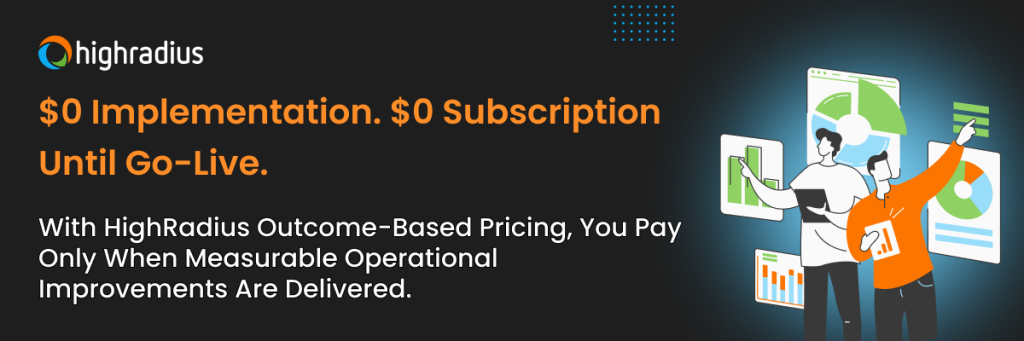
$0 implementation fee
$0 subscription fee until Go-Live
HighRadius earns a fraction of the financial gains realized by the customer
We validated this approach through a 24-month controlled experiment. Projects that began with a Mutually Agreed Success Criteria (MASC), clearly defined baseline metrics and outcome targets, that consistently delivered stronger results. Projects without defined outcome metrics often faced longer implementation cycles and limited operational impact.
Outcome-Based Pricing also addresses a major concern of vendor lock-in. In traditional models, businesses incur significant upfront costs before results are visible. OBP removes this risk by tying vendor compensation directly to measurable improvements in operational performance.
HighRadius delivers these improvements through a single Agentic AI platform for the Office of the CFO, deploying 190+ AI agents across Order-to-Cash, Accounts Payable, Record-to-Report, Treasury, and financial operations.
For finance leaders evaluating transformation initiatives, this model shifts the conversation from software deployment to measurable financial impact, which is ultimately the benchmark for transformation success.
Digital Finance Transformation Case Studies
Finance transformation often begins by targeting operational processes that depend heavily on manual processes and human dependencies. Here are a few finance transformation case studies that improve financial performance and efficiency by implementing automated, AI-powered financial capabilities.
Konica Minolta
Konica Minolta modernized its credit decisioning process to reduce manual reviews and improve risk visibility. Automated credit evaluation allowed the finance team to assess customer risk more consistently while reducing approval delays.
The result was faster credit approvals and improved visibility into working capital exposure.
How Konica Minolta Unlocked $30M in Cash Flow
Discover how AI-driven finance automation improved forecasting accuracy to 98.6% and reduced manual treasury work dramatically.
L’Oréal streamlined receivables operations by automating invoice tracking and centralizing collections activities. Previously, fragmented processes made it difficult for teams to prioritize collections and monitor receivables performance.
Automation helped improve DSO performance while also creating a more structured collections process for customer accounts.
How L’Oréal Reduced Credit Risk by $57M
See how AI-driven credit risk automation helped reduce A/R overdue from 24.4% to 11.7% while unlocking millions in working capital.
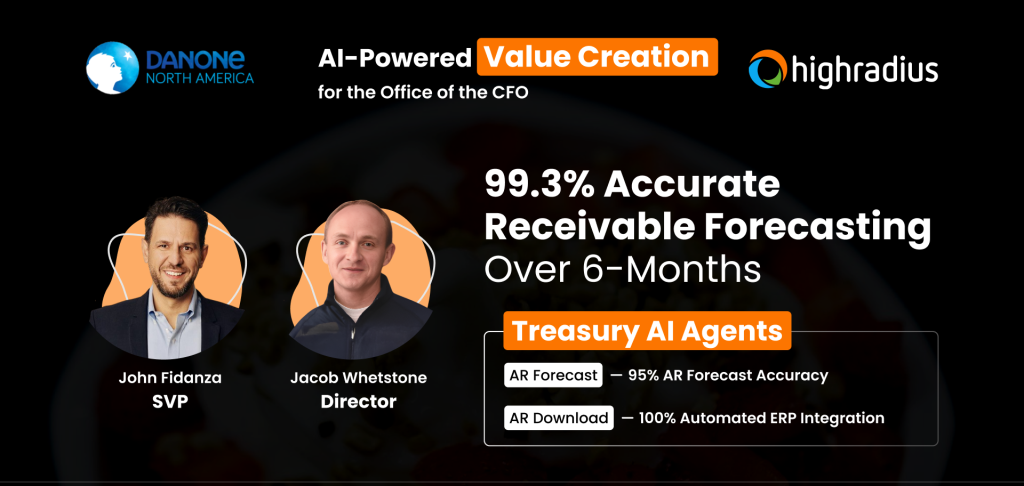
Danone focused on dispute resolution and receivables management. Dispute handling often required manual coordination across teams, slowing collections activity.
By centralizing dispute management and automating workflows, Danone improved collections productivity and reduced operational delays.
How Danone Recovered $25.5M in Invalid Deductions
See how AI analyzed 1.1M deduction claims annually and accelerated recovery across 25+ retailer portals.
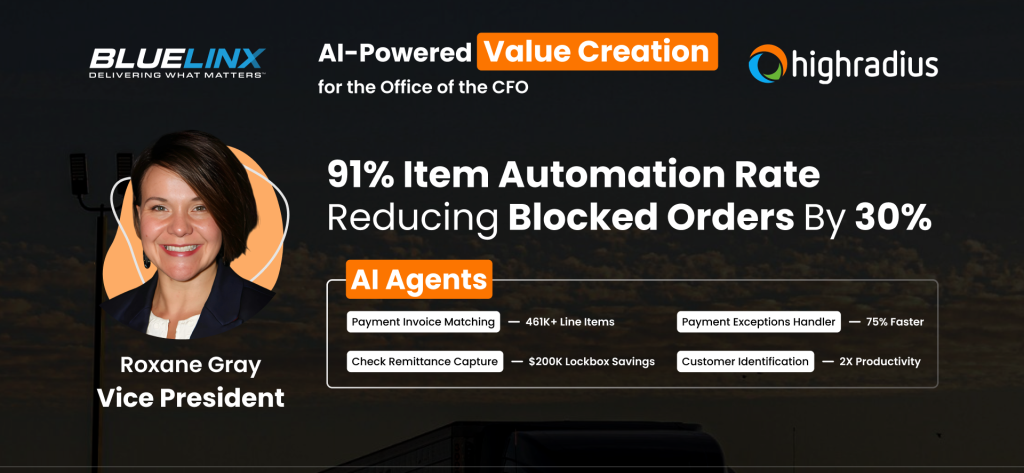
BlueLinx strengthened credit management by introducing automated credit evaluation and improved risk monitoring. This helped the company replace manual credit reviews with more structured risk assessments.
As a result, credit approvals became faster while improving visibility into customer credit exposure and potential bad debt risk.
From Manual Credit Reviews to 99% Workflow Automation
Learn how BlueLinx transformed credit management with AI-driven automation and real-time risk insights.
Trust HighRadius As Your Digital Finance Transformation Partner
Many finance organizations undergoing digital finance transformation still operate with fragmented systems across critical financial functions. These disconnected workflows force finance teams to rely on manual coordination across spreadsheets, emails, and multiple applications. As transaction volumes increase, these inefficiencies slow financial operations, delay decision-making, and limit visibility into working capital and risk.
HighRadius addresses this challenge with a unified Agentic AI platform for the Office of the CFO. With pre-built ERP integrations for SAP, Oracle, and NetSuite, the platform connects finance data and automates operational workflows across Order-to-Cash, Accounts Payable, Record-to-Report, and Treasury. Finance teams gain real-time visibility into receivables, cash flow, and risk exposure while reducing manual intervention across critical finance processes.
Here are key capabilities that support digital finance transformation with HighRadius:
Connects directly with leading ERP systems to maintain a single system of record while enabling automation across finance operations.
To reduce the risk often associated with transformation initiatives, HighRadius introduced Outcome-Based Pricing (OBP).
The result? Businesses enjoy $0 implementation fees and $0 subscription fees until go-live while unlocking 90%+ automation, 99% accuracy, 30-70% increased efficiency, 100% accounting compliance and 20% reduced past dues.
Learn more about HighRadius' Credit Management Software
Mitigate credit risk, reduce bad debt, and streamline customer onboarding with AI-powered insights.
Reduce bad debt with a prioritized worklist of high-impact customer accounts demanding immediate attention.
Credit Agency Integration
Identify risky customers by getting alerts on mergers and bankruptcies from credit agencies.
Online Credit Application
Improve onboarding time for your new customers with fully completed credit applications, tailored to your customer branding & requirements.
Frequently Asked Questions
1. What is digital finance transformation?
Digital finance transformation is the shift from manual, fragmented finance processes to integrated, automated operations using AI and real-time data. It connects systems across the Office of the CFO to improve efficiency, visibility, and financial decision-making.
2. What are the steps for successful finance transformation?
Key steps for successful finance transformation include diagnosing process inefficiencies, defining measurable outcomes, consolidating finance data, introducing automation, and scaling improvements across Order-to-Cash, Accounts Payable, treasury, and financial close operations.
3. How do I choose finance transformation strategies?
To choose effective finance transformation strategies, start by identifying process bottlenecks, defining outcome metrics such as DSO or close cycle time, evaluating ERP integration requirements, and prioritizing automation in high-impact finance processes.
4. What are the key factors in finance transformation success?
Key factors in finance transformation success include strong ERP finance transformation integration, unified finance data, automation across workflows, clearly defined outcome metrics, and a technology platform that supports scalable finance operations.
HighRadius Named as a Leader in the 2024 Gartner® Magic Quadrant™ for Invoice-to-Cash Applications
Positioned highest for Ability to Execute and furthest for Completeness of Vision for the third year in a row. Gartner says, “Leaders execute well against their current vision and are well positioned for tomorrow”
HighRadius Named an IDC MarketScape Leader for the Second Time in a Row For AR Automation Software for Large and Midsized Businesses
HighRadius stands out as an IDC MarketScape Leader for AR Automation Software, serving both large and midsized businesses. The IDC report highlights HighRadius’ integration of machine learning across its AR products, enhancing payment matching, credit management, and cash forecasting capabilities.
Forrester Recognizes HighRadius in The AR Invoice Automation Landscape Report, Q1 2023
Forrester acknowledges HighRadius’ significant contribution to the industry, particularly for large enterprises in North America and EMEA, reinforcing its position as the sole vendor that comprehensively meets the complex needs of this segment.