Soumi specializes in O2C, finance, and accounting transformation with a focus on bringing a domain-led perspective to accounting, finance and order-to-cash transformation. She crafts insight-driven, CFO-aligned content that helps finance teams optimize operational workflows and drive measurable outcomes. Beyond her professional work, Soumi is a published author of two books, a poetess, an avid reader, and a storyteller who enjoys exploring narratives across both B2B and creative formats.
2026 Automation Benchmark Report
HighRadius 2026 Automation Benchmark Report For The Office Of The CFO
Understand if your performance is on par with top 10% of the organizations. Identify gaps, best practices and know how you can drive value through Agentic AI-Driven Automation.
Disconnected credit systems increase business risk—not just IT complexity.
ERP integration is essential, but by itself it doesn’t enable connected, real-time credit decisions.
Connected credit architecture improves decision quality by unifying data across the entire Order-to-Cash cycle.
The right credit management software should be evaluated on decision quality, data connectivity, and business outcomes—not features alone.
Did you know? 59% of finance leaders say they still lack real-time insights, even after implementing enterprise finance systems.
The average business today operates across multiple finance systems, yet credit decisions often depend on a fragmented view of customer risk. ERP systems store customer records, finance teams monitor payment behavior, collections track overdue balances, and external bureaus provide financial insights, but when these data sources aren't continuously connected, credit teams are forced to make decisions based on partial information. As a result, analysts face delayed approvals, blocked orders, inconsistent credit policies, and increased bad debt risk. Modern credit management software can automate many of these processes, but automation alone doesn't solve disconnected data.
This raises a more fundamental question: What separates a connected credit management platform from another standalone tool? More importantly, is ERP integration alone enough to improve decision quality? In this blog, we explore why disconnected credit systems create business risk, what connected credit architecture looks like in practice, and the key capabilities finance leaders should evaluate before investing in credit management software.
Companies Lose Millions Each Year to Poor Credit Decisions—Not Just Bad Customers.
Modern credit management combines ERP data, payment behavior, and external risk signals to improve decision quality and accelerate customer onboarding.
The Executive Problem: Credit Decisions Are Only as Good as the Data Behind Them
Every credit decision is a reflection of the data available at that moment. The challenge is that customer risk doesn't stand still. Payment behavior changes with every invoice paid or missed, disputes alter outstanding exposure, collections interactions influence repayment patterns, and new orders can significantly impact credit utilization. Yet in many organizations, credit decisions continue to rely on periodic reviews, spreadsheet exports, or static credit scores that no longer reflect the customer's current financial position.
This disconnect creates a dangerous gap between what finance teams know and what credit decisioning systems are built with. Analysts spend valuable time validating data instead of evaluating risk, while sales teams wait for approvals that could have been made faster with a complete, up-to-date customer view.
How Customer Risk Evolves vs. How Credit Decisions Respond
Business Event (Changes Daily)
What Changes in Customer Risk
How Standalone Credit Systems Typically Respond
Customer makes a large payment
Credit exposure decreases
Credit limit remains unchanged until the next manual review
New invoices are generated
Outstanding receivables increase
Exposure is updated in ERP, but not reflected in active credit decisions
Invoice dispute is raised
Collectability and payment timelines change
Analysts manually verify dispute status across systems
High-value sales order is placed
Credit utilization spikes
Orders are blocked until a manual credit review is completed
External credit bureau updates customer rating
Financial risk profile changes
Bureau updates are reviewed periodically rather than continuously
Collections team secures a payment commitment
Short-term payment outlook improves
Credit teams often don't see this information during approvals
Do you know the right credit management tool can help reduce bad debt by up to 20%.
Estimate the financial impact of AI-powered credit management—from faster approvals to lower write-offs and improved analyst productivity.
Why Standalone Credit Risk Solutions Break the Credit Risk Management Process
A credit decision doesn't happen in isolation. It depends on information generated throughout the Order-to-Cash (O2C) process. Every customer interaction, payment, dispute, and sales order contributes to a more complete understanding of customer risk. Yet in many businesses , these functions remain confined to individual systems, leaving credit teams to make decisions without the full picture.
The issue isn't a lack of data. It's that every function owns only a piece of the customer story, and standalone credit management that rarely connects those insights at the moment a decision is made.
Where credit decisioning and risk monitoring within ERP gets lost
1. Customer Master
Provides customer identity, legal entity, business hierarchy and credit profile. Without synchronized customer records, analysts may evaluate outdated or incomplete information.
2. Credit Exposure
Open invoices, outstanding balances, blocked orders, credit scoring and existing credit utilization determine current financial exposure. When this data isn't continuously refreshed, credit limits no longer reflect actual customer risk.
3. Payment Behavior
Recent payments, DSO trends, broken promises and payment consistency are among the strongest indicators of future risk. Standalone credit tools often miss these operational signals because they reside elsewhere.
4. Financial Statements
Financial ratios provide a snapshot of long-term creditworthiness. However, they cannot explain what happened yesterday, last week or this morning.
5. External Credit Data
Credit bureaus provide valuable external risk indicators. But they represent only one dimension of customer risk and should complement, not to replace but streamline internal operational data.
6. Credit Decision
The final decision should combine all of these signals. When each input lives in a different system, analysts become the integration layer instead of the software.
Executive Insight: A credit decision is only as complete as the information that informs it.
Introducing the Connected Credit Decision Loop
Most organizations view credit as a point-in-time approval process. In reality, customer risk is constantly evolving. Every payment, new order, collection activity, and change in credit exposure provides additional context that can strengthen the next decision. When these operational signals aren't continuously connected, finance teams rely on periodic reviews that struggle to keep pace with changing business conditions.
The Connected Credit Decision Loop shifts the focus from isolated credit reviews to continuous decision intelligence, where every operational event refines the next credit decision.
Five Warning Signs Your Credit Process Is Falling Behind
Most businesses don't realize their credit decisions are based on outdated information until they experience delayed approvals, unnecessary blocked orders, or unexpected bad debt. If any of the following scenarios sound familiar, your credit risk solutions may be operating on an incomplete view of customer risk.
1. Your team starts every day by exporting ERP reports.
If analysts routinely download ERP data into spreadsheets before reviewing credit requests, your decision-making process depends on static snapshots rather than live operational data. By the time the review begins, the underlying customer information may already have changed.
A customer may have cleared overdue invoices or significantly reduced outstanding exposure, but if those payments aren't reflected immediately, credit teams continue making decisions based on outdated financial positions.
3. Blocked orders require manual investigation.
When sales, finance, and credit teams must exchange emails or reconcile data across multiple systems before releasing an order, it signals that critical decision context isn't flowing with the business.
4. Credit reviews happen on a schedule—not when customer risk changes.
Many organizations reassess credit weekly, monthly, or only when an exception occurs. Meanwhile, customer payment behavior, credit exposure, disputes, and business activity continue to evolve every day.
5. Different teams rely on different versions of customer data.
If Finance, Credit, Sales, and Collections each work from separate systems or reports, decisions become inconsistent because no single team has a complete, current view of the customer.
70% of ERP Initiatives Fail to Fully Meet Their Business Goals.
This structured vendor evaluation scorecard helps compare credit management platforms based on business outcomes, ERP integration and long-term scalability.
What Modern Credit Management Tools Should Synchronize
The quality of a credit decision depends on more than a customer's credit score. It relies on a connected view of operational, financial, and behavioral data that changes throughout the customer lifecycle. Modern credit management tools should continuously synchronize these business data objects to ensure every decision reflects the customer's current financial position.
Business Data
Why It Matters
Customer Master
Maintains a consistent customer profile across all credit decisions and business units.
Credit Limits
Prevents policy conflicts by ensuring approved limits remain current across systems.
Payment Behavior
Reveals changing payment patterns that help identify improving or deteriorating customer risk.
Accounts Receivable Aging
Provides an up-to-date view of outstanding exposure and overdue balances.
Blocked Orders
Helps prioritize order releases based on current customer risk and available credit.
Collections Activity
Incorporates disputes, promise-to-pay commitments, and customer interactions into ongoing credit evaluations.
Vendor Evaluation Checklist
AI-led credit management tools do more than automate workflows. It should ensures every credit application is based on complete, current, and connected business data. Use this checklist to evaluate whether your existing platform supports continuous decision-making.
Capability
Why It Matters
Two-way ERP synchronization
Keeps customer records and credit information aligned.
Automatic credit updates
Ensures decisions reflect the latest customer activity.
ERP + bureau data
Creates a more complete view of customer risk.
Multi-ERP support
Maintains consistency across business units.
Collections integration
Uses repayment behavior to improve future decisions.
Cash application synchronization
Updates available credit as payments are received.
Blocked order support
Reduces unnecessary order delays.
Unified customer profile
Eliminates fragmented customer information across systems.
Traditional Credit Reviews vs. Connected Credit Decisions
As customer behavior becomes more dynamic, the gap between traditional credit reviews and connected decision-making continues to widen.
Traditional Credit Reviews
Connected Credit Decisions
Based on historical snapshots
Based on continuously updated business data
Manual information gathering
Connected operational intelligence
Periodic reassessments
Continuous evaluation
Static customer profiles
Dynamic customer risk profiles
Separate systems for ERP, Credit, Collections, and Cash Application
One connected customer view across critical business data
Reactive credit management
Proactive risk management
Case Studies
How BlueLinx Achieved 70% Faster Onboarding with AI-led Credit Solution
See how this firm managed high-volume credit operations across 15,000+ customers.
How HighRadius Credit Risk Monitoring Seamlessly Integrates With ERP
Traditional credit risk tools not only give hard time integrating with ERP but also don’t support accurate credit decisioning and credit reviewing. As customer information, payment behavior, credit exposure, collections activity, and financial risk signals become distributed across multiple systems, finance teams are left making critical credit decisions with incomplete context.
HighRadius integrates seamlessly with leading ERP platforms, including SAP, Oracle, NetSuite, and Microsoft Dynamics 365 to continuously synchronize the business data that drives every credit decision. The result is a single, continuously updated view of customer risk that helps organizations accelerate approvals, improve policy compliance, reduce blocked orders, and scale credit operations without disrupting existing ERP investments.
SAP Credit Management
Extend SAP with AI-powered credit management that synchronizes customer master data, credit exposure, payment behavior, and blocked orders to enable faster, more consistent credit decisions across enterprise operations.
Oracle Credit Management
Connect Oracle ERP with real-time credit decisioning by unifying customer financial data, receivables, payment trends, and credit policies, reducing manual reviews while improving risk visibility.
NetSuite Credit Management
Automate credit management within NetSuite by synchronizing customer records, receivables, payment activity, and credit limits to eliminate spreadsheet-driven reviews and accelerate order approvals for growing businesses.
Microsoft Dynamics 365 Credit Management
Enhance Dynamics 365 with connected credit management that provides a unified customer risk profile, automates credit reviews, and enables finance teams to make faster, data-driven decisions across the Order-to-Cash process.
Analyst Reports
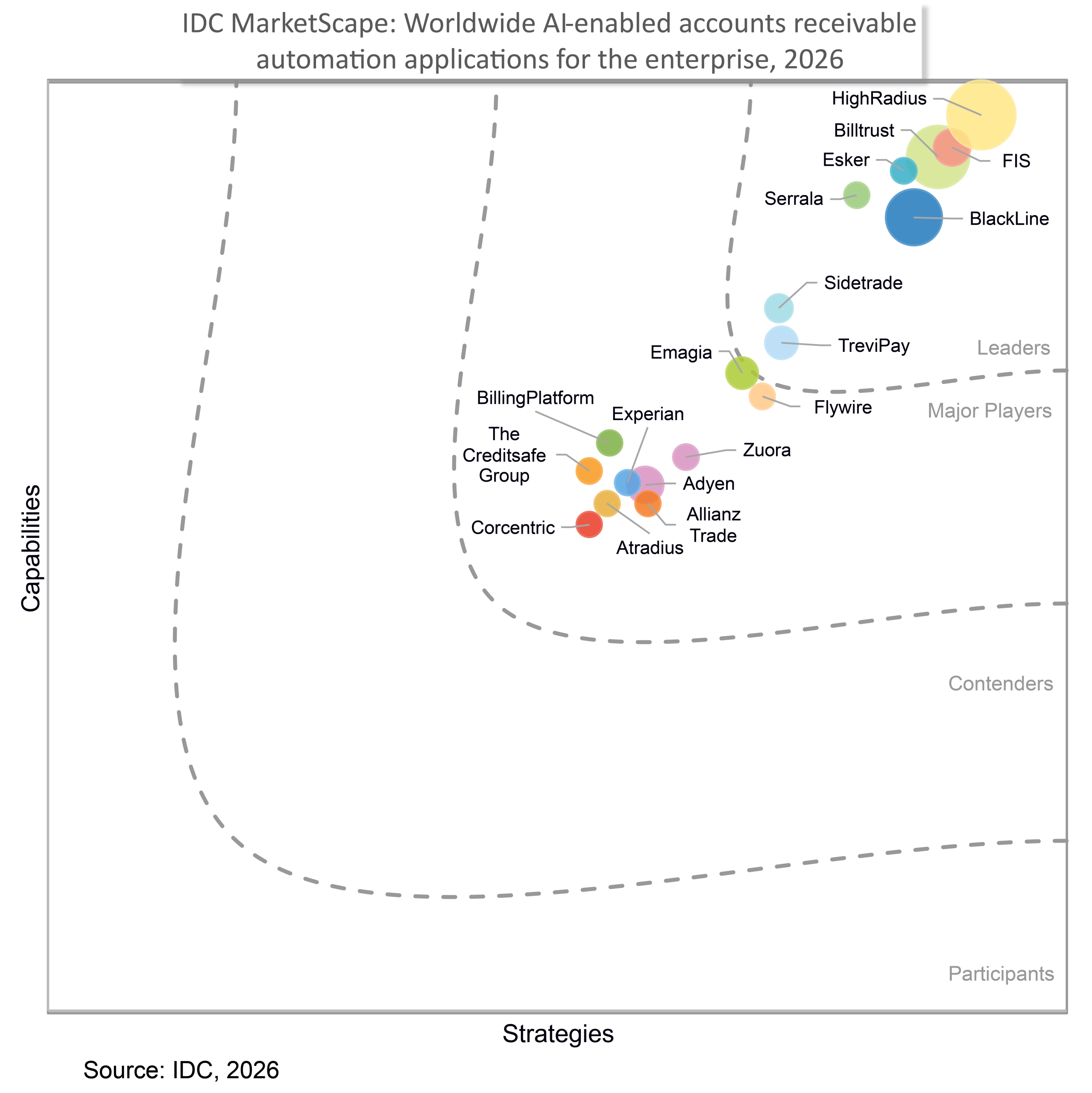
Recognized as an IDC MarketScape Leader in AR Automation
IDC recognized HighRadius for AI-driven AR automation across both enterprise and mid-market organizations.
HighRadius’ Connected Credit Management for Seamless ERP Integration
Best credit decisioning tools requires more than automating individual tasks. It requires connecting the customer, financial, and operational data behind every credit decision by combining ERP data, external credit information, payment behavior, collections activity, and configurable credit policies into a single decisioning platform.
Built for both growing mid-market businesses and global enterprises, HighRadius credit risk management delivers end-to-end credit automation. from digital credit applications and agentic AI-led financial statements spreading to automated credit scoring, policy-driven approvals, continuous risk monitoring, and blocked order management. With seamless integration across leading ERP platforms including SAP, Oracle, NetSuite, and Microsoft Dynamics 365, finance teams gain a continuously updated view of customer risk that enables faster, more informed credit decisions without increasing analyst workload.
With real-time credit risk analysis software and credit decisioning software, you can receive alerts for any changes in your customers’ credit profile and make data-driven credit decisions from unlimited credit reports. Our software integrates with your ERP system and can start monitoring your customers in just 30 days.
We offer configurable credit scoring software and approval workflows that can be customized based on geography, customer segments, business units, and other factors. You can fast-track credit approvals through complex corporate hierarchies, making the credit application process more efficient and streamlined.
Our highly configurable online credit application allows you to onboard customers across the globe with multi-language, customized credit applications embedded on your website. You can automatically capture financials, personal guarantees, and check bank references, reducing the need for manual data entry.
Our software also automatically extracts credit data from over 40+ global and local agencies, including credit ratings, financials, and credit insurance information. You can configure the auto-extracted data in your preferred currency, making it easier to analyze and interpret.
With AI-based blocked order management, you can auto-predict blocked orders based on the customers’ credit limit utilization and payment history. You can leverage AI-based release or partial payment recommendations for faster credit decisions, reducing the need for manual intervention.
Struggling With Slow Credit Approvals and Credit Reviews?
Explore the #1 software that makes onboarding customer faster and easier
Accelerate payment recovery from delinquent customers and boost cash flow through automated collection workflows.
Cash App
Achieve same day cash application with automated remittance aggregation
Credit
Mitigate credit risk, reduce bad debt, and streamline customer onboarding with AI-powered insights.
Deductions
Reduce Revenue Leakage with AI Prediction models that identify valid and invalid deductions.
Online Credit Application
Onboard customers seamlessly with a configurable online credit application. Cut down on back-and-forth and collect all customer details in one go.
FAQs
1. Is ERP credit management enough?
No. Native ERP credit management provides customer and financial data but often lacks advanced credit automation, external bureau integration, continuous risk monitoring, AI-driven decisioning, and automated workflows. Connected credit management software complements your ERP by synchronizing data and enabling faster, more informed credit decisions.
2. What is native ERP synchronization?
Native ERP synchronization is the automatic exchange of customer, credit, receivables, payment, and master data between your ERP and credit management software. Real-time synchronization ensures finance teams always work with current information, reducing manual updates, inconsistent records, and delayed credit decisions.
3. Can credit software work without ERP integration?
Yes, but its effectiveness is limited. Without ERP integration, credit analysts often rely on manual data entry, spreadsheets, and outdated customer information. Integrating credit software with your ERP enables real-time visibility into customer exposure, payment activity, and credit limits, resulting in faster and more accurate decisions.
4. Why does cash application affect credit risk?
Cash application directly impacts customer exposure by updating outstanding receivables when payments are matched to invoices. Real-time cash application gives credit teams an accurate view of available credit, helps release blocked orders faster, and prevents decisions based on outdated balances.
5. Can connected credit software reduce bad debt?
Yes. Connected credit software improves decision quality by combining ERP data, payment behavior, receivables, collections activity, and external credit information into a unified customer risk profile. This enables proactive credit decisions, early risk detection, and more consistent policy enforcement, helping reduce bad debt and unnecessary credit losses.
6. How does HighRadius support ERP integration for mid-market businesses?
HighRadius integrates seamlessly with leading mid-market ERPs, including NetSuite and Microsoft Dynamics 365, allowing growing businesses to automate credit approvals, synchronize customer and receivables data, and monitor credit risk in real time. Organizations can modernize credit operations without replacing their existing ERP or adding manual processes.
Resource Library
Resource Hub
Order to Cash
Order to Cash software data sheet
Disconnected workflows can leave teams chasing data, while automated O2C has delivered 20% lower past dues.
HighRadius recognized as a "Leader" in IDC Marketscape: Worldwide AI-enabled accounts receivable automation applications for the enterprise 2026 vendor assessment
Recognized as a Leader in 2026 Vendor Assessment for unifying credit, collections, cash application, deductions, e-invoicing, and payments on one AI platform to advance enterprise-wide invoice-to-cash transformation.
Forrester Recognizes HighRadius in The AR Invoice Automation Landscape Report, Q1 2023
Forrester acknowledges HighRadius’ significant contribution to the industry, particularly for large enterprises in North America and EMEA, reinforcing its position as the sole vendor that comprehensively meets the complex needs of this segment.