7 Successful Debt Collection Techniques to Reduce Bad Debts
Last Updated: 31 August, 2026
•
Editorial Team HighRadius
2026 Automation Benchmark Report
HighRadius 2026 Automation Benchmark Report For The Office Of The CFO
Understand if your performance is on par with top 10% of the organizations. Identify gaps, best practices and know how you can drive value through Agentic AI-Driven Automation.
Navigating the complexities of debt recovery is a daunting task for many finance professionals and collections teams. From tracking digital transactions across multiple payment channels to assessing customer creditworthiness, the challenges are many.
Debt collection, simply put, is the process of ensuring you receive the payments owed to you. It begins with an order, and ideally, it should end with the collection of payment. However, it’s not always that straightforward. Many factors can be a bottleneck in this process, making it essential to have effective debt collection methods at your disposal.
These techniques aren’t just about chasing after unpaid bills; they encompass strategies to prevent issues in the first place and methods to recover debts when things go wrong. Before we delve into the solutions, let’s take a closer look at the major problems that collections teams run into, so you can see what’s standing in the way of financial success.
Key Takeaways
Debt collection is complex and often slowed by poor data quality, weak prioritization, and inefficient communication.
Proactive strategies like strong credit checks, clear payment terms, and personalized outreach improve payment outcomes.
Automation and AI enable smarter prioritization, faster follow-ups, and more efficient debt recovery.
Major Challenges Faced by the Collections Teams
When engaging in debt collection, many collectors face challenges like handling a large volume of delinquent accounts and having limited time to address all accounts in their worklist. The following issues represent fundamental flaws in the ideal collections process:
Inconsistent and outdated data: Data plays a crucial role in the collections process, but incomplete or inaccurate information can lead to significant issues. Collectors might expend effort on attempting to collect payments that have already been settled or improperly allocated, resulting in redundant actions, strained customer relationships, and an elevated DSO.
Inadequate correspondence: While collections correspondence is crucial, it is equally important to focus on the groundwork of customer collaboration. Collectors may focus on non-critical customers who would have paid regardless, rather than prioritizing those who require more attention.
Improper customer prioritization: Collectors often rely on static parameters such as due dates, invoice values, and customer segments to prioritize accounts. However, these factors may not be sufficient to deal with dynamic changes in the financial health of the company.
It’s crucial for finance leaders to keep checking how well their collections process is working. This helps them know where they are in terms of managing collections and making sure it’s working smoothly. For a more efficient approach, consider collections process automation. Now, let’s explore the top debt collection strategies that can help reduce bad debts.
Need Ready-to-Use Follow-Up Emails?
These 21 collection email templates help you act on every collection strategy in this blog.
7 Effective Debt Collection Tips to Reduce Bad Debts
These debt collection strategies techniques are designed to significantly reduce bad debts. By employing these tips, you not only enhance your chances of getting paid promptly but also maintain positive customer relationships, ensuring a win-win situation for both parties involved.
1. Robust credit assessment
It’s crucial to start with a robust credit check and onboarding process. This means thoroughly assessing a customer’s creditworthiness before offering credit for goods or services. Establishing an easy-to-use application process within your accounts receivables software ensures you gather comprehensive information.
2. Clear payment terms and policies
Keep your payment terms straightforward and easy to understand. Ensure that your customers have a crystal-clear understanding of your expectations and payment timelines. By communicating these clearly, you not only prevent misunderstandings but also establish a solid foundation for a smoother collections process. Be transparent about late fees and penalties to encourage timely payments.
3. Flexible payment plans
In challenging financial situations, offer flexible payment plans. Understand that some customers may be facing temporary hardships. Being flexible with payment terms and allowing them to make partial payments can demonstrate your willingness to work with them while increasing the likelihood of debt recovery. Remember, maintaining customer loyalty and retaining a customer is more valuable than a single transaction.
4. Diverse payment options
Many companies underestimate the power of providing diverse payment options. Customers often delay payments when the process is overly complicated. Make things simple and convenient for your customers by providing invoices that they can easily pay, or by offering a self-service portal with a range of secure payment options.
Your customers can pay using credit cards, ACH transfers, wire transfers, or digital wallets like PayPal. This flexibility not only speeds up payments but also enhances the customer experience, ensuring their satisfaction.
5. Prioritizing aging accounts
Another effective debt recovery strategy involves careful planning. Before making collection calls, it’s essential to prioritize the customers who need attention the most. This means knowing the age of the accounts and the amounts owed, which is often overlooked. Blindly reaching out to all customers, even those who pay regularly, can cause unnecessary friction.
Leveraging AI-based Collections Software streamlines this process, allowing collection analysts to maximize efficiency by prioritizing calls. AI-driven tools segment high-risk customers, predict payment timelines, and customize dunning strategies for a more targeted approach.
6. Personalized reminder messages
Standardized reminders often get lost in the clutter of emails. Personalize your reminder messages and follow-up emails. Tailor your communication to each customer’s situation. Show them that you recognize their unique circumstances and are committed to working together to resolve payment issues. A personal touch can go a long way in nurturing goodwill.
7. Incentivize early payments
Consider offering incentives for early payments or timely settlements. Discounts, rewards, or extended credit terms can be attractive motivators for customers to settle their debts faster. By providing these incentives, you not only encourage prompt payments but also reinforce a positive relationship with your customers.
Successful Debt Collection Strategies With Examples
Real-world collection strategies go beyond generic follow-ups and focus on prioritization, timing, and resolution of underlying blockers. The most effective approaches combine data-driven segmentation with structured workflows to improve recovery rates.
Example 1: High-risk account strategy
Prioritize overdue accounts with high invoice value, increasing aging buckets, and deteriorating payment behavior. These accounts should be flagged early using risk signals such as rising DSO, frequent delays, or high credit utilization. Collections teams can then initiate proactive escalation workflows, involve senior stakeholders, or place credit holds to prevent further exposure while accelerating recovery.
Example 2: Reminder-based strategy
Use a structured reminder cadence to improve payment discipline across customers. This includes automated reminders 3–5 days before the due date, on the due date, and immediately after an invoice becomes overdue. Consistent communication reduces dependency on manual follow-ups, ensures no invoice is missed, and improves on-time payment rates without increasing collection effort.
Example 3: Dispute-led delay strategy
Identify invoices delayed due to disputes such as pricing mismatches, delivery issues, or missing documentation. These invoices should be routed to resolution workflows with clear ownership and SLA tracking. Resolving disputes quickly removes payment blockers, shortens the collection cycle, and prevents invoices from aging unnecessarily.
Ebooks
Top 5 Ways for Faster Collections by American Express
Explore 5 high-impact collection strategies that eliminate delays, improve visibility, and accelerate receivables.
Manual debt collection relies on spreadsheets, emails, and manual follow-ups, which leads to delays and missed recovery opportunities. Automated collections solutions help prioritize accounts, trigger reminders, and improve recovery rates with minimal manual effort.
Manual vs Automated Debt Collection
Feature
Manual
Automated
Follow-ups
Inconsistent
Scheduled
Prioritization
Static
AI-driven
Visibility
Limited
Real-time
Recovery speed
Slow
Faster
Ebooks
Poor Vendor Selection Drives Hidden Costs Across Receivables Operations.
Use a structured scorecard to identify the right-fit solution, reduce inefficiencies, and improve long-term ROI.
Accelerate Your Debt Collections With HighRadius Collections Software
Collections teams often struggle with the sheer volume of tasks involved in chasing overdue payments. Manual processes are not only time-consuming but also prone to errors. When you’re dealing with multiple customers, keeping track of who owes what, when payments are due, and which accounts need attention can turn into quite a complicated task.
Automation tools bring a level of precision and efficiency that manual methods simply can’t match. They ensure timely customer reminders, reduce missed deadlines, and provide real-time payment tracking for swift issue resolution, offering accurate reports for data-driven decision-making. Plus, automation streamlines workflows, reducing the risk of costly errors, and ensures a systematic and organized approach to bad debt collection.
As transaction volumes increase and the need for faster responses grows, automation is increasingly becoming the standard, enabling collections teams to operate more intelligently and efficiently in managing how to collect debt. At HighRadius, we bring you the future of collections through our AI-based collections software. Our solution offers advanced worklist prioritization, streamlined workflows, and automated reminders—all working together to accelerate recovery and reduce DSO (Days Sales Outstanding).
We redefine efficiency, freeing up your valuable time so you can focus on your top priorities. By integrating seamlessly with ERP systems, credit agencies, payment partners, and more, we simplify data workflows and eliminate manual data entry, making collections smoother than ever before. Embrace innovation and take control of your financial future with HighRadius. Book a demo with us today to experience the impact of AI-driven collections firsthand.
Learn more about HighRadius’ Collections Management Software
Accelerate payment recovery from delinquent customers and boost cash flow through automated collection workflows.
Target the right customers with the right method, using AI to prioritize high-impact accounts for faster collections
In-App Dialer
Spend more time on calls, collecting from customers while we handle transcription & note-taking, boosting call volume & reducing past dues.
Advanced Dunning
Increase customer coverage by 10X with automated collections emails to increase your collector’s efficiency.
FAQs
Frequently Asked Questions (FAQs)
1. What is the 7 7 7 rule for debt collection?
The 7-7-7 rule for debt collection recommends reaching out to debtors within 7 days of the debt becoming due, making 7 contact attempts over the course of 7 weeks, and aiming to resolve the debt within 7 months. But ensure that your collection efforts align with the specific legal requirements.
The 7-7-7 rule for debt collection recommends reaching out to debtors within 7 days of the debt becoming due, making 7 contact attempts over the course of 7 weeks, and aiming to resolve the debt within 7 months. But ensure that your collection efforts align with the specific legal requirements.
2. How can collection strategies be improved?
Improving collection strategies involves embracing automation to streamline processes, and segmenting customers for tailored approaches. Clear communication, flexible payment options, and strict adherence to legal compliance are also essential components of enhancing debt collection practices.
Improving collection strategies involves embracing automation to streamline processes, and segmenting customers for tailored approaches. Clear communication, flexible payment options, and strict adherence to legal compliance are also essential components of enhancing debt collection practices.
3. What are some successful debt collection techniques?
Successful debt collection techniques include proactive communication, setting clear payment terms, offering flexible payment options, prioritizing overdue accounts, and leveraging automation for timely reminders. It’s essential to adhere to ethical and legal guidelines throughout the process.
Successful debt collection techniques include proactive communication, setting clear payment terms, offering flexible payment options, prioritizing overdue accounts, and leveraging automation for timely reminders. It’s essential to adhere to ethical and legal guidelines throughout the process.
Resource Library
Resource Hub
Order to Cash
Order to Cash software data sheet
Disconnected workflows can leave teams chasing data, while automated O2C has delivered 20% lower past dues.
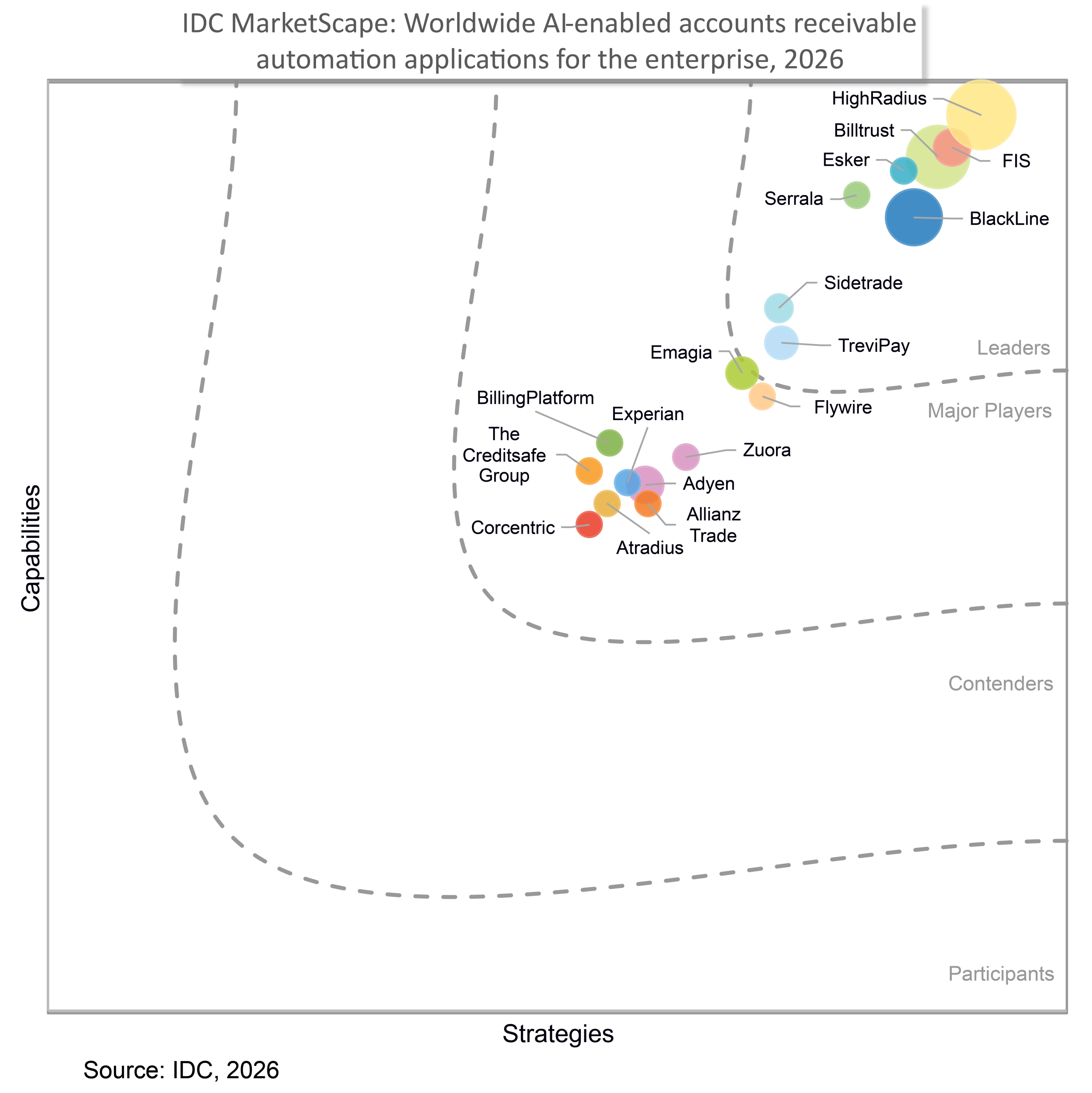
HighRadius recognized as a "Leader" in IDC Marketscape: Worldwide AI-enabled accounts receivable automation applications for the enterprise 2026 vendor assessment
Recognized as a Leader in 2026 Vendor Assessment for unifying credit, collections, cash application, deductions, e-invoicing, and payments on one AI platform to advance enterprise-wide invoice-to-cash transformation.
Forrester Recognizes HighRadius in The AR Invoice Automation Landscape Report, Q1 2023
Forrester acknowledges HighRadius’ significant contribution to the industry, particularly for large enterprises in North America and EMEA, reinforcing its position as the sole vendor that comprehensively meets the complex needs of this segment.