What Are the Responsibilities of a Credit Manager? 9 Essential Duties for Success
Last Updated: 28 August, 2026
•
Editorial Team HighRadius
2026 Automation Benchmark Report
HighRadius 2026 Automation Benchmark Report For The Office Of The CFO
Understand if your performance is on par with top 10% of the organizations. Identify gaps, best practices and know how you can drive value through Agentic AI-Driven Automation.
What if your credit scoring software could deliver 3× faster credit reviews and reduce bad debt exposure by up to 20%? HighRadius' credit scoring does that for you.
Have you ever wondered who monitors businesses’ financial decisions from behind the scenes to make sure they aren’t taking unnecessary risks? Well, it’s the Credit Manager. They are the ones making sure everything in the finance department operates well by evaluating potential customers’ creditworthiness and establishing credit limits. Also, they are accountable for handling leadership tasks such as guiding credit policies and strategies.
Though minimizing the company’s financial risk is the fundamental requirement of the credit manager’s job, they do much more than that. Therefore, the next time you hear about a company that is doing well financially, you can be certain that a credit manager is working hard behind the scenes to make things happen. Now let’s understand the key duties, qualifications, how one can get there and everything in between.
Still Reviewing Every Customer Manually? AI Automates 80–90% of Routine Credit Decisions
See how leading finance teams accelerate customer onboarding by up to 70% and deliver 2–3× faster credit approvals with automated credit application tools.
Credit Manager plans, organizes, leads and controls the credit function. They are responsible for training of the credit staff, managing day-to-day credit activities to reduce bad debt, and authorizing credit limits. They also collaborate with external collection agencies for effective debt recovery when needed.
“ I know how to collect, protect my employer and keep the customer! I am a Credit Manager! “ – Rhonda Sears, Credit Manager
9 Key Duties and Responsibilities of Credit Manager
A Credit Manager is entrusted with the responsibility of overseeing an organization’s credit risk management process. Their duties typically include:
Credit exposure managementCredit managers are responsible for controlling the overall credit exposure of the company. They closely monitor accounts receivable and assess the creditworthiness of customers. This involves analyzing financial statements, credit reports, and payment histories to gauge risk levels.
Aging and collectability managementCredit managers play a crucial role in proactively managing the aging of accounts receivable. This involves ensuring the timely collection of outstanding payments while also maintaining strong, positive relationships with customers.
New account setupA credit manager’s duties include establishing new accounts in line with company policies and procedures. By conducting thorough credit assessments, these managers can effectively mitigate risks associated with extending credit to new customers. It ensures organizations have a balanced and secure credit portfolio.
Business growth and optimization Qualities of a good credit manager include the ability to evaluate credit risk accurately by conducting thorough assessments of potential customers’ creditworthiness. Credit offers valuable insights to sales teams, allowing them to focus on prospects with the best potential for conversion and long-term profitability.
Days sales outstanding (DSO) controlAnother key duty of credit managers is to implement measures to reduce Days Sales Outstanding (DSO) below target, for optimizing cash flow. This includes monitoring accounts receivable, promptly following up on invoices, and implementing efficient credit policies. They also collaborate with external collection agencies for effective debt recovery.
Negotiating loan terms & dealing delinquent accountsAs part of their job, credit managers work with new clients to negotiate loan terms that are both fair and compliant with regulations. Also they proactively address disputes and delinquent accounts through negotiation, resorting to legal action when necessary.
Creating credit scoring models Credit managers use advancedstatistical algorithms to develop credit scoring models that assess creditworthiness and assess the risk of lending money or extending credit. By leveraging data analysis and predictive modeling techniques, the company can identify risks early on and take appropriate measures to mitigate them.
Approving credit applicationsEvaluating credit applications is a crucial responsibility of credit managers, who ensure that decisions align with the company’s risk appetite. Factors such as financial history, credit score, and payment behavior are considered. In this process, credit managers take a balanced approach that considers both company interests and customer needs.
Credit Policy development and implementationCredit management involvesdeveloping and implementing office policies and standards related to credit management, ensuring adherence to legal compliance and best practices. Regularly review and update policies to align with changing business needs and industry regulations.
Credit Manager Skills and Qualifications
To excel as a Credit Manager, Here are the essential skills:
Soft skills
Communication skills
Sound decision-making and problem-solving
Attention to detail
Time management and organization
Customer relationship management
Leadership and team collaboration
Adaptability and flexibility
Negotiation ability
Ability to work under pressure
Critical thinking and analytical mindset
Hard technical skills
Financial analysis and risk assessment
Creating credit scoring models
Knowledge of credit laws and regulations
Data analysis and interpretation
Accounting principles
Proficiency in financial software
Loan documentation and processing
Legal and compliance knowledge
Industry-specific expertise
Familiarity with ERP, credit management software, and tools
Credit Manager Experience Requirements
Proven work experience as a Credit Manager, Credit Analyst, or in a similar role is typically required. Candidates should have a demonstrated track record of success in effective credit management, including assessing creditworthiness, managing accounts receivable, and mitigating credit risk. This practical experience provides invaluable insights and skills that complement formal education.
Credit Manager Education and Training Requirements
To excel as a Credit Manager, candidates typically need a solid educational background in finance, accounting, business administration, or a related field. Here are the typical education and training requirements for Credit Managers:
Bachelor’s degree
A bachelor’s degree in finance, accounting, economics, banking and finance, or a relevant field is typically required. It provides students with foundational knowledge in key concepts such as financial accounting, corporate finance, economics, and business strategy.
Master’s degree (Optional):
While not always mandatory, some employers may prefer candidates with a master’s degree in finance or business administration. A master’s degree program offers more specialized and focused learning, providing advanced knowledge and skills in finance, risk management, and other relevant areas. This can be beneficial for candidates seeking senior-level or executive positions in credit management.
Relevant training and certifications:
Along with a formal educational degree, completing relevant training programs and obtaining certifications can enhance a Credit Manager’s credentials. They may include certifications such as Certified Credit Research Analyst , Certified Credit Professional (CCP), or Chartered Financial Analyst (CFA), etc. These certifications demonstrate proficiency and expertise in credit management principles and practices.
Credit Manager Salary Range
Credit Managers’ salary is influenced by several key factors, including years of experience, location, industry, and company size.
According to the 2022 Robert Half Salary Guide for Accounting and Finance Professionals, the average base salary for Credit Managers ranges from $65,500 to $117,500, with total compensation potentially reaching $130,000 to $150,000 for senior-level positions, reflecting the demand for experienced professionals in this critical role.
Furthermore, specialized knowledge in industries such as manufacturing, retail, finance, healthcare, and technology can lead to higher salaries, especially in larger firms with expansive credit portfolios. But, while seasoned Credit Managers in enterprise companies within major cities tend to enjoy the highest rewards, they also face greater expectations and pressures. Thus, aspiring credit managers should carefully weigh factors such as career advancement opportunities, work-life balance, and compensation when considering roles in credit management.
How to Become a Credit Manager
Becoming a credit manager requires learning the skills we covered above and completing the necessary training. If you want to become a credit manager, you can work toward it with the following steps:
Starting as a credit assistant
Begin your journey in the field of credit management as a Credit Assistant, where you’ll support Credit Analysts in various tasks such as evaluating credit applications and monitoring accounts receivable.
Advancing to credit analyst
Progress to the role of Credit Analyst, where you’ll conduct in-depth credit assessments and make informed decisions based on financial analysis. Gain expertise in evaluating creditworthiness and managing credit risks.
Transitioning to senior credit analyst
Move up to Senior Credit Analyst positions, where you’ll handle more complex credit evaluations, mentor junior analysts, and contribute to the development of credit policies.
Leading as a credit supervisor/team leader
Take on leadership responsibilities as a Credit Supervisor or Team Leader, overseeing teams of Credit Analysts, managing daily operations, and ensuring compliance with credit policies and procedures.
Becoming a credit manager
Achieve the highest level in the field as a Credit Manager or Credit Director, where you’ll manage all aspects of credit operations, including policy development, portfolio monitoring, and collaboration with other departments. Lead the way in optimizing credit processes and mitigating credit risks.
Conclusion
In conclusion, credit managers play a crucial role in ensuring the financial stability and success of organizations by effectively managing credit risk and accounts receivable. From overseeing credit exposure to implementing strategies for debt collection and credit policy development, effective credit management plays a key role behind the scenes.
Through a combination of practical experience, educational qualifications, and specialized skills, individuals can embark on a rewarding career path in credit management, starting from roles such as credit assistant and progressing to credit manager or director positions.
How HighRadius Credit Risk Software Helps Improve Credit Risk Assessment
HighRadius Credit Management Platform helps mid-market finance teams automate credit decisioning, standardize risk evaluation, and gain real-time visibility into customer exposure without increasing analyst headcount. Built for organizations scaling beyond spreadsheet-driven approvals, the platform combines AI-driven credit scoring, automated workflows, and continuous monitoring to accelerate onboarding, reduce manual reviews, and improve control over credit risk.
With real-time credit risk management tools and AI-powered credit management solutions, finance teams can receive alerts for changes in customer credit profiles and make faster, data-driven decisions using unlimited credit reports. The platform integrates with ERP systems and can begin monitoring customers in as little as 30 days.
With real-time credit risk analysis software and credit decisioning software, you can receive alerts for any changes in your customers’ credit profile and make data-driven credit decisions from unlimited credit reports. Our software integrates with your ERP system and can start monitoring your customers in just 30 days.
We offer configurable credit scoring software and approval workflows that can be customized based on geography, customer segments, business units, and other factors. You can fast-track credit approvals through complex corporate hierarchies, making the credit application process more efficient and streamlined.
Our highly configurable online credit application allows you to onboard customers across the globe with multi-language, customized credit applications embedded on your website. You can automatically capture financials, personal guarantees, and check bank references, reducing the need for manual data entry.
Our software also automatically extracts credit data from over 40+ global and local agencies, including credit ratings, financials, and credit insurance information. You can configure the auto-extracted data in your preferred currency, making it easier to analyze and interpret.
With AI-based blocked order management, you can auto-predict blocked orders based on the customers’ credit limit utilization and payment history. You can leverage AI-based release or partial payment recommendations for faster credit decisions, reducing the need for manual intervention.
Struggling With Slow Credit Approvals and Credit Reviews?
Explore the #1 software that makes onboarding customer faster and easier
Accelerate payment recovery from delinquent customers and boost cash flow through automated collection workflows.
Cash App
Achieve same day cash application with automated remittance aggregation
Credit
Mitigate credit risk, reduce bad debt, and streamline customer onboarding with AI-powered insights.
Deductions
Reduce Revenue Leakage with AI Prediction models that identify valid and invalid deductions.
Online Credit Application
Onboard customers seamlessly with a configurable online credit application. Cut down on back-and-forth and collect all customer details in one go.
FAQs
1) What are the responsibilities of a credit operations manager?
The duties of a credit operations manager include:
Supervising credit processing
Loan documentation
Managing the day-to-day operations of the credit department.
Working with other departments to assess operational efficiency
Maintain the credit policy
Monitor progress of existing loans
Recruit and manage staff
2) Is being a credit manager a stressful job?
Yes, being a credit manager can be stressful at times, due to the responsibility of managing credit risk, ensuring timely debt collection, and navigating legal complexities. But it can also be gratifying to see positive outcomes of effective credit management on the company’s financial stability.
3) What is the core responsibility of a credit risk manager?
A credit risk manager’s core responsibility is to evaluate and reduce credit risk in order to safeguard the company’s financial stability. Assessing credit applications, approving credit limits, handling accounts receivable, and taking measures to reduce bad debt losses are all part of this process.
Resource Library
Resource Hub
Order to Cash
Order to Cash software data sheet
Disconnected workflows can leave teams chasing data, while automated O2C has delivered 20% lower past dues.
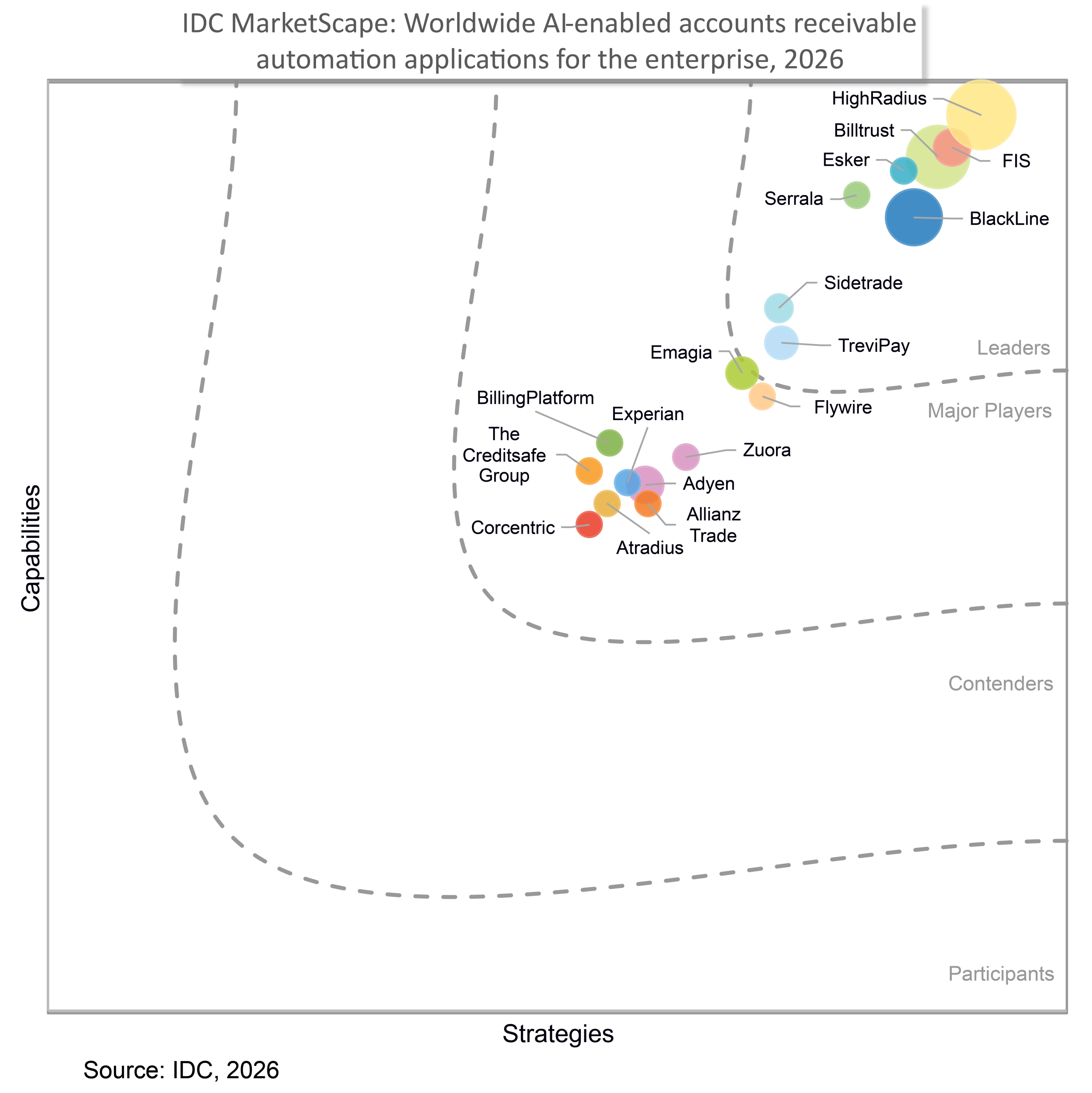
HighRadius recognized as a "Leader" in IDC Marketscape: Worldwide AI-enabled accounts receivable automation applications for the enterprise 2026 vendor assessment
Recognized as a Leader in 2026 Vendor Assessment for unifying credit, collections, cash application, deductions, e-invoicing, and payments on one AI platform to advance enterprise-wide invoice-to-cash transformation.
Forrester Recognizes HighRadius in The AR Invoice Automation Landscape Report, Q1 2023
Forrester acknowledges HighRadius’ significant contribution to the industry, particularly for large enterprises in North America and EMEA, reinforcing its position as the sole vendor that comprehensively meets the complex needs of this segment.